• KGS/USD = 0.01144 0%
  • KZT/USD = 0.00208 0%
  • TJS/USD = 0.10482 0.48%
  • UZS/USD = 0.00008 0%
  • TMT/USD = 0.28490 0%
  • KGS/USD = 0.01144 0%
  • KZT/USD = 0.00208 0%
  • TJS/USD = 0.10482 0.48%
  • UZS/USD = 0.00008 0%
  • TMT/USD = 0.28490 0%
  • KGS/USD = 0.01144 0%
  • KZT/USD = 0.00208 0%
  • TJS/USD = 0.10482 0.48%
  • UZS/USD = 0.00008 0%
  • TMT/USD = 0.28490 0%
  • KGS/USD = 0.01144 0%
  • KZT/USD = 0.00208 0%
  • TJS/USD = 0.10482 0.48%
  • UZS/USD = 0.00008 0%
  • TMT/USD = 0.28490 0%
  • KGS/USD = 0.01144 0%
  • KZT/USD = 0.00208 0%
  • TJS/USD = 0.10482 0.48%
  • UZS/USD = 0.00008 0%
  • TMT/USD = 0.28490 0%
  • KGS/USD = 0.01144 0%
  • KZT/USD = 0.00208 0%
  • TJS/USD = 0.10482 0.48%
  • UZS/USD = 0.00008 0%
  • TMT/USD = 0.28490 0%
  • KGS/USD = 0.01144 0%
  • KZT/USD = 0.00208 0%
  • TJS/USD = 0.10482 0.48%
  • UZS/USD = 0.00008 0%
  • TMT/USD = 0.28490 0%
  • KGS/USD = 0.01144 0%
  • KZT/USD = 0.00208 0%
  • TJS/USD = 0.10482 0.48%
  • UZS/USD = 0.00008 0%
  • TMT/USD = 0.28490 0%

Viewing results 7 - 12 of 2324

Italy’s Eni Expands Energy Projects in Kazakhstan with Hybrid Power Plant

The Italian energy company Eni is accelerating the expansion of its projects in Kazakhstan. By the end of the year, the company plans to complete construction of a hybrid power plant in Zhanaozen, one of the country’s key oil and gas centers. The 247-MW project combines three energy sources: solar, wind, and gas generation. The approach is expected to reduce the carbon footprint while providing a more stable energy supply in a region where strategically important production assets are concentrated Construction is proceeding in stages. The first component is already operational. In September 2025, a solar power plant with 80,000 panels was commissioned. Full completion of the complex is scheduled for the end of 2026, following the launch of gas and wind generation facilities. According to the Ministry of Energy, the project is intended to strengthen energy security for major enterprises in the Mangistau region, including Ozenmunaygaz and the Kazakh Gas Processing Plant. In a region that regularly experiences power shortages, this is a significant development. The project was discussed during a meeting between Kazakhstan’s Minister of Energy Yerlan Akkenzhenov and Italy’s Ambassador to Kazakhstan Antonello De Riu. Italian companies are gradually expanding their presence in Kazakhstan’s energy sector, from upstream production to processing and power generation. Cooperation extends beyond electricity generation. In January 2026, QazaqGaz and Eni moved to the practical phase of exploration at the Kamenkovsky block in the Caspian Basin. Work is also continuing at the Yuzhny Shu-Sarysu and Bereke blocks. Another major initiative is the gas-chemical complex under construction in the Atyrau region. The polyethylene project, with a planned capacity of 1.25 million tons per year and an estimated cost of $7.5 billion, has already entered the construction phase. The project is being implemented by KMG PetroChem, with Italy’s MAIRE group (through its subsidiary Tecnimont) serving as a key contractor. At the same time, conventional power generation projects are advancing. Cooperation with Italian power engineering company Ansaldo Energia has enabled the installation of new gas turbines at Almaty CHPP-3, with equipment deliveries completed in January 2026. However, this expanding cooperation is taking place amid legal uncertainty. Earlier, Eni and Shell, partners in the development of the Karachaganak field, lost a key stage of arbitration proceedings in London and may be required to pay Kazakhstan between $2 billion and $4 billion. While this could affect future investment decisions, it has not so far slowed the growth of Italian companies’ activities in the country.
Threats to Regional Security: Why Escalation Around Iran Matters for Central Asia

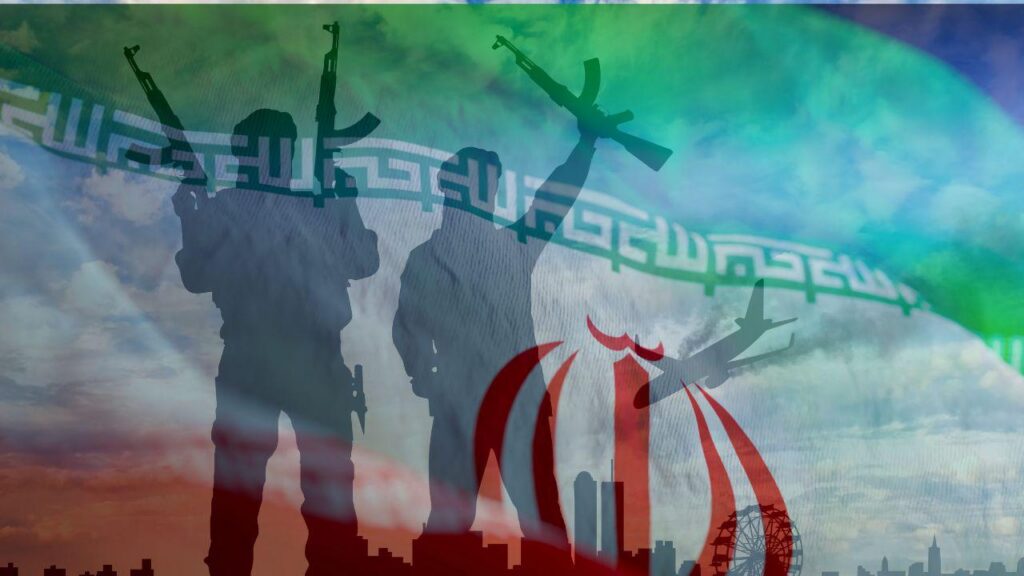
For Central Asia, the central question is not simply whether a wider conflict involving Iran would destabilize the Middle East, but how that instability could spill north into a region that has repeatedly absorbed the consequences of crises to its south. Central Asian states have seen before how militant infiltration, narcotics trafficking, and extremist mobilization can intensify when neighboring wars weaken state control and create more permissive transit corridors. History gives Central Asia specific reasons to take that risk seriously. During the Tajik civil war and its aftermath, the Tajik-Afghan border became a frontline against crossings by Afghan militants and narcotics traffickers. In 1999 and 2000, fighters from the Islamic Movement of Uzbekistan, or IMU, carried out the Batken incursions  into southern Kyrgyzstan, took hostages, and demonstrated how quickly insecurity from the Afghan theater could penetrate Central Asia. At the same time, Afghan opiates moved north through the Northern Route, tying militancy, organized crime, and border insecurity into a single regional problem. Afghanistan remains the most important precedent, but the comparison with Iran must be made carefully. After the fall of Najibullah in 1992, Afghanistan fragmented into competing militias and warlord zones. The Taliban later emerged from that disorder, and the Afghan state collapsed again when the Taliban captured Kabul and returned to power in 2021. Iran is structurally different. It has a centralized state, a denser security apparatus, and the Islamic Revolutionary Guard Corps, or IRGC, which is deeply embedded in regime security and domestic politics. For that reason, the most plausible risk is not an immediate Afghanistan-style collapse, but a slower weakening of control in peripheral regions that could open space for armed groups, trafficking networks, and extremist recruiters. Those peripheral regions matter because Iran’s borderlands already contain armed actors with their own agendas. In the northwest, PJAK remains part of the Kurdish militant landscape. In the southeast, Jaysh al-Adl operates in Sistan-Baluchistan and adjoining border areas. Their capabilities should not be exaggerated, and they do not represent entire Kurdish or Baloch populations. But in a period of prolonged instability, such groups could exploit weaker local control, greater arms circulation, and more permissive smuggling corridors. For Central Asia, however, the greatest concern is the interaction between any Iranian crisis and the threat environment centered on Afghanistan. United Nations reporting in 2025 assessed ISIL-K as the predominant extra-regional terrorist threat, and the U.S. National Counterterrorism Center says ISIS-K has carried out attacks in Afghanistan, Iran, Pakistan, and Russia while using media to recruit new members and advance a vision of “Khorasan” that explicitly includes parts of Central Asia and Iran. In other words, Central Asia already faces a live extremist ecosystem to its south; wider instability involving Iran could amplify that pressure rather than replace it. This is why Central Asia should not be seen as a passive observer. The region sits at the junction of security corridors linking Afghanistan, Iran, the Caspian basin, and Russia. A wider conflict involving Iran could intensify trafficking through existing routes, strain border...

U.S. Air Tanker Crash in Iraq Recalls KC-135 Loss in Kyrgyzstan in 2013

The March 12 fatal crash of a U.S. military KC-135 refueling aircraft supporting air strikes on Iran was the first accident involving that type of plane since a 2013 crash in Kyrgyzstan during U.S. military operations in Afghanistan. The U.S. Central Command said on Friday that that all six crew members on a KC-135 that went down in western Iraq had died, and that the aircraft was lost while flying over “friendly airspace,” and was not downed by hostile or friendly fire. U.S. military officials previously said two aircraft were involved in the incident, and that the second one landed safely. An investigation into the crash is underway as U.S. and Israeli aircraft continue intense attacks on targets in Iran, which has retaliated with missile and drone strikes on Israel and other countries. Shipping has been disrupted in the Strait of Hormuz, driving up global energy prices. Thirteen years ago, the United States was engaging in military operations against Taliban insurgents in Afghanistan when a KC-135 tanker crashed soon after taking off from Manas air base in Kyrgyzstan, killing all three crew members on board. The crash occurred on May 3, 2013. On March 14 of the following year, the U.S. Air Force released the results of an investigation into the fatal accident. “A unique combination of six factors -- flight control malfunctions, insufficient crew force training, incomplete crew checklist response, use of rudder while in a Dutch roll condition, crew composition, and cumbersome procedural guidance -- all came together during the flight's short 11-minute duration and resulted in this accident,” the investigation report said. It described a Dutch roll as “a more dangerous oscillatory instability” that followed initial instability causing the plane’s nose to drift from side to side. In 2006, a Kyrgyz airliner that was taking off from Manas accidentally struck a KC-135 tanker aircraft that had landed after a mission in Afghanistan and was awaiting instructions from the control tower. There were no injuries on the Kyrgyz plane, and one of the three KC-135 crew members suffered abrasions while evacuating from the refueling aircraft. Between 2001 and 2014, the U.S. Air Force operated a logistics hub at Manas, near Bishkek in Kyrgyzstan.

Gurbanguly Berdymuhamedov’s U.S. and Germany Trip Draws Attention to Diplomatic Reshuffle

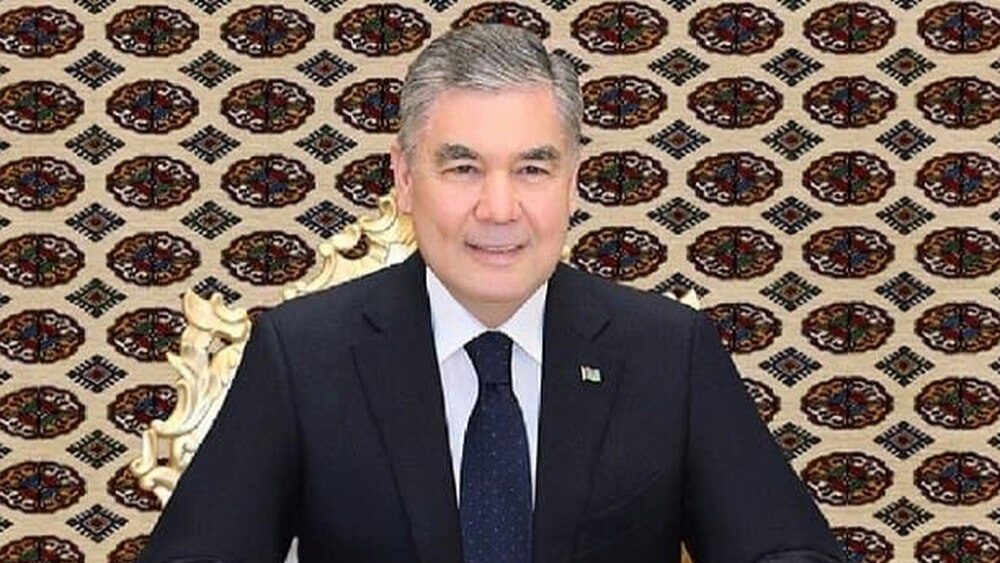
In mid-February, Gurbanguly Berdymuhamedov, former president of Turkmenistan and current chairman of the Halk Maslahaty (the People's Council of Turkmenistan), visited the United States. State media reported extensively on the trip, although some details of the visit and its outcomes were not publicly clarified. Shortly after Berdymuhamedov’s return, President Serdar Berdymuhamedov, his son, dismissed Turkmenistan’s ambassador to the United States and the country’s permanent representative to the United Nations. No official explanation for the change was provided. According to official reports, Berdymuhamedov held meetings with executives of Nicklaus Companies, including its leadership, as well as representatives of the Turkmenistan-U.S. Business Council. The company was founded by American golfer Jack Nicklaus. During the visit, Berdymuhamedov also toured several golf facilities and visited an equestrian complex, where he was briefed on horse care and training practices. He additionally met with a number of U.S. business figures, including entrepreneurs Steve Wynn and Isaac Perlmutter, as well as William Koch, chairman of Oxbow Group. Discussions were also held with representatives of agricultural equipment manufacturer John Deere regarding potential cooperation in Central Asia. Golf and equestrian projects Interest in golf has been growing in Turkmenistan in recent years. The Ashgabat Golf Club, opened in 2017, is promoted by officials as a flagship recreational facility in the capital. Plans have also been announced to expand golf infrastructure in the Avaza National Tourist Zone, where Berdymuhamedov has previously instructed authorities to consider the construction of additional courses. On his return journey from the United States, Berdymuhamedov made a stop in Germany, where he reportedly discussed preparations for the 2026 FEI World Equestrian Championships in Aachen and an Akhal-Teke horse beauty contest scheduled to take place in the Netherlands. Unconfirmed reports and diplomatic changes Some media outlets reported that Berdymuhamedov’s visit coincided with a weekend stay by U.S. President Donald Trump at his Mar-a-Lago residence. Reports also suggested that a planned meeting did not take place, although no official confirmation has been provided. Separate reports by independent Turkmen media claimed that Berdymuhamedov’s aircraft sustained technical damage during the trip and that another government aircraft was dispatched from Ashgabat. These claims have not been officially confirmed. Personnel changes in Turkmenistan’s diplomatic service followed the visit. Veteran diplomat Aksoltan Atayeva was relieved of her post as the country’s representative to the United Nations, while Esen Aidogdyev was reassigned to the embassy in Washington. Independent media have also previously reported allegations regarding property holdings by former ambassador Meret Orazov in the United States. These claims have not been publicly addressed by Turkmen authorities.

Uzbek Woman Killed in Traffic Accident in New York

A citizen of Uzbekistan has died following a traffic accident in New York City. The incident occurred on March 10 and resulted in the death of 31-year-old Nilufar Komilova, according to Uzbekistan’s state news agency Dunyo. Preliminary information cited by the agency indicates that the accident involved a dump truck operated by the New York City Department of Transportation. The crash took place in the Kew Gardens neighborhood in the borough of Queens. Police told the New York Daily News that Komilova was struck by a yellow Mack dump truck as it made a right turn from Metropolitan Avenue onto Lefferts Boulevard shortly before 9 a.m. She died at the scene. Akobir Azizov, described as a close family friend, told the newspaper that Komilova had just taken her seven-year-old daughter to school and was walking home when the accident occurred about two blocks from her apartment. “She usually takes Lefferts Boulevard,” Azizov said. “She always followed traffic rules. She would wait for the signal to cross the street.” Komilova is survived by two children, a three-year-old son and a seven-year-old daughter. Azizov said relatives have struggled to explain the tragedy to them. According to the report, Komilova’s husband, who works as a driver for the ride-hailing service Uber, became aware of the accident after trying unsuccessfully to contact her. Uzbek officials said the Consulate General of Uzbekistan in New York is in regular contact with the family and is providing consular and legal assistance. The diplomatic mission has also expressed condolences. The incident follows another fatal traffic accident involving an Uzbek national earlier this year. On February 5, an 11-year-old girl from Uzbekistan was struck by a school bus in the Bath Beach neighborhood of Brooklyn and later died at Maimonides Medical Center. In February, Uzbekistan introduced amendments to its law “On Burial and Funeral Services,” published on the government legal portal Lex.uz. The changes allow state financial assistance for transporting the remains of Uzbek citizens who die abroad, a measure aimed at easing the financial burden on migrant families.

Growing Trade Disputes Test the Eurasian Economic Union

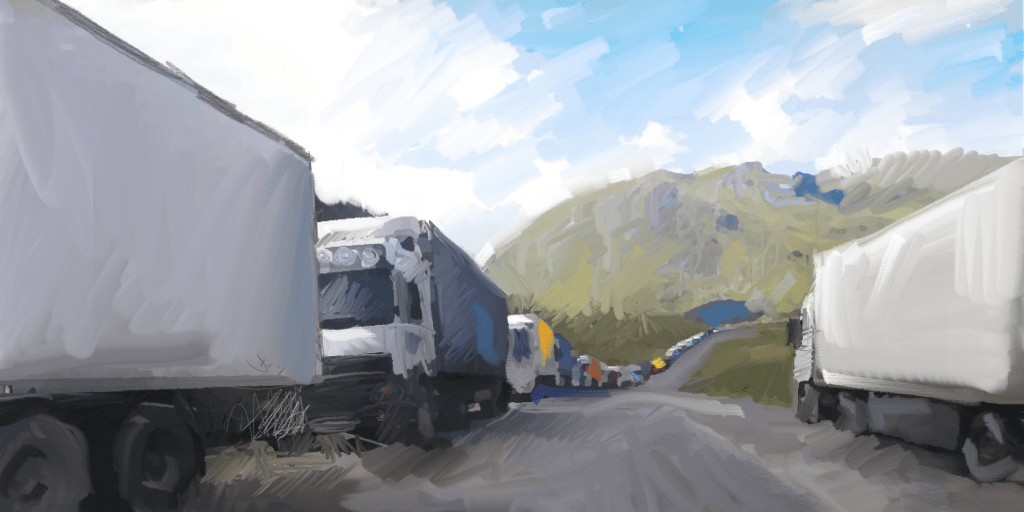
Trade disputes within the Eurasian Economic Union (EAEU) are as old as its creation. Restrictions on the import and export of certain goods have long been common practice. However, analysts increasingly warn that tensions have reached a point at which the organization risks losing its core function, ensuring the free movement of goods across borders and maintaining simplified conditions for migrant workers. Mounting Restrictions The EAEU currently comprises Armenia, Belarus, Kazakhstan, Kyrgyzstan, and Russia. Economic integration among several post-Soviet states began in 2000 with the establishment of the Eurasian Economic Community (EurAsEC), formed by Belarus, Kazakhstan, Kyrgyzstan, Russia, and Tajikistan. Uzbekistan joined in 2006, but suspended its participation in 2008. The foundation of this organization was the Customs Union agreement, intended to abolish customs duties among member states. The structure of the integration project has since evolved. The EAEU treaty was signed in 2014 and entered into force on January 1, 2015. Tajikistan and Uzbekistan did not join, while Armenia became a member in 2015. More than two decades after the first integration agreements, however, many of the bloc’s original promises remain only partially fulfilled. Experts have long argued that protectionist measures remain widespread within the bloc and that full freedom of movement for all categories of goods, including strategic products, has not been achieved. They also point to pronounced economic asymmetry: Russia accounts for approximately 85–87% of the union’s combined GDP, whereas Kazakhstan accounts for approximately 9–10%. Russia’s significantly larger population and political influence have further reinforced perceptions of structural imbalance. Moscow is now preparing new regulatory measures affecting its partners. From April 1, 2026, a national system for confirming the arrival of goods will be introduced for road imports from EAEU countries. According to the Russian authorities, shifting key control procedures to the pre-border stage is intended to improve transparency in the administration of indirect taxes. Previously, such checks were conducted after goods entered the country through desk and field audits. At the same time, Russia has intensified selective customs controls on its borders with Kazakhstan and Belarus, officially citing efforts to combat counterfeit goods. Particular scrutiny is being applied to product labelling and accompanying documentation. Controls were tightened last summer, when mobile checkpoints were established along the Kazakh-Russian border, followed by the inspections of vehicles leaving Belarus in the autumn. Full-scale checkpoints are now operating on the Kazakh-Russian border, while a simplified regime linked to the Union State and EAEU agreements continues to apply on the Belarusian-Russian border. Logistics industry representatives report that stricter controls on the Kazakh border have significantly increased transit delivery times. Carriers often face lengthy delays at checkpoints even when their documentation is in order. According to Alexandra Pokumeiko, head of a freight-forwarding department, the changes have created uncertainty in delivery schedules along Belarus-Russia transport corridors and on transit routes through Russia to Kazakhstan. The growing number of administrative restrictions has begun to spill into specific sectors of the economy, triggering retaliatory measures between member states. Escalating Tensions in the Automotive Sector A new dispute...