• KGS/USD = 0.01144 0%
  • KZT/USD = 0.00215 0%
  • TJS/USD = 0.10456 0%
  • UZS/USD = 0.00008 0%
  • TMT/USD = 0.28490 0%
  • KGS/USD = 0.01144 0%
  • KZT/USD = 0.00215 0%
  • TJS/USD = 0.10456 0%
  • UZS/USD = 0.00008 0%
  • TMT/USD = 0.28490 0%
  • KGS/USD = 0.01144 0%
  • KZT/USD = 0.00215 0%
  • TJS/USD = 0.10456 0%
  • UZS/USD = 0.00008 0%
  • TMT/USD = 0.28490 0%
  • KGS/USD = 0.01144 0%
  • KZT/USD = 0.00215 0%
  • TJS/USD = 0.10456 0%
  • UZS/USD = 0.00008 0%
  • TMT/USD = 0.28490 0%
  • KGS/USD = 0.01144 0%
  • KZT/USD = 0.00215 0%
  • TJS/USD = 0.10456 0%
  • UZS/USD = 0.00008 0%
  • TMT/USD = 0.28490 0%
  • KGS/USD = 0.01144 0%
  • KZT/USD = 0.00215 0%
  • TJS/USD = 0.10456 0%
  • UZS/USD = 0.00008 0%
  • TMT/USD = 0.28490 0%
  • KGS/USD = 0.01144 0%
  • KZT/USD = 0.00215 0%
  • TJS/USD = 0.10456 0%
  • UZS/USD = 0.00008 0%
  • TMT/USD = 0.28490 0%
  • KGS/USD = 0.01144 0%
  • KZT/USD = 0.00215 0%
  • TJS/USD = 0.10456 0%
  • UZS/USD = 0.00008 0%
  • TMT/USD = 0.28490 0%

Viewing results 367 - 372 of 2368

Tianjin SCO Summit Signals a Shift: China’s Long Game and the Rise of a New Power Bloc

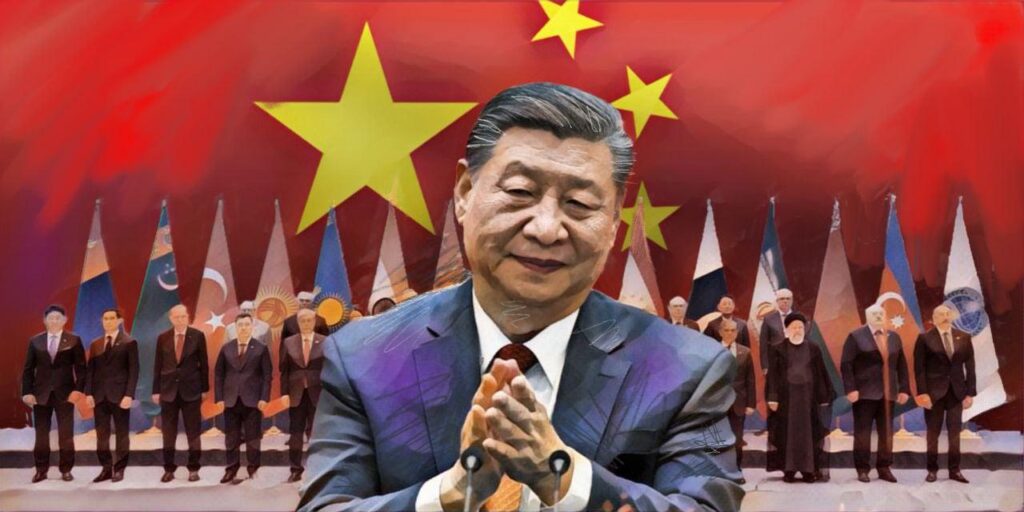
The notion of a bipolar world, once defined by the Cold War rivalry between the United States and the Soviet Union, is being reimagined. At the recent Shanghai Cooperation Organisation (SCO) summit in Tianjin, China, signs emerged of a new geopolitical alignment centered around the so-called “Global South.” Chinese President Xi Jinping invoked this framing during the August 31 banquet, positioning the SCO as a counterweight to what he referred to as the “collective West.” According to state news agency Xinhua, Xi expressed confidence that “with the concerted efforts of all parties, the current summit will be a complete success,” and that the SCO would play “an even more significant role” in global affairs. He framed the organization as a mechanism for uniting emerging economies in the Global South and for advancing “human civilization.” Founded in 2001 by six countries, the SCO now includes 10 full members, two observers, and 14 dialogue partners, spanning Asia, Europe, and Africa. “Bringing together major emerging market economies and developing countries such as China, Russia, and India, the SCO represents nearly half of the world’s population and a quarter of the global economy,” Xinhua noted. This framing signals that Beijing sees a new geopolitical pole coalescing around China, Russia, and India, a convergence of financial, technological, and military capacities within the SCO framework. Symbolic Alignments on Display Group photos from the summit offered a symbolic illustration of emerging alignments. In one image preceding the SCO banquet, Xi Jinping stands flanked by Russian President Vladimir Putin and Kazakh President Kassym-Jomart Tokayev, with other Central Asian leaders, including Shavkat Mirziyoyev (Uzbekistan), Emomali Rahmon (Tajikistan), and Sadyr Japarov (Kyrgyzstan), grouped closely behind. Another image, taken before the Council of Heads of State meeting, shows Indian Prime Minister Narendra Modi positioned directly behind Tokayev, reflecting the summit’s broader geopolitical weight. Xi and Modi also met one-on-one, where they agreed to define China and India as partners rather than rivals. Xi reportedly called for both countries to “become good neighbors, good friends, and partners who contribute to each other’s success,” referring to the cooperation as a “dragon and elephant pas de deux.” Modi, in turn, employed the term “Global South” during his address to the Council of Heads of State, urging reforms to global institutions such as the United Nations. “Constraining the aspirations of the Global South within an outdated framework is a gross injustice to future generations,” he said. UN Secretary-General António Guterres, who attended the summit, was the implicit target of such reformist appeals. The presence of Tokayev, a former senior UN official, added another layer of diplomatic nuance. Some speculate that Tokayev could be put forward as a future UN Secretary-General by Global South nations. Putin’s Narrative on Ukraine In his address, Putin reiterated a narrative long promoted by the Kremlin regarding the war in Ukraine. He described the conflict not as an invasion, but as the result of a “coup d’état in Ukraine” supported by the West and claimed that NATO’s expansion posed a direct...
Central Asian Countries Launch New Contact Group on Afghanistan

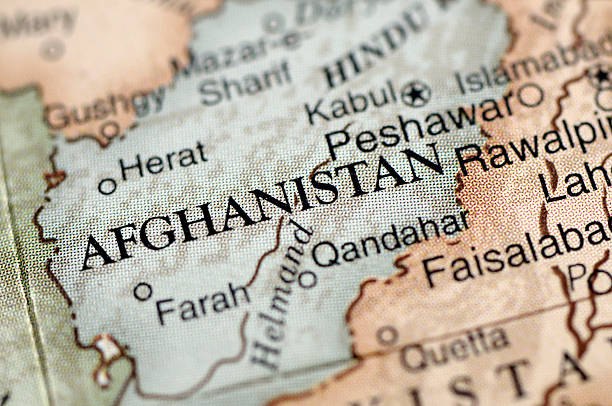
At Uzbekistan’s initiative, the special representatives of four Central Asian countries convened in Tashkent on August 26, for the inaugural meeting of a new regional Contact Group on Afghanistan. Delegations from Uzbekistan, Kazakhstan, Kyrgyzstan, and Tajikistan participated, launching a platform for regular envoy-level dialogue on shared concerns related to Afghanistan. According to the ministry, the participants emphasized the “relevance and timeliness” of creating this Contact Group as an independent mechanism for regional coordination. The meeting builds on commitments made by the presidents of the four countries during the August 2024 Central Asian summit in Astana, which produced a joint statement and a 2025-2027 roadmap for regional cooperation. In Tashkent, delegates reiterated the need for a unified regional approach to Afghanistan, given Central Asia’s geographic proximity and long-standing cultural and economic ties with its southern neighbor. The envoys underscored that the region must take a self-reliant, coordinated stance on Afghan affairs, one that promotes stability, security, and sustainable development across Eurasia. During the talks, the participants pledged to pursue common, balanced, and realistic policies toward the situation in Afghanistan based on consensus. They identified the urgent need to restore and expand trade, transport, logistics, and cultural-humanitarian connections with Afghanistan, which have deteriorated in recent years. The envoys also exchanged views on engaging with Afghanistan’s de facto Taliban authorities in line with each country's interests. They expressed support for enhanced cooperation on regional security challenges, including the fight against terrorism, extremism, narcotics trafficking, and cross-border crime. Although none of the Central Asian states formally recognize the Taliban government, all maintain practical working relationships with Kabul, particularly in areas such as border control, counterterrorism, trade, and humanitarian support. Since the Taliban’s return to power in 2021, Central Asia has navigated a delicate diplomatic path, maintaining cautious ties with Kabul while also deepening relations with China and Russia. Uzbekistan has taken a leading role. In August 2024, its prime minister visited Kabul, signing 35 agreements worth $2.5 billion. Bilateral trade reached $866 million in 2023. Kazakhstan, Afghanistan’s primary supplier of wheat and flour, has kept its embassy open in Kabul and held multiple business forums since 2023. According to the CACI Analyst, Kazakh-Afghan trade reached $700 million in the first nine months of 2024, with projections aiming for $3 billion within five years.

Opinion: China’s Diplomatic Power Play Unfolds in Tianjin

On August 31, the next SCO Plus summit will begin in the Chinese city of Tianjin and run through to September 1. Judging by the list of participants, China, under Chairman Xi Jinping, is positioning itself to challenge the United States for influence over the global geopolitical agenda. As part of the Shanghai Cooperation Organization (SCO) summit, Xi will host a formal banquet for the attending heads of state, according to the Chinese Foreign Ministry. Xi is also scheduled to chair the 25th meeting of the SCO Council of Heads of State and lead the expanded SCO Plus session - the largest since the establishment of the organization - where he will deliver a keynote address. Clues to the themes of Xi’s speech can be found in the diverse array of leaders expected to attend. Chinese Deputy Foreign Minister Liu Bin confirmed at a Beijing press conference that among the SCO member states, participants will include Russian President Vladimir Putin, Indian Prime Minister Narendra Modi, Pakistani Prime Minister Shahbaz Sharif, Iranian President Masoud Pezeshkian, Belarusian President Alexander Lukashenko, Kazakh President Kassym-Jomart Tokayev, Kyrgyz President Sadyr Japarov, Tajik President Emomali Rahmon, and Uzbek President Shavkat Mirziyoyev. Several leaders from non-member states will also join, including Turkish President Recep Tayyip Erdoğan; Mongolian President Ukhnaagiin Khurelsukh; Azerbaijani President Ilham Aliyev; Indonesian President Prabowo Subianto; and Turkmen President Serdar Berdimuhamedov, whose participation suggests Ashgabat’s cautious but growing interest in regional dialogue. Also in attendance will be the prime ministers of Armenia (Nikol Pashinyan), Cambodia (Hun Manet), Nepal (Khadga Prasad Sharma Oli), Egypt (Mostafa Madbouly), Malaysia (Anwar Ibrahim), and Vietnam (Pham Minh Chinh). The summit will also host key international institutional leaders, including UN Secretary-General António Guterres; SCO Secretary-General Nurlan Yermekbayev; CIS Secretary-General Sergey Lebedev; ASEAN Secretary-General Kao Kim Hourn; CSTO Secretary-General Imangali Tasmagambetov; EAEU Chairman Bakytzhan Sagintayev; and AIIB President Zhou Ji. Kazakhstan will be prominently represented. In addition to President Tokayev, three high-profile Kazakhs mentioned above - Yermekbayev, Tasmagambetov, and Sagintayev - will attend in their capacities as heads of international organizations. Their presence signals Astana’s growing diplomatic weight and reflects the strategic outreach led by Tokayev, himself a former UN Deputy Secretary-General. This background likely contributes to the rapport between Kazakhstan and Guterres. The summit will also inevitably draw attention due to the presence of the Armenian and Azerbaijani leaders, figures central to the ongoing realignment in the South Caucasus. Both Baku and Yerevan have increasingly distanced themselves from Moscow, favoring closer ties with Turkey and the United States. The recent peace agreement between Aliyev and Pashinyan, signed in the presence of President Trump, underscored the growing American role in the region and the diminishing influence of Russia. While Moscow appears willing to tolerate this shift, Tehran views it with deep concern, especially after its recent 12-day conflict with Israel. Russia, for its part, seems to be signaling disengagement from the region. Its silence in response to Baku and Yerevan’s Western overtures suggests strategic apathy, if not withdrawal. Beijing, of course, is...

Uzbekistan Responds After Migrant Taxi Driver Insulted in Moscow

A video filmed in the Moscow region has sparked public outrage after a Russian man verbally assaulted a taxi driver from Uzbekistan, calling him a “slave of Russians.” According to Minval, the incident took place in the courtyard of a residential complex in the town of Khimki, where the resident told the driver that he was “not at home” and had come to Russia “because there is nothing in Uzbekistan.” The footage has triggered a wave of discussion in both Russia and Uzbekistan, where labor migration remains a vital economic issue. In response, Uzbekistan’s Ministry of Foreign Affairs issued a statement, without directly referencing the video, reaffirming that all Uzbek citizens are under the protection of the state, regardless of their location. “The Republic of Uzbekistan, in accordance with its Constitution, national legislation, and international obligations, has a duty to safeguard the rights, freedoms, and dignity of its citizens abroad,” the ministry stated. Authorities also urged Uzbeks whose rights are violated abroad to immediately report incidents to local law enforcement and to seek assistance from Uzbek diplomatic missions or consulates. “Protecting the rights and interests of our citizens abroad is a key priority of our state policy,” the ministry emphasized. The incident comes amid broader policy shifts in Russia concerning foreign nationals. Starting September 1, authorities in Moscow and the surrounding region will roll out a new digital monitoring system for migrants. According to the Multifunctional Migration Center in Sakharovo, citizens from Central Asia and other countries will be required to install a mobile application called Amina, which will manage functions such as residence registration, address changes, and work permit payments.

Tokyo Steps Up: Iwaya’s Central Asia Tour Signals Japan’s Long-Term Commitment

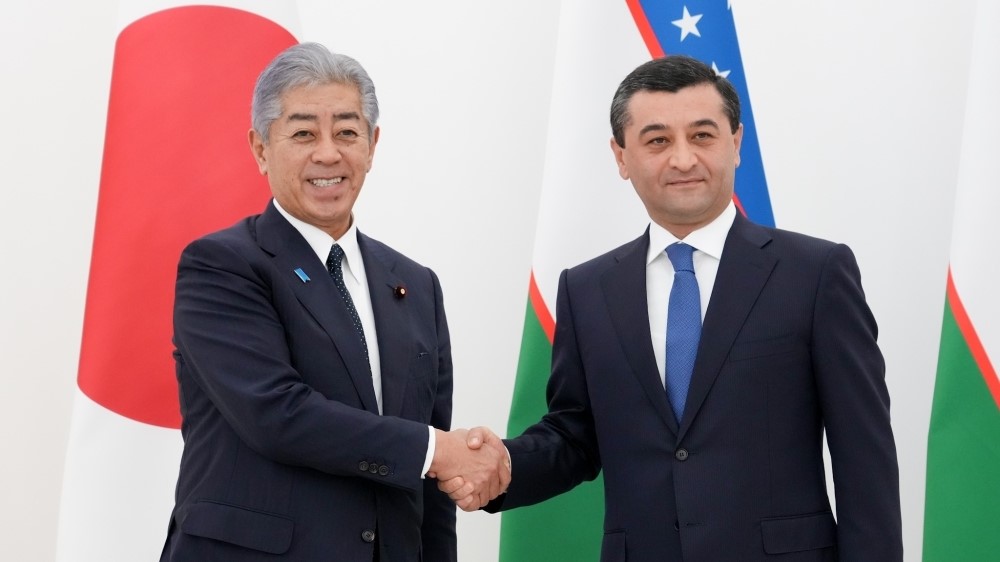
Japanese Foreign Minister Takeshi Iwaya made a landmark trip to Central Asia from August 24–28, 2025, holding talks in Kazakhstan and Uzbekistan. Tokyo framed the visit as a bid to deepen bilateral ties and revive the Central Asia plus Japan leaders’ summits. The visit fulfilled commitments made by then-Prime Minister Kishida, who had planned a similar tour in 2024 before cancelling at the last minute due to a domestic earthquake alert. Strategic Engagement Iwaya’s visit reflects Tokyo’s long-standing, multifaceted approach to Central Asia. Analysts emphasized to The Times of Central Asia that Japan is pursuing “trust-building diplomacy” in the region, focusing on human capital, infrastructure, and governance rather than quick geopolitical wins. Tokyo inaugurated the Central Asia plus Japan Dialogue format in 2004, making it the first outside power to group all five Central Asian republics within a single framework. As Professor Timur Dadabaev of Tsukuba University told The Times of Central Asia, Tokyo is seen “not as a competing hegemon, but as a partner that invests in the region’s human capital, infrastructure, and governance in ways that reinforce independence.” This approach contrasts with what has been characterized as the transactional models of other powers. On August 25, Iwaya met with Kazakhstan’s Deputy Prime Minister and Foreign Minister Murat Nurtleu in Astana, marking his first official visit to the country. The talks underscored both sides’ commitment to strengthening ties as strategic partners and in upholding a “free and open international order based on the rule of law.” The ministers welcomed active exchanges and pledged to expand cooperation in trade, investment, mineral resources, disaster prevention, and nuclear non-proliferation. They also announced plans to accelerate preparations for the long-delayed Central Asia plus Japan summit. [caption id="attachment_35524" align="aligncenter" width="1000"] Japanese Foreign Minister Iwaya with Kazakh Foreign Minister Nurtleu in Astana after their meeting on August 25, 2025; image Japan MOFA[/caption] In Tashkent, Iwaya echoed this message, calling Uzbekistan “an important strategic partner,” and highlighting the first-ever foreign ministers’ strategic dialogue held there. Japanese officials also stressed their policy does not aim to pressure Central Asian partners on sensitive issues. Characterizing Japan as a “catalyst to promote interconnectivity and inter-regional cooperation,” Foreign Ministry spokesman Toshihiro Kitamura stated that Tokyo does not see a zero-sum “competition between Japan and other countries. We would like to see Central Asian countries work together with other parts of the world.” In Tashkent, Kitamura explicitly noted that while Japan condemns Russia’s invasion of Ukraine, it will not pressure Uzbekistan or others to take the same stance. “The relationship between Russia and the Central Asian countries is a very delicate issue. Each country should take into account the relations it establishes with other countries. Even if it is with Russia, such relations do not affect the relations of other countries with Japan,” Kitamura stated. Bilateral Agreements In Kazakhstan, Iwaya held high-level talks with President Kassym-Jomart Tokayev and Foreign Minister Nurtleu. Tokayev welcomed Japan as a “reliable and close partner in Asia” and said ties are “developing dynamically.” The sides agreed to...

EU Opens First Migrant Resource Center in Uzbekistan as Russia Moves to Tighten Control

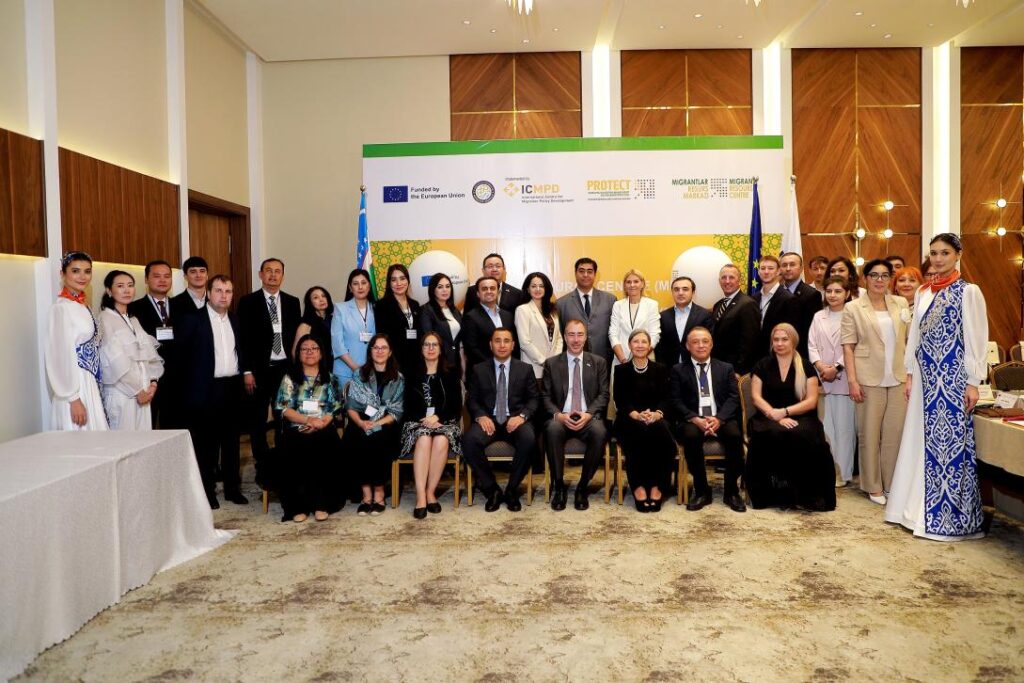
The European Union has launched Uzbekistan’s first Migrant Resource Center in Tashkent, while Russia is preparing to roll out a mobile application to monitor foreign workers starting September 1. Migrant Resource Center in Tashkent The EU Delegation in Uzbekistan announced that the centre opened on August 26 as part of the EU-funded PROTECT program: Improving Migration Management and Migrant Protection in Selected Silk Routes and Central Asian Countries. The initiative is implemented by the International Centre for Migration Policy Development (ICMPD) in partnership with Uzbekistan’s Migration Agency. The Center will provide information on legal employment opportunities abroad, raise awareness about the risks of irregular migration, and support the reintegration of returning migrants. Similar centers already operate in Tajikistan and Kyrgyzstan. At the opening ceremony, EU Ambassador Toivo Klaar said the centers “play a crucial role in providing people with the information they need to make informed decisions about migration.” ICMPD Deputy Director General Sedef Dearing added that the new facility will be “practical and timely for those considering migrating and returning.” Russia’s Mobile Application for Migrants Meanwhile, Russia will begin testing a new digital monitoring system in Moscow and the Moscow region on September 1, according to the Multifunctional Migration Centre in the Russian town of Sakharovo. Citizens from Uzbekistan, Tajikistan, Kyrgyzstan, Armenia, Kazakhstan, Georgia, Azerbaijan, Moldova, and Ukraine will be required to install a mobile application called Amina. The app will handle residence registration, address updates, work permit payments, and appointment scheduling. The Ministry of Internal Affairs will also have access to users’ geolocation data. Migrants who fail to confirm their location within three working days risk being removed from the registration system and placed on a monitoring list. Migration Management in Focus The launch of the EU-backed center in Tashkent reflects Europe’s emphasis on support services and informed choice for migrants, while Russia’s mobile app signals a shift toward stricter surveillance and control. Together, these measures highlight the growing importance of migration management across Central Asia and Eurasia.