
• KGS/USD = 0.01144 0%
  • KZT/USD = 0.00212 0%
  • TJS/USD = 0.10456 0.19%
  • UZS/USD = 0.00008 0%
  • TMT/USD = 0.28490 0%
  • KGS/USD = 0.01144 0%
  • KZT/USD = 0.00212 0%
  • TJS/USD = 0.10456 0.19%
  • UZS/USD = 0.00008 0%
  • TMT/USD = 0.28490 0%
  • KGS/USD = 0.01144 0%
  • KZT/USD = 0.00212 0%
  • TJS/USD = 0.10456 0.19%
  • UZS/USD = 0.00008 0%
  • TMT/USD = 0.28490 0%
  • KGS/USD = 0.01144 0%
  • KZT/USD = 0.00212 0%
  • TJS/USD = 0.10456 0.19%
  • UZS/USD = 0.00008 0%
  • TMT/USD = 0.28490 0%
  • KGS/USD = 0.01144 0%
  • KZT/USD = 0.00212 0%
  • TJS/USD = 0.10456 0.19%
  • UZS/USD = 0.00008 0%
  • TMT/USD = 0.28490 0%
  • KGS/USD = 0.01144 0%
  • KZT/USD = 0.00212 0%
  • TJS/USD = 0.10456 0.19%
  • UZS/USD = 0.00008 0%
  • TMT/USD = 0.28490 0%
  • KGS/USD = 0.01144 0%
  • KZT/USD = 0.00212 0%
  • TJS/USD = 0.10456 0.19%
  • UZS/USD = 0.00008 0%
  • TMT/USD = 0.28490 0%
  • KGS/USD = 0.01144 0%
  • KZT/USD = 0.00212 0%
  • TJS/USD = 0.10456 0.19%
  • UZS/USD = 0.00008 0%
  • TMT/USD = 0.28490 0%

Viewing results 379 - 384 of 2368

Bridges, Not Blocs: Japan’s Central Asia Approach

Japan is one of the countries that has been most active in recent years in terms of deepening political and economic relations with the republics of Central Asia. However, the geopolitical and ideological grounds for Tokyo's activism have received less attention than those of other countries. In early August 2024, then Prime Minister Fumio Kishida was scheduled to visit the region, but the visit was cancelled at the last minute due to the risk of a major earthquake that could have struck Japan at that time. During his visit, Kishida was also expected to announce the launch of an economic aid package for the Central Asian republics. As confirmed by the Ministry of Foreign Affairs in Tokyo, Japanese Foreign Minister Takeshi Iwaya is visiting the region over the coming days, landing in Kazakhstan on August 24, before moving on to Uzbekistan until August 28. In the two countries, he will meet with his Kazakh and Uzbek counterparts, Murat Nurtleu and Bakhtiyor Saidov, respectively, with the aim in both cases of strengthening bilateral relations. Japan's interest in Central Asia is long-standing: the Central Asia Plus Japan Dialogue format was launched back in 2004, a platform that has been emulated by several countries in the following years. From a political point of view, this is a very smooth relationship, as confirmed to The Times of Central Asia by Timur Dadabaev, Professor of International Relations at the University of Tsukuba. “Japan’s engagement with Central Asia is driven less by immediate material gain and more by its pursuit of trust-building diplomacy,” Dadabaev told TCA. “It is a relationship rooted in Japan’s desire to be seen as a reliable, non-imperial partner that supports the sovereignty, stability, and regional agency of Central Asian states. Unlike other powers, Japan positions itself as a ‘distant neighbor without hidden agendas,’ which makes its initiatives particularly well-received. Over the years, this has translated into Japan being perceived not as a competing hegemon, but as a partner that invests in the region’s human capital, infrastructure, and governance in ways that reinforce independence rather than dependence.” The relationship between Japan and the Central Asian republics is based on many concrete elements - cooperation on energy, migrant workers, and connectivity - which, as Tomohiko Uyama, Professor of Modern History and Politics of Central Asia at Slavic-Eurasian Research Center at the Hokkaido University pointed out to TCA, represent the basis for broader diplomatic engagement. “The relationship between Japan and Central Asia is based on geopolitical factors. For Japan, Central Asia is a region that shares troublesome neighbors, Russia and China,” Uyama said. “Increasing Japan's presence in this region is important for curbing the excessive expansion of China and Russia’s global influence. However, strengthening diplomatic relations requires fostering economic and human relations. Therefore, in addition to its traditional technical cooperation, Japan is seeking to promote decarbonization, transportation connectivity, and human resource development.” Professor Dadabaev also stresses that the two dimensions - the one linked more to concrete elements and the one that has more to...
Tokayev in Bishkek: Deals, Diplomacy, and a Golden Bridge

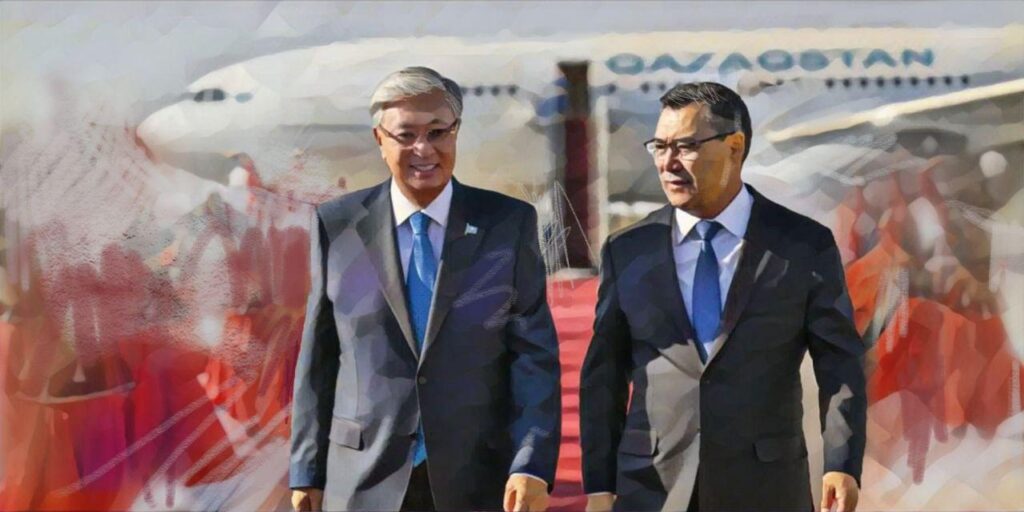
Kazakh President Kassym-Jomart Tokayev arrived in Kyrgyzstan on 21 August for an official visit that rolls into a full day of talks in Bishkek on 22 August, including a session of the Supreme Interstate Council. The Kyrgyz capital implemented rolling traffic restrictions around motorcade routes, a sign of how tightly choreographed the program is. The visit’s centerpiece is a Tokayev–Japarov meeting in both narrow and expanded formats, alongside a packed slate of bilateral events that underscore deepening political, economic, and cultural ties between the neighbors. Tokayev’s schedule blends state protocol with public-facing diplomacy. Alongside presiding over the seventh meeting of the Supreme Interstate Council, the two leaders are set to unveil the “Golden Bridge of Friendship” monument in Bishkek’s Yntymak Park - an attempt to give symbolic form to a relationship both sides have labored to institutionalize over the past two years. The program is also set to include the inauguration of the Consulate General of Kazakhstan in Osh, the launch of a branch of L.N. Gumilyov Eurasian National University in Kyrgyzstan’s south, the third Kyrgyz-Kazakh Youth Forum, and Days of Kazakhstan Cinema - events designed to anchor cooperation beyond chancelleries and boardrooms. This public show of diplomacy is being matched by concrete steps. The new Consulate General in Osh is intended to smooth consular services, support cross-border business, and expand cultural ties in a region where Kazakh–Kyrgyz trade and travel flows are accelerating. Central government, city, and regional officials joined Kazakh diplomats at the ribbon-cutting, underscoring the practical, day-to-day value for citizens who live and work across the southern corridor. Optics aside, the substance is in the talks. Astana and Bishkek have spent the last 18 months upgrading their legal architecture. In April 2024, the presidents signed a Treaty on Deepening and Expanding Allied Relations, moving the relationship beyond the basic language of partnership and into a framework that touches upon security, transport, energy, agriculture, and cultural cooperation. Kazakhstan’s Parliament later approved, and the president signed implementing legislation, putting the allied-relations commitments on a firmer legal footing domestically. This trip is widely viewed in both capitals as a chance to translate that framework into specific projects - some of which are already in motion. Trade and connectivity top the economic agenda. Bilateral trade hit roughly $1.7 billion in 2024, and both governments have repeatedly floated a target of $3 billion within the decade. The composition of flows is familiar: Kazakhstan ships metals, grain, fuels, and construction materials, while Kyrgyzstan supplies gold, coal, light-industry goods, and services. Reaching the next rung, however, will require more predictable border procedures, harmonized standards, and dedicated logistics capacity - areas where ministerial roadmaps are already in circulation. Energy and water cooperation is the other pillar. Kyrgyzstan’s Kambarata-1 hydropower project - envisioned as a 1,860 MW plant on the Naryn River - has become a regional test case for practical integration. Since mid-2024, Kyrgyzstan, Kazakhstan, and Uzbekistan have built a joint track with the World Bank and other partners to complete feasibility work, structure financing,...

Kyrgyz President Denounces “Politicized” Sanctions on Banks

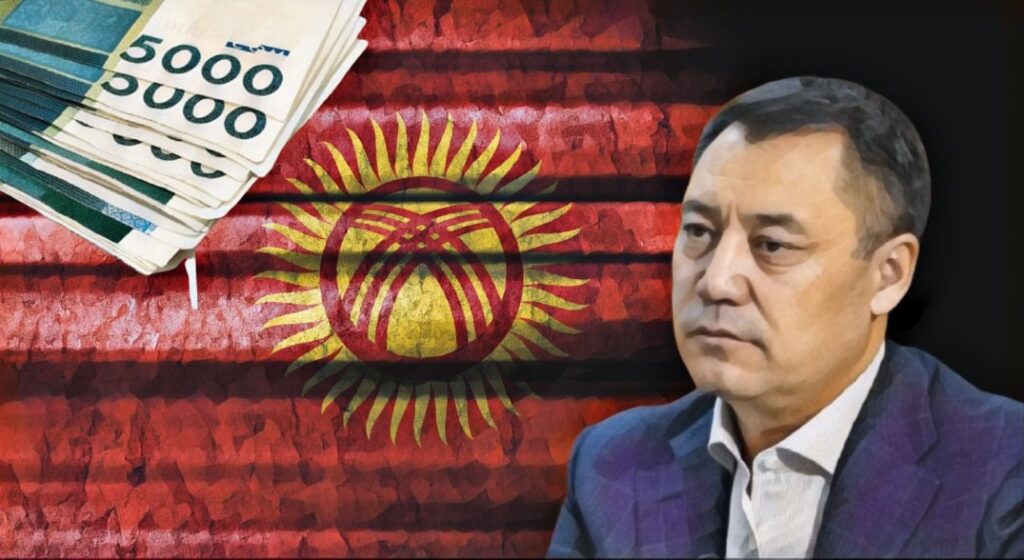
President Sadyr Japarov has sharply criticized the United States and United Kingdom for imposing what he has called unfounded sanctions on Kyrgyz financial institutions, urging Western leaders to stop “politicizing the economy.” In an interview with state news agency Kabar, Japarov defended two state-owned banks – Keremet Bank and Capital Bank – against allegations that they helped Russia skirt international sanctions, insisting that no evidence of violations has been presented. Neither the UK nor the U.S. has provided a single fact of violation… such facts simply do not exist,” Japarov said, dismissing the sanctions as politically motivated. UK and U.S. Target Kyrgyz Banks for Russia Sanctions Evasion Japarov’s comments come after a new wave of Western measures targeting Kyrgyzstan’s banking and crypto sectors for purported links to Russian sanctions evasion. On August 20, London sanctioned Kyrgyzstan-based Capital Bank – along with its director, Kantemir Chalbayev – alleging the bank was being used by Moscow to pay for military goods as part of a “convoluted scheme” to evade sanctions. The British authorities also blacklisted two Kyrgyz cryptocurrency exchanges - Grinex and Meer - that ran the infrastructure for a new rouble-backed crypto coin called A7A5, which moved an estimated $9.3 billion in just four months and was “intentionally created to evade sanctions.” The UK’s sanctions minister, Stephen Doughty, warned that “laundering transactions through dodgy crypto networks” would not soften the blow of Western sanctions. These steps followed a U.S. Treasury designation in January 2025 against Keremet Bank, a mid-sized Kyrgyz lender, for creating a hub for trade payments that helped Moscow evade restrictions. U.S. officials allege that Keremet Bank facilitated cross-border transactions for Russia’s sanctioned Promsvyazbank and even sold a controlling stake to a firm linked to a pro-Kremlin oligarch – moves Washington viewed as part of a secret channel to re-export dual-use goods and finance Russia’s defense sector. Those actions marked one of the first instances of Western “secondary sanctions” against Central Asian entities – penalties on third-country institutions accused of abetting a sanctioned nation’s activities. Kyrgyz Government’s Defensive Measures President Japarov contends that Kyrgyzstan has been proactive in compliance and that the West’s suspicions are misplaced. He noted that 21 banks operate in Kyrgyzstan, and authorities deliberately limited all Russian rouble transactions to just two state-controlled banks to shield the rest of the financial sector from any inadvertent sanctions breach. “To prevent any of them from falling under sanctions, we decided that only the state-owned Keremet Bank would work with the Russian rouble… All operations are under state control, and the income goes directly to the state treasury,” Japarov stated. Earlier this year, the government expanded this approach by channeling rouble remittances and payments through Capital Bank, which was brought under 100% state ownership in April. The National Bank of Kyrgyzstan ordered that all cross-border transfers in roubles – including the billions of roubles sent home by Kyrgyz migrant workers each day – be processed exclusively via Capital Bank. Kyrgyz officials argued this centralization was meant to “ensure transparency of...

Cholpon-Ata to Host ‘Day of German Economy in Kyrgyzstan’

On August 26, Kyrgyzstan will host one of its most prominent international business events of the year, the Day of German Economy in Kyrgyzstan, alongside the 4th meeting of the Kyrgyz-German Business Council. The events are organized by the National Investment Agency under the President of the Kyrgyz Republic. According to the agency, the forum will take place at two venues in the resort city of Cholpon-Ata: the Rukh Ordo Cultural Center and the No. 2 State Residence of the President of the Kyrgyz Republic. The event is expected to bring together high-level participants, including government officials, business leaders, industry associations, and investors from both Germany and Kyrgyzstan. Welcoming remarks will be delivered by Adylbek Kasymaliyev, Chairman of the Cabinet of Ministers of Kyrgyzstan, and Professor Reinhold Krämmel, Honorary Consul of Kyrgyzstan in Munich and Deputy Co-Chairman of the Kyrgyz-German Business Council. The forum will feature two thematic panel sessions: "Energy Projects for German-Kyrgyz Economic Cooperation" - focusing on opportunities in green energy and infrastructure development. "Export Potential and Logistics in the Transition Period: Opportunities of the Middle Corridor" - examining evolving trade routes and modern logistical challenges. In addition, Kasymaliyev will attend the meeting of the Kyrgyz-German Business Council. Discussions will center on the theme: “Kyrgyz-German Trade, Economic and Investment Cooperation: Finance as an Integral Part of the Partnership.” The primary aim of the event is to deepen economic dialogue, enhance trade and investment relations, and strengthen the strategic partnership between Kyrgyzstan and Germany.

CSTO Working Group on Military Training and Scientific Cooperation Opens in Bishkek

A working group meeting on military training and scientific cooperation under the Collective Security Treaty Organization (CSTO) opened in Bishkek today, bringing together delegations from Armenia, Belarus, Kazakhstan, Kyrgyzstan, Russia, and Tajikistan to coordinate officer education, joint curricula, and research collaboration across the bloc. The two-day session runs August 21–22 under Kyrgyzstan’s 2025 chairmanship. AKIpress reported the start of proceedings and its focus on aligning training and scientific work across member states. Officials have said the agenda will center on harmonizing military-education standards, expanding joint training for specialized branches, and mapping priority research areas that can be shared among defense academies and laboratories across the alliance. Outcomes from the Bishkek meeting are expected to inform the CSTO’s rolling program of joint trainings and institutional cooperation in 2026 and beyond. Recent Track Record in Central Asia Today’s meeting builds on a stepped-up schedule of CSTO drills and staff talks in Central Asia. In September 2024, Kyrgyzstan hosted the active phase of “Interaction-2024,” “Search-2024,” and “Echelon-2024” exercises designed to synchronize command-and-control, reconnaissance, logistics, and support elements of the alliance’s collective forces. The Kyrgyz leg concluded with combined operations demonstrations and evaluation of interoperability gains. In October 2024, Tajikistan hosted “Rubezh-2024,” focused on Central Asia’s rapid-deployment forces and scenarios involving incursions by illegal armed groups, hostage rescue, and air-defense coordination. The CSTO reported that the exercise’s operational objectives were achieved and that joint tactics were refined during the active phase at the Harbmaidon range. This year, the organization also ran a strategic command-staff training for its Joint Staff and national ministries on March 17–20, 2025, rehearsing planning and coordination procedures for regional contingencies - part of the bloc’s annual joint-training cycle. Policy framework and next steps The Bishkek working group is meeting against the backdrop of decisions taken by defense ministers in Bishkek on May 28, 2025, when CSTO members approved the Plan of Military Cooperation for 2026–2030 and the Plan of joint training for 2026 - documents that set training priorities, exercise calendars, and institutional cooperation goals across the alliance. By aligning academy programs and research agendas, and pairing them with the long-term exercise plan, the CSTO is aiming to standardize specialist training (from signals and EW to logistics and UAV operations), expand exchanges among defense universities, and convert lessons from recent drills into updated curricula. As chair, Kyrgyzstan is expected to circulate agreed proposals from this week’s sessions to the Council of Defense Ministers for inclusion in the 2026 training calendar and for incorporation into the 2026–2030 cooperation framework.

Tokayev to Visit Kyrgyzstan for High-Level Talks on Aug. 21–22

Kazakhstan’s President Kassym-Jomart Tokayev is due in Kyrgyzstan for an official visit at the invitation of President Sadyr Japarov, with the main program set in Bishkek. An announcement, carried by state media, confirmed the trip and outlined that talks would take place on deepening political and economic ties. Local authorities have introduced traffic restrictions for Aug. 21–22, indicating a two-day schedule including protocol events and bilateral meetings. The leaders are expected to review cooperation across trade, transit, and energy, and to convene the Supreme Interstate Council, the highest bilateral forum, to sign documents prepared by their foreign ministries in recent weeks. Diplomatic sources say deliverables could include measures to ease border procedures and timelines for joint infrastructure projects. A Busier, More Formalized Partnership Kazakhstan and Kyrgyzstan have intensified engagement through 2024–2025 with frequent ministerial contacts, new investment pledges, and coordination on water-energy policy. In early August, the countries’ foreign ministers initiated a 2025–2027 cooperation plan for presidential approval at the upcoming summit. Energy is central: the governments, together with Uzbekistan and international partners, have advanced groundwork on the Kambarata-1 hydropower plant, a flagship project intended to expand clean generation and regulate seasonal flows in the Syr Darya basin. Economically, both states are members of the Eurasian Economic Union, giving their businesses a shared customs space and labor mobility framework — a recurring theme when leaders meet to resolve practical bottlenecks in border trade and logistics. Business groups on both sides are also pushing for upgrades to road and rail crossings and for the expanded use of digital customs tools. Tokayev’s program is expected to include a formal meeting with President Japarov, a session of the Supreme Interstate Council, and a signing ceremony. While detailed communiqués typically follow the talks, officials in Bishkek and Astana have signaled that this visit aims to translate recent preparatory work into specific targets on trade, transport, and energy, setting the tone for the next phase of Kazakh–Kyrgyz relations.
