• KGS/USD = 0.01144 0%
  • KZT/USD = 0.00212 0%
  • TJS/USD = 0.10456 0.19%
  • UZS/USD = 0.00008 0%
  • TMT/USD = 0.28490 0%
  • KGS/USD = 0.01144 0%
  • KZT/USD = 0.00212 0%
  • TJS/USD = 0.10456 0.19%
  • UZS/USD = 0.00008 0%
  • TMT/USD = 0.28490 0%
  • KGS/USD = 0.01144 0%
  • KZT/USD = 0.00212 0%
  • TJS/USD = 0.10456 0.19%
  • UZS/USD = 0.00008 0%
  • TMT/USD = 0.28490 0%
  • KGS/USD = 0.01144 0%
  • KZT/USD = 0.00212 0%
  • TJS/USD = 0.10456 0.19%
  • UZS/USD = 0.00008 0%
  • TMT/USD = 0.28490 0%
  • KGS/USD = 0.01144 0%
  • KZT/USD = 0.00212 0%
  • TJS/USD = 0.10456 0.19%
  • UZS/USD = 0.00008 0%
  • TMT/USD = 0.28490 0%
  • KGS/USD = 0.01144 0%
  • KZT/USD = 0.00212 0%
  • TJS/USD = 0.10456 0.19%
  • UZS/USD = 0.00008 0%
  • TMT/USD = 0.28490 0%
  • KGS/USD = 0.01144 0%
  • KZT/USD = 0.00212 0%
  • TJS/USD = 0.10456 0.19%
  • UZS/USD = 0.00008 0%
  • TMT/USD = 0.28490 0%
  • KGS/USD = 0.01144 0%
  • KZT/USD = 0.00212 0%
  • TJS/USD = 0.10456 0.19%
  • UZS/USD = 0.00008 0%
  • TMT/USD = 0.28490 0%

Viewing results 343 - 348 of 1913

Kazakhstan Plans to Boost Agricultural Exports to Serbia

Kazakhstan plans to expand agricultural exports to Serbia, as discussed at the fourth meeting of the Kazakh-Serbian Intergovernmental Commission (IGC) held in Almaty late last week. Co-chair of the IGC, Deputy Prime Minister and Minister of National Economy Serik Zhumangarin, said agriculture is one of the most promising areas of bilateral cooperation, along with healthcare, tourism, science, biotechnology, education, and culture. In the first half of 2025, trade in agricultural products between the two countries rose 1.5 times, reaching $4 million. Kazakhstan aims to increase supplies of grains and legumes, vegetable oils, fish, meat, and dairy products. Deputy Minister of Agriculture Yermek Kenzhehanuly noted that the European Commission has approved requirements for the export of Kazakh fish products to EU countries, with 20 enterprises now authorized to supply pike perch fillets and other fish. In February, Kazakhstan also received permission to export honey to the European Union, and four major producers are ready to begin shipments. Work is ongoing to open access to the EU market for aquaculture products and horse meat. Kazakhstan has proposed joint investment projects in the processing of livestock and crop products. Scientific cooperation was also identified as a promising area, including training specialists in breeding and seed production, conducting field trials of grain, oilseed, and vegetable crops across various regions, plant hybridization, and producing biopesticides. According to the Ministry of Agriculture, food production in Kazakhstan has grown 1.4 times over the past three years, from KZT 2.3 trillion ($4.2 billion) in 2021 to KZT 3.3 trillion ($6.1 billion) in 2024. In the first half of 2025, gross agricultural output totaled KZT 1.8 trillion ($3.3 billion), 3.7% higher than the same period last year. Food production rose by 10%, while beverage production increased by 5%. Exports of agricultural products grew 1.3 times, from $3.8 billion to $5.1 billion. Investments in fixed assets in agriculture increased 1.2 times to KZT 919 billion ($1.7 billion), while investments in food production rose from KZT 118.3 billion to KZT 180.3 billion (from $220 million to $333 million). Labor productivity in the sector reached KZT 5 million ($9,200) per employee, up from KZT 3.4 million ($6,300) in 2021. State support has led to a doubling of fertilizer use from 626,000 tons to 1.3 million tons, an increase in the renewal rate of agricultural machinery from 4.3% to 5.5%, a 1.38-fold rise in the yield of grain and legumes from 11.0 to 15.2 cwt/ha, a 1.82-fold increase in land cultivated with water-saving technologies to 470,100 hectares, a 10% rise in cattle numbers to 4.3 million head, and a 17.3% increase in small ruminants to 11.6 million head. As previously reported by The Times of Central Asia, in January, Minister of Agriculture Aidarbek Saparov met with Russian Agriculture Minister Oksana Lut in Moscow to discuss lifting restrictions on the import and transit of agricultural products and boosting Kazakh food exports to Russia.

Tentative Armenia-Azerbaijan Plan Could Boost the Middle Corridor for Central Asia

A tentative U.S.-facilitated agreement between Armenia and Azerbaijan could open a new transport route through Armenia’s southern Syunik region, linking mainland Azerbaijan to its exclave of Nakhchivan and onward to Türkiye. Armenian Prime Minister Nikol Pashinyan has confirmed that Washington proposed managing a 32-kilometer corridor through Syunik to connect the two Azerbaijani territories. While this outline has been discussed publicly, the legal and operational details remain undisclosed, and officials say more information will be released if the agreement is finalized. According to U.S. mediators and regional leaders, the route is part of ongoing efforts to normalize Armenia-Azerbaijan relations after decades of conflict. A U.S. official told reporters the plan could “open Armenia to the world” by providing new options for regional trade and transit. Both sides stress that key issues—such as governance, security, and financing—still need resolution. The corridor is one of the main sticking points in peace talks: Azerbaijan wants it free from exclusive Armenian control, while Armenia rejects any arrangement that would compromise its sovereignty. If realized, the route could become a new link in the Trans-Caspian “Middle Corridor”, which connects Central Asia to Europe via Kazakhstan, the Caspian Sea, Azerbaijan, Georgia, and Türkiye. It would offer Kazakhstan, Uzbekistan, and Turkmenistan an additional westward route, bypassing Russian and Iranian territory. Traffic along the Middle Corridor has grown rapidly as shippers sought alternatives to northern routes. Cargo volumes along the Middle Corridor increased markedly—from around 600,000 tons in 2021 to approximately 1.5 million tons in 2022, representing a 2.5-fold rise and climbed further to approximately 4.1 million tons by late 2024. The EU has committed billions of euros to upgrade ports, railways, and logistics hubs, and the World Bank forecasts the volumes potentially reaching up to 11 million tonnes per year. route’s freight volumes could triple by 2030. An Armenian segment could further cut transit times and build redundancy, improving supply chain resilience for Central Asia. The proposal’s framing as a U.S.-supported project signals a shift in South Caucasus diplomacy. Russia has long mediated between Armenia and Azerbaijan, but its influence has waned amid the war in Ukraine. Olesya Vartanyan, a South Caucasus expert at the International Crisis Group, told AP News, “Russia has been left on the sidelines, because the Kremlin has nothing to offer to Armenia and Azerbaijan.”  The initiative also concerns Iran, which fears losing its role as a north–south transit hub. For Central Asia, the corridor could add a politically diversified channel for exports, reinforcing “multi-vector” trade strategies. It would provide new access to Turkish and European markets, potentially strengthening regional bargaining power. The proposed corridor is expected to include rail transport as well as oil and gas pipelines and fiber‑optic cables, though construction would be carried out by private firms under a U.S.-negotiated lease agreement as reported by PanArmenian news service. This could allow Caspian energy exports from Kazakhstan and Turkmenistan to reach Türkiye and Europe more directly, and improve Central Asia’s digital connectivity by reducing reliance on Russian telecom routes. However, no technical designs...

Azerbaijan, Kazakhstan, and Turkmenistan Push Ahead with Digital Corridor Across Caspian

Marine research is underway to determine the optimal route for the Trans-Caspian fiber-optic cable, a vital component of the ambitious “Digital Silk Way” initiative aimed at building a high-capacity digital corridor connecting Europe and Asia, Media.az reported. The ongoing survey, which includes shoreline assessments and detailed seabed analysis, will define the shortest, safest, and most environmentally sustainable path for the cable. Research began simultaneously from the Azerbaijani and Kazakhstani coasts and is expected to take up to four weeks. Emil Masimov, Chairman of AzerTelecom’s Board, visited the Turkan research vessel, where the survey is being conducted. During his visit, he reviewed the ship’s technical capabilities and met with the crew and engineering teams. “The Trans-Caspian cable project is progressing rapidly. With the launch of this marine survey, we are entering a crucial phase of construction,” Masimov said. “This step will boost regional digital connectivity and position the Caspian Sea as a key link in global digital infrastructure. Both Azerbaijani and Kazakh teams are using cutting-edge technology and professional expertise, and I am confident the work will be completed on schedule.” The 380-kilometer underwater cable will run from Sumgayit, Azerbaijan, to Aktau, Kazakhstan, and is expected to offer a transmission capacity of up to 400 terabits per second. Once operational, the line will significantly strengthen intercontinental data flows. Construction is scheduled to be completed by the end of 2026. Kazakhtelecom is leading the project on the Kazakh side, while U.S.-based Pioneer Consulting is providing technical oversight and consultancy services. The Trans-Caspian cable is a central element of the broader “Digital Silk Way” initiative, which envisions a modern telecommunications corridor passing through Azerbaijan, Georgia, Turkey, Kazakhstan, and Turkmenistan. The project aims to deliver high-speed, low-latency data routes that promote regional cooperation, digital integration, and sustainable economic development.

Kazakhstan Doubles Barley Exports, with Iran and China Leading Demand

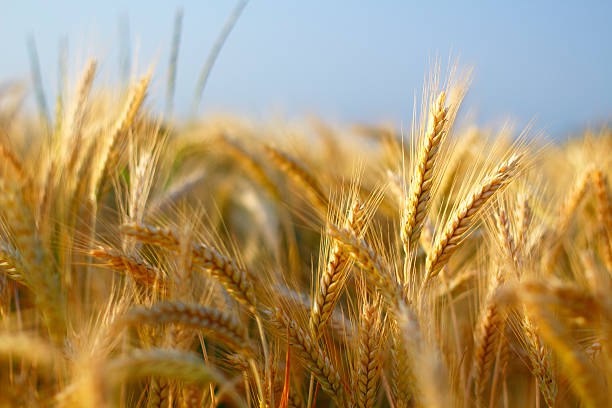
Kazakhstan has doubled its barley exports in the 2024-2025 marketing year, strengthening its position as a key player in the global grain market. According to the Ministry of Agriculture, the country exported 1.82 million tons of barley between September 2024 and August 2025, twice the volume recorded in the same period the previous season. The sharp increase was driven by a strong harvest of 3.84 million tons, robust demand from major markets such as Iran and China, and competitive pricing. Iran emerged as the largest buyer, importing 1.064 million tons, nearly 30 times more than the previous year. China followed with 414,400 tons, while Uzbekistan imported 125,200 tons. The surge in international demand has also pushed up domestic barley prices, providing a boost to local producers. In September 2024, prices ranged between KZT 50,000 and 52,000 per ton; by early August 2025, they had climbed to KZT 85,000-87,000 per ton. The Ministry projects total barley exports for the 2024-2025 season will reach 1.9 million tons. Kazakhstan has also reported a significant rise in wheat exports. Between September 2024 and July 2025, the country exported 12.4 million tons of wheat and flour, a 34% increase compared to the 9.3 million tons exported during the same period in 2023-2024.

Kazakhstan Begins Oil Exports to Hungary

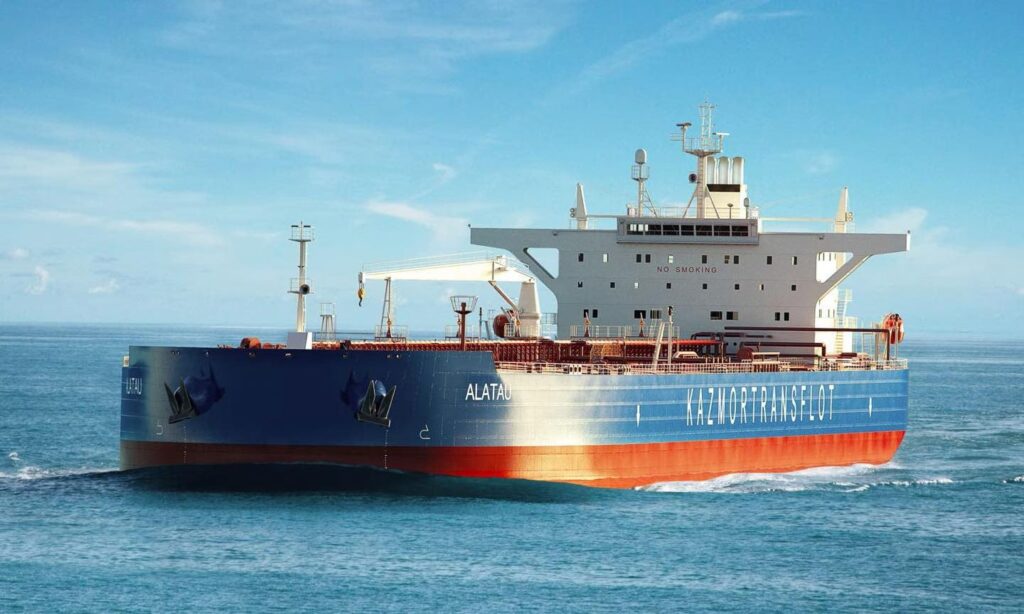
Kazakhstan has shipped its first batch of crude oil to Hungary, marking a significant step in the deepening energy partnership between KazMunayGas (KMG), the country’s national oil and gas company, and Hungary’s MOL Group. According to KMG, 85,000 tons of crude were transported by sea from the Russian port of Novorossiysk to the Croatian port of Omisalj aboard the Alatau tanker, operated by Kazmortransflot, a KMG subsidiary. From there, the oil was transported via the Adriatic pipeline, operated by JANAF, Croatia’s state oil pipeline operator, to the Százhalombatta refinery in Hungary. Upon the tanker's arrival in Croatia, representatives of KMG, MOL Group, and JANAF convened to discuss further cooperation. Following the meeting, KMG and MOL Group signed a framework agreement outlining future oil supply arrangements. The deal broadens the scope of Kazakhstan’s oil exports to the European Union. Kazakhstan already supplies crude to Germany via the Druzhba (Friendship) pipeline, which runs through Russian territory. As previously reported by The Times of Central Asia, Kazakhstan and Hungary reached a preliminary agreement earlier this year to supply Kazakh oil to Hungary through the Druzhba pipeline as well. The agreement was concluded in February during a meeting in Astana between Kazakhstan’s Minister of Energy, Almasadam Satkaliyev, and Hungarian Minister of Foreign Affairs and Trade, Péter Szijjártó. The two sides agreed to conduct trial shipments in 2025. MOL Group has been active in Kazakhstan for over two decades and has invested $200 million in the development of the Rozhkovskoye gas condensate field in western Kazakhstan.

Kazakhstan Breaks Ground on First Nuclear Power Plant

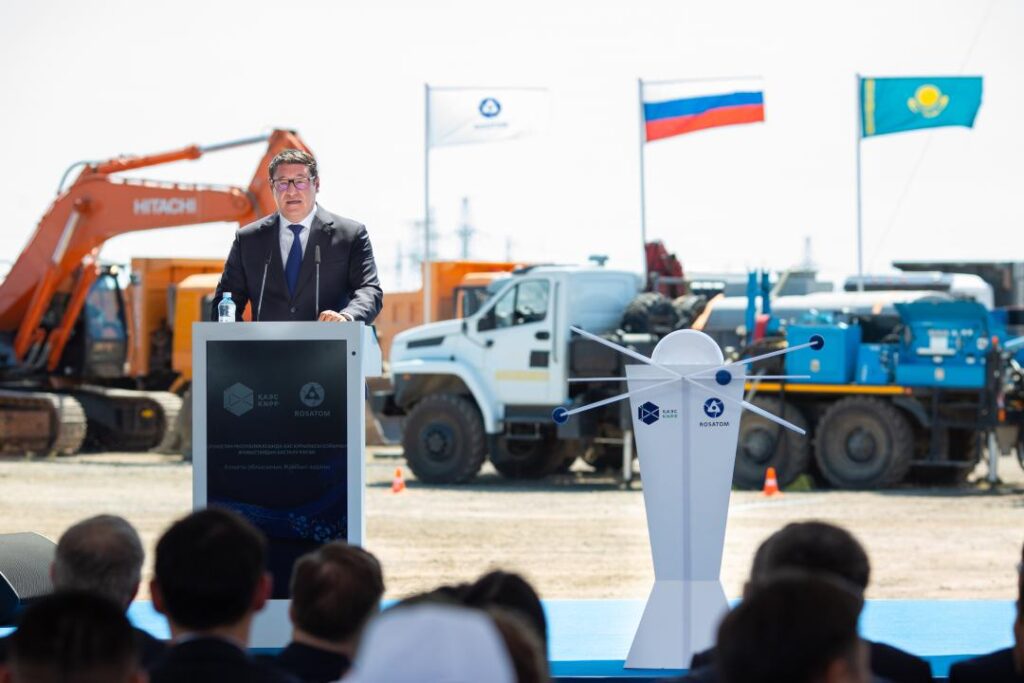
Kazakhstan has officially launched the construction of its first nuclear power plant, marking a significant milestone in the country’s long-term energy strategy. A groundbreaking ceremony was held on Friday in the Almaty region, in the south of the country. The project is being led by a consortium headed by Rosatom, Russia’s state nuclear energy corporation. The facility will be located near the village of Ulken on the shores of Lake Balkhash, approximately 400 kilometers from Almaty, Kazakhstan’s largest city. The plant will feature two reactors with a combined capacity of 2.4 gigawatts by 2035 and is expected to meet a substantial share of the country’s future electricity demand. According to Almasadam Satkaliyev, Chairman of the Atomic Energy Agency of the Republic of Kazakhstan, the total investment in the project is estimated at $14-15 billion. An additional $1 billion has been allocated for the development of social infrastructure in the surrounding region. “Today’s ceremony marks the start of engineering and survey work, a critical preparatory stage that will determine not only the final site and configuration of the plant, but also the safety, reliability, and economic efficiency of the entire project,” Satkaliyev said. Rosatom Director General Alexey Likhachev presented a model of the plant, which will be based on the design of Russia’s Novovoronezh Nuclear Power Plant and utilize Generation III+ reactor technology. This design is recognized for its improved fuel efficiency, advanced safety systems, and standardized construction process, which aims to reduce both construction and operational costs. Satkaliyev stressed that Kazakhstani enterprises and research institutions would play a central role in the project, with the aim of bolstering domestic industry, creating thousands of jobs, and advancing the country's nuclear science capabilities to international standards. According to the Agency’s press service, Satkaliyev recently met with Professor Jozef Konings, Dean of the Nazarbayev University Graduate School of Business, and Professor David Robinson of Duke University (USA) to discuss collaboration on nuclear workforce development. Discussions focused on potential joint academic programs, faculty exchanges, and international research partnerships. “Human capital development is a key pillar of the safe and sustainable introduction of nuclear technologies in Kazakhstan. I am confident that cooperation with leading academic institutions will contribute to forming a new generation of specialists capable of ensuring the safe and efficient operation of future nuclear power plants,” Satkaliyev stated. As previously reported by The Times of Central Asia, Kazakhstan plans to build at least three nuclear power plants. The second and third facilities are slated for development by the China National Nuclear Corporation (CNNC).