• KGS/USD = 0.01144 0%
  • KZT/USD = 0.00211 0%
  • TJS/USD = 0.10526 0%
  • UZS/USD = 0.00008 0%
  • TMT/USD = 0.28530 0%
  • KGS/USD = 0.01144 0%
  • KZT/USD = 0.00211 0%
  • TJS/USD = 0.10526 0%
  • UZS/USD = 0.00008 0%
  • TMT/USD = 0.28530 0%
  • KGS/USD = 0.01144 0%
  • KZT/USD = 0.00211 0%
  • TJS/USD = 0.10526 0%
  • UZS/USD = 0.00008 0%
  • TMT/USD = 0.28530 0%
  • KGS/USD = 0.01144 0%
  • KZT/USD = 0.00211 0%
  • TJS/USD = 0.10526 0%
  • UZS/USD = 0.00008 0%
  • TMT/USD = 0.28530 0%
  • KGS/USD = 0.01144 0%
  • KZT/USD = 0.00211 0%
  • TJS/USD = 0.10526 0%
  • UZS/USD = 0.00008 0%
  • TMT/USD = 0.28530 0%
  • KGS/USD = 0.01144 0%
  • KZT/USD = 0.00211 0%
  • TJS/USD = 0.10526 0%
  • UZS/USD = 0.00008 0%
  • TMT/USD = 0.28530 0%
  • KGS/USD = 0.01144 0%
  • KZT/USD = 0.00211 0%
  • TJS/USD = 0.10526 0%
  • UZS/USD = 0.00008 0%
  • TMT/USD = 0.28530 0%
  • KGS/USD = 0.01144 0%
  • KZT/USD = 0.00211 0%
  • TJS/USD = 0.10526 0%
  • UZS/USD = 0.00008 0%
  • TMT/USD = 0.28530 0%

Viewing results 337 - 342 of 1960

Analysis: How Kazakhstan’s New Road and Rail Projects Are Boosting the Economy

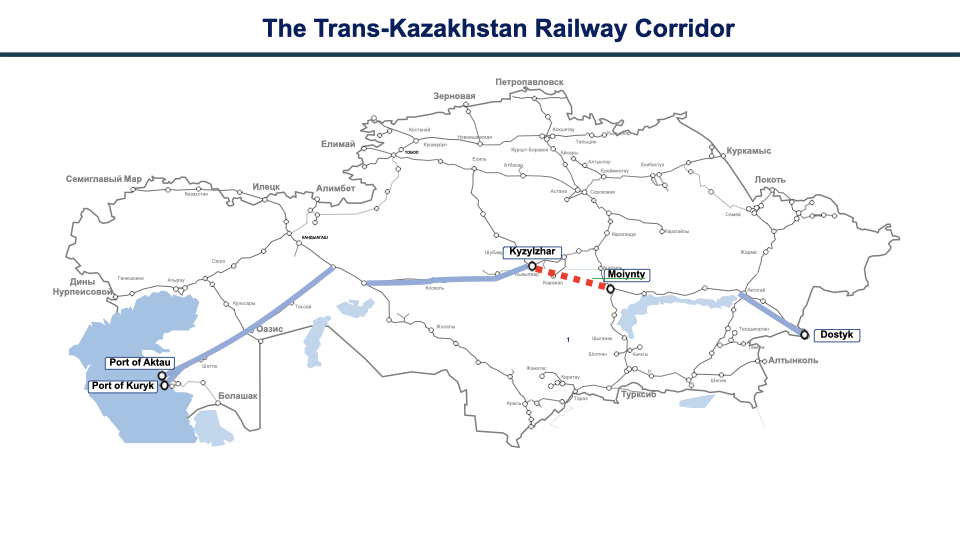
Kazakhstan is the largest landlocked country in the world, located at the strategic crossroads of Eurasian trade routes. This year, the country launched two major infrastructure projects: the Trans-Kazakhstan Railway Corridor and the construction of a new Center-West Highway, which will connect the capital, Astana, with Kazakhstan’s western regions. How the Center-West Highway will reshape Kazakhstan’s economy and logistics The Center-West Highway will link Astana to the country’s western territories, providing direct access to the Middle Corridor, also known as the Trans-Caspian International Transport Route (TITR). Passing through the towns of Arkalyk, Turgay, and Irgiz, the route will cut the distance to western Kazakhstan by more than 560 kilometers (about 350 miles). It is expected to improve interregional connectivity, stimulate socio-economic growth, increase the capacity of the transport network, and strengthen Kazakhstan’s role as a transit hub. Deputy Minister of Transport Maksat Kaliakparov told The Times of Central Asia that construction is still in its early stages. Repairs on the Astana-Korgalzhyn-Karazhar section are currently funded by the Development Bank of Kazakhstan, with completion planned for 2026. “The remaining sections are still in the design phase, and financing is being secured,” Kaliakparov said. “This year we plan to complete feasibility studies for unpaved sections, approve project documentation for the Arkalyk-Egindikol and Irgiz-Torgay stretches, and explore public-private partnerships to attract investment.” Beyond improving domestic transport links, the Center-West Highway is set to become a crucial part of the TITR, providing a shorter and more reliable route to Kazakhstan’s Caspian ports of Aktau and Kuryk. This will speed up transit, increase freight volumes, and reduce logistics costs for both domestic and international shippers. According to Kaliakparov, the project also includes modern roadside infrastructure: logistics hubs in Arkalyk and Irgiz, service stations, cafés, hotels, and an intelligent traffic monitoring and control system. “It is also important to introduce a number of innovative and environmentally friendly solutions, such as stormwater treatment facilities, energy-saving LED lighting, and the use of recycled materials. Environmental requirements will also be taken into account, including the preservation of animal migration routes using environmentally friendly solutions such as underground passages and eco-bridges,” emphasized Kaliakparov. However, despite its significant advantages, the project faces a number of challenges. The key ones among them are financing, complex terrain and geological conditions, seasonal limitations, and low population density along parts of the route, which affect its commercial viability. Kaliakparov added: “The road requires significant investment, especially for the construction of new sections, some of which pass through hard-to-reach areas. It is also necessary to take into account the short construction season in the northern and central regions of the country”. According to him, the highway is being designed with the local climate in mind. Kazakhstan’s continental weather patterns, sharp temperature fluctuations, steppe and semi-desert landscapes, hydrological studies, erosion prevention measures, and strict environmental compliance are taken into account. Once completed, the Center-West Highway is expected to increase freight traffic to 5–6 million tons per year, cut delivery times between central and western Kazakhstan by 30–40%,...


24 Central Eurasian Startups Join Silicon Valley Programs

This fall, 24 startups from Central Eurasia and other regions will join the AlchemistX and Silicon Valley Residency programs, set to begin on September 3. The selected teams will gain direct access to the U.S. venture ecosystem, top investors, and leading technology companies. In 2025, a total of 225 startups from 20 countries applied, but only 24 were selected. Of these, 10 teams from Kazakhstan and Uzbekistan were accepted into the AlchemistX program, while 14 others, representing Qatar, the U.S., Singapore, Georgia, and Mongolia, joined the Silicon Valley Residency. “AlchemistX & Silicon Valley Residency is a strategic corridor linking Central Eurasia with Silicon Valley,” said Kazakhstan’s Minister of Digital Development, Zhaslan Madiev. He highlighted the importance of tangible results, noting that in 2024, 22 participating startups generated $380,000 in revenue within four months and secured $1.4 million in funding. Over the course of the four-month program, participants will receive mentorship from venture partners, attend workshops on U.S. market entry, and pitch their startups to investors at Demo Day. Teams will also have the opportunity to register their companies in the U.S. and become part of the Silkroad Innovation Hub, Kazakhstan’s official innovation outpost in Silicon Valley. “Silkroad Innovation Hub was created as a bridge between Central Eurasia and Silicon Valley, and today we see this mission becoming a reality,” said Asset Abdualiyev, the hub’s founder. The programs are organized by Astana Hub in partnership with IT Park Uzbekistan, Silkroad Innovation Hub, and Alchemist Accelerator, with the support of the digital development ministries of Kazakhstan and Uzbekistan, as well as regional venture funds. The participation of Kazakh and Uzbek startups in Silicon Valley underscores Central Eurasia’s growing presence on the global tech stage and offers new pathways for integration into the international innovation economy. At the first Central Eurasia at Silicon Valley conference held in October 2024, industry leaders projected that the region could give rise to major global IT companies within the next 10 to 15 years. Organizers cite the region’s untapped potential: a population of over 100 million, an average age of 27, and around 200,000 STEM graduates each year. With a maturing startup ecosystem, active universities, growing venture capital networks, and an international presence in Silicon Valley, Central Eurasia is poised to become a new tech frontier.

Kazakhstan’s Automotive Industry Boosts Revenues by Over 50% in July

Kazakhstan’s automotive industry posted strong growth in July 2025, producing 11,700 vehicles valued at KZT 164.9 billion ($305.3 million), according to the Kazakhstan Automobile Union. This represents a 50.1% increase in production volume compared to July 2024. Data from the National Statistics Bureau shows that in July 2024, the country produced 7,800 vehicles worth KZT 100.9 billion ($186.8 million). Over the past year, the industry has not only expanded output but also significantly boosted revenue. From January to July 2025, Kazakhstan produced 83,200 vehicles valued at KZT 1.16 trillion ($21.4 billion), marking a 16.7% year-on-year increase. The automotive sector now accounts for 40.7% of the national engineering industry. Passenger cars led the growth, with 75,400 units produced, up 19% from the same period last year. Bus production also saw a 5.5% uptick, totaling more than 1,300 units. In contrast, truck output declined by 10.5% to 4,100 vehicles. Manufacturers also turned out 1,900 trailers and semi-trailers, along with 453 special-purpose vehicles. Regional Breakdown Kostanay remains the top manufacturing hub, producing 45,700 vehicles, a 6.9% increase, at Allur’s facilities. In Almaty, the Hyundai Trans Kazakhstan and Hyundai Trans Almaty plants reported a record 41.8% increase, assembling 31,200 vehicles. Production trends varied in other regions: Semey: Down 17.5% (2,400 units) Karaganda region (QazTehna): Up 28.1% Kokshetau (KAMAZ-Engineering): Up 34.6% Top Brands and Models The most produced brands from January to July were: Hyundai: 30,800 units Chevrolet: 16,500 Kia: 14,800 Jetour: 7,100 Jac: 5,600 Leading models included the Chevrolet Cobalt (13,600 units), Hyundai Tucson (11,900), Kia Sportage (nearly 7,000), Hyundai Elantra (4,900), and Hyundai Mufasa (4,600). Anar Makasheva, President of the Kazakhstani Automobile Union, credited the industry's progress to the expertise of more than 8,000 specialists: “The growth in production strengthens the position of the domestic automotive industry and opens up new opportunities for enterprises.” She also announced the upcoming launch of two new plants: the multi-brand Astana Motors Manufacturing Kazakhstan facility in Almaty and a new KIA production line in Kostanay. Together, these projects are expected to create over 5,000 jobs. As previously reported by The Times of Central Asia, Kazakhstan set a record for car sales in 2024. Domestic automotive production is projected to reach approximately 150,000 vehicles in 2025.

Kazakhstan Trials Ultra-Fast 10G Internet

Kazakhstan has launched a pilot project to test wired internet speeds of up to 10 Gbit/s in its capital, Astana. The initiative is part of a broader strategy to modernize the country's digital infrastructure and improve access to high-performance internet services.  First Technology Trial The pilot project is being implemented under a memorandum of cooperation between Huawei Technologies Kazakhstan and Astana Innovations JSC. During a recent presentation, participants were introduced to a new generation of networking equipment, including optical terminals, OLT systems, and Wi-Fi 7. In a designated demo zone, guests tested the service and confirmed its stability and high performance. Speed measurements during the trial showed data transfer rates reaching up to 9,490 Mbps, sufficient for uninterrupted use of bandwidth-intensive applications such as 8K video streaming and cloud gaming. Stakeholder Perspectives Gizat Amyrgaly, Chairman of the Board at Astana Innovations JSC, underscored the significance of the rollout: "The launch of 10G in Astana is a strategic step toward building a next-generation digital infrastructure. It is important for us that innovations quickly transition from testing to practical use, delivering tangible benefits to residents and businesses." Sun Yaxiu, CEO of Huawei Technologies Kazakhstan, also highlighted the project’s national relevance: “We are proud that Huawei's 10G PON technology is being introduced for the first time in an open, public project. Ultra-high-speed wired internet will open up new possibilities for the digital transformation of the urban environment, as well as for business, education, and healthcare.” Rauan Kabdrakhimov, CEO of Enterprise CO Beeline, stated the company’s intention to move swiftly from pilot testing to real-world deployment: “Our priority as a digital operator is to apply cutting-edge technology to deliver the best customer experience. We are pleased to be a technology partner in this important initiative.” What Is 10G PON? 10G PON refers to the next generation of wired broadband capable of speeds up to 10 gigabits per second. Unlike mobile technologies such as 4G or 5G, where the number represents a generational standard, the "10" in 10G PON denotes actual data speed. The idea for the pilot network was first discussed in June 2025 during the China-Central Asia Forum. At that time, the Astana City Administration and Huawei signed a cooperation agreement supporting the future deployment of 50G PON and other advanced telecom solutions in the capital.  Experts say the successful trial of this technology could pave the way for the widespread introduction of advanced digital services throughout Kazakhstan.

Splitting the Flow: How Central Asia Can Bypass Russia in Internet Connectivity

In today’s world, reliable mobile communications and internet access are indispensable, and Central Asia is no exception. Digital infrastructure has become a core component of development across the region. Yet, the architecture of internet connectivity in Central Asia has been shaped not only by global technological progress but also by the geopolitical upheavals of the early 2020s, a decade already recognized as historically transformative. Recent developments have renewed focus on this issue. On August 13, Kazakhstan officially joined over 100 countries utilizing Starlink’s satellite internet services, following a June 12, 2025, agreement that confirmed SpaceX's compliance with national laws. The Kazakh Ministry of Digital Development emphasized that Starlink offers stable connectivity “even in the most remote and inaccessible areas,” expanding access to digital services for underserved populations. While Starlink’s rates are higher than local norms, 23,000 KZT ($42.50) a month for home users and 26,000 KZT ($48) for mobile users, the launch signals a broader shift in Kazakhstan’s internet policy. For decades, the country maintained strict control over online access. As late as 2019, the authorities blocked social networks during live streams by exiled oligarch Mukhtar Ablyazov. The 2020 pandemic further exposed infrastructure gaps, with students in remote areas forced to climb rooftops and trees for mobile signals. These stark images, along with a gradual political thaw, likely spurred the momentum for reform. Another catalyst is the war in Ukraine. A recent report by the Internet Society highlights Kazakhstan’s efforts to reduce reliance on Russian internet infrastructure and enhance regional digital resilience. Central Asia’s landlocked geography means it depends heavily on terrestrial fiber optic cables connected to countries with undersea landing stations. Approximately 95% of Kazakhstan’s international internet traffic flows through Russia, posing strategic vulnerabilities amid heightened geopolitical tensions. To address this, Kazakhstan is investing in low Earth orbit (LEO) satellite systems and exploring alternative terrestrial fiber routes, including a long-discussed cable under the Caspian Sea connecting to Europe. As of January 2024, Kazakhstan had 18.2 million internet users, 92.3% of the population, with average fixed-line speeds of 53.86 Mbps, ranking 94th globally, according to Ookla’s Speedtest Index. Uzbekistan Follows Suit Uzbekistan, the region’s second-largest economy, is also seeking to diversify its digital dependencies. In March 2025, Tashkent signed agreements with the European Union on a satellite internet project and the “Connectivity for Central Asia” program, both aimed at extending access to remote communities and modernizing digital infrastructure. These initiatives are part of the EU’s Global Gateway strategy. “By investing in digital connectivity, we are bridging gaps, creating opportunities, and ensuring that Central Asia has access to the benefits of the digital economy,” said European Commissioner for International Partnerships, Jutta Urpilainen. As of early 2024, Uzbekistan had 34.2 million mobile subscribers and 29.5 million internet users, an 83.3% penetration rate. Basic fixed-line internet packages cost 55,000 UZS ($4.40) per month for 6 Mbps daytime speeds; premium plans offer 50 Mbps for about $8. As reported by The Times of Central Asia, Starlink is expected to launch in Uzbekistan in 2026....

Kazakhstan Ships Grain to Europe via Estonian Port

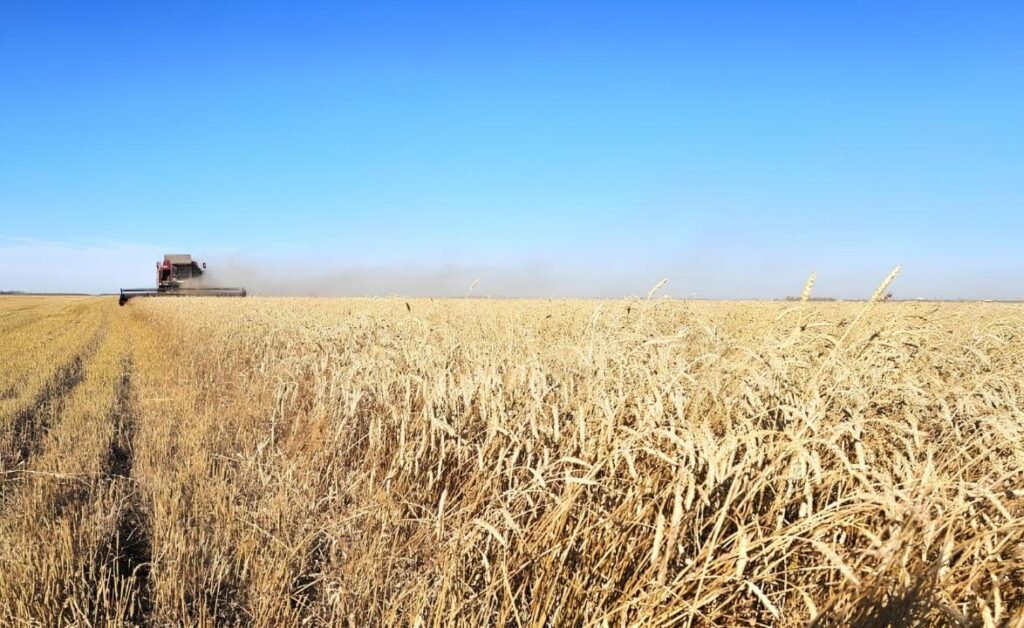
Kazakhstan is expanding its grain exports to European markets, with significant shipments routed through Estonia’s Muuga port. According to the Ministry of Agriculture, the Akmola region, the country’s top grain-producing area, exported 145,000 tons of wheat through Muuga during the first seven months of 2025. Of this volume, more than 110,000 tons were delivered to Italy, over 28,000 tons to Belgium, and approximately 6,500 tons to Estonia. The shipments followed a memorandum of cooperation signed in February 2025 between the Akmola regional administration and the Muuga Grain Terminal. A key milestone of Kazakhstan’s 2024-2025 export season has been the diversification of grain destinations. For the first time, Kazakh wheat was exported to Belgium, Poland, Portugal, Norway, and the United Kingdom. From September 2024 to August 10, 2025, Kazakhstan exported 9.8 million tons of wheat from the new harvest, a 55% increase compared to the same period in the 2023-2024 season. Uzbekistan, Tajikistan, Afghanistan, Kyrgyzstan, Iran, and Azerbaijan remain the country’s primary buyers. Including flour, Kazakhstan exported a total of 12.4 million tons of wheat grain between September 2024 and July 2025, marking a 34% rise from the 9.3 million tons exported during the same period in the previous season.