• KGS/USD = 0.01144 0%
  • KZT/USD = 0.00216 0%
  • TJS/USD = 0.10663 0%
  • UZS/USD = 0.00008 0%
  • TMT/USD = 0.28530 0%
  • KGS/USD = 0.01144 0%
  • KZT/USD = 0.00216 0%
  • TJS/USD = 0.10663 0%
  • UZS/USD = 0.00008 0%
  • TMT/USD = 0.28530 0%
  • KGS/USD = 0.01144 0%
  • KZT/USD = 0.00216 0%
  • TJS/USD = 0.10663 0%
  • UZS/USD = 0.00008 0%
  • TMT/USD = 0.28530 0%
  • KGS/USD = 0.01144 0%
  • KZT/USD = 0.00216 0%
  • TJS/USD = 0.10663 0%
  • UZS/USD = 0.00008 0%
  • TMT/USD = 0.28530 0%
  • KGS/USD = 0.01144 0%
  • KZT/USD = 0.00216 0%
  • TJS/USD = 0.10663 0%
  • UZS/USD = 0.00008 0%
  • TMT/USD = 0.28530 0%
  • KGS/USD = 0.01144 0%
  • KZT/USD = 0.00216 0%
  • TJS/USD = 0.10663 0%
  • UZS/USD = 0.00008 0%
  • TMT/USD = 0.28530 0%
  • KGS/USD = 0.01144 0%
  • KZT/USD = 0.00216 0%
  • TJS/USD = 0.10663 0%
  • UZS/USD = 0.00008 0%
  • TMT/USD = 0.28530 0%
  • KGS/USD = 0.01144 0%
  • KZT/USD = 0.00216 0%
  • TJS/USD = 0.10663 0%
  • UZS/USD = 0.00008 0%
  • TMT/USD = 0.28530 0%

Viewing results 541 - 546 of 2047

Kazakh Uranium to Power Czech Nuclear Plants

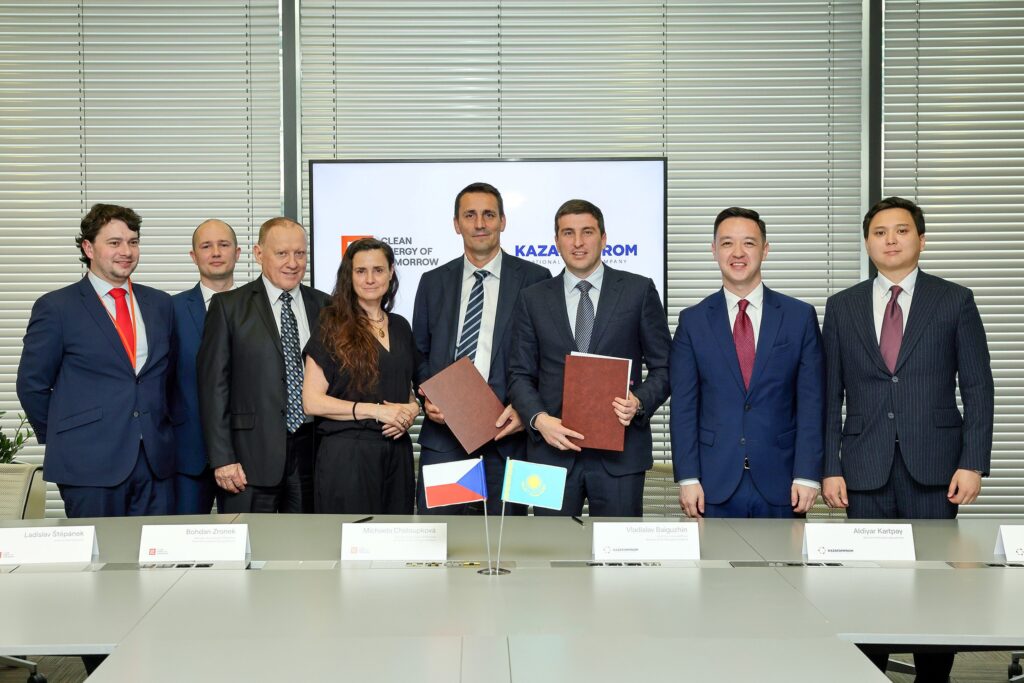
Kazakhstan’s National Atomic Company Kazatomprom has signed a contract with Czech energy giant ČEZ a.s. to supply natural uranium for the country’s nuclear power plants. The agreement marks a significant step in strengthening energy cooperation between Kazakhstan and the European Union. Expanding European Reach The contract, signed at ČEZ’s headquarters in Prague, represents a key milestone in the expansion of Kazatomprom’s uranium supply footprint in Europe. Under the seven-year deal, Kazakhstan will provide approximately one-third of the uranium needed for Westinghouse fuel assemblies used at the Temelín Nuclear Power Plant. Both parties emphasized the agreement’s importance for regional energy security and environmental sustainability. “With the signing of this agreement, Kazatomprom continues to expand its presence in Europe and strengthen its strategy to diversify its sales portfolio. This is another important milestone on our way to becoming the preferred partner for the global nuclear power industry,” said Vladislav Baiguzhin, Kazatomprom’s Chief Commercial Officer. Bogdan Zronek, head of ČEZ’s nuclear division, highlighted the strategic value of the partnership: “The partnership with Kazatomprom diversifies our supplier portfolio and is of strategic importance for ČEZ and the Czech Republic. It provides a stable and reliable source of fuel for our nuclear power plants.” ČEZ and the Czech Nuclear Sector ČEZ is Central Europe’s leading energy company, operating six nuclear reactors at the Temelín and Dukovany sites. Together, these facilities supply roughly 36% of the Czech Republic’s electricity. The company is actively advancing its VIZE 2030 decarbonization strategy, aiming to secure a stable, environmentally friendly energy future. Kazatomprom’s Global Standing Kazatomprom remains the world’s largest producer of natural uranium, accounting for about 21% of global primary production in 2024. All production is carried out in Kazakhstan using in-situ leaching, an environmentally safer extraction method. The company is certified under ISO 45001 and ISO 14001 standards. Kazatomprom exports uranium globally, with key markets in China, Southeast Asia, Europe, and North America. Deliveries are made via long-term contracts and the spot market, including through its Swiss-based subsidiary, Trading House KazakAtom. Ongoing International Partnerships The agreement with ČEZ builds on a strategic relationship initiated in 2016, when the two sides signed a memorandum to cooperate on nuclear fuel cycle projects, including exploration, mining, processing, reclamation, marketing, and technological innovation. In February 2025, Kazatomprom also signed its first-ever uranium supply contract with Switzerland’s Axpo Power AG and Kernkraftwerk Leibstadt AG for the Beznau and Leibstadt nuclear power plants. The latest deal further solidifies Kazatomprom’s position in Europe’s energy market and underscores the growing role of nuclear power in the region’s shift toward clean, sustainable energy sources.
Kazakhstan Expands Wheat Exports to North Africa

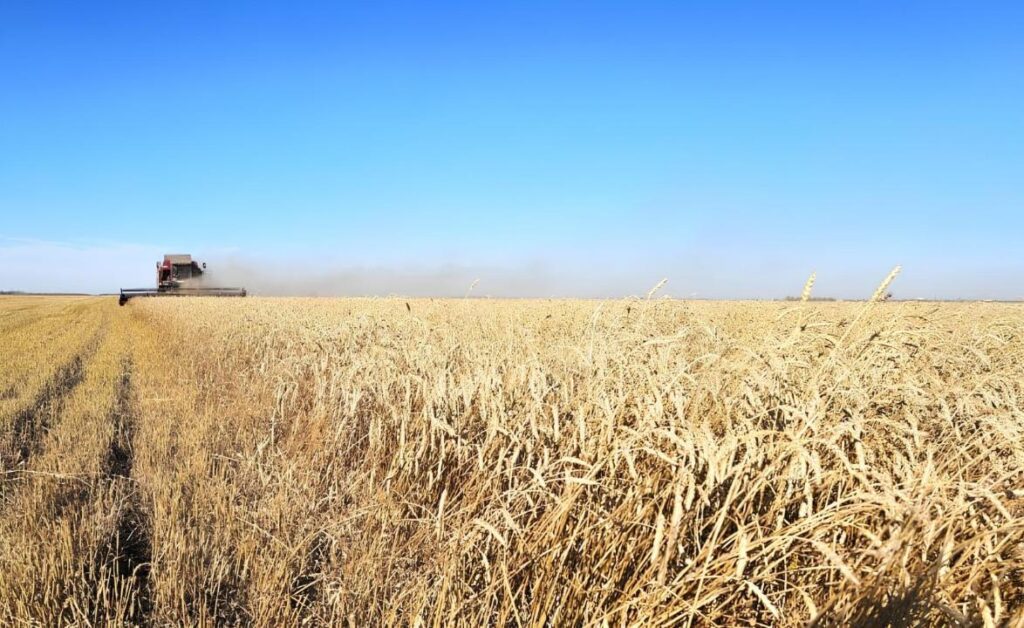
Kazakhstan, Central Asia’s leading grain producer, is broadening its export markets to include Africa. The national grain operator, Food Contract Corporation, has reached preliminary agreements to supply 300,000 tons of food wheat to Morocco and other North African countries by the end of the current marketing season, according to the Ministry of Agriculture​. More than 200,000 tons of wheat have already been contracted for shipment to African markets. The Corporation’s export strategy emphasizes market diversification, prioritizing the European Union, the Middle East and North Africa (MENA) region, Southeast Asia, and neighboring countries such as Afghanistan, Iran, Azerbaijan, Georgia, and Armenia. Kazakhstan’s traditional grain buyers include Central Asian states, China, and Turkey. To facilitate broader exports, the country is prepared to transport grain via the Azov, Black, and Baltic Sea ports. In 2024, Kazakhstan harvested 26.7 million tons of grain, its largest yield in 13 years, according to the Ministry of Agriculture. The country exported 8.1 million tons of grain last year, including between 6.5 and 7.5 million tons of wheat. For the 2025 season, Kazakhstan aims to export approximately 12 million tons of newly harvested grain. Efforts to secure new markets are ongoing, with negotiations focused on increasing agricultural exports to Azerbaijan, China, Iran, North Africa, and EU countries, as well as to Uzbekistan and Georgia, through access points at Black and Baltic Sea ports​.

Transit of Russian Gas to Uzbekistan Through Kazakhstan Continues to Grow

The volume of Russian natural gas transiting through Kazakhstan to Uzbekistan is on the rise, reflecting deepening regional energy cooperation. Kazakhstan’s Deputy Minister of Energy, Alibek Zhamauov, shared the update during a speech at the international Energy Trends forum, according to Interfax. Gas transit to Uzbekistan via Kazakhstan began in October 2023. In 2024, 5.6 billion cubic meters of Russian gas were delivered through Kazakhstan, surpassing earlier forecasts of 3.8 billion cubic meters. The volume is projected to increase to 7.3 billion cubic meters in 2025, with further plans to reach 11 billion cubic meters per year starting in 2026. The growing volumes highlight Kazakhstan’s emerging role as a vital transit hub for Central Asia. In 2023, the initial year of operation, 1.28 billion cubic meters of gas were transported along this route. Zhamauov stated that the project is part of a broader strategy to enhance regional energy security and develop cross-border gas infrastructure. Kazakhstan’s Ministry of Energy has committed to expanding and upgrading the country’s gas transportation network to accommodate long-term supply agreements with neighboring states. Uzbekistan’s Production Decline Raises Concerns The rising reliance on imported gas comes amid a continued decline in Uzbekistan’s domestic natural gas production. In the first two months of 2025, output fell by 4.2% compared to the same period in 2024. This trend follows a steep drop in production from 61.59 billion cubic meters in 2018 to 44.59 billion in 2024. The shrinking output has sparked concerns over Uzbekistan’s energy security and its broader economic implications. The country’s increasing dependence on regional gas flows highlights the strategic importance of projects like the Russia-Kazakhstan-Uzbekistan transit corridor.

Kazakhstan Plans 25% Gas Output Increase by 2030

Kazakhstan aims to significantly increase its natural gas production over the next five years, raising output from 59 billion cubic meters to 74 billion cubic meters by 2030. The announcement was made by Deputy Minister of Energy Alibek Zhamauov during the Energy Trends: Gas & Petrochemicals forum in Astana. Production Growth Driven by Major Fields and New Developments In 2023, Kazakhstan produced 59 billion cubic meters of gas, with output projected to rise to 62.8 billion cubic meters in 2024. This growth will be driven by ongoing production at the country’s largest fields, Tengiz, Karachaganak, and Kashagan, as well as the launch of new sources, including the Rozhkovskoye, Anabai, and Urikhtau fields. “Our goal is to increase gas production to 74 billion cubic meters by 2030,” Zhamauov stated. “But the key task is to process gas within the country as efficiently as possible to supply our citizens and industry, as well as to create a raw material base for gas chemistry.” Currently, over 85% of Kazakhstan’s gas production comes from the Tengiz (26%), Karachaganak (41%), and Kashagan (19%) projects. By the end of 2024, marketable gas output is expected to reach 28.7 billion cubic meters, including Tengiz (8.7 bcm), Karachaganak (7.5 bcm), Kashagan (4.7 bcm), Zhanazhol (3.3 bcm), and other fields (3.6 bcm). Of this, 21.2 billion cubic meters (79%) will be consumed domestically, while 5.6 billion cubic meters (21%) will be exported. Zhamauov noted that gas production will increase by 5.9 billion cubic meters, reaching 34.6 billion cubic meters by 2030, due to the introduction of new gas processing plants (GPPs). Two GPPs, with capacities of 1 billion and 2.5 billion cubic meters respectively, will be built at the Kashagan field. A 4 billion cubic meter facility will be developed at Karachaganak, while a plant in Zhanaozen will add another 900 million cubic meters per year. LNG Plant in Astana A liquefied natural gas (LNG) plant with a capacity of 75,000 tons per year is also planned for Astana. Chingiz Cherniyazdanov, director of the Kazakh Institute of Oil and Gas (KING), shared details of the project during the forum. “The Astana LNG complex will be located in the capital’s industrial zone,” Cherniyazdanov said. “We will build the first stage with a production capacity of 75,000 tons per year, as well as a hub for LNG storage. Commissioning is scheduled for 2027.” The plant will source feedstock from the Saryarka gas trunkline (Kyzylorda-Zhezkazgan-Temirtau-Astana). A storage facility will be constructed to balance seasonal fuel demand during colder months. KING also plans to use the LNG to launch a vehicle conversion service. Cherniyazdanov added that, following completion of the second string of the Beineu-Bozoi-Shymkent gas pipeline, which will double capacity from 15 to 30 billion cubic meters per year, the LNG plant could expand to a second stage, increasing production to 100,000 tons per year. The pipeline expansion will be carried out in two phases: from September 2025 to July 2027, and from August 2027 to January 2029. Expanded Gas Infrastructure and...

Trump’s Trade War Against China: Opportunities and Risks for Central Asia

Experts believe that Central Asian countries stand to gain from U.S. President Donald Trump’s renewed trade war with China, but the region also faces substantial risks. Kazakhstan Bears the Brunt On April 3, Trump signed an executive order imposing “reciprocal” customs duties on goods from dozens of countries. Kazakhstan faced the steepest tariff in Central Asia at 27%, while Kyrgyzstan, Uzbekistan, Tajikistan, and Turkmenistan each received a flat 10% rate. Kazakhstan’s Ministry of Trade explained that 92% of the country’s exports to the U.S., including crude oil, uranium, silver, and ferroalloys, were among the exempt categories listed in the order. As a result, only 4.8% of total exports to the U.S. would be affected. The government has announced its intent to hold consultations with Washington to avoid further tariffs. More broadly, global economic uncertainty tied to the trade war may cause further weakening of national currencies across Central Asia. Declining demand for oil could depress prices, posing a particular threat to Kazakhstan, where oil is a primary export. On April 9, Trump announced a 90-day freeze on additional tariffs, applying a temporary 10% duty for more than 75 countries, excluding China. Open Confrontation with Beijing In a sharp escalation, the U.S. raised tariffs on Chinese imports to 145%. Beijing retaliated with 125% tariffs on U.S. goods, effectively halting trade. As the Chinese government noted, duties at this level “no longer make economic sense.” On April 13, Trump, responding to pressure from the U.S. business community, reversed duties on processors, computers, smartphones, and electronics. According to Morgan Stanley, 87% of iPhones are made in China, and production of the upcoming iPhone 17 will also be based there. Additionally, four out of five iPads and 60% of Macs are manufactured in China. Meanwhile, Chinese President Xi Jinping has urged European nations to resist what he described as Trump's erratic trade policies. Central Asia: Strategic Position, Mixed Prospects With Chinese goods effectively shut out of the U.S. market, Beijing is likely to turn to alternative trade routes. While Southeast Asian nations such as Vietnam and Malaysia benefitted during the 2018-2019 trade war, this time Trump has also targeted some of them with tariffs, fearing rerouted exports. China’s growing pivot toward Eurasia places the Central Asian countries at a critical transit junction. Their strategic position on land routes to Europe offers untapped potential for trade reorientation. Kyrgyzstan, in particular, has served as a conduit for Chinese goods, with Chinese-manufactured items re-labeled as Kyrgyz products before entering markets across the CIS. This practice, noted as early as 2015, primarily catered to Russia but also extended to Kazakhstan. More recent findings indicate that illegal Chinese imports into Central Asia may total billions of dollars. The existing smuggling infrastructure could be formalized and scaled, facilitating increased regional trade. Long-term benefits could include heightened cargo traffic through Kazakhstan, Uzbekistan, and Kyrgyzstan, sparking Chinese investment in logistics infrastructure and creating jobs in transport. Risks of Overreliance The trade conflict may also incentivize some Chinese manufacturers to relocate assembly operations...

President Tokayev: Kazakhstan Prepared for Global Market Turbulence

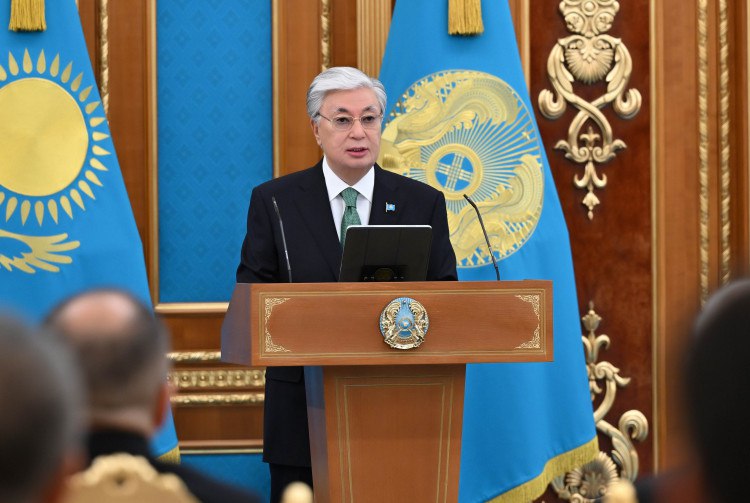
Kazakh President Kassym-Jomart Tokayev has stated that Kazakhstan is prepared to confront the consequences of what he described as one of the most severe global economic crises in recent decades. Speaking at a meeting with the country’s scientific community, Tokayev emphasized that while the international environment is turbulent, there is no reason for panic, noting that Kazakhstan has prior experience in navigating such challenges. “Due to the onset of a ‘tariff war of all against all,’ we are witnessing the breakdown of production and trade chains, the collapse of markets, and heightened volatility in raw material prices. These developments will inevitably affect all nations, including Kazakhstan,” Tokayev warned. Despite these external shocks, he assured that the country will stay the course on its development agenda. All priority infrastructure projects, he confirmed, will continue to receive full financing and will be implemented as planned. In light of growing global uncertainty, Tokayev underlined the fierce competition for investment that lies ahead. “We need to be in very good shape. We must be ready for all scenarios. We must act pragmatically and confidently. Crises are beneficial in that they reveal the presence or absence of managerial talent and give rise to new opportunities,” the president stated. A day earlier, Tokayev had convened a meeting with key figures from the government’s economic and financial sectors to assess the situation following a steep decline in global prices for energy resources and essential commodities. As previously reported by The Times of Central Asia, Kazakhstan’s economy has recently received a temporary boost thanks to increased demand and rising prices for several key exports. This trend followed the U.S. suspension of additional tariffs on various countries, including Kazakhstan.