• KGS/USD = 0.01143 0%
  • KZT/USD = 0.00205 0%
  • TJS/USD = 0.10433 0.1%
  • UZS/USD = 0.00008 0%
  • TMT/USD = 0.28577 0%
  • KGS/USD = 0.01143 0%
  • KZT/USD = 0.00205 0%
  • TJS/USD = 0.10433 0.1%
  • UZS/USD = 0.00008 0%
  • TMT/USD = 0.28577 0%
  • KGS/USD = 0.01143 0%
  • KZT/USD = 0.00205 0%
  • TJS/USD = 0.10433 0.1%
  • UZS/USD = 0.00008 0%
  • TMT/USD = 0.28577 0%
  • KGS/USD = 0.01143 0%
  • KZT/USD = 0.00205 0%
  • TJS/USD = 0.10433 0.1%
  • UZS/USD = 0.00008 0%
  • TMT/USD = 0.28577 0%
  • KGS/USD = 0.01143 0%
  • KZT/USD = 0.00205 0%
  • TJS/USD = 0.10433 0.1%
  • UZS/USD = 0.00008 0%
  • TMT/USD = 0.28577 0%
  • KGS/USD = 0.01143 0%
  • KZT/USD = 0.00205 0%
  • TJS/USD = 0.10433 0.1%
  • UZS/USD = 0.00008 0%
  • TMT/USD = 0.28577 0%
  • KGS/USD = 0.01143 0%
  • KZT/USD = 0.00205 0%
  • TJS/USD = 0.10433 0.1%
  • UZS/USD = 0.00008 0%
  • TMT/USD = 0.28577 0%
  • KGS/USD = 0.01143 0%
  • KZT/USD = 0.00205 0%
  • TJS/USD = 0.10433 0.1%
  • UZS/USD = 0.00008 0%
  • TMT/USD = 0.28577 0%

Viewing results 853 - 858 of 1911

France to Help Kazakhstan Preserve Lake Balkhash

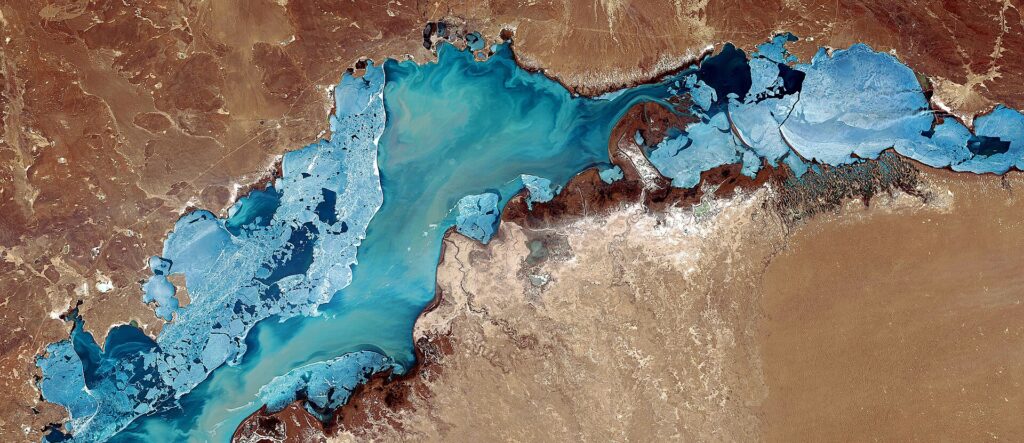
Kazakhstan’s Ministry of Water Resources and Irrigation, the French Development Agency (AFD), and the French Geological Survey (BRGM, Bureau de Recherches Géologiques et Minières) have signed a cooperation agreement to preserve Lake Balkhash. The agreement was formalized on December 4 at the One Water Summit in Saudi Arabia, attended by Kazakhstan President Kassym-Jomart Tokayev and French President Emmanuel Macron. Located 175 miles northwest of Almaty, Kazakhstan’s largest city, Lake Balkhash is the world’s fifteenth-largest lake. Under the agreement, the French side will allocate a grant of 1.35 million €uros to Kazakhstan’s Ministry of Water Resources and Irrigation to develop sustainable water management for the lake. The project includes a comprehensive study of the Lake Balkhash basin to create a long-term preservation plan through 2040. Minister of Water Resources and Irrigation, Nurzhan Nurzhigitov explained, "The trilateral agreement with AFD and BRGM is aimed at studying and sustainably managing water in the Lake Balkhash basin. The document provides for measuring and analyzing the state of water, modeling climate and anthropogenic influences, and forecasting the water balance until 2040. One of the goals of the project is to optimize the operating mode of the Kapchagay Reservoir to stabilize the level of Lake Balkhash. Based on the results of the study, measures will be taken to clean the rivers [feeding Balkhash], prevent soil degradation and water pollution, develop fisheries and ecotourism, and create a regulatory framework for the protection of the lake." At the summit, Kazakhstan’s Special Representative for International Environmental Cooperation, Zulfiya Suleimenova, announced that Kazakhmys Corporation, one of the country’s leading private companies, will contribute $5 million to preserve the ecosystem of Lake Balkhash and adjacent wetlands. In November, The Times of Central Asia reported that 13.5 billion cubic meters of water had been sent to Lake Balkhash via the Ili River from the Kapchagay Reservoir in 2024, raising the lake’s average water level to 341.6 meters above sea level. The Ili River, which originates in China, provides about 70% of Lake Balkhash’s water. Earlier in May, reports indicated that Balkhash’s water level had risen by 23 centimeters since the start of the year, largely due to increased rainfall and snow-melt floods during spring. Additionally, Kazakhstan and China have begun negotiations on the joint management of trans-boundary rivers, including the Ili. As previously reported by The Times of Central Asia, a key focus for Kazakhstan in these talks is to maintain optimal water levels in Lake Balkhash.
Trump’s Bid for Ukraine-Russia Peace: Could Kazakhstan Be the Key Mediator?

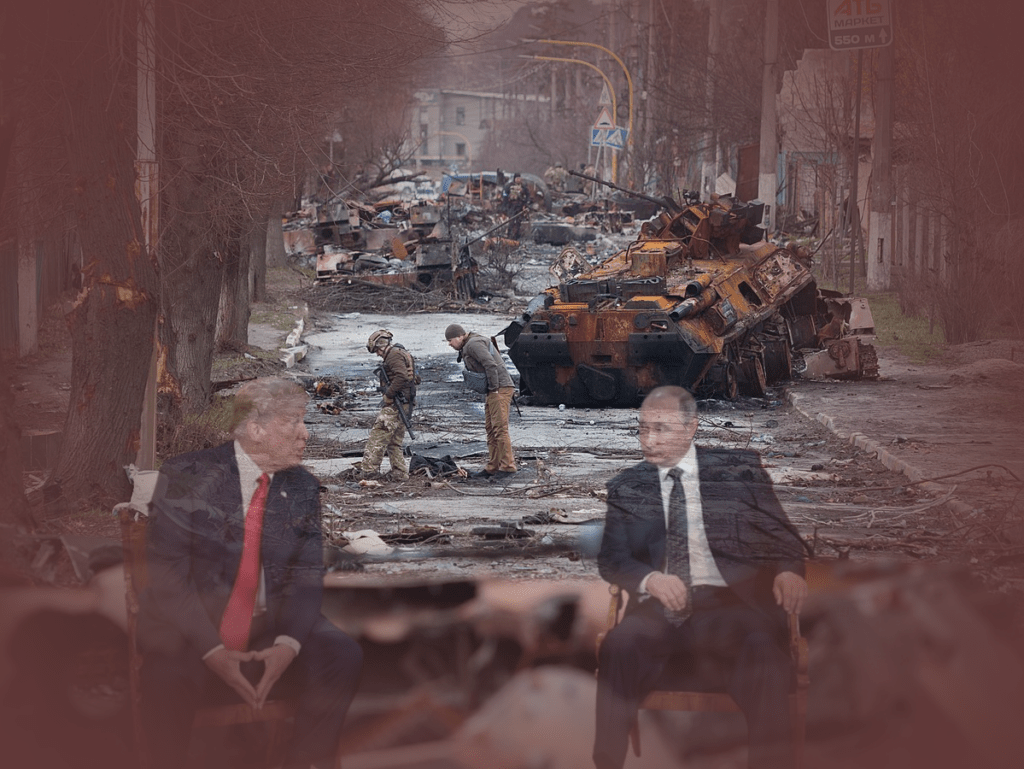
One of the anticipated top priorities of Donald Trump’s presidency is ending Russia's war in Ukraine while normalizing relations with Moscow. Writing on his Truth Social channel, Trump stated that, “Together, we will secure PEACE THROUGH STRENGTH, and Make America, and the World, SAFE AGAIN!” Trump’s nominee to serve as Special Envoy for Ukraine and Russia, 80-year-old former national security advisor, General Keith Kellogg, laid out his plan in writing for the America First policy institute, whilst focusing on characterizing the war “an avoidable crisis that, due to the Biden Administration’s incompetent policies [which] has entangled America in an endless war.” There are fears, however, that Kellogg’s proposal to reach a ceasefire by freezing the frontlines and forcing both sides the negotiating table will lead to a tumultuously violent period as Moscow seeks to swallow up territory. Meanwhile, NATO’s new secretary-general, Mark Rutte, has warned that compelling Ukraine into a “bad peace” would pose a “dire threat” to the U.S. itself. Whilst the framework for bringing a pause to hostilities is becoming clearer, it appears that Trump (or his representative) will need to meet with Vladimir Putin, and Kazakhstan has emerged as a potential venue for this high-stakes meeting. Kazakhstan's Role as Mediator Russian political analyst, Arkady Dubnov, has argued that Putin’s recent state visit to Astana may be an indication that Kazakhstan could play a pivotal role, and that given Putin’s limited travel options due to the International Criminal Court’s arrest warrant against him, Kazakhstan, with its reputation for diplomacy, would be a logical choice. “Putin is essentially restricted from visiting most of the Western Hemisphere,” Dubnov explained. “This leaves the Eurasian East, and among its cities, Astana stands out. Kazakhstan has hosted OSCE and CICA summits, mediated in the Syrian conflict, and facilitated peace talks over the future of the South Caucasus.” Dubnov sees Putin’s visit to Astana as indirectly tied to a possible meeting with Trump. “The Kremlin trusts Kazakhstan as an ally while respecting its constructive relations with the U.S. and the broader West,” he stated. Kazakhstan has long been recognized as a neutral ground where East and West can find commonality. The Astana process on Syria, initiated in 2017, helped prevent the escalation of hostilities for years, whilst Kazakhstan has mediated in other long-standing disputes, such as the conflict between Armenian and Azerbaijan. Given this history, it is conceivable that a reconciliation process between Russia and Ukraine could start in Astana. Neither the Minsk agreements of 2014, nor discussions in Istanbul in 2022 achieved lasting peace, but Kazakhstan’s diplomatic efforts could provide fresh impetus. Early Peace Efforts In March 2022, Kazakh President Kassym-Jomart Tokayev spoke with Ukrainian President Volodymyr Zelensky, emphasized the urgency of negotiations to bring a halt to hostilities, a stance that has since gained momentum as the war drags on. By 2024, the validity of Tokayev’s view — that negotiations are the only viable path to end the bloodshed — has become increasingly apparent. Kazakhstan’s diplomatic corps has actively pushed for peace....

Russia’s Strategic Posturing and Putin’s November Visit to Kazakhstan

On November 27, 2024, Russian President Vladimir Putin’s state visit to Kazakhstan underscored the complex geopolitical and security challenges facing the region. Hosted by Kazakh President Kassym-Jomart Tokayev in Astana, the visit took place amidst heightened tensions following Russia’s deployment of its Oreshnik hypersonic missile in Ukraine on November 21. This escalation has reshaped the regional security environment, compelling Kazakhstan to confront potential spillover effects of the Ukraine conflict. Energy remained a central focus during the visit. Kazakhstan remains heavily reliant on oil exports through the pipeline of the Caspian Pipeline Consortium (CPC), which passes through southern Russia. This cooperation benefits Kazakhstan economically but, by tying Kazakhstan further into Russian energy networks, it further complicates Astana's efforts to balance relations with Moscow and Western powers. Following periodic closures of the CPC route on various pretexts, Kazakhstan has resolved to diversify its energy export strategy. It has increased shipments by barge across the Caspian Sea to enter the Baku-Tbilisi-Ceyhan (BTC) pipeline, which terminates on Turkey's coast in the eastern Mediterranean. One should not be surprised if ideas about the old Trans-Caspian Oil Pipeline (TCOP) project are taken out of deep storage for reanimation. The TCOP is an undersea link first discussed in the late 2000s between then-Presidents Nursultan Nazarbayev of Kazakhstan and Nicolas Sarkozy of France. It was shelved at the time because it did not seem geoeconomically necessary. Since then, relations between Russia and Kazakhstan have been complicated by the periodic CPC closures that, although they are given technical justification, appear politically motivated by Moscow to squeeze Astana. Kazakhstan's short-term solution, to increase oil shipments by barge across the Caspian Sea to Baku for insertion into the BTC pipeline, simply cannot attain the volumes necessary to provide a strategic alternative to the CPC. The BTC, at present, would be able to accommodate whatever volumes Kazakhstan would be able to transit to Azerbaijan including via a prospective TCOP, for export to world markets from Ceyhan. One would suppose that bilateral discussions also covered the possible participation of Rosatom in the construction and operation of Kazakhstan’s first nuclear power plant (NPP). However, no mention of this topic was made in public statements. Kazakhstan would prefer to escape the vise-like pressure between Russia and China on this matter. That is why Tokayev has discussed participation by the French firms Orano and EDF with France's President Emmanuel Macron. It has recently been suggested that it would be technically feasible for Kazakhstan to find a group of Western companies capable of executing the project. A Western consortium would have no reason to hesitate to include Kazatomprom in an appropriate role, not excluding capacity-building. The Russia-only and China-only options for the NPP's construction would be less welcoming to such a possibility. Kazakhstan's leadership has become properly sensitive to how energy partnerships are not just economic decisions, but strategic calculations in Central Asia's volatile geopolitical landscape. Indeed, Russia’s use of the Oreshnik missile against Ukraine has created an entirely new security situation. It has raised concerns that...

Kazakh Deputy PM Zhumangarin: Our Industries Come Before Sanctions

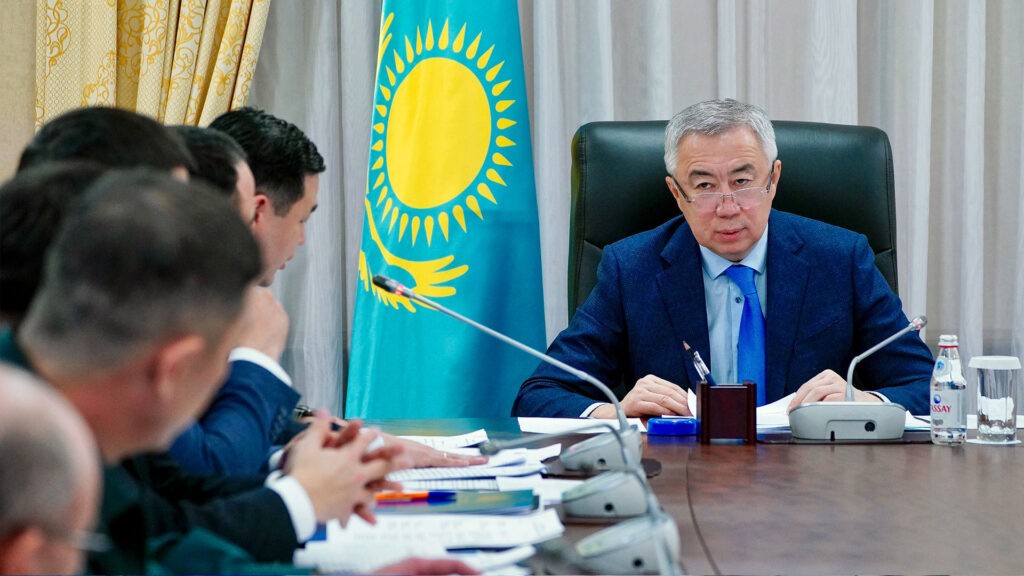
Kazakhstan has clarified its position on sanctions against Russia imposed as a result of Russia's invasion of Ukraine. Primarily, Kazakhstan will not support measures that could negatively impact its economy. Speaking to Russian state media outlet Tass, Deputy Prime Minister Serik Zhumangarin underscored that Kazakhstan will not act as a conduit for circumventing sanctions, as doing so could severely affect its domestic industries. However, he emphasized the nation's commitment to safeguarding its economic interests, particularly in sectors where products might fall under sanction restrictions. “We have explicitly stated that we will not impose restrictions on these goods, as behind them are large labor collectives and enterprises, often located in single-industry towns,” Zhumangarin explained. During Russian President Vladimir Putin's visit to Kazakhstan on November 27-28, he met with Kazakh President Kassym-Jomart Tokayev. The leaders issued a joint statement condemning unilateral sanctions, citing their detrimental effects on global trade, economic cooperation, and sustainable development. They reaffirmed their commitment to principles of open and non-discriminatory international trade. By maintaining a neutral stance on sanctions, Kazakhstan seeks to minimize economic risks while prioritizing the interests of its workforce and industries. As The Times of Central Asia previously reported, Kazakhstan’s Ambassador to Russia, Dauren Abayev, noted that Kazakh companies aim to avoid secondary sanctions but will continue fostering close cooperation with Russia. In an August interview with Bloomberg, Zhumangarin reiterated that Kazakhstan would not blindly adhere to sanctions against Russia but would consider international restrictions. He highlighted that while Kazakhstan aims to protect its companies from trade bans, it cannot completely disregard sanctions due to the risk of economic isolation. Furthermore, Kazakhstan's Minister of National Economy, Nurlan Baibazarov, addressed concerns in early November regarding including Kazakh companies on UK sanctions lists. He emphasized that these cases mostly involved transient firms, asserting that Kazakhstan continues to comply with international regulations.

Kazakhstan Seeks to Stabilize Currency as Tenge Hits Record Low

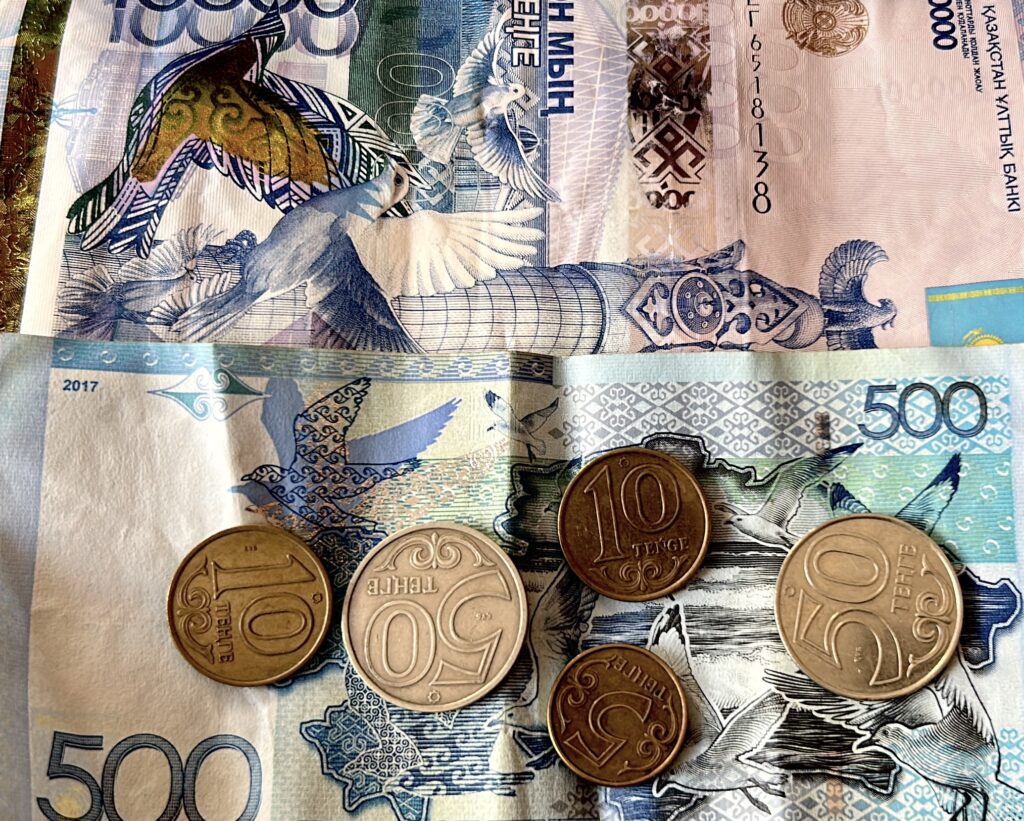
Kazakhstan’s central bank said Monday that it has spent more than $1 billion in foreign exchange interventions since mid-November in an effort to stabilize the declining currency, which has passed the threshold of 500 tenge to the U.S. dollar and hit record lows. Kazakh officials attribute the drop to the global appreciation of the dollar, a decrease in oil prices, the tumbling Russian ruble and other factors.  The National Bank said it expects to spend another $800 million or $900 million in foreign currency sales in December to cover transfers from the National Fund to the state budget. It also noted that the government on Nov. 19 reinstated a requirement that “quasi-government entities” sell 50% of foreign currency revenue as a measure to balance the FX market.  “On the domestic FX market, there was an increase in demand for foreign currency from economic agents and a limited supply, partly due to the exchange rate surpassing a psychological threshold,” said the bank, referring to the 500 tenge to the dollar barrier.  “Amid the deterioration of several fundamental factors, to prevent destabilizing fluctuations, smooth excessive volatility in the tenge exchange rate, and ensure the supply of foreign currency, the National Bank conducted foreign exchange interventions from November 15 to November 28. The total volume of currency sales for the month amounted to USD 1,047 million,” it said.  The tenge fell to a record low of 520 to the dollar on Monday, according to financial news reports. The Bloomberg news agency said the currency went as low as 530 to the dollar on Monday afternoon, amounting to a loss of more than 13% for the year so far. A significant factor affecting the tenge is the fall in the value of the ruble, which took another hit last month after new Western sanctions were imposed on Gazprombank, a Russian state-owned bank that handles energy transactions.   Kazakhstan and Russia are major trading partners. On a visit to Kazakhstan last week, Russian President Vladimir Putin highlighted growing trade between the two countries and said: “Payments were and still are a problem, but we now have over 80 percent of payments made in national currencies, which, of course, makes our work in the financial sphere easier.” Russia accounts for almost 20% of Kazakhstan's foreign trade, according to Kazakh President Kassym-Jomart Tokayev. He said last week that Kazakhstan remains a partner of Russia during this “difficult” time, possibly a reference to geopolitical tensions and economic challenges related to Russia’s war in Ukraine.   On Monday, Nurlan Baibazarov, Kazakhstan’s deputy prime minister and minister of the national economy, appealed for calm, said finances are stable and that Kazakhstan had weathered similar exchange rate fluctuations at the beginning of the war in early 2022, according to the Orda.kz news site.  

Choking on Smog: Kazakhstan’s Ust-Kamenogorsk forced to suspend in-person schooling amid rising air pollution

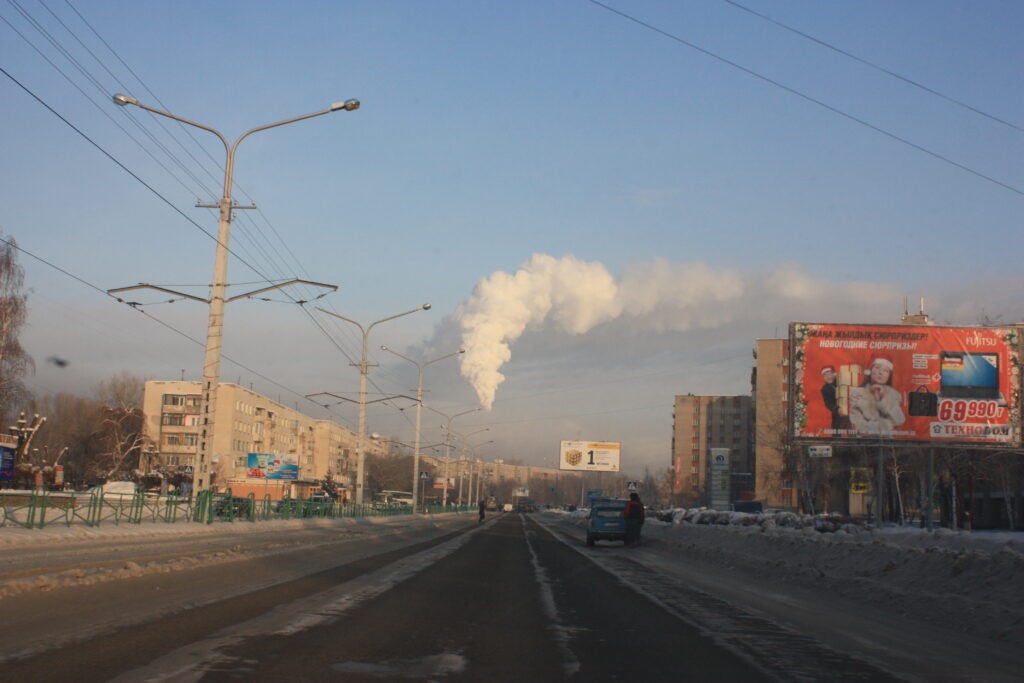
The city of Ust-Kamenogorsk in eastern Kazakhstan has once again found itself at the center of an environmental scandal, with polluted air and unfavorable weather conditions causing deteriorating health among its citizens and forcing schoolchildren to move to distance learning. Smog in the city: complaints and consequences In the last week of November, unfavorable weather conditions hit Ust-Kamenogorsk, aggravating the problem of air pollution. Citizens complained of worsening health: headaches, nausea, vomiting, coughing, and fever. Children, who have to breathe polluted air on their way to school, are particularly affected. Parents have repeatedly expressed their outrage, demanding action. In response to the latest complaints, the authorities transitioned some 53,000 of the city's schoolchildren to distance learning on November 28-29. This marked the first time in the city's history that education was suspended due to the environmental situation. Weather forecasters say that the unfavorable weather conditions will continue until at least the end of November. This means that Ust-Kamenogorsk residents will continue to suffer from smog, and children will probably remain in distance learning. Environmentalists weigh in Azamat Tauyrbekov, head of the Department of Ecology for the East Kazakh region, said that environmental agencies are working hard these days, conducting air measurements throughout the city. However, inspections of enterprises are complicated by bureaucratic procedures: access to production facilities requires an official application with evidence of violation. On November 28, joint inspections took place at two large enterprises in the region: Kazzinc and an oil extraction plant. So far, the results of the inspections have not been published, but activists and citizens continue to insist on the need for more transparent controls over emissions. Citizen frustration boils over Residents of Ust-Kamenogorsk are discussing the air pollution situation on social networks, sharing their complaints and worries. In comments on the Instagram platform one can see messages such as: - "It is impossible to breathe, even at home." - "My head hurts, I feel weak, feverish, have a sore throat, watery eyes, stuffy nose." - "How is it possible to poison almost 400,000 people? We pay taxes to be destroyed?" - "There is a taste of metal and acid in my mouth." Despite the fact that the problem has become a reason for creating memes and jokes about smog, reactions such as these reveal the deep dissatisfaction and anxiety of the city's residents. People are starting to openly demand that authorities strengthen control over emissions from enterprises and take real measures to improve the environmental situation in the city.