• KGS/USD = 0.01144 0%
  • KZT/USD = 0.00212 0%
  • TJS/USD = 0.10456 0%
  • UZS/USD = 0.00008 0%
  • TMT/USD = 0.28490 0%
  • KGS/USD = 0.01144 0%
  • KZT/USD = 0.00212 0%
  • TJS/USD = 0.10456 0%
  • UZS/USD = 0.00008 0%
  • TMT/USD = 0.28490 0%
  • KGS/USD = 0.01144 0%
  • KZT/USD = 0.00212 0%
  • TJS/USD = 0.10456 0%
  • UZS/USD = 0.00008 0%
  • TMT/USD = 0.28490 0%
  • KGS/USD = 0.01144 0%
  • KZT/USD = 0.00212 0%
  • TJS/USD = 0.10456 0%
  • UZS/USD = 0.00008 0%
  • TMT/USD = 0.28490 0%
  • KGS/USD = 0.01144 0%
  • KZT/USD = 0.00212 0%
  • TJS/USD = 0.10456 0%
  • UZS/USD = 0.00008 0%
  • TMT/USD = 0.28490 0%
  • KGS/USD = 0.01144 0%
  • KZT/USD = 0.00212 0%
  • TJS/USD = 0.10456 0%
  • UZS/USD = 0.00008 0%
  • TMT/USD = 0.28490 0%
  • KGS/USD = 0.01144 0%
  • KZT/USD = 0.00212 0%
  • TJS/USD = 0.10456 0%
  • UZS/USD = 0.00008 0%
  • TMT/USD = 0.28490 0%
  • KGS/USD = 0.01144 0%
  • KZT/USD = 0.00212 0%
  • TJS/USD = 0.10456 0%
  • UZS/USD = 0.00008 0%
  • TMT/USD = 0.28490 0%

Viewing results 505 - 510 of 2007

Latest Baikonur Launch Pays Tribute to 1975 Apollo-Soyuz Mission

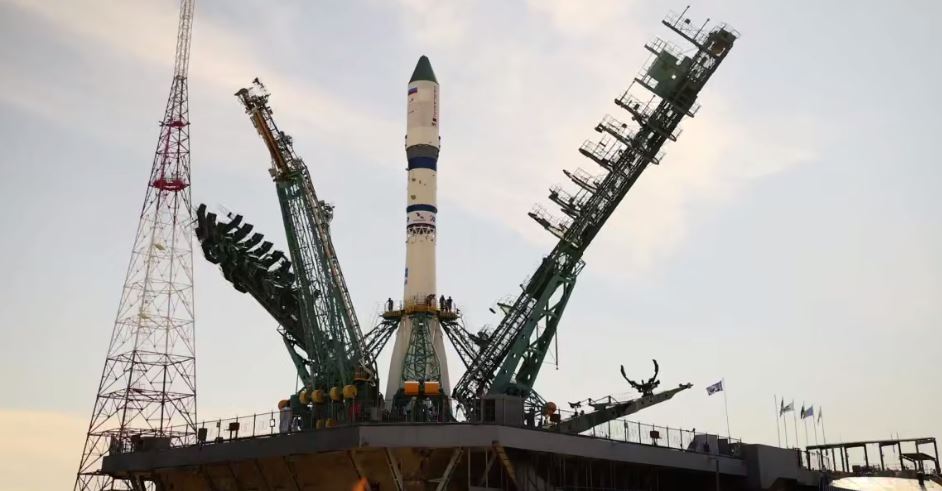
In July 1975, millions of people watched on television as a U.S. Apollo spacecraft docked with a Soviet Soyuz capsule in a crewed mission in orbit that symbolized collaboration between the two superpowers at the height of Cold War enmity. That remarkable moment 50 years ago is being commemorated on a Soyuz rocket carrying a Russian cargo spacecraft that launched from the Baikonur Cosmodrome in Kazakhstan – early on Friday, Baikonur time - and is scheduled to reach the International Space Station after a two-day trip. The spacecraft is loaded with more than 2.5 tons of fuel, drinking water, food, medicine, science equipment, and other supplies for the crew on the station. The Soyuz rocket currently heading to the ISS is painted white and blue and has an emblem marking the anniversary of the Soyuz-Apollo docking, which was the first international space mission. It had begun on July 15, 1975, when two Soviet cosmonauts launched from Baikonur and, hours later, three American astronauts blasted off from Cape Canaveral, Florida. The Russians and the Americans connected in space two days later, shaking hands, exchanging gifts, and sharing a meal. The show of comity in space contrasted with the intense competition between the two global rivals that was known as the “space race,” which included the Soviet launch of the Sputnik satellite into orbit in 1957 and the Apollo 11 landing of American astronauts on the moon in 1969. “I really believe that we were sort of an example … to the countries. We were a little of a spark or a foot in the door that started better communications,” Apollo astronaut Vance Brand had said, according to a NASA account of the Apollo-Soyuz mission. Tensions between Russia and the United States escalated after Moscow launched a large-scale invasion of Ukraine in 2022, though relations improved after U.S. President Donald Trump took office for a second term in January. The U.S. and Russian space agencies have continued to collaborate over the course of the protracted war. Roscosmos, the Russian space agency, refers to the cargo spacecraft currently in orbit as Progress MS-31, while the U.S. agency NASA uses the term Progress 92 because it’s the 92nd Russian resupply craft to launch in support of the International Space Station since its construction began in 1998. The Apollo-Soyuz mission has been described as a precursor of the ISS project.


How Can Britain Benefit From the Middle Corridor?

On July 2nd, a roundtable held at the House of Lords, the upper chamber of the British parliament, brought together diplomats, trade envoys, logistics professionals, and academics to promote the Middle Corridor – the overland route connecting China to Europe via Kazakhstan, the Caspian Sea, Azerbaijan, Georgia, and Turkey. The session aimed to highlight the strategic and economic case for British involvement in the corridor. However, in a crowded political landscape, the pitch struggled to gain airtime. On the same day, British economic minister Rachel Reeves shed tears in parliament’s lower chamber, sparking fears of political instability, and, a few miles away, the Wimbledon tennis season had just begun. In short, Westminster and the British media were elsewhere. Nonetheless, speakers made their case for the corridor’s importance to China-Europe freight. The Middle Corridor has gained attention as an alternative to the Northern Corridor – a rail network that runs from China through Kazakhstan, Russia, and Belarus, all members of the Eurasian Economic Union (a shared customs zone). The Northern route could, in theory, deliver goods from China to Europe in as little as ten days. But its viability has been damaged by Russia’s invasion of Ukraine and the sanctions regime that followed. Since then, cargo traffic along the Middle Corridor has surged. “Before the war in Ukraine, 99% of goods travelled along the northern corridor, and just 1% along the Middle Corridor,” said Dr Chris Brooks, Global Director of Risk, Quality and Compliance at Bertling Logistics. “Now it’s about 90% along the Middle Corridor.” In raw numbers, the increase has been stark. Back in 2021, cargo volume transported through the Middle Corridor was around 800,000 tonnes; that stood at 4.5 million tonnes at the end of 2024. “It is never going to be an alternative to the maritime route,” Brooks said, estimating that even with major investment, capacity would top out at around 16,000 tonnes per month, which is dwarfed by maritime trade between China and Europe, which totals around 800,000 tonnes a month. However, he did call the route a “strategic insurance policy,” citing its neutrality, flexibility, and compliance with Western sanctions. For automotive, electric, and fast-moving consumer goods (FMCG) with short shelf lives, the route will prove particularly useful. “Whether you're going through the Red Sea or around the Cape of Good Hope, maritime typically takes anything between 35 and 52 days. The Northern Russian corridor is 10 to 20 days. The Middle Corridor can actually do similar.” But Brooks added that infrastructure and the weather remain limiting factors, meaning that lead times are anything between 14 and 45 days, with some shipments taking up to two months. “We have as many as 400 trucks queuing up… not because of customs – they’re just queuing to get onto the ferry from Baku to Kazakhstan… Drivers are waiting anything from one week to one month,” he said, adding his concerns that the corridor also has limited capacity to move large cargo. [caption id="attachment_33653" align="aligncenter" width="960"] Image: middlecorridor.com[/caption] Many speakers...

Kazakhstan Confronts Major Data Leak in High-Stakes Security Crackdown

A detective thriller worthy of a Hollywood script is quietly playing out in the daily lives of Kazakhstani citizens, one with implications for nearly every household. At its core lies the largest leak of personal data in Kazakhstan’s history, unfolding across Almaty and Astana. The incident touches on something deeply personal: data that could be weaponized by fraudsters for illicit gain. Sixteen Million Records Exposed In early June, the Telegram channel SecuriXy.kz, known for its cybersecurity reporting, revealed a massive breach of Kazakh citizens' personal data. "A CSV file containing the personal data of Kazakh citizens, containing 16.3 million lines, has been discovered. The table contains the following fields: Last name, First name, Middle name, Gender, Date of birth, ID number, IIN [Bank Identification Number], Mobile phone number, Work phone number, Home phone number, Citizenship, Nationality, Address, Confirmed address, Start and end dates of residence," the channel stated. The analysis identified 16,302,107 records, 16.9 million unique phone numbers, and 15,851,699 unique individual identification numbers (IINs), the number of citizens whose information had been compromised. “The ‘address’ field often contains the addresses of dental clinics, polyclinics, the Tax Committee, universities, and other organizations,” the channel noted. The leak included highly sensitive personal data such as contact details and IINs, which the channel warned could be used for: “Phishing, social engineering, document forgery, and telephone fraud.” The data appears to have been compiled over a significant period. SecuriXy.kz reported that, “Most of the records were entered into the system after 2011,” with over two million added in 2022 alone. Data from 2023-2024 also appears, underscoring the leak's relevance. The revelation sparked swift reactions from officials. The Ministry of Digital Development, Innovation, and Aerospace Industry (MCIAI) released a statement confirming an investigation in collaboration with law enforcement and intelligence agencies. “It should be noted that the initial analysis indicates that the information may have originated from private information systems. No hacker attacks or leaks of personal data from state information systems have been recorded at this time. It is premature to draw final conclusions or confirm the accuracy of the information until the investigation is complete,” the ministry stated, adding that similar past incidents often involved outdated data compiled by service sector firms or microfinance institutions. “The ministry is monitoring the situation," the authorities concluded. "Additional information will be posted after the investigation is complete.” Cybersecurity experts, however, were less dismissive. Enlik Satieva, vice president of the TSARKA Group, a cybersecurity firm affiliated with the government, stressed the seriousness of the breach. "These are not just names," she stated. "The published database contains the most important personal data of citizens. In particular, it includes surnames, first names, patronymics, gender, dates of birth, IINs, citizenship, nationality, residential addresses, registration and residence periods, as well as mobile, home, and work phone numbers." Satieva suggested that some of the data may have been sourced from medical organizations, and that the leak might stem from a specific entity or multiple sources linked through IINs. Criminal Case and Contradictions...

Almaty Grapples with Year-Round Nitrogen Dioxide Crisis, Study Warns

A new study has revealed persistently dangerous levels of nitrogen dioxide (NO₂) pollution in Almaty, Kazakhstan’s largest city, with motor vehicles identified as the primary source. Conducted by the Almaty Air Initiative over 2023-2024, the research highlights aging vehicles, inadequate emissions oversight, and coal-based heating as key contributors to chronically high NO₂ levels throughout the year. With more than 600,000 vehicles on the roads daily, Almaty’s outdated and poorly regulated transport fleet is having a significant environmental impact. According to the Ministry of Internal Affairs, nearly one-third of the city’s vehicles are over 20 years old, many lacking catalytic converters that are standard in other countries. NO₂ Levels Far Exceed Global Health Standards Data from over 50 monitoring stations, installed as part of an Asian Development Bank-supported program, show that annual NO₂ concentrations in Almaty were 4.6 times higher than the World Health Organization’s recommended limits in 2023, and 4.2 times higher in 2024. Only 16 days in 2024 met the WHO’s daily NO₂ threshold of 25 µg/m³. On 143 days, concentrations exceeded 40 µg/m³, posing health risks to vulnerable groups such as children, the elderly, and people with respiratory issues. On seven days, levels surpassed 100 µg/m³, considered extremely hazardous for the general population. Kazhydromet, Kazakhstan’s national weather agency, documented over 11,000 violations of the country’s maximum permissible concentration (MPC) for NO₂ in 2024, an average of nearly 30 per day. Pollution Persists Across All Seasons Unlike particulate matter (PM2.5), which typically spikes during the heating season, NO₂ pollution remains elevated year-round. Peak monthly averages reached nearly 100 µg/m³ in January 2023 and 80 µg/m³ in December 2024. Even in summer, concentrations hovered around 30-35 µg/m³, well above WHO guidelines. In 2024, Almaty recorded 164 “clean” days based on PM2.5 levels (below the WHO’s 15 µg/m³ threshold), but just 16 days met the corresponding standard for NO₂, underscoring the pollutant’s persistent presence and underrecognized health risks. Additional Contributors: Coal and Industry Beyond traffic emissions, NO₂ levels are exacerbated by emissions from two coal-fired thermal power plants, as well as numerous private heating systems and small-scale boiler houses. The study also criticized Kazakhstan’s vehicle inspection system, which it says fails to identify or enforce emissions violations. Study Urges Comprehensive Action To tackle the NO₂ crisis, researchers recommend a suite of policy measures, including: Transitioning public transport to gas and electric power Phasing out coal-based heating in favor of gas Installing emissions filters at thermal power plants and residential heating units Establishing low-emission zones across Almaty Encouraging walking and cycling for short trips Strengthening vehicle inspection and emissions monitoring systems With NO₂ now considered one of the most serious and persistent air quality threats in Central Asia, Almaty’s situation serves as a stark warning for other rapidly urbanizing cities in the region.

New Plane Crash Allegations Add Fuel to Russia-Azerbaijan Dispute

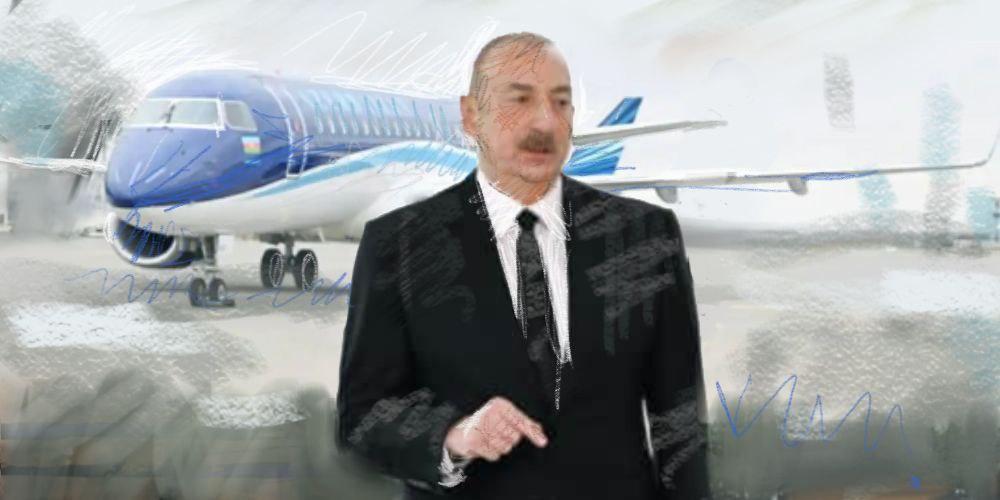
Earlier this year, Azerbaijan lashed out at Russia over the Dec. 25, 2024 crash of an Azerbaijan Airlines plane that the government said was hit by accidental Russian ground fire before crashing in Kazakhstan. Now, Moscow is coming under fresh scrutiny over the crash, which killed 38 of the 67 people on board, as a broader dispute between Russia and Azerbaijan sharply escalates. On Wednesday, an Azerbaijani news outlet, Minval Politika, published an anonymous letter and other materials purportedly containing a Russian air defense captain’s assertion that the Russian Defense Ministry gave the order to shoot down the plane as it tried to land in Grozny, Chechnya. The outlet says it can’t confirm the authenticity of the letter, and Russia has previously said an official investigation should run its course. But the dramatic allegation and the timing of the apparent leak to Minval Politika are likely to heighten acrimony at a particularly sensitive moment. Minval Politika said it felt compelled to publish the information for “society,” and that the “data obtained can serve as useful information for the competent authorities of the Republic of Azerbaijan investigating the circumstances of the tragedy.” The wider confrontation stems partly from the arrests of dozens of people of Azerbaijani origin by Russian security officials in the Russian city of Yekaterinburg last week. Two ethnic Azerbaijani brothers died in those raids, which Russian officials said were part of an old murder probe. Azerbaijan then detained staff at the Baku office of Russian state media group Sputnik, alleging fraud and other crimes. Russia, in turn, accused Azerbaijan of “unfriendly” conduct. The rift lays open the delicacy of relations between regional power Russia and most former Soviet republics that, since the dissolution of the Soviet Union in 1991, have developed trade, diplomatic, and other ties with Moscow while trying to strengthen their own sovereignty and national identity, and engage with other international partners. Central Asian countries – Kazakhstan, Kyrgyzstan, Uzbekistan, Tajikistan, and Turkmenistan – have generally maintained this balance and looked for diplomatic solutions to concerns such as discrimination against Central Asian migrants in Russia. At the other end of the spectrum, Ukraine has been in an all-out war with a Russian invading force for more than three years. Azerbaijan, in the South Caucasus region, has long maintained an alliance with Russia, which has gradually been losing influence in the area as it focuses on the Ukraine war and as Türkiye and other players gain more clout. Azerbaijan’s relationship with Russia soured markedly because of the Azerbaijan Airlines plane crash and what Azerbaijani authorities and commentators saw as an evasive Russian response to the disaster. The incident put Kazakhstan in a difficult position because the crash happened on its territory, just outside the Caspian Sea city of Aktau, and Kazakh authorities were therefore the leaders of an investigation that required the full cooperation of Russia to understand what really happened. Russian President Vladimir Putin had apologized to his Azerbaijani counterpart, Ilham Aliyev, but did not acknowledge that...

Former Justice Minister From ‘Old Kazakhstan’ Sentenced to Nine Years in Prison

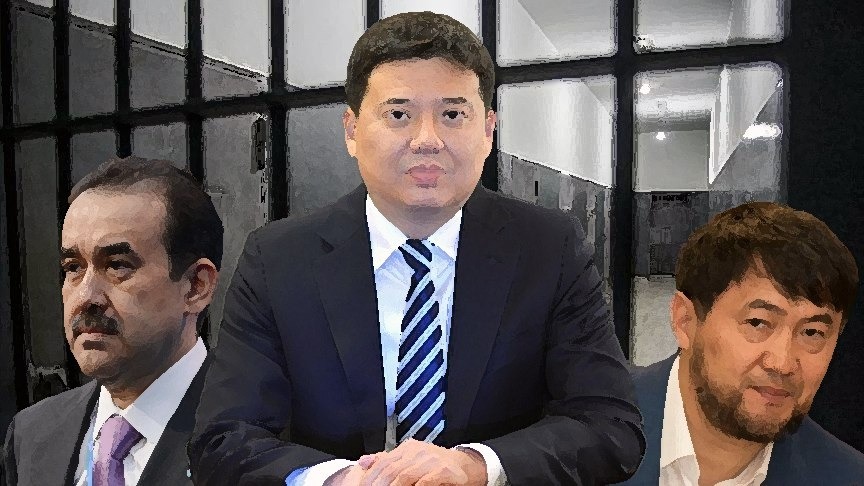
Former Minister of Justice Marat Beketayev has been sentenced to nine years in prison with confiscation of property for crimes linked to large-scale corruption. Beketayev is widely regarded as a representative of the "Old Kazakhstan" of the first president, Nursultan Nazarbayev, a term widely used to describe officials removed from power in the wake of the January 2022 unrest and associated with systemic corruption. Verdict Handed Down The Anti-Corruption Service of Kazakhstan announced on June 30 that Beketayev was convicted of fraud, embezzlement on an especially large scale, and illegal participation in entrepreneurial activities. Details of the case remain classified. The charges were formally submitted to the court in March 2025. Beketayev served as Minister of Justice from 2016 until early 2022. Following the January unrest, he was appointed as an advisor to the Prime Minister but was quietly dismissed in December 2022, a fact that only became public knowledge in February 2023. He was detained in October 2023 while allegedly attempting to flee the country. According to investigators, he abused his office by lobbying for the interests of an affiliated company and awarding it annual contracts for unnecessary services, actions that reportedly inflicted significant financial damage on the state. Fallout from the January Events Beketayev’s dismissal came immediately after the events known in Kazakhstan as "Bloody January" (Qantar), when protests initially triggered by rising liquefied gas prices escalated into nationwide unrest. From January 3-7, 2022, major cities were engulfed in chaos. Government buildings, law enforcement agencies, and military units were attacked; 238 people were reportedly killed, including children and police officers. The worst violence occurred in Almaty, where protesters stormed the city administration, the president’s residence, and the airport. Order was restored on January 8 with the intervention of the Collective Security Treaty Organization (CSTO), at the request of President Kassym-Jomart Tokayev. Open-source information and official investigations suggest the unrest was orchestrated by supporters of former president Nursultan Nazarbayev, who had stepped down in 2019 after nearly 30 years in power. In the aftermath, many high-ranking officials were removed or prosecuted. Among them was former Prime Minister and National Security Committee (KNB) Chairman Karim Massimov, who was sentenced to 18 years in prison for orchestrating what authorities describe as a coup attempt. Nazarbayev’s nephews, Samat Abish and Kairat Satybaldy, also faced charges. Abish received an eight-year suspended sentence due to his "sincere repentance," while Satybaldy, accused of economic crimes, paid approximately 700 billion tenge ($1.5 billion) in restitution and was released. The post-Qantar purge extended to numerous grassroots organizers and ordinary citizens involved in the unrest. In political discourse, the divide between Tokayev's supporters and the remnants of Nazarbayev’s influence is often described as a split between "New Kazakhstan" and "Old Kazakhstan." Beketayev’s Legacy and Links to Major Scandals Beketayev is considered an ally of Massimov and thus part of the old power structure. He was also involved in one of Kazakhstan’s most controversial international legal disputes, the case involving Moldovan businessmen Anatol and Gabriel Stati. In 2017, $22...