• KGS/USD = 0.01144 0%
  • KZT/USD = 0.00214 0%
  • TJS/USD = 0.10508 0.48%
  • UZS/USD = 0.00008 0%
  • TMT/USD = 0.28490 -0.28%
  • KGS/USD = 0.01144 0%
  • KZT/USD = 0.00214 0%
  • TJS/USD = 0.10508 0.48%
  • UZS/USD = 0.00008 0%
  • TMT/USD = 0.28490 -0.28%
  • KGS/USD = 0.01144 0%
  • KZT/USD = 0.00214 0%
  • TJS/USD = 0.10508 0.48%
  • UZS/USD = 0.00008 0%
  • TMT/USD = 0.28490 -0.28%
  • KGS/USD = 0.01144 0%
  • KZT/USD = 0.00214 0%
  • TJS/USD = 0.10508 0.48%
  • UZS/USD = 0.00008 0%
  • TMT/USD = 0.28490 -0.28%
  • KGS/USD = 0.01144 0%
  • KZT/USD = 0.00214 0%
  • TJS/USD = 0.10508 0.48%
  • UZS/USD = 0.00008 0%
  • TMT/USD = 0.28490 -0.28%
  • KGS/USD = 0.01144 0%
  • KZT/USD = 0.00214 0%
  • TJS/USD = 0.10508 0.48%
  • UZS/USD = 0.00008 0%
  • TMT/USD = 0.28490 -0.28%
  • KGS/USD = 0.01144 0%
  • KZT/USD = 0.00214 0%
  • TJS/USD = 0.10508 0.48%
  • UZS/USD = 0.00008 0%
  • TMT/USD = 0.28490 -0.28%
  • KGS/USD = 0.01144 0%
  • KZT/USD = 0.00214 0%
  • TJS/USD = 0.10508 0.48%
  • UZS/USD = 0.00008 0%
  • TMT/USD = 0.28490 -0.28%

Viewing results 79 - 84 of 1474

Kazakhstan and Uzbekistan Boost Rail Freight to 32.3 Million Tons

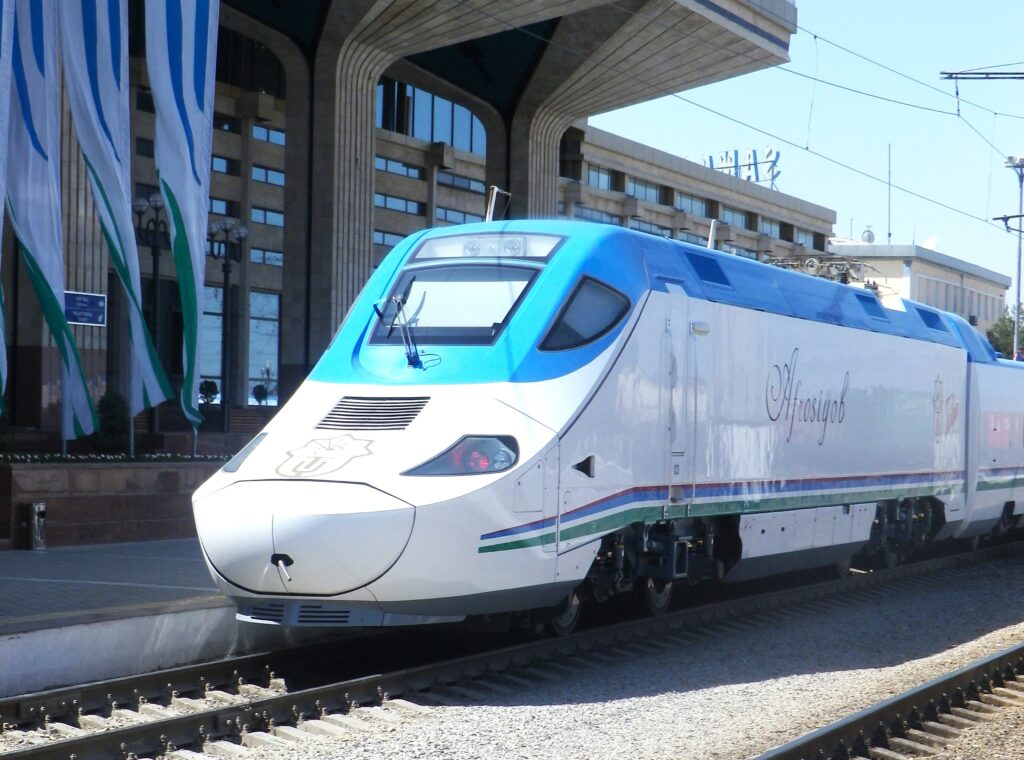
Kazakhstan and Uzbekistan have agreed on new measures to expand rail freight capacity as Astana works toward increasing overall transit volumes to 55 million tons. According to Kazakhstan’s Ministry of Transport, the agreement was reached during a meeting between the transport ministers of the two countries, where they discussed further cooperation in the railway sector. The talks were held as part of Kazakhstan’s broader strategy to strengthen its role as a key transit hub in Central Asia. Both sides emphasized the strategic importance of rail connections between Kazakhstan and Uzbekistan, describing them as central to trade growth, international transit flows, and regional transport integration. Officials also pointed to the strong potential for increasing freight volumes and improving the efficiency of logistics corridors linking the two economies. By the end of 2025, rail freight transportation between the two countries reached 32.3 million tons, representing a 16% increase compared to 2024, the ministry said. To maintain steady growth and achieve agreed capacity targets, the parties adopted a joint action plan focused on infrastructure development at key border crossings, including Saryagash, Oasis, and Syrdarya. The plan also provides for the completion of major railway projects, including the Darbaza-Maktaaral section. Currently, up to 36 pairs of trains pass daily through the Saryagash crossing, with plans to increase that figure to 40. At the Oasis junction, traffic is expected to grow from two to 10 train pairs per day. Through Syrdarya, volumes are projected to reach 10 train pairs daily following the launch of the Darbaza-Maktaaral line. During the meeting, the ministers also reviewed the synchronization of infrastructure upgrades and maintenance work, improvements to border control procedures, and measures to optimize operational coordination in order to raise overall transport efficiency. Last month, Kazakhstan’s national railway company, Kazakhstan Temir Zholy, announced that its Jibek Joly, or Silk Road, tourist train route would be extended to Dushanbe for the first time, linking cities in Kazakhstan and Uzbekistan with Tajikistan’s capital. The inaugural journey on the expanded route is scheduled to depart from Almaty on March 20, 2026, coinciding with Nauryz celebrations across the region.


American AI Company to Help Kazakhstan Develop University Admissions Exam

Kazakhstan’s Ministry of Science and Higher Education and the AI-based education company ETS say they are developing a new university admissions exam, the Admissions Insight Test (AIT), as part of a partnership launched in November 2025 to modernize the country’s national admissions system. Officials say the test is also meant to support the international recognition of results in future. “The Admissions Insight Test represents a decisive step forward for Kazakhstan’s higher education system,” said Sayasat Nurbek, Kazakhstan’s Minister of Science and Higher Education. “By building this new admissions exam in partnership with ETS, we are strengthening trust, fairness, and global alignment in how students enter our universities. This work positions Kazakhstan to lead in education innovation while ensuring our students are prepared for success in a rapidly changing, international, and AI-driven world.” ETS, which is headquartered in Princeton, New Jersey with offices worldwide, said the AIT would be modular. “Subject Modules” would align with the school curriculum and a student’s intended field of study. Separate “Skills Based Tests” would measure critical thinking, academic writing and research skills, communication, quantitative and digital literacy, and creative or design thinking.  The ETS Research Institute is expected to work alongside Kazakhstan’s education leaders and National Testing Center specialists, using AI and advanced analytics to streamline development and deepen the insights universities get from results. Kazakhstan already uses nationwide testing as a central gateway into university, and policymakers have linked admissions changes to a broader push to become a regional education hub. “Around the world, governments are rethinking how education systems measure readiness for the future and they are turning to ETS because trust, rigor, and global expertise matter,” said Kadriye Ercikan, Senior Vice President of Global Research at ETS. “Our work with Kazakhstan reflects the same responsibility we bring to partnerships with education systems worldwide: applying the strongest measurement science, responsible innovation, and AI-enabled approaches to help countries build assessment systems that are fair, credible, and internationally respected.” The project sits alongside Kazakhstan’s higher education transformation and its decision to join OpenAI’s Education for Countries program as officials look to prepare students for an AI-shaped economy.

Kazakhstan Moves to Export Its Legendary Aport Apples

Kazakhstan is preparing to introduce its iconic Almaty aport apples to international markets after the variety attracted strong interest from European partners at Grune Woche 2026 in Germany. During the exhibition, QazTrade and the Association of Almaty Aport Producers signed a memorandum aimed at promoting aport apples and their processed products abroad, according to the Ministry of Trade and Integration of Kazakhstan. The aport is one of Kazakhstan’s most distinctive apple varieties and is closely associated with the natural and cultural heritage of Almaty, widely regarded as the ancestral home of apples. Known for their large size, rich aroma, and juiciness, aport apples are also highly demanding to cultivate. High-quality aport can only be grown at elevations between 850 and 1,250 meters above sea level, primarily in the foothills surrounding Almaty. Unlike commercial apple varieties that begin bearing fruit within four to six years, aport trees typically require eight to nine years before producing their first harvest. Despite the longer maturation period, the apple’s distinctive qualities and heritage value position it as a premium niche product. “The main advantage of aport is its uniqueness. Unlike mass-produced varieties designed for volume and long storage, aport stands out for its vivid taste, rich aroma, and large fruit size. Our orchards are located above 850 meters above sea level, which affects the firmness of the pulp and depth of flavor. In Germany, we presented not only fresh apples but also processed products such as fruit pastilles and apple chips. We also produce aport-based juice, vinegar, and dried fruit,” said Roman Safarov, president of the Association. According to QazTrade, participation in Grüne Woche confirmed strong export potential, particularly for processed aport products. “The Almaty aport is registered as a geographical indication. This status confirms its unique characteristics shaped by the natural conditions of the Almaty foothills, special soils, clean water, and temperature fluctuations. The geographical indication protects the brand and allows it to be promoted as a premium product in international markets,” said QazTrade CEO Aitmuhammed Aldazharov. Horticulture is increasingly viewed as a strategic growth area within Kazakhstan’s agro-industrial sector. According to Yerbol Taszhurekov, apple orchards in Kazakhstan now cover nearly 29,000 hectares, concentrated mainly in the southern regions of Almaty, Turkestan, Zhambyl, and Zhetisu. In the Almaty and Zhetisu regions alone, orchards span more than 2,400 hectares and include over 416,000 trees. Kazakhstan is also working to revive the aport variety, which had previously faced near extinction. Under a targeted 2024-2028 program involving private investors and specialized nurseries, authorities aim to produce certified saplings and expand commercial cultivation. By 2027, plans call for planting at least 110 hectares of new aport orchards.

Kazakhstan Doubles Honey Exports in 2025

Kazakhstan’s beekeepers nearly doubled their honey exports in 2025, with neighboring Uzbekistan emerging as the primary destination, according to the Ministry of Agriculture. Official data show that Kazakhstan exported 1,477 tons of honey in 2025, compared to 603 tons in 2024. The majority of shipments, 1,264 tons, or 85.6% of total exports, were delivered to Uzbekistan. Kazakh honey was also exported to Canada, China, Saudi Arabia, Russia, and the United States. A trial shipment was sent to Oman for the first time. Amid rising exports, imports declined sharply. In 2025, honey imports totaled 262.4 tons, down from 1,663 tons in 2024. The Ministry of Agriculture attributes this decrease to increased domestic production and the strengthening position of local producers. Kazakhstan produces approximately 5,000 tons of honey annually. Nearly half of this volume, 2,300 tons, comes from private subsidiary farms, while 2,700 tons are produced by large enterprises. Beekeeping is most developed in the East Kazakhstan, Pavlodar, Almaty, and Turkestan regions, as well as in the Abai and Zhetisu regions. These regions account for around 241,000 bee colonies, more than 90,000 of which have breeding status. State support measures include production subsidies. The Ministry of Agriculture emphasizes that the sector’s development is being pursued systematically. In 2024, a roadmap for the industry’s development for 2025-2027 was approved, and amendments to the laws “On Beekeeping” and “On Breeding Livestock” were drafted. In April 2025, the proposed amendments were submitted to parliament. According to the ministry, the legislative changes are intended to increase transparency in the sector, strengthen breeding programs, and enhance the competitiveness of Kazakh honey in foreign markets, thereby creating a foundation for further export growth and rural development. As previously reported by The Times of Central Asia, the Hungarian company Aranynektár Kft announced in 2024 plans to build a honey processing plant in Kazakhstan to facilitate exports to European Union countries.

Will E-Commerce Become the New Oil for Kazakhstan?

On February 26, Almaty will host Ranking Business Day, a professional Open Talk discussion titled “Will E-Commerce Become the New Oil for Kazakhstan?” Amid ongoing structural economic transformation and the search for new growth drivers, e-commerce has emerged as one of the country’s most dynamic sectors. Online commerce is already exerting a significant impact on retail, logistics, banking, and the development of small and medium-sized enterprises. However, a central question remains: can e-commerce evolve into a strategic pillar of the economy, comparable in importance to the raw materials sector? As part of the event, Ranking.kz will present a comprehensive industry study examining the current state and future prospects of Kazakhstan’s marketplace sector. The analysis covers market structure and dynamics, the positioning of domestic and foreign players, the economic and social impact of e-commerce, and the role of state regulation. Participants will address the following issues: the current state of e-commerce in 2025-2026; the impact of cross-border trade and intensifying competition with international platforms; the implications of new consumer protection legislation for the market; risks and potential scenarios for the sector’s sustainable development in 2026. Special attention will be given to balancing the interests of the state, businesses, and consumers, as well as fostering a competitive environment that supports the growth of domestic companies. Ranking Business Day will bring together representatives of government agencies, the financial sector, industry associations, marketplaces, and logistics companies for an open professional dialogue. The event will take place at the Mercure Almaty City Center and will begin at 9:00 a.m. Information partners of the event include The Times of Central Asia, Kapital.kz, Kursiv.Media, Tengrinews, National Business, Bluescreen.kz, and Profit.kz.

Central Asia Records Over 6% Growth as Trade with Russia Expands

Central Asian economies concluded 2025 with growth exceeding 6%, significantly outpacing major developed markets such as the United States and the Eurozone, where expansion stood at approximately 1.6% and 1.1%, respectively, according to Turkish newspaper Yeni Şafak. The figure aligns with the World Bank who puts regional expansion at 6.2% and the Eurasian who Development Bank (EDB) estimates growth at 6.6%. Economists attribute the region’s performance to strong domestic demand, active state investment programs, infrastructure development, and rising exports of raw materials and industrial goods. Kazakhstan and Uzbekistan accounted for the largest contributions to overall growth, supported by large-scale public investment initiatives and expanding foreign trade. By contrast, the U.S. and European economies experienced slower growth amid high interest rates, inflationary pressures, and weaker consumer demand. Uzbek economist Mirkomil Kholboyev, writing on his Telegram channel, said the trend reflects deeper structural factors. “In general, the average real growth in Central Asia has almost always been higher than in the United States or Europe, with the exception of 2021,” he wrote. “Beyond short-term effects, lower-income countries like ours tend to grow faster than high-income economies. In wealthier countries, the return on additional capital has declined, while in our region capital remains scarce, allowing investments to generate higher returns. Demographic growth is also higher here, and the steady expansion of the labor force serves as an additional driver of economic growth.” Trade data indicate that Central Asia’s economic ties with Russia have strengthened in recent years. In 2021, the region accounted for 3.2% of Russia’s imports. By the first 10 months of 2025, that share had risen to 4.6%. Over the same period, Central Asia’s share of Russian exports increased from 5.6% to 7%. Overall, during the first 10 months of 2025, Central Asia ranked as Russia’s third-largest import partner and fourth-largest export destination. Before the war in Ukraine, the region ranked seventh among Russia’s import partners and fourth in exports. Although Russia’s economy remains significantly larger, reaching approximately $2.1 trillion in 2024 and exceeding the combined size of Central Asian economies by about 4.4 times, the increase in trade shares over the past four years is notable. Kholboyev also noted that part of the rise in imports is attributable to re-export activity.