• KGS/USD = 0.01144 0%
  • KZT/USD = 0.00210 0%
  • TJS/USD = 0.10523 0%
  • UZS/USD = 0.00008 0%
  • TMT/USD = 0.28571 0%
  • KGS/USD = 0.01144 0%
  • KZT/USD = 0.00210 0%
  • TJS/USD = 0.10523 0%
  • UZS/USD = 0.00008 0%
  • TMT/USD = 0.28571 0%
  • KGS/USD = 0.01144 0%
  • KZT/USD = 0.00210 0%
  • TJS/USD = 0.10523 0%
  • UZS/USD = 0.00008 0%
  • TMT/USD = 0.28571 0%
  • KGS/USD = 0.01144 0%
  • KZT/USD = 0.00210 0%
  • TJS/USD = 0.10523 0%
  • UZS/USD = 0.00008 0%
  • TMT/USD = 0.28571 0%
  • KGS/USD = 0.01144 0%
  • KZT/USD = 0.00210 0%
  • TJS/USD = 0.10523 0%
  • UZS/USD = 0.00008 0%
  • TMT/USD = 0.28571 0%
  • KGS/USD = 0.01144 0%
  • KZT/USD = 0.00210 0%
  • TJS/USD = 0.10523 0%
  • UZS/USD = 0.00008 0%
  • TMT/USD = 0.28571 0%
  • KGS/USD = 0.01144 0%
  • KZT/USD = 0.00210 0%
  • TJS/USD = 0.10523 0%
  • UZS/USD = 0.00008 0%
  • TMT/USD = 0.28571 0%
  • KGS/USD = 0.01144 0%
  • KZT/USD = 0.00210 0%
  • TJS/USD = 0.10523 0%
  • UZS/USD = 0.00008 0%
  • TMT/USD = 0.28571 0%

Viewing results 127 - 132 of 1474

Kazakhstan-Uzbekistan Jibek Joly Train Tour Extended to Tajikistan

Kazakhstan’s national railway company, Kazakhstan Temir Zholy (KTZ), has announced the expansion of its popular Jibek Joly (Silk Road) tourist train route to include Tajikistan, adding a new stop to one of Central Asia’s flagship railway tourism initiatives. The updated route will now reach the Tajik capital, Dushanbe, extending the tour beyond Kazakhstan and Uzbekistan for the first time. The inaugural journey on the extended route is scheduled to depart from Almaty on March 20, 2026, and return on March 25, passing through a series of historic Silk Road cities: Turkestan (Kazakhstan), Samarkand (Uzbekistan), Dushanbe (Tajikistan) and Tashkent (Uzbekistan). The tour package includes rail travel, guided sightseeing, entrance to cultural and historical sites, and organized transfers. Its launch coincides with Nauryz, the region’s traditional spring holiday, allowing travelers to experience vibrant local celebrations along the way. First introduced in November 2024, the Jibek Joly train originally ran between Almaty, Turkestan, and Tashkent, and has since become a highly visible symbol of the region’s growing tourism sector. The project reflects broader efforts to promote Central Asia as a unified tourist destination. Regional leaders have advocated for a shared visa-free regime for foreign visitors, similar to Europe’s Schengen Zone, to encourage cross-border travel and boost international tourism. Officials say that initiatives like Jibek Joly can help strengthen cultural ties, foster regional integration, and raise Central Asia’s profile on the global tourism map.


Attempting to Build a Litter-Free Kazakhstan: An Interview with Ecologist Kamila Akimbekova

Ten years ago, waste recycling in Almaty was largely the domain of individual enthusiasts. Today, environmental campaigns draw thousands, and conversations about responsible consumption have become part of daily life for many city residents. One of the pioneers of this movement is Kamila Akimbekova, an eco-influencer and co-organizer of environmental initiatives. In an interview with The Times of Central Asia, she reflects on the evolution of Almaty’s eco-community, the principles behind the zero waste concept, and how small, consistent changes can reshape a city. TCA: Kamila, you had a successful career in banking. What prompted your transition to environmental activism?  Kamila: I think my interests evolved. People often think recycling is a new trend, but it actually existed in the USSR: students collected waste paper, and people returned glass for reuse. It was an effective circular economy. When I became a mother for the second time, I began thinking more deeply about my impact on the world. I started researching whether Almaty had recycling facilities. At the time, information was scarce, and it wasn’t easy to locate collection points, but I didn’t give up. TCA: Was access to information more limited 10-15 years ago? Kamila: Absolutely. Social media was less developed, and online information was often outdated or unreliable. I started looking for people who shared my values and eventually connected with Almaty’s early eco-activists. They were scattered individuals with a shared desire for change. Over time, we formed a real community, launched joint projects, and I began sharing what I learned on my blog. That’s how I transitioned to eco-influencing. Today, I have around 30,000 Instagram followers, an engaged audience concerned about the environment. TCA: Is the eco-community large now? Kamila: It’s grown significantly, especially in Almaty, though we’re also connected with activists across Kazakhstan. Participation has multiplied. Our early events drew 20-50 people. Now we see around 2,000. There’s strong interest from students and school-children, I lecture regularly and see growing volunteerism. At our last campaign, electronic sensors showed that 1,900 people attended. TCA: Is it true that women form the core of the eco-community? Kamila: Yes, that’s backed by studies. Women tend to be more environmentally conscious, likely due to traditional roles as caretakers of the home and future generations. TCA: Today, people can recycle much more than just paper, glass, and plastic. How did that expansion come about? Kamila: I wanted a convenient way to dispose of multiple waste types, old medicines, unused items, plastics, metals, e-waste, etc. In 2019, we invited companies like Rocket Plastic and an e-waste recycler to set up at our events. We also partnered with the Almaty Pop-Up Store and expanded through collaborations with the Darmarka project and the Recycle Birge team. TCA: I was surprised to learn you accept unusual items, used cooking oil, expired candy, even food scraps for farmers. Kamila: We follow the zero waste concept, which aims to reduce waste to zero. Many newcomers think sorting is the most important part, but recycling is actually the last...

Kazakhstan to Increase Grain Processing Nearly Tenfold by 2028

Kazakhstan plans to increase its deep grain processing capacity nearly tenfold by 2028, as part of a broader strategy to shift from raw material exports to the production of high value-added agricultural products. The initiative includes five major investment projects for wheat and corn processing, with a combined annual capacity of 4.8 million tons of grain. According to the Ministry of Agriculture, the projects will be located across the northern, southern, and central regions of the country and are expected to become a cornerstone of Kazakhstan’s agro-industrial transformation. These priorities were outlined during the fourth meeting of the National Kurultai in March 2024, where President Kassym-Jomart Tokayev emphasized the need for industrial diversification and greater economic resilience. Currently, Kazakhstan processes just over 510,000 tons of grain annually in the deep processing segment. The country has three specialized enterprises that produce starch, gluten, molasses, bioethanol, and other high value-added products. The five new projects are expected to attract $2.6 billion in investment and create approximately 3,300 jobs. Key developments include a wheat processing plant with a capacity of 415,000 tons per year in the Kostanay region; corn processing enterprises in the Turkestan and Zhambyl regions; and new production facilities in Astana and Akmola region focusing on starch, gluten, bioethanol, and amino acids. A significant share of these products will be exported to the U.S., Europe, China, India, the Eurasian Economic Union member states, the Middle East, and Africa. As previously reported by The Times of Central Asia, Kazakhstan harvested a record crop of grains and oilseeds in 2024, providing the raw material base for this upcoming industrial expansion.

The Potential and Problems of Tourism in Kazakhstan

Kazakhstan boasts unique natural landscapes that could attract international visitors, and significantly enrich the country's economy. Each year, the government allocates increasing funds to support tourism. However, services and infrastructure in many tourist destinations still remain well below international standards. Undeniable Improvements According to Talgat Gazizov, Chairman of the Board of the national company Kazakh Tourism, more than 1,100 tours to Kazakhstan are currently available on 18 major online platforms across Europe and Asia – a threefold increase compared to 2023. This reflects growing interest among international tour operators. As previously reported by The Times of Central Asia, authorities are also weighing up the possibility of opening casinos in designated tourist zones, accessible exclusively to foreign citizens. In 2025, Kazakhstan invested nearly $2.5 billion in the development of its tourism sector, a 32% year-on-year increase. The number of tourists staying in accommodation facilities rose by 12%, surpassing 10 million. Kazakhstan also improved its position in the World Economic Forum’s global tourism index, climbing from 66th to 52nd place. The stated goal is to break into the top 50. Currently, 328 tourism investment projects are underway. Notable among them are the Oi-Karagai mountain resort, Hilton and Mandarin Oriental hotel complexes, the Zhibek Zholy entertainment complex, and the Keruen Inn roadside service chain. These projects are expected to create around 10,000 permanent jobs. A Comprehensive Development Plan for the Almaty Mountain Cluster includes expanding ski resorts and integrating them into a unified system. The celebrated Shymbulak ski base and Medeu high-altitude skating rink, both located near Almaty, are among the country’s most distinctive attractions. The plan envisions 30 new cable cars and 161 kilometers of ski slopes, aiming to boost annual tourist numbers from 1.8 million to 5 million. Authorities note that, globally, ski tourists spend seven times more than beach tourists. The Shchuchinsk-Borovskaya (Burabai) resort area is also a development priority. Infrastructure expansion around Lakes Katarkol, Maloye and Bolshoye Chebachye, and Zhukei is intended to ease pressure on Lakes Shchuchye and Borovoye. The number of inbound tourists to Burabai is projected to reach 94,000 by the end of 2029, with 32,500 people employed in the local tourism industry. In western Kazakhstan, development is planned along the Mangistau Peninsula, including Teply beach and Kendirli resorts on the Caspian Sea. Efforts are also underway to improve access to the striking rock formations of Bozhyr and Tamsha, which rival world-famous geological landmarks. Services and Infrastructure Lag Behind Despite progress, serious shortcomings persist, chief among them underdeveloped services. The lack of public toilets in tourist zones and along highways has been repeatedly highlighted. Government data shows that many resort areas in the Akmola, Karaganda, and Pavlodar regions, as well as in the Abai and Zhetysu regions, lack reliable water supply and central sewage systems. The use of well water remains a pressing concern. In the Abai region, some recreation centers are situated dangerously close to water sources. Lake Alakol, a popular summer destination, requires urgent shoreline reinforcement. Similar dredging work is also necessary in Caspian...

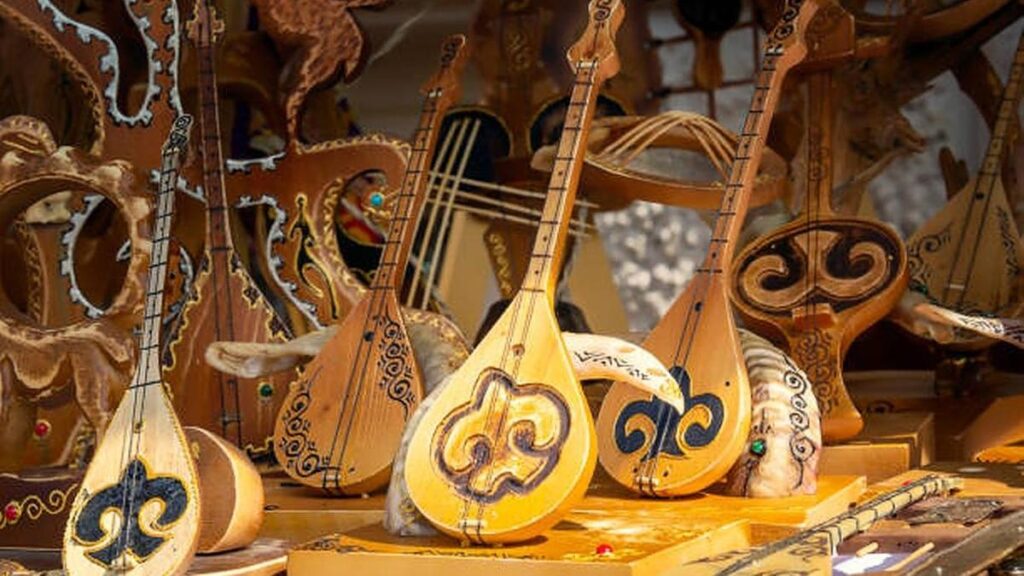
TCA Interview: Musician Merey Otan on the Reinvention of Kazakh Musical Instruments

Until recently, Kazakh national instruments were largely associated with school concerts, folk ensembles, and official ceremonies. The dombra (a long-necked, two-stringed plucked instrument), kobyz (a bowed string instrument with two horsehair strings), and sybyzgy (a wooden end-blown flute traditionally made from apricot wood) seemed to occupy a separate cultural space: symbolically important, yet detached from everyday life. “Before, the dombra was for me only part of school concerts,” recalls Sanzhar Uvashev, 24, a sales specialist from Almaty. “It was brought out on holidays, people dressed in national costumes, played a couple of obligatory songs, and that was it. I never thought this instrument could sound different, or be part of contemporary music.” Today, that distance is steadily narrowing. The sound of the dombra is increasingly featured in contemporary original music, electronic compositions, film scores, and social media. Young musicians are not abandoning tradition, but they are no longer treating it as something frozen in time. To understand how this rethinking is taking place, and why tradition need not remain 'untouched', The Times of Central Asia spoke with Merey Otan, a researcher and musician who works with Kazakh instruments in a modern cultural context. ТCA: Merey, how did your study of national instruments begin? Was it a deliberate decision? MO: It started during my master’s studies, when I was writing a thesis on contemporary music in Kazakhstan. As part of that research, I interviewed the ethno-rock band Aldaspan and kobyz player Almat Saizhan. I was especially interested in how the dombra and kobyz were being transformed and modernized and eventually devoted a whole chapter of my work to this topic. So yes, it was a conscious choice. TCA: People often argue that tradition should be preserved in its original form. What’s your take on that? MO: I’ve heard that view often, especially from traditional musicians. Some believe, for example, that an electronic dombra desecrates the instrument. Given the sacred meaning of the dombra and kobyz, I understand that stance. In sociology, these people are sometimes called purists. But I disagree. The world is changing, and some traditions from the nomadic era have lost their relevance or even become barriers. I believe traditions can, and sometimes should, evolve. If modifying an instrument helps engage younger generations, why not? TCA: Where do you personally draw the line between respect for heritage and experimentation? MO: I see nothing wrong with experimentation. On the contrary, bands like Steppe Sons show deep respect for heritage. Their members have formal musical education and a strong grounding in tradition. However, it's important to consider the concept of cultural appropriation from postcolonial theory. This occurs when privileged groups use the culture of marginalized communities for personal gain. In music, this might look like a Western artist profiting from Kazakh instruments without acknowledging Kazakh musicians. That, in my view, is disrespectful. TCA: Is there still criticism about the “incorrect” use of traditional instruments? MO: Yes, certainly. When Aldaspan introduced the electronic dombra, public figures like Bekbolat Tleukhan were highly critical....

Kazakh Science Ministry Expands Strategic Partnership with AstraZeneca

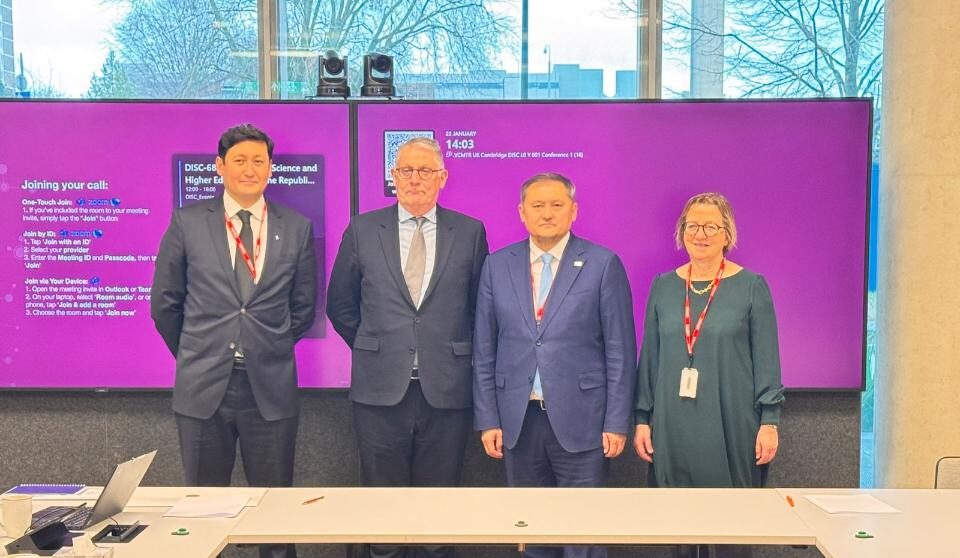
Kazakhstan has entered a new phase of cooperation with British-Swedish pharmaceutical giant AstraZeneca, expanding the partnership beyond healthcare into science, education, and innovation. On January 26, Minister of Science and Higher Education Sayasat Nurbek visited AstraZeneca’s Discovery Centre in Cambridge, the company’s largest global research and innovation hub, where a memorandum of understanding was signed with AstraZeneca Kazakhstan. According to the ministry, the agreement paves the way for new areas of collaboration aimed at strengthening national scientific capacity, introducing advanced medical technologies, and enhancing the long-term sustainability of Kazakhstan’s healthcare system. The partnership will focus on several strategic areas: Real-World Data (RWD) and Real-World Evidence (RWE): Development of advanced data analytics tools to support scientific research, clinical decision-making, and evidence-based healthcare policy. Expansion of the Young Health Program: Prevention of non-communicable diseases among youth and the promotion of responsible health behaviors. Sustainable Development and Economic Diversification: Joint initiatives in environmental protection, green technologies, and sustainable business practices. Early Diagnosis and Healthcare Resilience: Implementation of modern screening methods, specialist training, and development of diagnostic infrastructure. Nurbek highlighted that the memorandum creates new opportunities to integrate research, education, and real-world clinical practice. “It is important not only to develop fundamental science, but also to ensure the transfer of advanced technologies and data into everyday medical practice. This partnership strengthens Kazakhstan’s scientific and biomedical potential,” he said. AstraZeneca has steadily expanded its operations in Kazakhstan in recent years. In April 2024, the Ministry of Healthcare, the Almaty city administration, national investment agency Kazakh Invest, and AstraZeneca signed an agreement on the contract manufacturing of biotechnological products. The initiative supports Kazakhstan’s strategic goal of increasing the share of domestically produced medicines to 50%. In July 2024, AstraZeneca and the state pharmaceutical distributor SK-Pharmacy signed a long-term agreement on local production and technology transfer. According to Maria Shipuleva, CEO of AstraZeneca Kazakhstan, the company’s innovative medicines will be produced at the Nobel Almaty Pharmaceutical Factory. The production portfolio includes treatments for diabetes, chronic heart failure, chronic kidney disease, multiple forms of leukemia, and cancer therapies for breast, ovarian, prostate, and pancreatic cancers.