• KZT/USD = 0.00212
  • TJS/USD = 0.10810
  • UZS/USD = 0.00008
  • TMT/USD = 0.29760
  • KZT/USD = 0.00212
  • TJS/USD = 0.10810
  • UZS/USD = 0.00008
  • TMT/USD = 0.29760
  • KZT/USD = 0.00212
  • TJS/USD = 0.10810
  • UZS/USD = 0.00008
  • TMT/USD = 0.29760
  • KZT/USD = 0.00212
  • TJS/USD = 0.10810
  • UZS/USD = 0.00008
  • TMT/USD = 0.29760
  • KZT/USD = 0.00212
  • TJS/USD = 0.10810
  • UZS/USD = 0.00008
  • TMT/USD = 0.29760
  • KZT/USD = 0.00212
  • TJS/USD = 0.10810
  • UZS/USD = 0.00008
  • TMT/USD = 0.29760
  • KZT/USD = 0.00212
  • TJS/USD = 0.10810
  • UZS/USD = 0.00008
  • TMT/USD = 0.29760
  • KZT/USD = 0.00212
  • TJS/USD = 0.10810
  • UZS/USD = 0.00008
  • TMT/USD = 0.29760

Viewing results 19 - 24 of 738

Over 12,600 Central Asians Identified in Russian Army

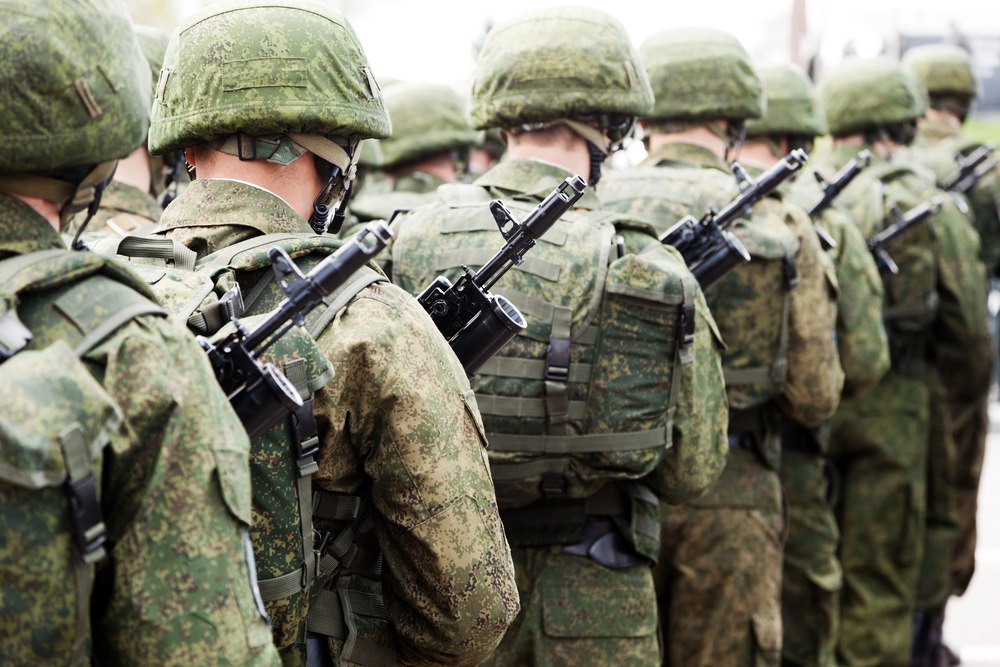
A Ukrainian state initiative has identified nearly 13,000 citizens from Central Asia who have signed contracts with Russia’s Defense Ministry and have served or are serving in the Russian army, according to data released by the “I Want to Live” project as part of the Ukraine-Central Asia Inquiry. As of 2026, the project reports it holds personal data on 12,666 individuals from the region. Uzbekistan accounts for the largest share, with 4,853 identified citizens. Tajikistan ranks second with 3,407 individuals, followed by Kazakhstan with 2,389 and Kyrgyzstan with at least 1,439. Turkmenistan has the lowest figure, with 578 identified nationals. The figures represent a sharp increase compared to 2025, when the same project reported around 5,740 individuals from Central Asia. At that time, it also began publishing named lists of recruits from each country who had joined Russia’s war in Ukraine. The issue remains sensitive across the region. Uzbekistan and Kazakhstan prohibit their citizens from taking part in foreign conflicts, and several cases have been brought against individuals who returned after fighting abroad. Last year, speaking at the St. Petersburg International Legal Forum, Alexander Bastrykin, Chairman of the Investigative Committee of Russia, said authorities had identified 80,000 individuals who had avoided military registration. “We’ve registered them for military service, and about 20,000 of these ‘new’ Russian citizens, who for some reason no longer want to live in Uzbekistan, Tajikistan, or Kyrgyzstan, are now on the front lines,” he said at the time. His remarks highlighted ongoing efforts to replenish military ranks, including through contract-based recruitment and incentives. Observers say such measures, alongside migration trends, may help explain the rising number of Central Asian nationals identified in the conflict.

Kazakhstan and China’s Snow Valley Agree to Build $100-200 Million Potato Processing Complex

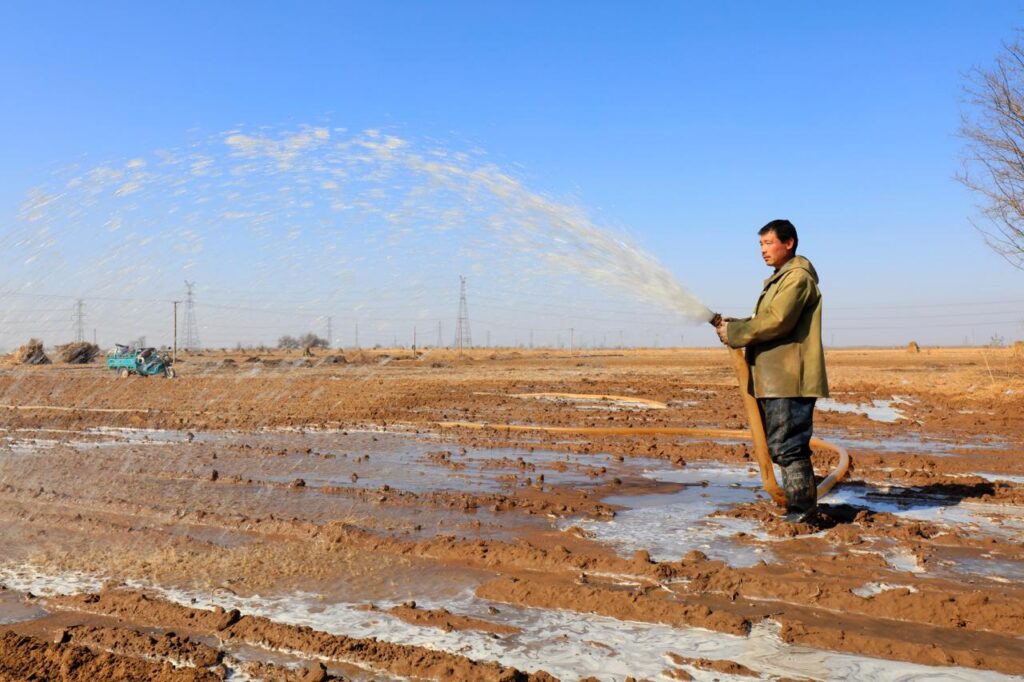
The administration of Kazakhstan’s Pavlodar region has signed a memorandum of cooperation with China’s Snow Valley Agricultural Group Co. Ltd. to implement a major investment project focused on potato processing, regional authorities have announced. The document outlines plans to establish a modern agro-industrial complex with an annual processing capacity of between 100,000 and 200,000 tonnes. The agreement was signed by regional governor Asain Baikhanov and representatives of the Chinese side, Wang Dengshe and Zhang Fan. The project is aimed at producing high value-added products. It includes the construction of a research and breeding center for potato cultivation and seed production, the launch of French fries manufacturing, and the development of storage, logistics, and distribution infrastructure. Total investment is estimated at between $100 million and $200 million. Regional authorities expect the project to create a full production and supply chain, reduce the shortage of deep-processing capacity in agriculture, and generate new jobs. “The regional administration is ready to support initiatives aimed at creating high-tech, high value-added production,” Baikhanov said. Founded in 2007 in Zhangjiakou, China, Snow Valley is a vertically integrated agro-industrial holding covering the entire production cycle from potato breeding and cultivation to deep processing. The company processes more than 800,000 tonnes of raw materials annually, including over 400,000 tonnes of frozen products. Its total storage capacity reaches 700,000 tonnes. The company is also engaged in breeding programs and has developed more than 80 potato varieties. Its production utilizes advanced technologies, including pulsed electric field (PEF) systems, which improve product quality and reduce oil consumption. Snow Valley exports its products to more than 40 countries. Following the visit, Chairman Wang Dengshe highlighted the strong potential of Pavlodar region and confirmed the company’s interest in long-term cooperation. “The Chinese company has confirmed its readiness to implement the project using modern technologies and local resources, while the regional administration has pledged comprehensive support, including infrastructure development, provision of resource bases, and administrative assistance,” the regional press service said. The project comes amid previous restrictions on potato exports. Kazakhstan earlier introduced a temporary ban on shipments outside the Eurasian Economic Union (EAEU) due to rising domestic prices. In autumn 2025, authorities also did not rule out reinstating such measures, although the market currently remains stable.

Water in Central Asia: Between Reality and Alarmism

The Regional Ecological Summit 2026 will take place in Astana on April 22-24. The event is intended to elevate Central Asia’s water and environmental agenda to the level of systemic solutions. Alongside preparations for the summit, however, an increasingly alarmist narrative is gaining traction among some experts. In this framing, water resources in Central Asia are presented as being in crisis, with predictions of shortages, threats to food security, and even potential conflict. Phrases such as “there is not enough water,” “the harvest is at risk,” and “the region is on the brink” are used with growing frequency. Such assessments are typically based on generalized and dramatized claims that fail to differentiate between countries or specific river basins. This creates the impression of a single, simultaneous crisis, whereas in reality the situation is far more complex. Yes, there is a problem, but it is not sudden or one-dimensional. Water scarcity in Central Asia is real. However, it must be interpreted accurately and objectively. According to expert estimates, up to 40% of water in the region is lost through deteriorating irrigation infrastructure, while more than 80% of water consumption is accounted for by agriculture. Current practice supports these figures. In southern Kazakhstan, seasonal water supply restrictions are regularly imposed. This year, for example, the government approved consumption limits for southern regions due to an expected shortage during the growing season. Uzbekistan has said, in joining the World Bank’s Water Forward initiative, that it aims to introduce water-saving technologies across its 4.1 million hectares of irrigated land and reduce irrigation losses by 25%. Equally important are developments in upstream countries, Kyrgyzstan and Tajikistan. According to a study by the Organisation for Economic Co-operation and Development, the region exhibits a structural interdependence between water and energy. More than 80% of electricity in these countries is generated by hydropower, meaning water resources are used simultaneously for energy production and irrigation. This creates systemic interdependencies. At the same time, coordination of water releases and electricity generation remains suboptimal, and the absence of long-term regulatory mechanisms has already led to water shortages during certain summer periods. This is a key point: the issue is not so much an absolute lack of water, but the complexity of coordination between upstream and downstream countries, as well as between sectors within individual states. In other words, water shortages in Central Asia are often driven less by natural conditions than by how water is distributed and managed. Particular attention in alarmist narratives is given to Afghanistan and the Kushtepa Canal. Estimates commonly suggest that the Qosh Tepa Canal could eventually divert around 6-10 km³ of water per year from the Amu Darya, although projections vary and depend on how fully the canal is completed and operated. While the canal is not yet fully operational, regional officials already treat it as a serious medium-term risk, with the precise scale of future withdrawals still under discussion. Countries in the region, especially Uzbekistan, have been pursuing dialogue with Afghanistan over the canal and...

Animal Euthanasia in Kazakhstan: Cruelty or Necessity?

In early April 2026, Kazakhstan's lower house of parliament, the Mazhilis, approved in the first reading amendments to the law “On Responsible Treatment of Animals.” The key proposed change is a shift away from the policy of returning vaccinated and sterilized dogs to their habitats, toward the legalization of euthanasia. The decision has triggered a sharp public divide: supporters cite safety concerns, particularly for children, while critics view the amendments as a rollback of the humane principles enshrined in the 2021 law and an attempt to compensate for institutional shortcomings through the mass culling of stray animals. Background: From Reform to Reversal In 2021, Kazakhstan sought to overhaul its approach to managing stray animal populations, aligning it with international practices. This led to the adoption of a dedicated law, which formalized a transition from culling to the CNVR model (capture, neuter, vaccinate, and return). The reform was presented as a compromise between humane treatment and public safety. The shift was driven by both civic activism and political momentum. In 2020, President Kassym-Jomart Tokayev described attitudes toward animals as a benchmark of societal development, acknowledging systemic shortcomings in the country. He later emphasized that state protection should extend to both people and animals. The initiative received support both domestically and internationally. Authorities pledged a systemic approach, including the creation of a national animal registry, mandatory microchipping, expansion of shelters, and tighter regulation of pet ownership. The expectation was that these measures would gradually reduce the stray population in a humane and sustainable manner. The Case for the Amendments: Safety and Cost The amendments, introduced in 2024, propose a transition to a no-return capture model. Despite criticism from animal welfare groups, the bill passed its first reading on April 8, 2026, and was forwarded to the Senate eight days later. Lawmakers, including Mazhilis committee chairman Yedil Zhanbyrshin, argue that the CNVR model has failed to deliver results under Kazakhstan’s conditions. They cite an increase in the stray dog population from 207,000 in 2022 to 247,000 in 2023. Another factor highlighted is the unintended consequence of mandatory microchipping introduced in 2023. According to lawmakers, the cost of registration and sterilization, averaging around 27,000 KZT (approximately $54), led some owners to abandon their pets. This, they argue, is reflected in the sharp decline in registered dogs, from 28,000 in 2022 to just 961 in 2024. Public safety remains the central argument. According to the Ministry of Health, Kazakhstan records an average of 105 animal attacks per day. Fiscal considerations are also significant. A full CNVR program is estimated to require annual spending of 14-15 billion KZT (approximately $28-30 million). Against the backdrop of competing budget priorities, including education and healthcare, lawmakers consider such expenditures excessive. They also point to practices in countries such as the United States and Japan, where euthanasia is used as a population control measure. Under the proposed model, captured animals would be held for a limited period, 15 days for unchipped dogs and 60 days for those with identified owners....

Kazakhstan Aims to Boost IT Services Exports to $5 Billion by 2030

Kazakhstan plans to increase its IT services exports nearly fivefold, to $5 billion by 2030, officials and industry participants said at a roundtable focused on positioning the country as a regional hub for international tech talent and digital nomads. According to official data, Kazakhstan exported IT services worth $471 million to 95 countries in the first nine months of 2025. In the final quarter of the year, that figure more than doubled, reaching $1.142 billion as of January 1, 2026. Export revenues also exceeded spending on imported digital solutions by more than 2.6 times, with imports totaling $429 million. The new export target is expected to be supported by workforce expansion and talent attraction initiatives. Representatives of Astana Hub said the country plans to train 10,000 specialists in AI by 2030. At the same time, Kazakhstan is promoting its Digital Nomad Residency program, launched in January 2025, aimed at attracting foreign IT professionals. To date, more than 700 applications from 30 countries have been submitted under the program, with over 120 specialists granted residency status. “Human capital development is the foundation on which Kazakhstan’s growth as a digital hub is built,” said Deputy Prime Minister and Minister for Artificial Intelligence and Digital Development Zhaslan Madiyev. “We aim to make the Digital Nomad process fully digital, transparent, fast, and convenient. The arrival of highly qualified professionals is not just a statistic, it brings international experience, new competencies, and links to global markets. Our goal is to create conditions where talented IT professionals can realize their potential here and contribute to Kazakhstan’s economy.” Participants at the roundtable, including engineers and analysts from international companies, also shared their relocation experiences and proposed improvements to digital services. Following the meeting, stakeholders agreed to continue work through a permanent working group to better adapt the program to the needs of the IT community. As previously reported by The Times of Central Asia, President Kassym-Jomart Tokayev proposed establishing a regional center for cooperation with Japan in digital transformation and artificial intelligence in Astana.

Kazakhstan Freezes Projects with Iran Amid Military Conflict

Kazakhstan has suspended several joint projects with Iran amid ongoing military hostilities in the country, Deputy Foreign Minister Arman Issetov has announced. The decision effectively puts on hold plans to expand trade and economic cooperation between Astana and Tehran, despite previously stated ambitions to significantly increase bilateral trade. On December 11, 2025, during the Kazakhstan-Iran business forum in Astana, Tokayev said bilateral trade had exceeded $340 million the previous year. The two sides set an initial goal of raising trade to $1 billion, with a longer-term aim of doubling that figure. However, the escalation of military activity in Iran has forced both sides to reconsider these plans. “The situation is currently very complicated. At this point, many of our projects with Iran have been frozen due to the country being in a state of war. As a result, our businesses and entrepreneurs are now in a wait-and-see position,” Issetov said. “Kazakhstan is not suffering major losses, as the volumes were relatively small and did not significantly impact the national economy. Nevertheless, given our strong partnership with Iran, there is an effect, though not a substantial one,” he added. Despite the growth in trade, Iran’s share in Kazakhstan’s foreign economic relations remains limited. According to the Ministry of National Economy, exports to Iran in 2025 amounted to $239.3 million, while imports totaled $191 million, equivalent to roughly 0.3% of the country’s total foreign trade turnover. The agricultural sector accounted for the bulk of trade: approximately 90% of Kazakhstan’s exports to Iran consisted of wheat and barley. In the first ten months of last year alone, grain shipments reached $280 million, exceeding the total agricultural trade volume for 2024 ($220 million). Government officials believe these volumes can be redirected to alternative markets if necessary. From a logistics perspective, Iran is not considered a critical transit route for Kazakhstan. This was previously confirmed by Deputy Prime Minister and Minister of National Economy Serik Zhumangarin. “I don’t think the conflict will have any impact on our logistics. Shipments through the Persian Gulf were never dominant for us,” he said. Despite its currently limited role, Iran had been viewed as a promising direction for the development of transport corridors. In December 2025, Tokayev announced plans to build a transport and logistics terminal at Shahid Rajaee Port, which was intended to provide direct access for Kazakh exports to global markets. Plans also included strengthening links between Kazakhstan’s ports of Aktau and Kuryk and Iran’s ports of Amirabad and Anzali, as well as integrating Bandar Abbas and Chabahar into regional logistics chains. “It is important for us to develop multimodal corridors connecting Central Asia with the Persian Gulf, and the Kazakhstan-Turkmenistan-Iran railway plays a key role in this,” Tokayev previously stated. According to his estimates, cargo traffic along this route could have doubled by 2030. For now, those plans are effectively on hold.   - Explore our complete Gulf crisis timeline, bringing together every major development and its implications for Central Asia in chronological order.