• KGS/USD = 0.01143 -0%
  • KZT/USD = 0.00193 -0%
  • TJS/USD = 0.10881 0%
  • UZS/USD = 0.00008 0%
  • TMT/USD = 0.28575 0%
  • KGS/USD = 0.01143 -0%
  • KZT/USD = 0.00193 -0%
  • TJS/USD = 0.10881 0%
  • UZS/USD = 0.00008 0%
  • TMT/USD = 0.28575 0%
  • KGS/USD = 0.01143 -0%
  • KZT/USD = 0.00193 -0%
  • TJS/USD = 0.10881 0%
  • UZS/USD = 0.00008 0%
  • TMT/USD = 0.28575 0%
  • KGS/USD = 0.01143 -0%
  • KZT/USD = 0.00193 -0%
  • TJS/USD = 0.10881 0%
  • UZS/USD = 0.00008 0%
  • TMT/USD = 0.28575 0%
  • KGS/USD = 0.01143 -0%
  • KZT/USD = 0.00193 -0%
  • TJS/USD = 0.10881 0%
  • UZS/USD = 0.00008 0%
  • TMT/USD = 0.28575 0%
  • KGS/USD = 0.01143 -0%
  • KZT/USD = 0.00193 -0%
  • TJS/USD = 0.10881 0%
  • UZS/USD = 0.00008 0%
  • TMT/USD = 0.28575 0%
  • KGS/USD = 0.01143 -0%
  • KZT/USD = 0.00193 -0%
  • TJS/USD = 0.10881 0%
  • UZS/USD = 0.00008 0%
  • TMT/USD = 0.28575 0%
  • KGS/USD = 0.01143 -0%
  • KZT/USD = 0.00193 -0%
  • TJS/USD = 0.10881 0%
  • UZS/USD = 0.00008 0%
  • TMT/USD = 0.28575 0%
20 December 2025

Viewing results 301 - 306 of 847

Kazakh Uranium to Power Czech Nuclear Plants

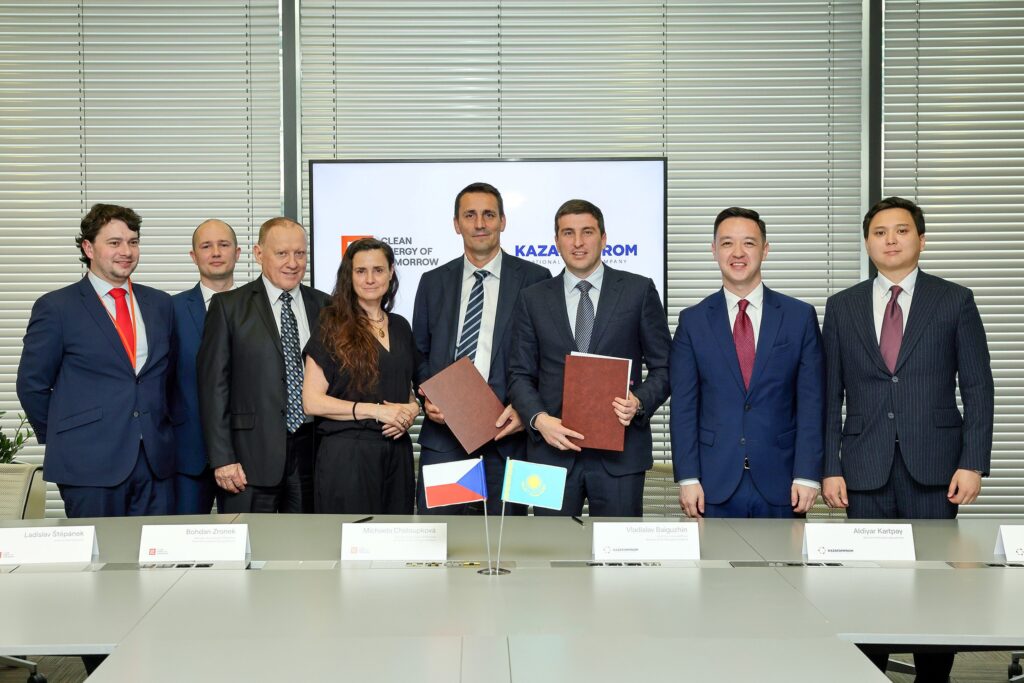
Kazakhstan’s National Atomic Company Kazatomprom has signed a contract with Czech energy giant ČEZ a.s. to supply natural uranium for the country’s nuclear power plants. The agreement marks a significant step in strengthening energy cooperation between Kazakhstan and the European Union. Expanding European Reach The contract, signed at ČEZ’s headquarters in Prague, represents a key milestone in the expansion of Kazatomprom’s uranium supply footprint in Europe. Under the seven-year deal, Kazakhstan will provide approximately one-third of the uranium needed for Westinghouse fuel assemblies used at the Temelín Nuclear Power Plant. Both parties emphasized the agreement’s importance for regional energy security and environmental sustainability. “With the signing of this agreement, Kazatomprom continues to expand its presence in Europe and strengthen its strategy to diversify its sales portfolio. This is another important milestone on our way to becoming the preferred partner for the global nuclear power industry,” said Vladislav Baiguzhin, Kazatomprom’s Chief Commercial Officer. Bogdan Zronek, head of ČEZ’s nuclear division, highlighted the strategic value of the partnership: “The partnership with Kazatomprom diversifies our supplier portfolio and is of strategic importance for ČEZ and the Czech Republic. It provides a stable and reliable source of fuel for our nuclear power plants.” ČEZ and the Czech Nuclear Sector ČEZ is Central Europe’s leading energy company, operating six nuclear reactors at the Temelín and Dukovany sites. Together, these facilities supply roughly 36% of the Czech Republic’s electricity. The company is actively advancing its VIZE 2030 decarbonization strategy, aiming to secure a stable, environmentally friendly energy future. Kazatomprom’s Global Standing Kazatomprom remains the world’s largest producer of natural uranium, accounting for about 21% of global primary production in 2024. All production is carried out in Kazakhstan using in-situ leaching, an environmentally safer extraction method. The company is certified under ISO 45001 and ISO 14001 standards. Kazatomprom exports uranium globally, with key markets in China, Southeast Asia, Europe, and North America. Deliveries are made via long-term contracts and the spot market, including through its Swiss-based subsidiary, Trading House KazakAtom. Ongoing International Partnerships The agreement with ČEZ builds on a strategic relationship initiated in 2016, when the two sides signed a memorandum to cooperate on nuclear fuel cycle projects, including exploration, mining, processing, reclamation, marketing, and technological innovation. In February 2025, Kazatomprom also signed its first-ever uranium supply contract with Switzerland’s Axpo Power AG and Kernkraftwerk Leibstadt AG for the Beznau and Leibstadt nuclear power plants. The latest deal further solidifies Kazatomprom’s position in Europe’s energy market and underscores the growing role of nuclear power in the region’s shift toward clean, sustainable energy sources.

Kazakh Scientists Unveil Advanced Organ Storage Technology at Expo 2025

A team of Kazakhstani doctors from the UMC Heart Center, led by renowned cardiac surgeon Yuri Pya, presented a groundbreaking development at the World Expo 2025 in Osaka, Japan: ALEM, a device designed for long-term preservation of donor organs. Developed with the support of the Heart Center Foundation, ALEM (Astana Life Ex-situ Machine) addresses a pressing issue in Kazakhstan’s vast geographical context, ensuring timely and effective delivery of donor organs across long distances. Extending the Viability of Life The ALEM device can keep a donor heart viable for more than 24 hours by replicating conditions inside the human body, including maintaining precise temperature, oxygen levels, and vital functions. This significantly extends the traditional preservation window of 4-6 hours, offering new potential for transplantation logistics and success rates. From Emergency to Innovation The idea for ALEM was born from necessity. As Pya recalls, “We had a difficult situation, due to weather conditions we couldn’t get a donor heart in time. Then the idea arose to create our own system, more affordable and perhaps even more effective.” The device was developed through interdisciplinary collaboration among cardiac surgeons, anesthesiologists, and engineers. It has already passed preclinical trials on animals and is now preparing for the next phase: clinical testing. More Than Preservation According to Timur Lesbekov, director of the Heart Center’s cardiac surgery department, ALEM offers not only preservation but also therapeutic potential. “This product can be called a breakthrough. To sustain an organ for more than a day is a great achievement. Importantly, the system can also treat organs before transplantation,” he said. Developers hope that showcasing ALEM at Expo 2025 will attract international attention and foster collaboration in the field of transplantology. “This is a historic moment for Kazakhstan,” said Murat Zauyrov, director of the Heart Center Foundation. “It’s the first time we are presenting a major medical innovation on such a global stage. Our aim is to contribute to global medical progress.” Kazakhstan’s Transplant Challenges Kazakhstan currently needs around 10 transplants per million residents annually, according to Pya. Since 2012, 100 heart transplants have been performed, a modest number, but each representing a life saved. “It’s not just a surgery. It’s a complex operation involving air ambulances, police, and coordination across at least five ministries,” he emphasized. Plans are underway to begin serial production of the ALEM device in Astana, which would position Kazakhstan among a select group of countries with a domestically developed system for long-distance organ transport. Expo 2025: A Global Stage for Innovation Expo 2025 in Osaka features participation from 158 countries and nine international organizations. ALEM is on display at the Kazakhstan Pavilion in the “Connecting Lives” zone under the broader theme “Creating a Future Society for Our Lives”. Kazakhstan’s pavilion, designed in the shape of a traditional shanyrak, was presented alongside exhibitions from South Korea, Germany, and Turkey. The opening ceremony was attended by Japanese Emperor Naruhito and Prime Minister Shigeru Ishiba, with Kazakhstan’s delegation led by Minister of Trade Arman Shakkaliev.

Kazakhstan’s Economy Receives Boost Amid Changing Tariff and Commodity Dynamics

Kazakhstan’s economy has recently navigated a series of external market shocks. While the suspension of U.S. reciprocal tariffs by President Trump represents a positive development, its direct impact on Kazakhstan is minimal, as the 27% tariff applied to only a minor segment (4.8%) of the nation’s exports and excluded key commodities such as oil, uranium, and silver. Kazakhstan is still subject to the universal baseline rate of 10%. However, the broader improvement in global market dynamics, spurred by increased demand for commodities that Kazakhstan predominantly produces, has provided a substantial boon to the country's economic prospects. This shift underscores a more favorable outlook for Kazakhstan, with rising global demand aligning closely with its resource-driven economy. On April 9, oil prices, in particular, rebounded strongly after hitting a four-year low earlier in the day. Brent crude rose by 4.23% to $65.48 per barrel. Similar trends were observed in other key commodities. Copper prices jumped nearly 3%, and gold rose over 3%, marking its best performance since October 2023, as investors sought safe-haven assets. U.S. natural gas futures, meanwhile, experienced a significant 8% increase, reflecting broader optimism spurred by the tariff suspension. Uranium futures, another strategic export for Kazakhstan, edged up by 1.18% to $64.40. Rare earth metals also showed exceptional growth, with a 12.5% gain highlighted by the VanEck Rare Earth and Strategic Metals ETF (REMX). This coincides with Kazakhstan’s recent discovery of over 20 million metric tons of rare earth deposits, consolidating its position as a potential global heavyweight in this critical market. The timing of the tariff suspension aligns closely with domestic efforts to address the country’s economic challenges. On April 9, President Kassym-Jomart Tokayev convened a meeting to tackle the ongoing economic crisis triggered by global market collapses and declining oil prices. He stressed the importance of maintaining development priorities while implementing swift actions to mitigate the crisis’ impact. The rise in commodity prices following the tariff halt gives these initiatives fresh momentum and a more favorable outlook for executing recovery measures.

Opinion: Kazakhstan’s Tax Reform May Come as an Unpleasant Surprise

Kazakhstan's tax reform has reached a critical juncture. This week, the Mazhilis, the lower house of parliament, approved the draft of the new Tax Code in its first reading. The sweeping document, comprising 822 articles, proposes the repeal of the current Tax Code along with the accompanying implementation law. While the reform fulfils directives issued by President Kassym-Jomart Tokayev in his 2022 and 2023 state-of-the-nation addresses, skepticism abounds. Experts and business leaders have voiced concerns, and lawmakers themselves have offered mixed reviews, with many adopting a critical stance. Concerns About Scope and Timing Though tax professionals broadly agree on the need for tax reform, some warn that the current version may be the most stringent in over two decades. Critics argue that without addressing structural inefficiencies in government spending, raising taxes alone will not yield the desired outcomes. They emphasize the need for a balanced approach that supports both fiscal sustainability and economic resilience. Adding to the unease is the timing. Kazakhstan, like many economies, faces mounting global pressures. The threat of a financial downturn, exacerbated by falling energy prices and international tariff disputes, has prompted urgent consultations at the highest level. Tokayev recently convened a closed-door meeting with the prime minister and the head of the National Bank, instructing them to finalize a government action plan to mitigate potential economic fallout and maintain investment flows. A Mixed Bag of Reactions Some analysts acknowledge that the existing Tax Code, adopted in 2008, is outdated. They argue that reforms are essential to address digitalization, evolving business models, and new global challenges. Calls for improved tax administration, especially the simplification of procedures and adoption of risk-based oversight, aim to ease pressure on law-abiding businesses while better targeting the informal sector. The draft law also seeks to limit inefficient tax exemptions and make incentives more focused and transparent. These changes are framed as part of Tokayev's broader economic transformation agenda, which prioritizes fair taxation, industrial processing, and innovation. Nonetheless, many entrepreneurs remain uneasy. Economic instability, lingering post-pandemic effects, geopolitical risks, and sanctions-related supply disruptions have left businesses vulnerable. Critics worry that introducing a more demanding tax regime now may fuel uncertainty and discourage investment. Additional concerns center on governance. Persistent issues of corruption, selective enforcement, and administrative overreach have eroded public trust. Without parallel reforms in public administration, experts argue that changes to tax policy alone may fall short. Divided Political Reception The draft Tax Code’s passage through its first reading does not guarantee smooth sailing. Even the ruling Amanat party, while supporting the bill, has voiced reservations. Its members have called for safeguarding small and medium-sized enterprises and enhancing investment incentives. The opposition Ak Zhol party has been the most vocal critic. Its leader, Azat Peruashev, characterized the proposal as a fiscal crackdown rather than genuine reform. The faction demands greater transparency, public consultations, and a reconsideration of proposed VAT hikes and lower registration thresholds. Meanwhile, the pro-business Respublica party supports the reform in principle but insists on greater simplification in business-tax...

Central Asia Endures Record-Breaking March Heatwave Attributed to Climate Change

Central Asia experienced an unprecedented heatwave in March 2025, with temperatures soaring to levels typically seen in late spring or summer. According to a new study by World Weather Attribution (WWA), cities across Uzbekistan, Kazakhstan, Kyrgyzstan, and Turkmenistan recorded daytime highs near or above 30°C, far above the seasonal norm. In Kyrgyzstan's Jalalabad, the temperature peaked at 30.8°C, while Uzbekistan's Namangan and Fergana registered 29.4°C and 29.1°C, respectively. Kazakhstan’s Shahdara witnessed a nighttime low of 18.3°C, the hottest March night ever recorded in the country. Researchers from the Netherlands, Sweden, Denmark, the United States, and the United Kingdom examined the five hottest days and nights in March across the region. Their findings indicate that human-induced climate change made the heatwave approximately 4°C hotter and nearly three times more likely. They also noted that climate models tend to underestimate early-season heat, particularly in March. Economic and Agricultural Risks The timing of the heatwave posed serious challenges for agriculture. In Kazakhstan, the spike in temperatures coincided with the start of spring wheat planting, while in neighboring countries, fruit trees were already in bloom, raising concerns about yield losses. Agriculture remains a critical sector in the region, employing up to 50% of the workforce in some countries and contributing between 5% and 24% to GDP. The region also depends heavily on glacier-fed irrigation systems. Unseasonably warm weather can accelerate snowmelt, depleting water reserves needed during peak agricultural demand later in the season. In response to declining glacier volumes, seven artificial glaciers were built in southern Kyrgyzstan's Batken region in late autumn 2024 to support future water needs. A Warming Future The WWA study warns that without significant emissions reductions, such heatwaves will become increasingly frequent and intense. If global warming reaches 2.6°C, events like March 2025 could become far more common. Governments in Central Asia are beginning to take action. Kazakhstan and Tajikistan, for example, have integrated heat-related risks into their national climate adaptation plans. Still, experts urge a broader, more coordinated regional response, calling for the use of heat-tolerant crops, enhanced early warning systems, and climate-conscious urban planning.

Jennifer Lopez to Perform in Kazakhstan – Billion-Tenge Boost Expected

American pop icon Jennifer Lopez will perform in Kazakhstan’s capital this summer, with local officials predicting a major economic windfall from the event. Malik Hasenov, producer at Astana Concert Company, told a recent government meeting that the concert could generate over 6.5 billion KZT ($12.6 million) for the city’s economy and contribute 400 million KZT ($778,000) in taxes to the state budget. Kazakhstan on the Map of J.Lo's World Tour Astana has been added to Lopez’s Up All Night world tour schedule, with the concert set to take place at Astana Arena on August 1. The tour includes stops in Turkey, Egypt, Spain, Hungary, Poland, the UAE, and other countries, but Kazakhstan is her only Central Asian destination. She is scheduled to perform in Abu Dhabi before arriving in Astana and will close the tour in Armenia's capital Yerevan. “I will have some special concerts this summer. I am very much looking forward to meeting you. We haven’t seen each other for too long. This summer is going to be awesome,” Lopez wrote on Instagram. Economic Impact: Expectations and Numbers According to Hasenov, approximately 15,000 tourists are expected to visit Astana for the concert, with significant spending projected across hotels, restaurants, transportation, and retail sectors. “Jennifer Lopez’s arrival will be a landmark moment, opening Astana on the touring map of A-class stars,” he said. Tickets are expected to go on sale shortly, ranging in price from 40,000 to 150,000 KZT ($75 to $290). Astana will also host two other major events in 2025. On July 13, the Alem Fest music festival, featuring British singer Craig David as headliner, will take place at Astana Arena, coinciding with the closing of Comic Con Astana. Additionally, large-scale drone shows are planned, expected to attract up to a million spectators. J.Lo and Kazakhstan: A Brief History This won’t be Jennifer Lopez’s first visit to Kazakhstan. In 2010, she performed at a private birthday celebration, and in 2011, she returned for a New Year’s corporate event. Reports estimate she was paid around $3 million for both appearances. In 2017, Lopez drew attention from Kazakhstani fans during a Las Vegas concert when she echoed chants of “Kazakhstan!” shouted by Gennady Golovkin supporters, a moment that quickly went viral. A year later, controversy arose when YouTube temporarily blocked the Kazakh music video Zyn-zyn, citing similarities to Lopez’s Control Myself. The video was later reinstated following public backlash in Kazakhstan, with many hailing it as a “small victory”. Most recently, in February 2025, Lopez interacted with a Kazakh fan named Binura during a concert in Abu Dhabi, sparking lively discussions across Kazakhstani social media.