• KGS/USD = 0.01144 0%
  • KZT/USD = 0.00211 0%
  • TJS/USD = 0.10526 0%
  • UZS/USD = 0.00008 0%
  • TMT/USD = 0.28530 0%
  • KGS/USD = 0.01144 0%
  • KZT/USD = 0.00211 0%
  • TJS/USD = 0.10526 0%
  • UZS/USD = 0.00008 0%
  • TMT/USD = 0.28530 0%
  • KGS/USD = 0.01144 0%
  • KZT/USD = 0.00211 0%
  • TJS/USD = 0.10526 0%
  • UZS/USD = 0.00008 0%
  • TMT/USD = 0.28530 0%
  • KGS/USD = 0.01144 0%
  • KZT/USD = 0.00211 0%
  • TJS/USD = 0.10526 0%
  • UZS/USD = 0.00008 0%
  • TMT/USD = 0.28530 0%
  • KGS/USD = 0.01144 0%
  • KZT/USD = 0.00211 0%
  • TJS/USD = 0.10526 0%
  • UZS/USD = 0.00008 0%
  • TMT/USD = 0.28530 0%
  • KGS/USD = 0.01144 0%
  • KZT/USD = 0.00211 0%
  • TJS/USD = 0.10526 0%
  • UZS/USD = 0.00008 0%
  • TMT/USD = 0.28530 0%
  • KGS/USD = 0.01144 0%
  • KZT/USD = 0.00211 0%
  • TJS/USD = 0.10526 0%
  • UZS/USD = 0.00008 0%
  • TMT/USD = 0.28530 0%
  • KGS/USD = 0.01144 0%
  • KZT/USD = 0.00211 0%
  • TJS/USD = 0.10526 0%
  • UZS/USD = 0.00008 0%
  • TMT/USD = 0.28530 0%

Viewing results 397 - 402 of 1474

East Kazakhstan’s Akbaur Stones: An Ancient Site Shrouded in Mystery

East Kazakhstan is home to one of Central Asia’s most enigmatic archaeological sites, the Akbaur complex. Often dubbed the “Kazakh Stonehenge,” it has been linked to ancient rituals, astronomical observations, and even cosmological legends. Despite decades of study, Akbaur continues to raise more questions than it answers. The Mysteries of Akbaur Archaeologists regard Akbaur as a unique cultural monument, though its true purpose remains debated. Some view it as an open-air temple, others as an ancient observatory or a major cult center for early civilizations of the region. More than a tourist attraction, Akbaur is a symbol of East Kazakhstan’s deep and still-unrevealed history. The site is not just a scattering of stones. It is a vast historical and architectural complex covering some 70,000 hectares, long surrounded by legends. Today, this area is protected by the state, and special permission is required to visit it, but just a few decades ago, both tourists and livestock roamed freely here. [caption id="attachment_36128" align="aligncenter" width="352"] @Yulia Chernyavskaya[/caption] For local residents, Akbaur holds sacred meaning. A tradition of leaving offerings has persisted through the centuries: small pieces of meat or fat are placed in shallow man-made depressions in stone slabs. A stone staircase, also human-made, leads to a grotto carved into the rock, and is believed to have carried symbolic as well as functional significance. Even the name “Akbaur” is contested. Possible Kazakh translations include “white liver,” “close relative,” and “mountain slope.” Though varied, each carries symbolic resonance with the site’s layered history. A Portal Between Worlds? The Akbaur complex is located near the village of Besterek, about 38 kilometers from Ust-Kamenogorsk. At first glance, the arrangement of boulders and slabs might appear natural. Archaeologists, however, identify the site as a Bronze Age monument. A conical grotto sits six meters above the mountain base, decorated with petroglyphs dating to the early 3rd millennium BCE. Around 80 images have been recorded, depicting humans, animals, dwellings, and tools, alongside more mysterious symbols. Interpretations range from cosmological signs to religious symbols, with fringe theories suggesting messages for descendants or even references to extraterrestrials. [caption id="attachment_36130" align="aligncenter" width="350"] @Yulia Chernyavskaya[/caption] [caption id="attachment_36131" align="aligncenter" width="350"] @Yulia Chernyavskaya[/caption] What makes the petroglyphs unique is their use of red ochre, a rare pigment in the region’s rock art. Some scholars speculate blood may have been mixed into the paint, adding a ritual dimension. The site’s natural features are equally intriguing. Above the grotto lies a massive slab with a heart-shaped hole, believed by some to have functioned as a “sky window” for astronomical observations. Elsewhere, stone “bowls” reveal remarkable precision: during the spring equinox, sunlight reflecting on water in one cavity aligns exactly with another, suggesting their use as a solar calendar. Other theories propose more practical functions. The depressions could have been used in sacrifices or metallurgy, given the discovery of nearby ingots matching their shapes. What Does Akbaur Hide? Systematic study of Akbaur began in the 1970s under archaeologist Zainolla Samashev, a native of East Kazakhstan. Since 2019, excavations...

Kazakhstan Sees Growth in Urban Cancer Cases

The incidence of cancer has risen in Kazakhstan’s cities, while rural areas have seen a decline, according to Energyprom.kz, which cited data from the Ministry of Health. In 2024, cancer incidence in urban areas reached 239.2 cases per 100,000 people, up from 230 the previous year. The highest rates, exceeding the national average, were recorded in the Karaganda region (353.5 per 100,000), Kostanay region (352.7), East Kazakhstan region (349.4), and Abay region (302.4). Environmental factors are believed to contribute. Karaganda, the hub of Kazakhstan’s coal and metallurgical industries, was ranked the world’s third most polluted city in 2024, according to the World Air Quality Report by IQAir. By contrast, cancer incidence in rural areas decreased to 147.1 per 100,000 people in 2024, down from 173.8 in 2023. Regional Data The total number of cancer patients in Kazakhstan reached 230,900 in 2024, an increase of 12,800, or 5.8%, compared to the previous year. Almaty, the country’s largest city, recorded the highest number of patients: 34,200. However, its incidence rate per 100,000 people was slightly below the national average. Karaganda region ranked second with 21,400 patients. Astana followed with 16,800. In 2024, 41,300 people in Kazakhstan were diagnosed with cancer for the first time. The largest numbers of new cases were in Almaty (5,200), Karaganda region (3,800), and Astana (3,000). Medical statistics also showed that the rate of primary diagnoses declined slightly, from 208.6 to 204.8 per 100,000 people. Kazakhstan in Regional Contex Within Central Asia, Kazakhstan has the highest cancer incidence, followed by: Kyrgyzstan - 86 per 100,000 Uzbekistan and Turkmenistan - 74.1 Tajikistan - 32.1 The cancer mortality rate in Kazakhstan also rose in 2024, from 65.1 to 68 deaths per 100,000 people. Measures to Combat Cancer To expand treatment access, Kazakhstan has launched domestic production of oncological drugs. In October 2024, Swiss pharmaceutical company F. Hoffmann-La Roche Ltd., in partnership with Nobel Almaty Pharmaceutical Factory JSC, began producing three biotechnological medicines in Almaty for the treatment of HER2-positive breast cancer, an aggressive form affecting up to 20% of breast cancer patients in Kazakhstan. Each year, around 5,000 new cases of breast cancer are registered in the country, with about 1,200 resulting in death.

Kazakhstan Wins Team Gold at World Boxing Championships in Liverpool

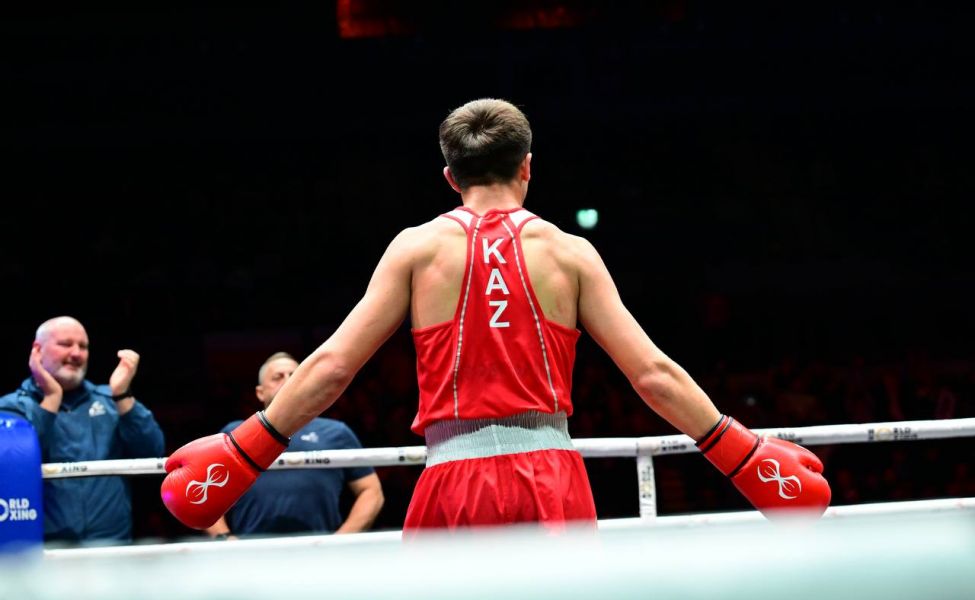
Kazakhstan's national boxing team has clinched the team gold medal at the inaugural World Boxing Championships held in Liverpool, England, edging out Uzbekistan by securing more gold medals. A total of 554 athletes from 68 countries participated in the competition, including 20 boxers from Kazakhstan, 10 male and 10 female. On September 14, eight Kazakhstani and eight Uzbekistani boxers advanced to the finals. Heading into the decisive final bout, both Kazakhstan and Uzbekistan had secured six gold medals each. The tie-breaker unfolded in the super heavyweight category (over 90 kg), where Kazakhstan’s Aibek Oralbay faced Uzbekistan’s Jahongir Zokirov. Zokirov had the upper hand after the first round, but Oralbay mounted a comeback and ultimately won by a 3:2 split decision. With this victory, Kazakhstan topped the overall medal table with seven gold medals. Uzbekistan followed with six, while India claimed third place with two. President Kassym-Jomart Tokayev congratulated the national team, praising gold medalists Sanzhar Tashkenbay, Mahmud Sabyrkhan, Alua Balkibekova, Aida Abikeeva, Torehan Sabyrkhan, Natalia Bogdanova, and Aibek Oralbay, as well as silver medalist Nazym Kyzaibay and bronze winners Victoria Grafeeva and Eldana Talipova. He wished success to those still competing in Liverpool and emphasized that while Kazakhstan’s performance at the championships was a major success, intensive preparation must continue ahead of the upcoming Olympic Games in the United States. This tournament marked a significant milestone as the first world championship organized by World Boxing, a breakaway international federation established in 2023 in response to ongoing governance and financial issues within the International Boxing Association (IBA). Following the IBA’s failure to implement required reforms, the International Olympic Committee (IOC) revoked its accreditation, placing boxing's Olympic status in jeopardy. World Boxing, now recognized by the IOC as of spring 2025, brought together more than 100 national federations and was granted the authority to organize Olympic qualifying events. Liverpool thus became the historic venue for the first world championship under the new structure. Athletes from Brazil (4), India and Poland (3 each), Turkey, Australia, and England (2 each), as well as France, Mongolia, Spain, Japan, Bulgaria, the USA, Taiwan, and Ireland (1 each) also reached the finals. As previously reported by The Times of Central Asia, Olympic champion Lazizbek Mullojanov, who won gold at the 2024 Games, was not included in Uzbekistan’s lineup. Mullojanov was suspended in mid-2025 amid an ongoing anti-doping investigation.

Kazakhstan Trade Deficit with China Quadruples in 2025

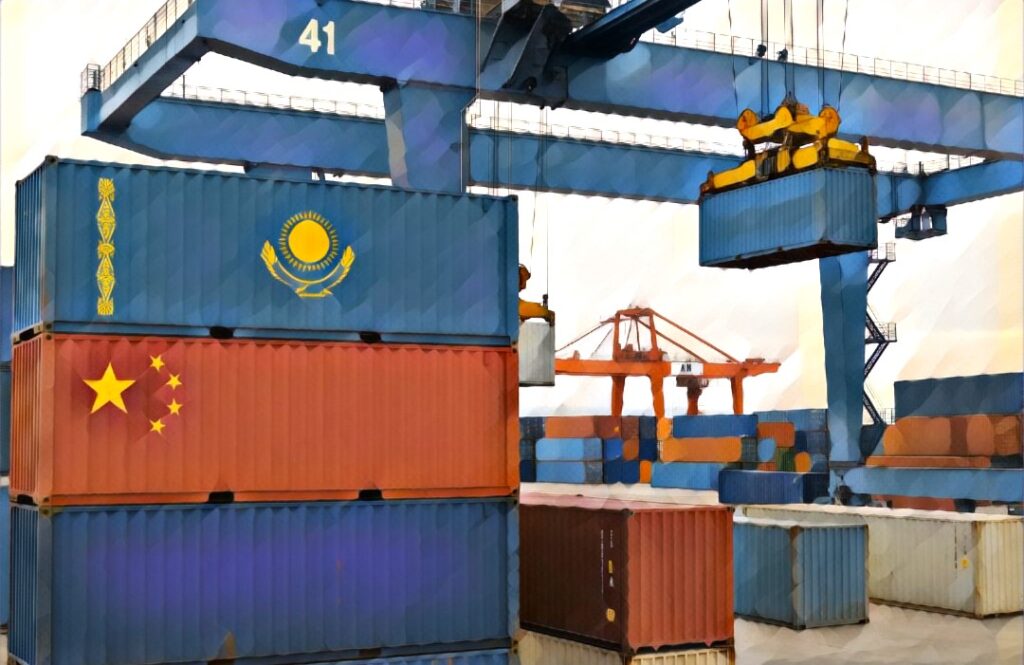
Kazakhstan’s trade deficit with China reached $1.8 billion in the first half of 2025, a sharp increase compared to $400 million for the whole of 2024. According to the Association of Financiers of Kazakhstan (AFK), the growth in trade turnover was driven almost entirely by rising imports of Chinese goods. A review published by AFK noted that Kazakhstan’s trade balance with China has remained in deficit since 2023, with the gap continuing to widen. Despite this, China remains Kazakhstan’s largest trading partner, accounting for more than 20% of the country’s total foreign trade. From January to June 2025, mutual trade between the two countries increased by 5.9% to $14.9 billion. However, Kazakhstan’s exports fell nearly 10%, while imports surged by 22.8%. “The decline in export revenues is mainly due to falling oil and metal prices and weaker demand from China, which increases the vulnerability of Kazakhstan’s export-oriented raw materials model,” AFK experts stated. Imports are expanding in line with rising domestic consumption and the rollout of large-scale infrastructure projects. China’s share of Kazakhstan’s trade turnover rose to 22.6% in the first half of 2025, up from 20.7% a year earlier. The growth was fueled by imports, which increased their share to 28.6% from 23.9%, while exports fell to 17.8% from 18.4%. Kazakhstan did record modest export gains in certain categories, including animal and plant products (+$164 million) and vehicles (+$160 million). These, however, were outweighed by sharp declines in mineral product exports (-$599 million) and metals (-$408 million). Imports from China grew most significantly in vehicles (+$1.2 billion), metals (+$279 million), and chemical products (+$231 million). The increase in vehicle imports was aided by a 14% drop in average car prices from China. Imports of food, furniture, construction materials, and consumer goods also rose. Trade settlements are also shifting. While the dollar remains the dominant contract currency, the yuan is gaining ground in import transactions, with the euro ranking third due to Kazakhstan’s ongoing trade ties with Europe. As a result, Kazakhstan’s trade deficit with China widened to $1.8 billion in January-June 2025, compared to $0.4 billion in the whole of 2024. “Imports are likely to continue to grow amid high consumer and investment demand, while exports will remain dependent on commodity prices and industrial dynamics in China. China is becoming an increasingly pronounced ‘economic magnet’ for Kazakhstan,” the AFK report concluded. As The Times of Central Asia previously reported, Kazakhstan is experiencing a slowdown in manufacturing activity in 2025 following record growth at the end of last year.

Blast at Scrap Metal Site in Kazakhstan Kills Three Uzbek Citizens

The bodies of three Uzbek citizens who died in an explosion at a scrap metal plant in Kazakhstan's Almaty region are being repatriated, according to Uzbek officials.    The deaths occurred on September 11 at the LGN Metal business in Baiserke village and local police have opened a criminal case for “violation of labor protection laws leading to death,” Uzbekistan’s Migration Agency said on Telegram on Saturday. It expressed condolences and said migration officers were helping the relatives of the dead. “Constant cooperation has been established with the Kazakh side during the investigation process,” the agency said.  Officials have not yet announced the cause of the blast. Plant owner Amirbek Sherbaev said a Chinese company rents the site and that it was possible that military ordnance was mixed in with scrap metal that had been received there, according to KTK, a television channel in Kazakhstan. KTK said defense ministry officials had joined the inquiry.

Astana to Host 2027 UEFA Under-19 Futsal European Championship

Astana has been selected to host the 2027 UEFA Under-19 Futsal European Championship, marking the first time Kazakhstan will stage a youth futsal tournament at this level. The decision was announced during a UEFA Executive Committee meeting in Tirana, Albania. According to the Kazakhstan Football Federation (KFF), the joint bid submitted by the KFF and the Kazakhstan Futsal Association received UEFA’s approval, granting Astana the right to organize the final tournament. The matches are tentatively scheduled to take place from September 26 to October 3, 2027, at the Zhekpe Zhek Sports Palace in the capital. Launched in 2019, the UEFA Under-19 Futsal Championship has been held every two years. The inaugural edition was held in Latvia's capital Riga, followed by tournaments in Spain (Jaén, 2022) and Croatia (2023). The 2025 edition is set to take place in Chișinău, Moldova, from September 28 to October 5. The final tournament features eight teams: the host nation and seven group winners from the qualification rounds. The lineup for Euro 2025 includes Moldova, Ukraine, Slovenia, Czechia, Turkey, Spain, Italy, and Portugal, the defending champions. Spain previously claimed back-to-back titles in 2019 and 2022. For Kazakhstan’s U-19 team, Euro 2027 will mark their debut in the finals, as host nations qualify automatically. While the youth squad has yet to make an international impact, the senior national futsal team has built a strong reputation. Kazakhstan secured bronze at Euro 2016 in Belgrade, reached the semifinals again in Slovenia in 2018, and advanced to the quarterfinals at Euro 2022 in the Netherlands. The senior team is currently competing for a spot in Euro 2026, which will be co-hosted by Latvia, Lithuania, and Slovenia. After missing direct qualification, Kazakhstan will face Italy in play-off matches on September 18 (away) and September 23 (home in Astana). Despite generational changes, naturalized Brazilian players such as Leo Higuita, Douglas Junior, and Edson continue to play key roles. Earlier this year, Kazakhstan introduced a legislative ban on the use of public funds to pay foreign athletes. Hosting Euro 2027 represents a significant milestone in Kazakhstan’s efforts to promote youth sports and strengthen its standing in European futsal. UEFA’s decision highlights the country’s growing role in international sport and provides a platform for the next generation of Kazakh futsal players to compete at the highest level.