• KGS/USD = 0.01143 0%
  • KZT/USD = 0.00205 0%
  • TJS/USD = 0.10433 0.1%
  • UZS/USD = 0.00008 0%
  • TMT/USD = 0.28577 0%
  • KGS/USD = 0.01143 0%
  • KZT/USD = 0.00205 0%
  • TJS/USD = 0.10433 0.1%
  • UZS/USD = 0.00008 0%
  • TMT/USD = 0.28577 0%
  • KGS/USD = 0.01143 0%
  • KZT/USD = 0.00205 0%
  • TJS/USD = 0.10433 0.1%
  • UZS/USD = 0.00008 0%
  • TMT/USD = 0.28577 0%
  • KGS/USD = 0.01143 0%
  • KZT/USD = 0.00205 0%
  • TJS/USD = 0.10433 0.1%
  • UZS/USD = 0.00008 0%
  • TMT/USD = 0.28577 0%
  • KGS/USD = 0.01143 0%
  • KZT/USD = 0.00205 0%
  • TJS/USD = 0.10433 0.1%
  • UZS/USD = 0.00008 0%
  • TMT/USD = 0.28577 0%
  • KGS/USD = 0.01143 0%
  • KZT/USD = 0.00205 0%
  • TJS/USD = 0.10433 0.1%
  • UZS/USD = 0.00008 0%
  • TMT/USD = 0.28577 0%
  • KGS/USD = 0.01143 0%
  • KZT/USD = 0.00205 0%
  • TJS/USD = 0.10433 0.1%
  • UZS/USD = 0.00008 0%
  • TMT/USD = 0.28577 0%
  • KGS/USD = 0.01143 0%
  • KZT/USD = 0.00205 0%
  • TJS/USD = 0.10433 0.1%
  • UZS/USD = 0.00008 0%
  • TMT/USD = 0.28577 0%

Viewing results 877 - 882 of 1395

Azerbaijan and Armenia to Hold Talks in Kazakhstan

Officials in Baku have agreed to a meeting of the foreign ministers of Azerbaijan and Armenia in Kazakhstan. Azeri president Ilham Aliyev stated as much at a meeting with participants of the international forum "COP29 and a Green Vision for Azerbaijan" held at ADA University, Turan.az reports. Aliyev said that if Yerevan gives reciprocal consent, their next talks will be held in Astana. He reminded the audience of the previously concluded Madrid Principles, which were first proposed in 2007. "We have a common understanding of how the peace agreement should look like. We just need to work out the details. However, of course, both sides need time. Now there is a unique chance. When the USSR collapsed there were wars in our region, unlike the Baltic States, which started their independent life peacefully. Now we have this chance. I think COP29 is a great opportunity for this," Aliyev said. On April 15 Kazakhstan's president Kassym-Jomart Tokayev paid an official visit to Armenia. Tokayev called on Yerevan and Baku to settle the conflict through negotiations, and he suggested Kazakhstan as the location for hosting the dialog. Tokayev himself spent years as a diplomat, and Kazakhstan seems to be positioning itself as an international mediator, aiming to be recognized as a significant diplomatic player on the world stage. Member of the Kazakhstan Institute for Social Development, Yernar Kushaliyev commented: "Kazakhstan pursues a multi-vector foreign policy, which allows it to effectively interact with various global powers and regional actors. Kazakhstan has a unique potential to play the role of the main mediator in the Eurasian region, especially in the settlement of disputes between states. The country maintains a neutral position, not participating in military conflicts, which creates favorable prerequisites for mediation and diplomacy. This position strengthens confidence in Kazakhstan as a reliable mediator and organizer of peace negotiations". Kushaliyev stresses that, in the context of the current negotiations, the military situation is not developing in Armenia's favor. "Azerbaijan, in its turn, has successfully implemented a number of strategic and tactical tasks in Nagorno-Karabakh, strengthening its positions. As a result of these circumstances, it seems likely that both sides will be able to come to constructive agreements and demarcate their borders during the negotiations to be held in Astana," he said.
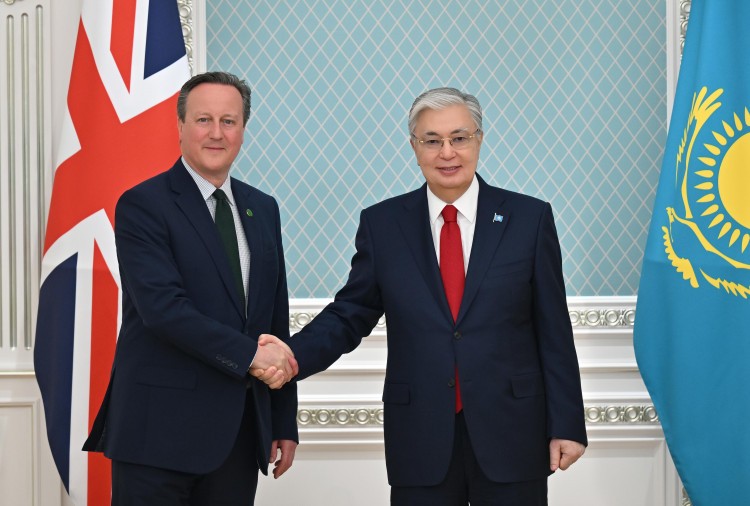
Britain’s Cameron Signs Strategic Partnership Agreement in Astana

A strategic partnership and cooperation agreement between Kazakhstan and Great Britain was signed by the two countries' foreign ministers, Murat Nurtleu and David Cameron, in Astana on 24 April. The Kazakh Foreign Ministry has commented that the document aims to strengthen bilateral relations in a wide range of sectors including foreign policy and security, trade and investment, protection of intellectual property, partnerships in energy and raw materials, transportation, protection of the environment and climate change, banking and financial services, employment and social policy, science, and education. Nurtleu added: “This comprehensive agreement will be a significant step in taking political, trade and investment relations between Astana and London to new horizons… We believe our strong and mutually beneficial strategic partnership will continue to strengthen all areas, from energy to rare metals, ecology to education.” Cameron recalled that strategic dialogue between the countries had begun eleven years ago during his first visit to Kazakhstan as Britain’s prime minister and confirmed the UK’s commitment to developing cooperation with Kazakhstan as its key partner in Central Asia. Memoranda of understanding on opening a branch of Queen’s University Belfast in Almaty and launching Kazakh language courses at Oxford University were also concluded during Cameron’s visit. At a meeting with Cameron later that day, Kazakh president Kassym-Jomart Tokayev reiterated the importance of collaboration between the two countries and commending the strategic partnership and cooperation agreement, announced, “I am confident that this comprehensive document will definitely give a fresh boost to our multifaceted bilateral agenda.” Great Britain is among the highest ten foreign investors in Kazakhstan. Since 2005, Kazakhstan’s economy has received $17 billion in FDI from the UK and last year alone, over $795 million .

Kazakhstan Likely To Insist on Revisions to Kashagan Oil Contracts

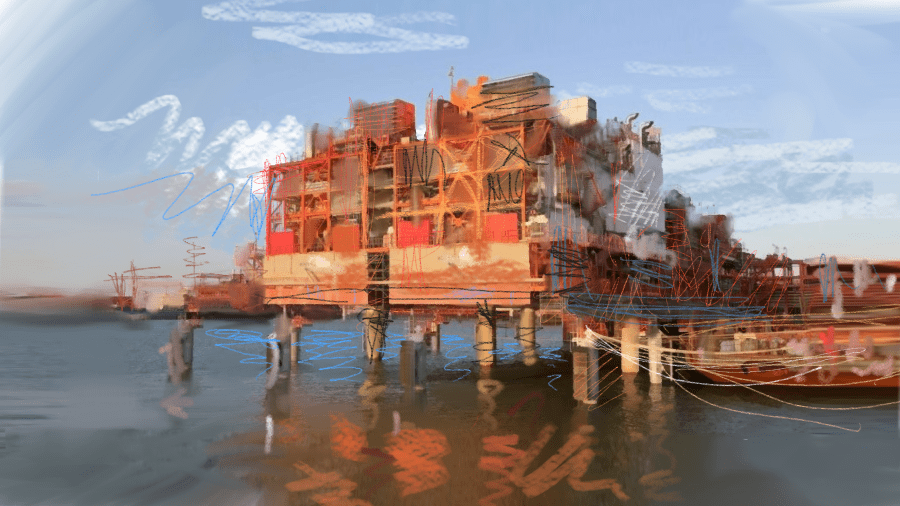
Kazakhstan is demanding compensation for lost profits from the North Caspian Operating Company (NCOC), the consortium that manages the Kashagan oil field, and arbitration claims have risen to $150 billion. Sources close to Kashagan told The Times of Central Asia that this should send the message to western energy companies that Kazakhstan is looking to revise previously signed contracts. While Bloomberg has reported the sum of the claims, citing people familiar with the matter, Kazakh government officials have declined to comment on the situation, claiming that it is a "commercial dispute." In April 2023, proceedings against the companies developing the Kashagan and Karachaganak fields began as part of a dispute over cost deductions from oil-sale proceeds of more than $13 billion and $3.5 billion, respectively. An additional $138 billion claim relates to the calculation of the cost of oil production "that was promised to the government but not delivered by the field developers," according to Bloomberg. The Ministry of Energy has not yet commented on the new claims. It states that the Kazakh authorities seek to maximize profits from their oil-production projects with the participation of foreign investors, but have been relatively flexible in previous disputes with oil corporations. International sources note that Eni, Shell, Exxon and TotalEnergies have already invested around $55 billion in Kashagan, and currently the field produces about 400,000 barrels of oil per day. NCOC investors, led by Italy's Eni, are convinced that production can be increased to 1.5 million barrels per day. NCOC has stated that it acts in strict compliance with the contract. Representatives of Eni confirmed that the Kazakh authorities have applied to the court for arbitration settlement, but did not disclose details. Earlier, Kazakhstan won a lawsuit against the Kashagan consortium which required them to pay $5.1 billion for damage to the environment. Kashagan is developed by the NCOC consortium, which includes the national company KazMunayGas (KMG) and several foreign energy companies: Eni, Shell (Great Britain), ExxonMobil (USA), Total (France), Inpex (Japan), and CNPC (China). Member of the Public Council of the Kazakh Ministry of Energy, Olzhas Baidildinov believes that the sharp increase in the amount of the lawsuit is a signal from the Kazakh side to the consortium to revise the contracts. "In my opinion, it's obvious that Kazakhstan wants to revise the terms of work on large consortia. At the same time, I have proposed many times to exchange the frozen assets of the Russian Federation for stakes in major projects: Tengiz, Karachaganak and Kashagan. There is a nuance here: for example, the shares in Karachaganak and Kashagan are managed by PSA LLP, which is determined by the authorized body, while the share in Tengiz is managed by KazMunayGas. As we see, on Kashagan and Karachaganak there are arbitration claims filed in international arbitration, there is an environmental issue - but on Tengiz they are silent for some reason. This is either KMG's unprofessionalism, because the amount of investment expense is very high, or some other unknown issues that need...

Germany Increases Investment and Trade in Kazakhstan

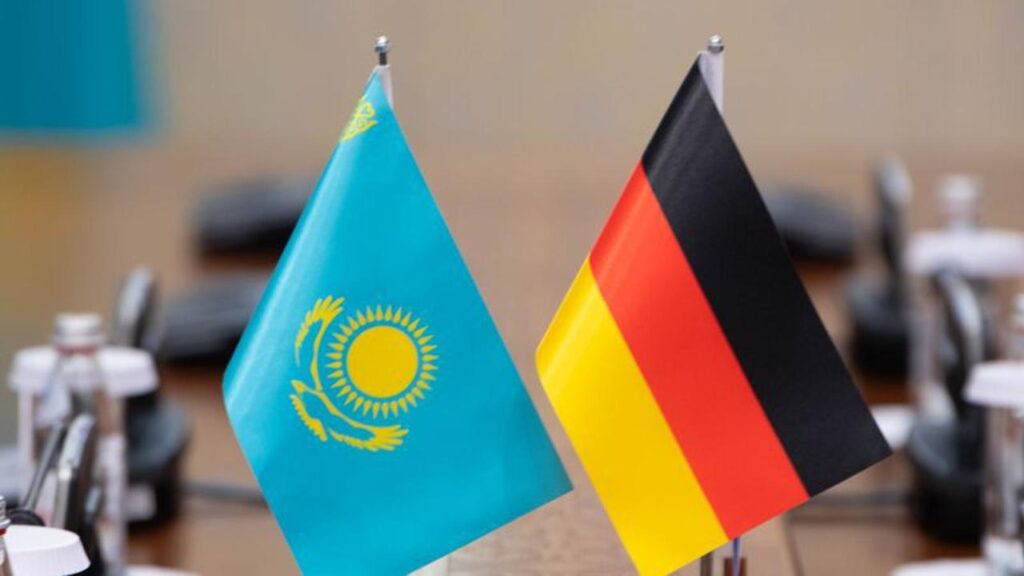
In a report on the implementation of Kazakh-German projects at a meeting of the Investment Promotion Council on 24 April, Kazakh Invest stated that investment from Germany in Kazakhstan reached an all-time high of $770 million in 2023. To date, the pool of German initiatives planned for Kazakhstan includes 63 projects with a value of around $54.4 billion and the potential to create 14.7 thousand jobs. The 32 projects already in operation, have created some 6,000 permanent posts. Bilateral trade turnover between Kazakhstan and Germany is also very positive , having leapt by 24.7% in 2022 and 41.3% in 2023. Kazakhstan, as its key partner in Central Asia, currently ranks as one of Germany’s top 50 trading partners.

Disinformation Targets Kazakhstan’s Ties with China, Russia, and the U.S.

Over an eight-day period in April 2024, a barrage of news stories featuring rumors about Kazakhstan’s foreign policy permeated Chinese media. These dubious reports alleged that the U.S. had hyped an unverified leak from a Russian Duma official claiming Kazakhstan was engaged in covert negotiations to join NATO and suggested that Kazakhstan was seeking China's support to deter a potential Russian invasion. The series of articles highlights the "fog of war" that pervades not only the battlefields of Ukraine but also the media landscape, representing a new front where Kazakhstan risks becoming collateral damage. Kazakhstan’s president has not deviated from the country’s neutrality and has maintained a difficult yet strategic multi-vector foreign policy that seeks to diversify economic and security arrangements rather than aligning exclusively with one partner. The evident information war underscores the diplomatic sensitivities which Kazakhstan faces, and the sinister tactics employed by outside actors to disrupt domestic and regional balances.   Misleading narrative #1: The U.S. is hyping an alleged voice recording of an official claiming that Kazakhstan is Russia’s next target On April 6, an alleged audio recording, attributed to Russian State Duma deputy and General Andrei Gurulov, hinted that Kazakhstan was set to become Russia's next target. The leak surfaced on X (Twitter) and was reported by the New Voice of Ukraine just hours later. In the following two days, the story propagated across at least five Chinese platforms, with numerous reposts claiming that “the Western media has vigorously hyped…the recording scandal”. The above post is machine translated from Chinese into English   A search on Google News on 21 April 2024 for “Andrei Gurulov” yielded no results, while a wider search revealed a single defense blog reporting on the alleged leak.   Misleading narrative #2: Kazakhstan is in covert discussions to join NATO Between April 10 and April 11, an array of articles and blogs appeared on at least six Chinese language media platforms (and were reposted across numerous other outlets) about Kazakhstan’s intent to join the North Atlantic Treaty Organization (NATO). The so-called “news” was based on an unverified and unconfirmed rumor. The above post is machine translated from Chinese into English   The above post is machine translated from Chinese into English   Kazakhstan has not expressed an intention to join NATO as a full member. Instead, it has engaged with NATO through partnership programs and dialogue, focusing on security cooperation, counter-terrorism, and military training within frameworks like the Partnership for Peace (PfP) program, which Kazakhstan joined in 1995. The above post is machine translated from Chinese into English   This is not the first case of gaslighting by the media on Kazakhstan-NATO issues. Images taken from the 2023 opening of a conference hall at the Peacekeeping Operations Center of the Ministry of Defense of Kazakhstan, which was attended by the U.S. Ambassador to Kazakhstan, resulted in similarly bizarre misrepresentations.   Misleading narrative #3: Kazakhstan seeks China’s security to counterbalance the Russian threat On April 14 and April 15, the latest barrage...

Kazakhstan Has Become Main Trade Partner of China’s Xinjiang Province

According to Chinese Customs Service data from the first quarter of 2024, Kazakhstan became the main trade partner of China's Xinjiang Uygur Autonomous Region. Since the beginning of the year, Xinjiang has conducted trade with 193 countries and regions of the world. The volume of imports and exports with Kazakhstan and Kyrgyzstan in currency terms has increased by 58.8% and 1.9% respectively. The volume of foreign trade originating from Xinjiang since the beginning of 2024 has increased by 42.7% year-on-year and reached about $13.2 billion. That puts Xinjiang in second place in China in terms of trade growth at the provincial level. Imports of agricultural products specifically increased by 36%. According to the General Customs Administration (GCA) of China, last year the trade turnover between Kazakhstan and Xinjiang increased by 63% and reached $20.3 billion. In the first half of 2023 China became Kazakhstan's main trading partner, displacing Russia. China supplies the country with cars, computers and laptops, plastics and plastic products -- and from Kazakhstan imports oil, natural gas, uranium, ferroalloys, mined ores and concentrates and oilseeds.