• KGS/USD = 0.01144 0%
  • KZT/USD = 0.00218 0%
  • TJS/USD = 0.10663 0%
  • UZS/USD = 0.00008 0%
  • TMT/USD = 0.28530 0%
  • KGS/USD = 0.01144 0%
  • KZT/USD = 0.00218 0%
  • TJS/USD = 0.10663 0%
  • UZS/USD = 0.00008 0%
  • TMT/USD = 0.28530 0%
  • KGS/USD = 0.01144 0%
  • KZT/USD = 0.00218 0%
  • TJS/USD = 0.10663 0%
  • UZS/USD = 0.00008 0%
  • TMT/USD = 0.28530 0%
  • KGS/USD = 0.01144 0%
  • KZT/USD = 0.00218 0%
  • TJS/USD = 0.10663 0%
  • UZS/USD = 0.00008 0%
  • TMT/USD = 0.28530 0%
  • KGS/USD = 0.01144 0%
  • KZT/USD = 0.00218 0%
  • TJS/USD = 0.10663 0%
  • UZS/USD = 0.00008 0%
  • TMT/USD = 0.28530 0%
  • KGS/USD = 0.01144 0%
  • KZT/USD = 0.00218 0%
  • TJS/USD = 0.10663 0%
  • UZS/USD = 0.00008 0%
  • TMT/USD = 0.28530 0%
  • KGS/USD = 0.01144 0%
  • KZT/USD = 0.00218 0%
  • TJS/USD = 0.10663 0%
  • UZS/USD = 0.00008 0%
  • TMT/USD = 0.28530 0%
  • KGS/USD = 0.01144 0%
  • KZT/USD = 0.00218 0%
  • TJS/USD = 0.10663 0%
  • UZS/USD = 0.00008 0%
  • TMT/USD = 0.28530 0%

Viewing results 967 - 972 of 1532

Kazakhstan: A Rising Global Player in Trade and Diplomacy

Over the past decade, Kazakhstan has become an increasingly important land-bridge between East and West, both in terms of trade and diplomacy. A vast nation the size of Western Europe with powerful neighbors in the form of China and Russia, yet on the doorstep of Europe with access to the Caspian Sea, Kazakhstan’s location has elevated it to the cusp of becoming a global power. Given its geography, it is reasonable to assert that many decisions in Kazakhstan are, out of necessity, the result of a geopolitical tightrope act necessitating a balanced and far-reaching policy outlook. This strategic position has been described by Ariel Cohen, a Nonresident Senior Fellow at the Eurasia Center of the Atlantic Council, as a “visionary multi-vector policy pioneered” by President Tokayev. Indeed, “mutually beneficially cooperation” and “mutually beneficial strategic partnership” have become watchwords of Tokayev’s presidency. Due to projects such as the Belt and Road Initiative and the Middle Corridor, Kazakhstan’s location has made it an indispensable ally to China. Playing a pivotal role in the expansion of transcontinental trade has led the whole of Central Asia to, in the words of Tokayev, “become a global stakeholder.” Trade turnover between Kazakhstan and China continues to expand, reaching $31.5 billion in 2023 (a 30% increase on 2022), and new transit routes are continuously under construction, with the Bakhty-Ayagoz railway line set to lead the opening of a third border crossing with China and increase the throughput capacity between the two nations from 28 million to around 48 million tons. Both cultural and political ties continue to grow, with a 30-day visa-free travel regime coming into force in November 2023. As for the total amount of Chinese investment in Kazakhstan over the past eighteen years, estimates vary from $23.2 to over $36 billion. Even these huge sums, however, are dwarfed in comparison to the Netherlands, which, in the last five years alone, has invested a colossal $33.8 billion in Kazakhstan. Meanwhile, according to Kazakhstan’s Bureau of National Statistics data for January to December 2022, Italy was Kazakhstan’s largest exporter, accounting for 16.4% of exports worth $13.9 billion during this period. The strength of this partnership was evinced by President Tokayev paying an official visit to Italy in January 2024, during which he held talks with Prime Minister Giorgia Meloni and spoke about the two nations’ “dynamically” developing relationship and its “enormous potential”. As a block, the EU is Kazakhstan’s biggest overall trading partner, the destination for 39% of total exports and accounting for 29.4% of its total trade in 2021. Through initiatives such as the C5+1 and the B5+1, meanwhile, the United States has increasingly sought to engage with Central Asia, and with Kazakhstan in particular. With investment totaling $19.4 billion, the U.S. ranks second in terms of foreign investment over the past five years. A driving force behind this engagement has been the huge untapped reserves of Rare Earth Elements (REEs) located in Kazakhstan. According to the Brookings Institute, whilst China is the dominant player in...

Kazakhstan and China Increase Trade by 30 Percent

By the end of last year, trade volume between Kazakhstan and China had increased by 30 percent. Kazakhstan sends oil, gas and metals to China, while importing clothing, machinery and cars. Mutual trade between the countries hit $31.5 billion in 2023, which is 30.4% more than in 2022. The main share of bilateral trade between the countries is imports to Kazakhstan of $16.8 billion. At the same time, exports increased by 11.7% over 12 months to $14.7 billion. China takes 22.5% of Kazakhstan's total trade with foreign countries: 27.4% of imports and 18.7% of exports. Popular export categories include refined copper and unprocessed copper alloys, natural gas, precious and rare earth metals, as well as radioactive elements and ferroalloys. However, Kazakhstan's Ministry of Agriculture reports that in recent years the demand for organic and environmentally friendly agricultural products produced in Kazakhstan has increased among Chinese buyers -- and the export of those products to China last year almost doubled, to $1.01 billion.

Kazakhstan to Expand Trade Cooperation with Chinese Provinces

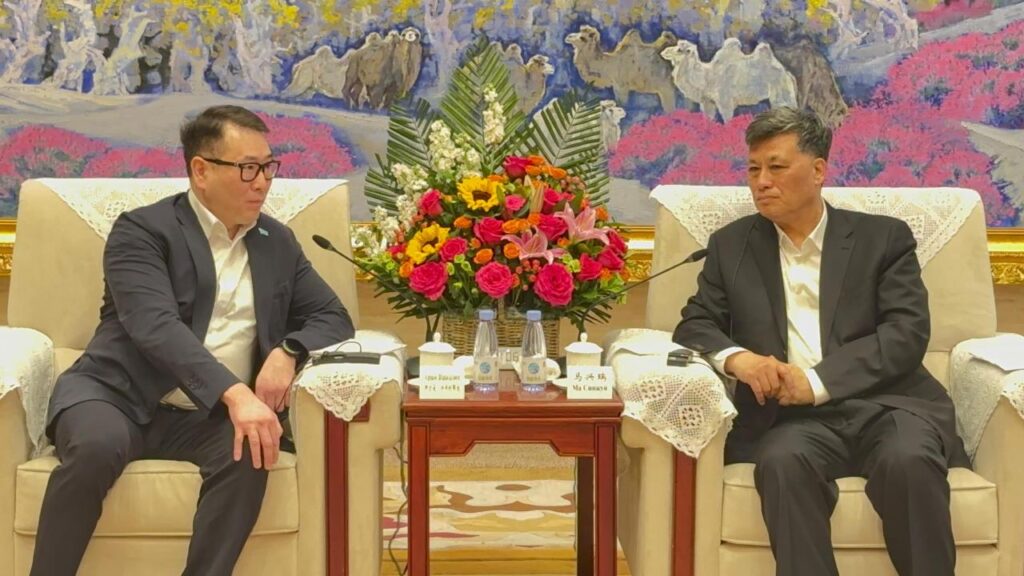
On March 19th, Kazakhstan’s Minister of Trade and Integration Arman Shakkaliev met Ma Xingrui, Communist Party Secretary of China’s western Xinjiang Uyghur Autonomous Region (XUAR) to discuss strengthening Kazakh-Chinese trade cooperation and the opening of a Kazakh trade mission in XUAR’s main city of Urumqi. In 2023, trade turnover between Kazakhstan and China reached $31.5 billion, with the XUAR accounting for over 64% or $20.3 billion of the total. Referencing his country’s focus on trade cooperation with China, the Kazakh minister stated, “Targeted work is being carried out with each province and a joint action plan is being developed to increase trade and attract investment in projects in priority areas. Kazakh businesses are showing more and more interest in supplying products to the Chinese market. We very much appreciate the support of the XUAR leadership in resolving issues of access of Kazakh goods to China.” The minister further reported, “To increase trade between our countries, especially with the XUAR, the Kazakh Head of State has instructed the opening of a trade mission in Urumqi. The QazTrade organization, which is subordinate to the Ministry of Trade and Integration, will be involved in the activities of this representative office. In the future, it will become a conduit between our manufacturers and Xinjiang companies interested in purchasing products.” The parties also discussed prospective joint investment projects and in particular, interest from Kazakh businesses in Chinese investment in the construction of feedlots for cattle, the creation of meat processing facilities and processing of cereals.

Creation of Kazakhstan–Azerbaijan “Supreme Interstate Council” Marks New Era of Cooperation

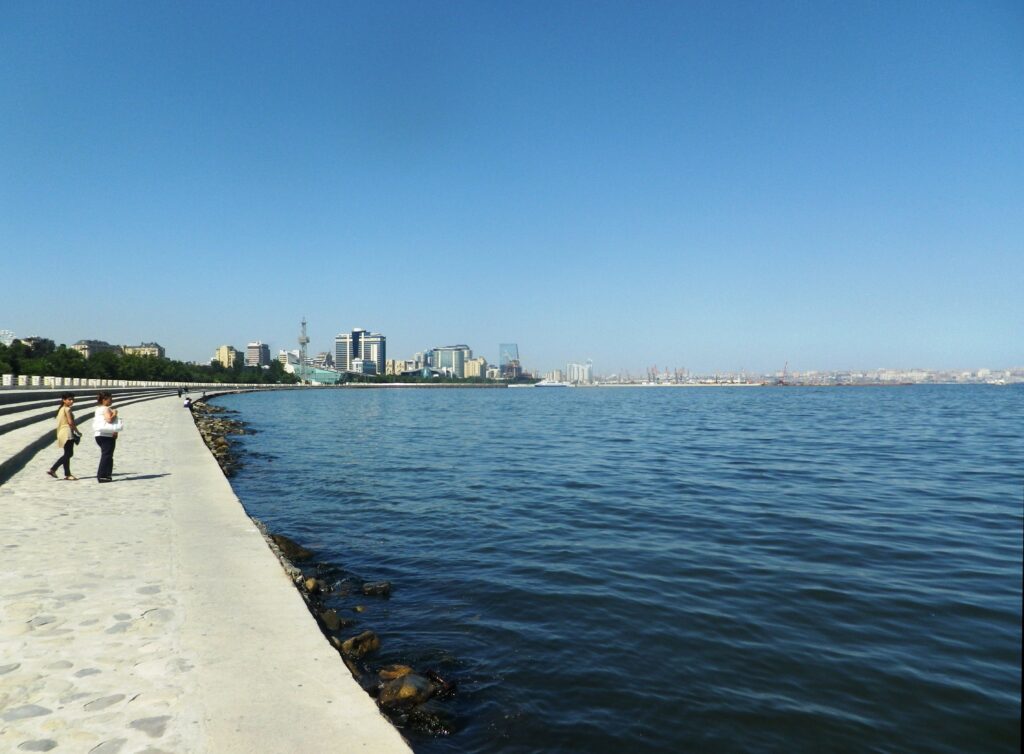
Diplomatic relations between Kazakhstan and Azerbaijan have developed dynamically since they were first established in August 1992, and have increased over the past 20 years, and grown especially since 2017. Over the last decade, the number of high-level visits in both directions have been rising to the point where they are now regular occurrences at an inter-ministerial level. That said, President Kassym-Jomart Tokayev’s state visit to Baku on March 11–12 represents yet another new phase in the two countries’ strategic partnership with a focus on trade, economic investment, and international cooperation. This new era is marked by the creation of their bilateral Supreme Interstate Council (SIC), a qualitatively recent development that will institutionalize and drive cooperation in new ways. (Readers should note here that the connotation of “Supreme” in this case signifies “high-level” rather than “having sovereign or autonomous power”. This is exactly the difference, respectively, between the Russian-language adjectives vysshii - literally “high-level” or “highest” - and verkhovnyi - the USSR’s Supreme Soviet, its highest legislative body, was verkhovnyi. This is a matter of choice of terms for translation. “Supreme” has been adopted following the usage of the countries concerned in their English-language public discourse, but it should not be misunderstood.) Although the Kazakhstan–Azerbaijan SIC has only just held its first meeting and is not yet fully institutionalized, it would seem from diplomatic indications that its activity is likely to resemble that of the Strategic Partnership Council (SPC) between Turkey and Azerbaijan. This latter forum was created in 2019 to subsume the two countries’ bilateral Strategic Cooperation Council, which was founded in 2010. Cooperation organized by this bilateral SPC broadly covers four issue areas: military-political and security issues, military and military-technical cooperation, humanitarian issues, and economic cooperation. These areas are listed in order of priority, meaning that the SPC and the SIC’s first focus is on cooperation related to military and security issue areas, plus other relevant issues that these may indicate. Nevertheless, cooperation in the humanitarian and economic spheres, which has been ongoing for some time, is sometimes folded into these top-priority areas within the existing consultative structures. The agreements signed at the November 2021 presidential summit between Kazakhstan and Uzbekistan had foreseen the formation of a bilateral SIC between them as well. Now that both these parties have ratified their Treaty of Allied Relations, also signed at that time, this SIC’s first meeting is scheduled for August of this year. Following the pattern of what is known about the SIC with Azerbaijan, it will be formally chaired by the two heads of state and organized by their respective foreign ministries. The speakers of their parliaments’ lower houses and representatives of security councils may join in the work as necessary. Thus, security and foreign-policy issues will be the main concern in the first instance. Nevertheless, like the SIC between Kazakhstan and Azerbaijan, the one between Kazakhstan and Uzbekistan is likely in the medium term to develop organizationally along the lines of the Turkish-Azerbaijani Strategic Cooperation Council, eventual transformation...

Health Specialists Visit Almaty Reference Laboratory

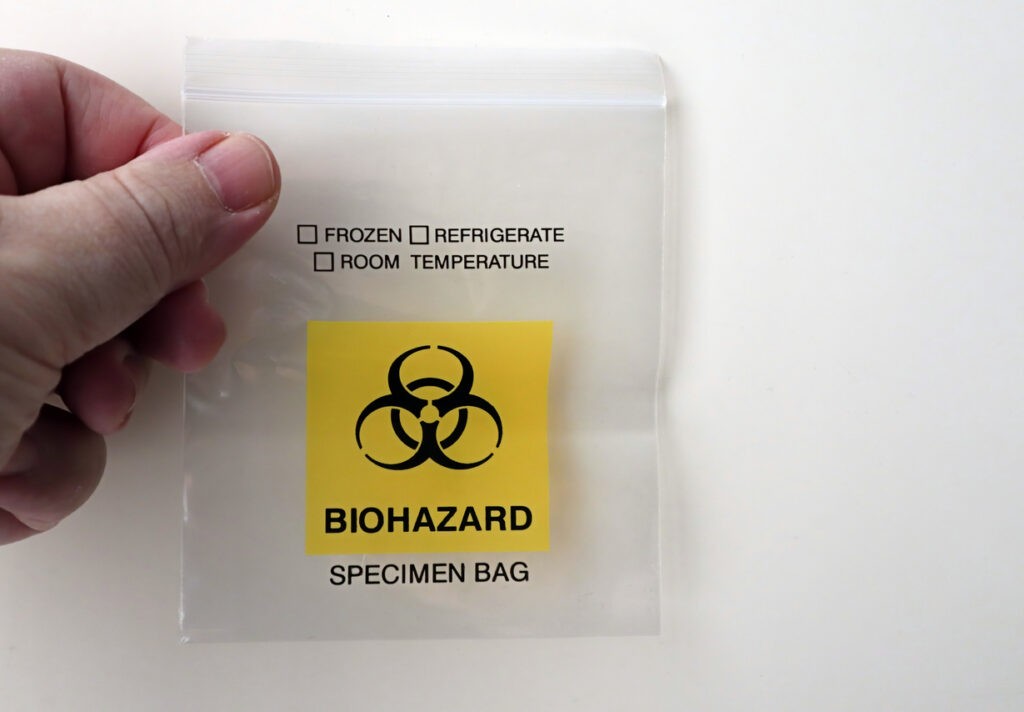
In a statement released by the Kazakhstan Ministry of Foreign Affairs, public health representatives from Central Asian countries and Azerbaijan, attending the regional Workshop on the Biological and Toxin Weapons Convention (BTWC), paid a visit to the Almaty Central Reference Laboratory. The seminar held at the UN Hub in Almaty, was organized by the United Nations Office for Disarmament Affairs (UNODA) and the Ministry of Foreign Affairs of Kazakhstan, with the support of the European Union (EU). During the event, issues were raised concerning the implementation and strengthening of BTWC protocols. The seminar also offered opportunities to share knowledge and experience on improving legislation, discuss plans of national importance and implement confidence-building measures among members of the BTWC. Whilst gathered in Almaty, representatives of Central Asian countries and Azerbaijan visited the Central Reference Laboratory, built with aid from US investments. The Ministry of Foreign Affairs noted that experts in the field of biosafety gave a high assessment of Kazakhstan's flagship institution's biotechnological complex and the laboratory's activities and development of Kazakhstani scientists. Kazakhstan conducts research in two bio-laboratories, both of which have third-level safety regulations in place. The first is the Central Reference Laboratory in Almaty. In operation since 2016, the facility was built with funded assistance of around $130 million from the U.S. Defense Threat Reduction Agency (DTRA) and the Nunn-Lugar Cooperative Threat Reduction (CTR) Program. A similar laboratory, located in Otar, is run by the Research Institute of Biosafety Problems. According to Kazakh President Kassym-Jomart Tokayev, Kazakhstan cooperates with the U.S. in the field of biological security under the former anti-plague institute in Almaty, but due to the expiration of the contract, the Americans are no longer involved in the reference laboratory which funded by the federal budget, now only employs Kazakh specialists.

Astana Projects Attract Qatari, Turkish, Russian Interest

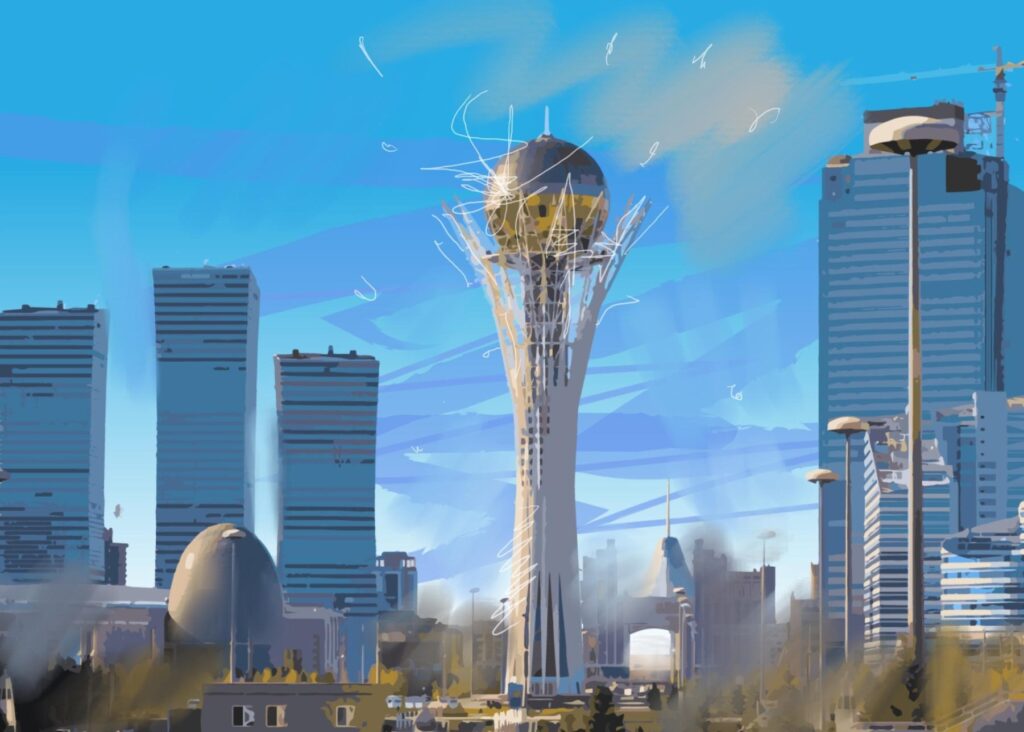
This month foreign investment projects in Astana's real estate sector have been high on the agenda at meetings at the Investment Headquarters in Kazakhstan's capital. One such project is a new medical center to be constructed in collaboration with a Qatari holding company, and with the participation of American cosmetic skin care provider Cynosure. The first stage is set to comprise a medical center for 50 patients with a planned investment of 88 billion tenge (~$196million), and in the second, the Qatari partners intend to invest around 160 billion tenge (~$360 million) in a larger extension. According to reports, Qatari investors have also committed funds for the construction of branded international schools in Astana. The first, a Sabis school for almost 3,000 pupils and 530 children of preschool age, is scheduled to open in April this year. The second, to be constructed by International Community Schools Ltd, will accommodate 1,225 pupils and 100 pre-school children, involve private investment of 9 billion tenge (~$20 million), and create over 100 jobs. The Turkish Tiryaki Company discussed investment of up to $200 million in the construction of a wheat processing plant with a capacity of 240,000 tons per year, and Russian e-commerce giants Wildberries and Ozon expressed their readiness to invest up to 90 billion tenge (~$200 million) in constructing large logistics centers in Astana. The Austrian Lasselsberger Group's plans for investment of over 25 billion tenge (~$55 million) in a plant at Astana's Industrial Park Number One will produce 100,000 tons of dry construction mixtures per year and create some 200 jobs.