• KGS/USD = 0.01144 0%
  • KZT/USD = 0.00208 0%
  • TJS/USD = 0.10414 -0.29%
  • UZS/USD = 0.00008 0%
  • TMT/USD = 0.28571 0%
  • KGS/USD = 0.01144 0%
  • KZT/USD = 0.00208 0%
  • TJS/USD = 0.10414 -0.29%
  • UZS/USD = 0.00008 0%
  • TMT/USD = 0.28571 0%
  • KGS/USD = 0.01144 0%
  • KZT/USD = 0.00208 0%
  • TJS/USD = 0.10414 -0.29%
  • UZS/USD = 0.00008 0%
  • TMT/USD = 0.28571 0%
  • KGS/USD = 0.01144 0%
  • KZT/USD = 0.00208 0%
  • TJS/USD = 0.10414 -0.29%
  • UZS/USD = 0.00008 0%
  • TMT/USD = 0.28571 0%
  • KGS/USD = 0.01144 0%
  • KZT/USD = 0.00208 0%
  • TJS/USD = 0.10414 -0.29%
  • UZS/USD = 0.00008 0%
  • TMT/USD = 0.28571 0%
  • KGS/USD = 0.01144 0%
  • KZT/USD = 0.00208 0%
  • TJS/USD = 0.10414 -0.29%
  • UZS/USD = 0.00008 0%
  • TMT/USD = 0.28571 0%
  • KGS/USD = 0.01144 0%
  • KZT/USD = 0.00208 0%
  • TJS/USD = 0.10414 -0.29%
  • UZS/USD = 0.00008 0%
  • TMT/USD = 0.28571 0%
  • KGS/USD = 0.01144 0%
  • KZT/USD = 0.00208 0%
  • TJS/USD = 0.10414 -0.29%
  • UZS/USD = 0.00008 0%
  • TMT/USD = 0.28571 0%

Viewing results 589 - 594 of 1407

Kyrgyzstan Returns Four Resorts to Uzbekistan with Additional Conditions Imposed on Kazakhstan

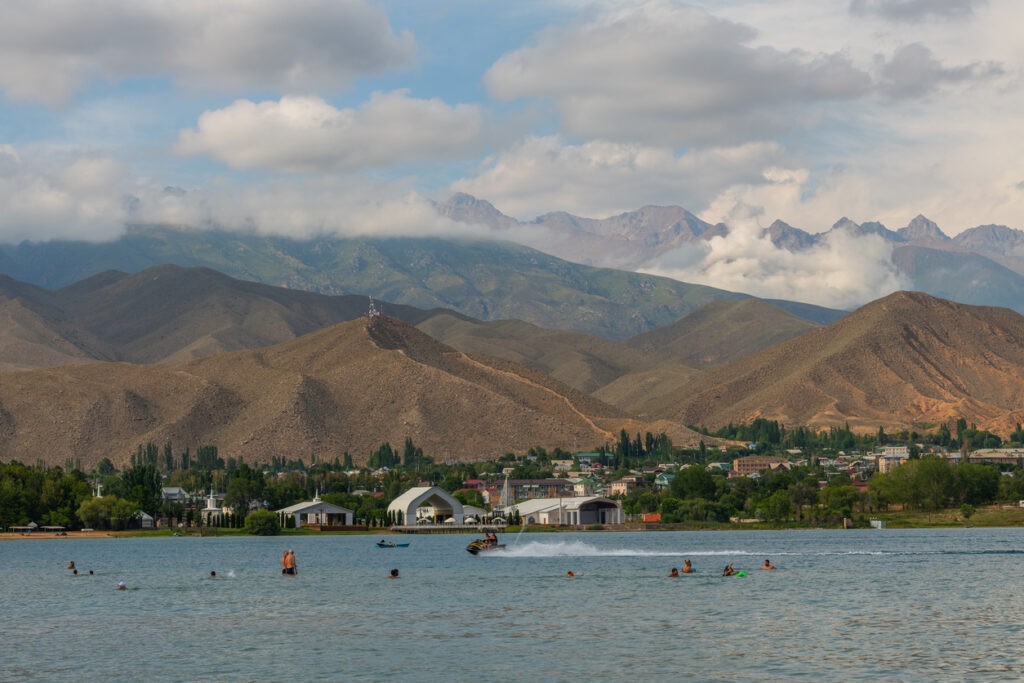
Shavkat Mirziyoyev, President of the Republic of Uzbekistan, has approved an agreement between the governments of Uzbekistan and Kyrgyzstan, to regulate the ownership and continued operation of four spa and recreation centers in the Issyk-Kul region. Kyrgyzstan's transfer of ownership of the four resorts to Uzbekistan determines the authorization for implementing property rights but as cited by one Uzbek publication “The recreational facilities aren’t given, they are returned!” In April 2016, the “Golden Sands of Central Asia” (formerly “Bosteri”), “Rohat-NBU” (formerly “Rakhat”), “Dilorom” (formerly “Enesay”), and the unfinished construction of “Buston", were transferred to the jurisdiction of Kyrgyzstan. Although located on the territory of Kyrgyzstan, the resorts previously belonged to JSC “Tashkent Mechanics Plant,” JSC “National Bank of Foreign Economic Activity,” JSC “Asakabank” and JSC “Uzsanoatkurilishbanki” of Uzbekistan. Back in 2016, the government of the Kyrgyz Republic, under Prime Minister Temir Sariyev, decided to seize recreational facilities from the Republic of Uzbekistan. This led to litigation in international arbitration and the facilities were immediately renamed. In September 2016, the Uzbek owners of resorts applied to the International Center for Settlement of Investment Disputes (ICSID). Uzbekistan considered that the 1992 agreement between the countries of the former Soviet Union, regulating the use of facilities left on the territory of other republics as a result of the collapse of the Union, was violated. According to this document, property belonging to one state but located on the territory of other CIS countries remains the property of its owners. Thus began a long series of arbitration discussions and efforts to settle the matter amicably, leading to the announcement of an agreement between the Kyrgyz government and the Cabinet of Ministers of Uzbekistan in December 2017, whereby the land plots of the resorts would remain the property of Kyrgyzstan whilst other properties would be returned to the ownership of the Uzbek side. After formalizing  property rights,  Uzbekistan would undertake to upgrade boarding houses to a level of three or four stars and ensure their operation throughout the year. The agreement, however, was not signed, and discussions continued. The dispute resolution review was completed in May 2023 in ICSID. Details of the deal remained confidential until Kyrgyzstan's president Sadyr Japarov, announced that the international court had decided that Kyrgyzstan should pay Uzbekistan more than $40 million. Following negotiations, the parties agreed to lease the facilities for investors from Uzbekistan for 49 years. The president then warned," We cannot invest in their renovation in the next 15-20 years because we have many other critical issues. We cannot talk about recreational facilities until we solve them." Whilst Article 2 of the agreement clearly states that the Kyrgyz side transfers the ownership of buildings and structures to the Uzbek side, the  recent agreement does not provide a fixed period for the rental of the recreational facilities. Kazakhstan and Kyrgyzstan have long-standing problems with boarding houses, including those in the former's “University”, “Olympus”, “Samal” and “Kazakhstan”sports and health resorts, in Issyk-Kul. At the end of the 1960s, the USSR declared Issyk-Kul...

Navigating Diplomacy: Central Asia’s Strategic Balancing Act Amid Middle East Tensions

The five Central Asian republics are actively building ties with the outside world, trying to balance the influence of China and Russia in the region. For the former Soviet republics, the Middle East was, until recently, a kind of terra incognita since Moscow carried out all contacts with the area. However, since the nineties, thanks to a growing friendship with Turkey, Kazakhstan, followed by other Central Asian republics, have begun establishing diplomatic, cultural, and trade ties with the Middle East and North African countries. Another escalation in the Middle East has forced the diplomatic departments of the Central Asian countries, whilst avoiding any accusations against either side in the conflict, to inform their citizens about and the address the fate of their compatriots who have found themselves at the epicenter of events. Kazakhstan In Kazakhstan, law enforcement agencies reacted before diplomats. Shyngys Alekeshev, head of the Interior Ministry's Information Policy Department, said in response to journalists' inquiries that police in the republic have brought their patrol routes closer to synagogues and Israeli diplomatic facilities. Later, official representative of the Ministry of Foreign Affairs of Kazakhstan, Aibek Smadiarov, said that no Kazakh citizens were injured as a result of the armed escalation between Iran and Israel, and urged Kazakh citizens in the Middle East to exercise caution. “The Kazakh Foreign Ministry expresses deep concern about the increasing escalation of tensions in the Middle East. We call on all parties involved to exercise restraint and refrain from using forceful methods to avoid civilian casualties and further escalation of the situation in the region, which could provoke a full-scale war. In this regard, we note the importance of taking early measures to resolve differences exclusively through political and diplomatic means within the framework of the principles of the UN Charter and international law,” said Smadiarov. According to the representative, 120 citizens of the Republic of Kazakhstan, including diplomats and their family members, are registered as being present in Israel, 102 in Iran, and 139 in Lebanon. “Communication channels have been created with citizens who are in these countries. Constant communication is maintained with them, and necessary recommendations are given depending on the development of the situation in one country or another. Several times, embassies have announced the need to leave the country due to the aggravation of military and political situations. At the same time, the Ministry and authorized bodies are monitoring the situation to work out possible repatriation flights. The evacuation of our citizens is still under consideration and the special control of the Ministry of Foreign Affairs,” said Smadiarov. Kyrgyzstan The Kyrgyz Foreign Ministry stated on October 2 that it is deeply concerned about events taking place in the Middle East, stating that it is calling on “the conflicting parties to respect the fundamental principles and norms of international law, including refraining from actions leading to an escalation of the situation in the region. The Kyrgyz Republic urges the global community to completely stop military action as soon as possible, and start...

Middle East Conflict Disrupts Flights with Central Asia

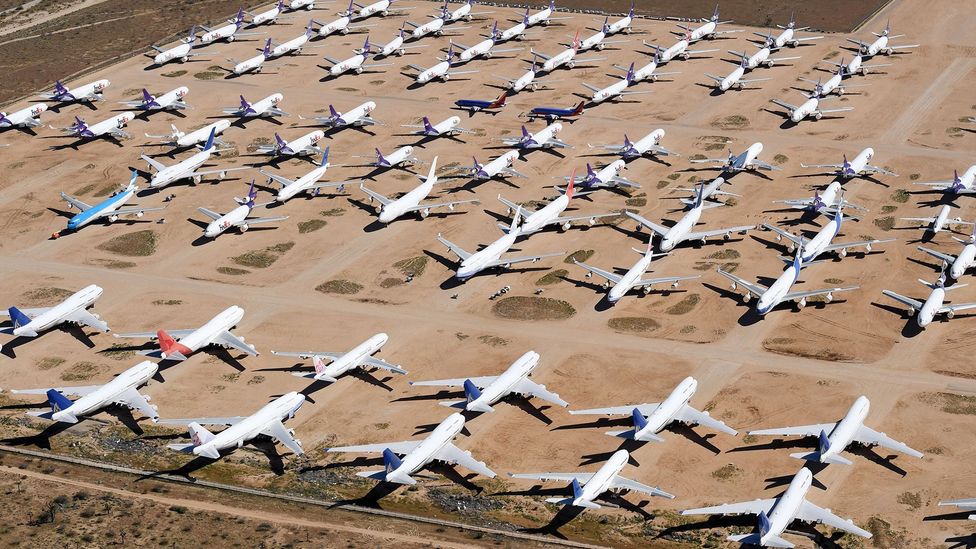
The growing conflict between Israel and Iran has disrupted international air travel in the Middle East, and Central Asia is grappling with cancellations and rerouted flights to and from the region. Flynas, a low-cost Saudi airline, and Qeshm Air, an Iranian carrier, have temporarily canceled flights to Uzbekistan “due to the escalation of tensions in the Middle East and the closure of part of the airspace,” the state-run Uzbekistan Airports company said on Telegram on Wednesday. The cancellations were a Flynas flight on the Jeddah-Tashkent-Jeddah route; another roundtrip Flynas flight from Jeddah to the Uzbek city of Namangan and back; and a Qeshm Air flight from Tehran to Tashkent and back to the Iranian capital, according to the Uzbek company. It advised travelers to check departure information with airline representatives. Air Astana, Kazakhstan’s national carrier, said it had decided to bypass Iran’s airspace on its flights to Dubai after analyzing the situation in the Middle East and following guidance from the national aviation authorities. “As a result, the flight routes from Astana and Almaty to Dubai will be altered, and flight time will be extended,” Air Astana said on Telegram. “Flights to Jeddah will remain unchanged but may be reconsidered if military activity in the region escalates. If necessary, the airline will implement additional changes to ensure flight safety.” Aviation authorities of Kazakhstan’s Ministry of Transport have advised domestic airlines to avoid Iranian airspace, according to Kazinform, a state-run news agency. The flight disruptions came after Iran launched hundreds of missiles at Israel on Tuesday, and Israel warned that it will respond forcefully to the attack. The confrontation threatens a broader conflict in the region as Israel is already conducting military operations against two Iran-backed groups, Hamas in Gaza and Hezbollah in Lebanon.

China Officially Joins the Middle Corridor

It was announced during the 8th International Silk Road Expo in Xi’an in September 2024 that China will formally join the Middle Corridor under the guise of participation by the China Railway Container Transport Corporation (CRTC). This move signals a growing reliance on Central Asia’s trade-route infrastructure potential. China's shift to overland routes is part of a broader strategy to diversify away from traditional maritime routes through chokepoints like the Strait of Malacca, which carry geopolitical risk. Kazakhstan's strategic geographic location naturally makes it indispensable to China’s trade, and infrastructure projects currently underway represent a key component of the Middle Corridor’s potential. In July 2024, Kazakh President Kassym-Jomart Tokayev ratified agreements with China aimed at further developing the Middle Corridor, enhancing both road and rail infrastructure. The country has already been upgrading its rail infrastructure, modernizing dry ports like Khorgos on the Chinese border, and expanding transit facilities at the Caspian Sea port of Aktau. The increased flow of goods through Kazakhstan is evident: over 212 container block trains have passed through the country by September 2024, with the number projected to exceed 300 by the year’s end. These build-outs, and particularly Kazakhstan’s modernization of its railways, go hand-in-hand with the recently finished improvements along the Baku-Tbilisi-Kars (BTK) line, which connects Azerbaijan to Turkey via Georgia. The expansion of the BTK line's capacity from 1 million to 5 million tons per year has now been completed. As a result of all these efforts, the travel time for goods from China to the Black Sea has been reduced to just 10–12 days, highlighting the efficiency of the corridor. Azerbaijan also plays a crucial role in this economic ecosystem. Baku’s port of Alat serves as a critical transit point for cargo crossing between Central Asia and the South Caucasus. Azerbaijan’s collaboration with Kazakhstan, Georgia, and Turkey has led to significant investments in expanding port facilities and upgrading railway systems beyond the crucial BTK link mentioned above. The result is a smoother, more reliable flow of goods from China to Europe. Azerbaijan is winning its bet to become a regional logistics hub. In addition, a Chinese consortium recently secured the contract for the construction of the Anaklia deep-sea port in Georgia, a strategically important site on the eastern edge of the Black Sea. The project was initially awarded to a Georgian-American consortium, but was cancelled in 2020 due to political and legal disputes. Following a new tender process this year, the Chinese consortium emerged as the sole bidder. If supporting infrastructure is adequately developed and the Black Sea’s cargo transit capacity can be significantly enhanced, then the Anaklia port could become a critical node in the Middle Corridor, enhancing its role in Eurasian trade and bolstering regional connectivity. China’s increased reliance on Central Asian, trans-Caspian, and South Caucasus routes is not just about efficiency. It is also a strategic diversification to mitigate the risks posed by geopolitical instability in other regions. Traditional sea routes through maritime choke-points as well as overland routes like...

Kazakhstan: Investigate Airstrike on UAE Residence in Sudan

Kazakhstan condemns a Sept. 29 airstrike on the Khartoum residence of the top diplomat of the United Arab Emirates in Sudan, the Kazakh Ministry of Foreign Affairs said on Tuesday. “We firmly believe that any kind of violence against diplomatic missions and their staff is absolutely unacceptable,” the ministry said in a statement. It said the airstrike violated the security of diplomatic missions as guaranteed under the Vienna Convention on Diplomatic Relations and appealed for an investigation to bring “all those involved to justice.” The United Arab Emirates said the airstrike was carried out by a Sudanese army aircraft and that it caused extensive damage to the building. The Sudanese Armed Forces, or SAF, denied responsibility. The SAF has previously accused the United Arab Emirates of supporting its enemy in Sudan’s civil war, a paramilitary group called the Rapid Support Forces.

Lukashenko Turns Up Charm After Kazakhstan Kerfuffle

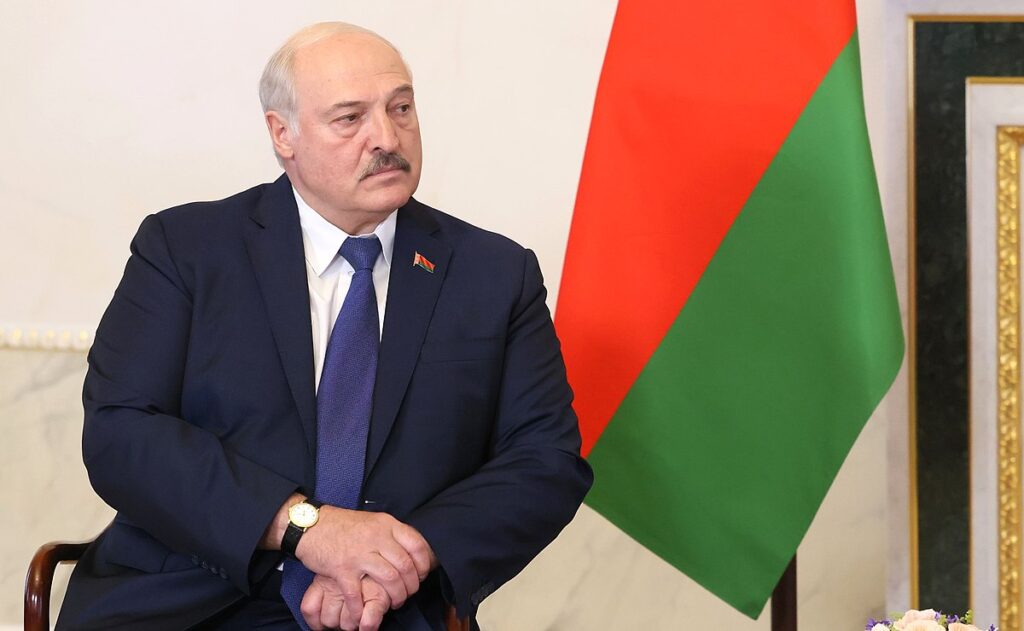
In August, Belarusian leader Aleksandr Lukashenko drew a Kazakh rebuke after he criticized Kazakhstan for what he described as its tepid support for Russia. Lukashenko was a model of diplomatic etiquette on Tuesday, effusively praising Kazakhstan as a close ally during a ceremony at which he received credentials of foreign ambassadors. “Today there are practically no areas where we do not have common interests. Annual $1 billion trade turnover and successful projects in industrial interaction testify to the high dynamics of bilateral cooperation,” the longtime Belarusian ruler said of Kazakhstan. Lukashenko´s comments were reported by Belarus Today, a state-run media group. The Belarusian president also thanked Kazakh President Kassym-Jomart Tokayev for supporting Belarus when it became a member of the Shanghai Cooperation Organization, a regional security group, earlier this year, according to Belarus Today. Kazakhstan was chair of the organization at the time. Things weren’t as convivial in August when Lukashenko, a backer of Russian President Vladimir Putin, suggested in an interview with Russian state television that Kazakhstan was exploiting Russia, now in a third year of war since its full-scale invasion of Ukraine in February 2022. “We are not starting to cheat like some post-Soviet states. They want to take something from Russia, but give nothing in return,” Lukashenko said at the time. The longtime leader of Belarus, who has crushed opposition over 30 years in power, referred to the dispatch of troops from regional countries to Kazakhstan in a show of support after protests and riots erupted there in January 2022, killing more than 200 people. Most of the troops were Russian; a small contingent came from Belarus. Kazakhstan’s Ministry of Foreign Affairs summoned the Belarusian ambassador after Lukashenko’s remarks and said, in an apparently oblique reference to the Ukraine war, that “all disagreements between states should be resolved by political and diplomatic means.” Kazakhstan’s new ambassador in Belarus is Yerlan Baizhanov, formerly the country’s top diplomat in Vietnam, Cambodia and Laos.