• KGS/USD = 0.01144 0%
  • KZT/USD = 0.00214 0%
  • TJS/USD = 0.10508 0.48%
  • UZS/USD = 0.00008 0%
  • TMT/USD = 0.28490 -0.28%
  • KGS/USD = 0.01144 0%
  • KZT/USD = 0.00214 0%
  • TJS/USD = 0.10508 0.48%
  • UZS/USD = 0.00008 0%
  • TMT/USD = 0.28490 -0.28%
  • KGS/USD = 0.01144 0%
  • KZT/USD = 0.00214 0%
  • TJS/USD = 0.10508 0.48%
  • UZS/USD = 0.00008 0%
  • TMT/USD = 0.28490 -0.28%
  • KGS/USD = 0.01144 0%
  • KZT/USD = 0.00214 0%
  • TJS/USD = 0.10508 0.48%
  • UZS/USD = 0.00008 0%
  • TMT/USD = 0.28490 -0.28%
  • KGS/USD = 0.01144 0%
  • KZT/USD = 0.00214 0%
  • TJS/USD = 0.10508 0.48%
  • UZS/USD = 0.00008 0%
  • TMT/USD = 0.28490 -0.28%
  • KGS/USD = 0.01144 0%
  • KZT/USD = 0.00214 0%
  • TJS/USD = 0.10508 0.48%
  • UZS/USD = 0.00008 0%
  • TMT/USD = 0.28490 -0.28%
  • KGS/USD = 0.01144 0%
  • KZT/USD = 0.00214 0%
  • TJS/USD = 0.10508 0.48%
  • UZS/USD = 0.00008 0%
  • TMT/USD = 0.28490 -0.28%
  • KGS/USD = 0.01144 0%
  • KZT/USD = 0.00214 0%
  • TJS/USD = 0.10508 0.48%
  • UZS/USD = 0.00008 0%
  • TMT/USD = 0.28490 -0.28%

Viewing results 115 - 120 of 975

Kazakhstan’s Golovkin Becomes World Boxing President

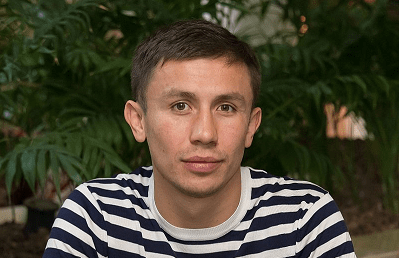
Gennadiy Golovkin, the two-time middleweight world champion and 2004 Olympic silver medalist for Kazkhstan, was named president of World Boxing at the federation's inaugural congress in Rome on Sunday. Golovkin, who has been president of Kazakhstan’s National Olympic Committee since last year, will lead the amateur boxing federation into the 2028 Olympic Games in Los Angeles. He succeeds Boris van der Vorst, a Dutch national who was the first president of World Boxing. “I feel great. I feel more excited. Right now, we have a new team, new view,” Golovkin said after his election to the post. “I have a plan. I have ideas, so many. My goal is bringing boxing’s position back to a high level.” The World Boxing federation was launched in 2023 to address concerns about transparency and governance in amateur boxing that had placed the future of the sport at the Olympics in doubt. That year, the International Olympic Committee, or IOC, expelled the International Boxing Association, the former governing body of amateur boxing, from the Olympic movement because of those corruption concerns. World Boxing, the new amateur boxing federation, has been collaborating with the IOC and said that, by January of this year, it had approved membership applications from 60 national boxing federations around the world. President Kassym-Jomart Tokayev congratulated Golovkin. “He has become the first representative of Kazakhstan to lead an international federation of an Olympic sport,” Tokayev said. “This landmark achievement is a testament to the global recognition of Gennady Golovkin’s outstanding accomplishments and his great contribution to boxing worldwide.”  
Central Asian Countries Agree to Recognize Each Other’s University Degrees

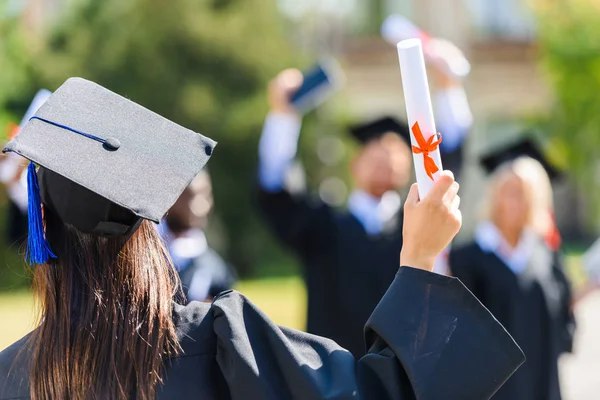
The governments of Kazakhstan, Kyrgyzstan, Tajikistan, Turkmenistan, and Uzbekistan have officially agreed to mutually recognize higher education diplomas issued within the region. Kazakhstan approved the relevant draft on November 12, as documented in an intergovernmental agreement. The initiative aims to create a unified educational space in Central Asia and eliminate barriers related to qualification recognition. Under the agreement, all five countries will automatically recognize university diplomas that are legally valid, officially accredited, and issued by state higher education institutions in any of the participating countries. Recognition will apply in three key areas: Employment in another Central Asian country Internships Continuing education at the next academic level However, qualifications must meet common higher education standards. Recognition may be denied only if substantial differences in the educational systems are identified. The agreement outlines a clear implementation mechanism: each country will appoint a designated authority responsible for diploma recognition and notify the depositary, which will in turn inform the other signatories. If the structure or authority of the appointed body changes, the state is required to issue an immediate notification through diplomatic channels. Despite agreeing on a shared framework, the countries still maintain varying standards for recognizing foreign university degrees. Uzbekistan, Kyrgyzstan, Turkmenistan, and Tajikistan have agreed to recognize diplomas from universities in any participating country, provided those institutions are legally operating and issue officially recognized state diplomas. Kazakhstan, however, has adopted stricter criteria. It will only recognize diplomas from regional universities that appear in the top 1,000 of the following international rankings: Quacquarelli Symonds World University Rankings (QS) Times Higher Education (THE) Academic Ranking of World Universities (ARWU) Diplomas from these universities will allow holders from participating countries to work, intern, or pursue further studies in Kazakhstan, subject to an application process. The agreement is expected to ease the movement of skilled professionals within Central Asia and reduce bureaucratic barriers to regional academic and professional mobility.

TCA Interview: Director Yernar Nurgaliyev: “It’s Time for Kazakh Cinema to Make Its Mark on the World”

Yernar Nurgaliyev still describes painting as his first love. Only now, instead of a brush, he uses a camera, and instead of a canvas, a screen. Today he shoots comedies, and dreams of a Kazakh multiverse where heroes never die. He is certain of one thing: Kazakh culture will be eternal, and he is doing everything possible to make it so. The Times of Central Asia spoke with the director about how he entered film, what he plans to shoot next, and why he believes it is time for Kazakhstan to make itself known to the world. TCA: Your films are always visually striking. Is this because you were originally trained as an artist? Nurgaliyev: Yes. I graduated from art college, then enrolled at the Zhurgenov Academy of Arts to study set design. I thought I would deepen my craft, but the first courses turned out to be a repeat of the college programme. I was very bored, so I decided to go to work. I didn’t start with music videos, but as an assistant propmaster. At that time, senior students recruited assistants from among firstyear students. An energetic girl, a production designer, asked me to help her with her diploma. Before that, I wasn’t interested in cinema at all, I lived for painting: I painted from life and did portraits. But when I saw the filmset, it was “wow.” I realised I wanted to work there. And I stopped going to the academy. I wanted to quit, but they wouldn’t let me. TCA: But you still got your diploma? Nurgaliyev: Yes, although it was difficult. I had nothing to do at the academy, still life, portraits, I had already done all that in college. There, they didn’t break us but helped us find our own style. At the academy, it was the opposite: the teacher said, “Draw like me.” But I can’t draw like someone else. I can only draw in my own way. TCA: Do you paint now? Nurgaliyev: I hardly have any time, but I recently picked up a brush again, and my hand remembers everything. Oil, watercolour, gouache, it’s as if there was no break. I am grateful to my hand; it remembers everything it was taught. TCA: Which is more important, talent or perseverance? Nurgaliyev: There are people who are gifted by God. But a gift is only the beginning. If you slack off and don’t develop, nothing will come of it. The worst thing is when a person is gifted but does nothing with it. I don’t sit still. If I have one day without work, it feels like I haven’t filmed for a year. I always need to be on the move. If the pause drags on, I start calling my friends myself: “Let’s come up with something.” [caption id="attachment_39639" align="aligncenter" width="300"] @Galiya Baizhanova[/caption] TCA: This year, you turned down many projects, choosing instead to focus on another film. Is this a new stage? Nurgaliyev: I’ve matured. Next year, I plan to shoot three of...

Metro Expansion Key to Almaty Infrastructure Plans

Next year, Almaty plans another incremental step in the development of its public transport infrastructure with the opening of a new station at Kalkaman. This should see the tentacles of the transport system shift towards the west of the city. In the future, there are also plans to extend the metro north to Alatau, where the government’s “smart city” is being developed. Investment in public transport is welcome, particularly with vocal complaints from residents about ever-increasing traffic problems and their contribution to the city’s winter smog. “The expansion of the metro is considered one of the key tools for improving the environmental situation in Almaty,” a spokesperson for the Almaty mayor’s office (or Akimat), told The Times of Central Asia. “Increasing the share of passenger transportation via the subway reduces the use of cars, decreases traffic congestion, lowers emissions, and contributes to improved air quality.” The ambitious new metro project is in addition to over 600 new buses expected to be added to the Almaty Bus fleet this year. But despite these schemes, the traffic problem shows little sign of abating. It begs the question: has the city got public transport priorities right? [caption id="attachment_39565" align="aligncenter" width="1600"] New-look trolleybuses and electro-buses can be seen as part of Almaty’s modern fleet; image: TCA, Joe Luc Barnes[/caption] The rise of the automobile “Traffic jams in Almaty began in the early 2000s, when the economic situation improved and people started buying cars,” Dauren Alimbekov, a high-profile blogger on Almaty transport, told The Times of Central Asia. He adds that the privatisation of other forms of public transport exacerbated this problem. The tram network was suspended in 2015 after two high-profile accidents, with the tracks being dismantled in 2017. Its disappearance coincided almost exactly with the arrival of ride-hailing services such as Yandex Go! in July 2016. By 2023, over 200,000 residents were moonlighting as Yandex Go! drivers to earn extra money. “In recent decades, the city has been planned with cars in mind, with major thoroughfares such as Al-Farabi almost totally lacking in convenient pedestrian crossings,” said Alimbekov. This influx of drivers has created problems. Private cars are a major contributor to air pollution in the city. On some days earlier this year, Almaty recorded the worst pollution in the world. [caption id="attachment_39564" align="aligncenter" width="1600"] A lack of dedicated bus lanes slows journey times and prevents more people from using public transport; image: TCA, Joe Luc Barnes[/caption] Public transport That is not to say that there is no public transport in the city. Indeed, the Almaty Metro is the only metro system in Central Asia to have opened since the collapse of communism. Trains began running in 2011, but they only travelled between an initial five stations. Two more opened in 2015, which saw a spike in passenger numbers. Today, there are eleven stations, although most of these remain along Abay Avenue, giving it little practical value to most residents. The metro system does not connect to either of the city’s main train...

TCA Interview: Kazakh Director Venera Kairzhanova on the Bravery of Children with Special Needs

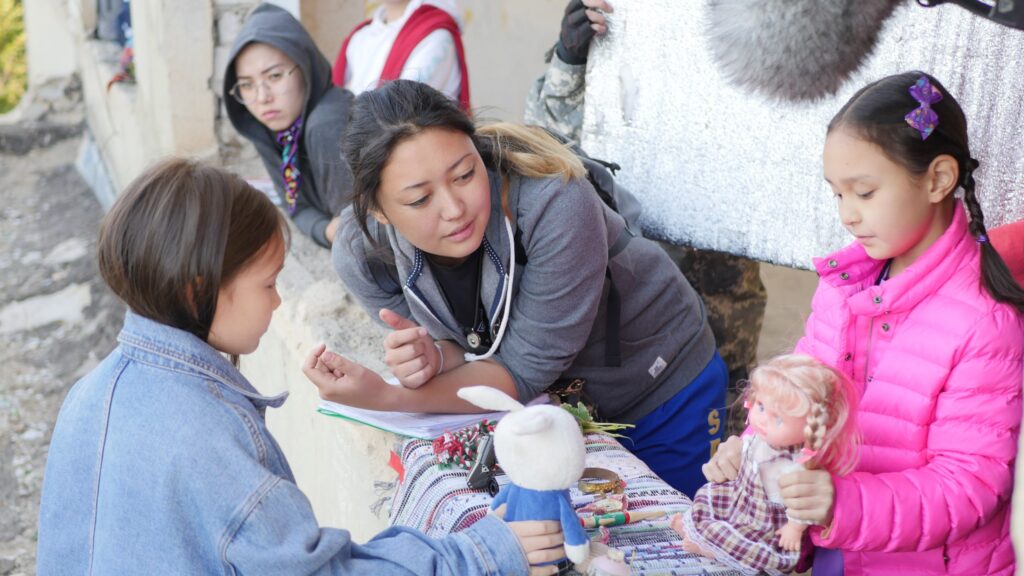
November saw the premiere of Venera Kairzhanova’s debut feature film, Second Mother. The documentary centers on the Meyirim rehabilitation center for children with developmental disabilities. But the film is more than a social chronicle; it’s a warm and luminous portrait of people who help children explore the world every day. Step by step, movement by movement. Kairzhanova spoke with The Times of Central Asia about the making of the film. TCA: Venera, congratulations on the premiere. How did you feel seeing your work on the big screen? Kairzhanova: It was very exciting, but everything went smoothly in a warm, friendly atmosphere. The film was well received, and the theater was full. The audience included employees of the Meyirim center, parents, media representatives, and industry colleagues. The first private screening was back in September, but it was in a small theater with limited guests. This time, it was a huge hall with lots of people, a completely different experience. What’s interesting is that when the project is finished and you watch it with the audience, you see it not just as a director, but also as a viewer. TCA: The audience cried. Did you? Kairzhanova: Yes. At the first screening, very much so. At the second, the emotions were a bit less intense, but the material still moves me: stories about the children, their teachers, their victories. After the screening, people came up to me to share their impressions and that was incredibly valuable. It’s important when a film is not just watched but really touches people’s hearts. [caption id="attachment_39501" align="aligncenter" width="300"] @Galiya Baizhanova[/caption] TCA: Working with children is always a special process. How did you prepare? Kairzhanova: Honestly, I didn’t prepare specifically. I arrived early, observed the classes and that was it. I was nervous, of course, because I didn’t know how the children would react to the cameras, lights, and equipment. But everything went surprisingly well. The children turned out to be incredibly open and sociable. They weren’t shy about the cameras; on the contrary, they played around and looked straight into the lens. Everything was so natural that we hardly interfered. We didn’t ask them to repeat anything or stage any shots. We just captured moments: in the dining room, during classes, and in their interactions. This project made me fall even more in love with documentary filmmaking, even though this is already my fifth documentary. TCA: Which episode was the most emotional for you? Kairzhanova: The film mainly focuses on the rehabilitation center’s educators. We filmed their daily routines: classes, meetings, celebrations. By the third day, everyone had gotten used to each other, and the atmosphere became very warm. One day, we filmed an individual session between instructor Anna Kosenko and a girl named Aisha. She was learning to walk with the help of an exoskeleton. Aisha, fragile, small, beautiful, was taking steps, and Anna was helping her. At one point, Anna asked, “Are you okay?” Aisha smiled and said, “Yes, I’m fine.” TCA: And you couldn’t...

Meet Nurxat Nuraje, One of Kazakhstan’s Most Impressive Scientists

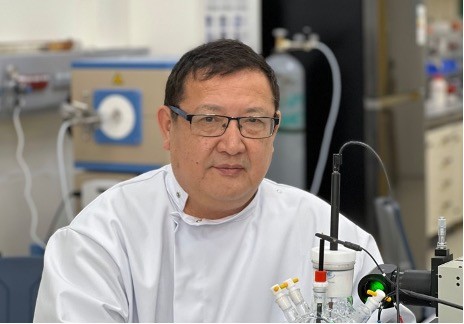
Nurxat Nuraje is a Kazakh scientist who is now well known in the global scientific community. He has spent more than two decades studying and conducting research in the United States. Drawn to science from an early age, he earned his PhD in chemistry from the City University of New York in 2008, successfully launching his research career. His main field of research is nanotechnology and its applications. At a time when nanoscience was still emerging, his bold approach to the subject quickly gained recognition. His first major publication was in the Journal of the American Chemical Society – one of the world’s leading chemistry journals. The paper introduced innovative ideas about nanocircuit fabrication, methods and challenges in their development, computational power, and potential applications. This paper was considered a major contribution to the field at the time. Soon after, he joined the Massachusetts Institute of Technology (MIT), one of the world’s foremost technology universities, as a postdoctoral researcher. There, he succeeded in finding ways to increase computer storage capacity, which is a crucial question for modern computing. His research on the development and application of specific nanoparticles was published in Advanced Materials, once again establishing his name in global science. His work was later awarded a silver medal at the International Materials Research Society conference in San Francisco. “Science doesn’t deliver results overnight. It evolves gradually,” says Nuraje. “The true mission of a scientist is to reshape the world’s thinking through discovery. In the future, we must move from oil to hydrogen energy. That is the energy of tomorrow.” Since 2013, Nuraje has worked as a research scientist at MIT. He is also credited with developing conductive polymer nanoparticles, which are now widely used. Together with his students, he continues to design and create practical, everyday-use technologies. In 2015 he received the Joseph Award for his outstanding contribution to nanotechnology. He became the first Kazakh scientist to win this American honor. Why did MIT invite him to join their team? The answer lies in his PhD dissertation, which was recognized by experts as one of the best in the field. Harvard University, the University of California, and MIT each offered him postdoctoral positions. One of Nuraje's remarkable achievements was the development of anti-fogging materials – the kind used on smartphone screens today. Working with MIT professor Angela Belcher, he co-created a new type of photocatalytic material through genetic engineering of the M13 virus. This groundbreaking work was published in Advanced Materials in 2012 and resulted in five international patents. This is a true testament to the Kazakh proverb: “Knowledge conquers all.” In 2015, he joined Texas Tech University as a professor of chemical engineering, where he established his own research laboratory, The Nurxat Nuraje Lab. There, his team developed solar-powered water-splitting technology to produce hydrogen. His breakthroughs in conductive polymers earned him the American Chemical Society’s Petroleum Research Award in 2016. In the following years, he was named “Most Distinguished Scientist” at Texas Tech University, and in 2018, the...