• KGS/USD = 0.01144 0%
  • KZT/USD = 0.00216 0%
  • TJS/USD = 0.10456 0%
  • UZS/USD = 0.00008 0%
  • TMT/USD = 0.28571 0%
  • KGS/USD = 0.01144 0%
  • KZT/USD = 0.00216 0%
  • TJS/USD = 0.10456 0%
  • UZS/USD = 0.00008 0%
  • TMT/USD = 0.28571 0%
  • KGS/USD = 0.01144 0%
  • KZT/USD = 0.00216 0%
  • TJS/USD = 0.10456 0%
  • UZS/USD = 0.00008 0%
  • TMT/USD = 0.28571 0%
  • KGS/USD = 0.01144 0%
  • KZT/USD = 0.00216 0%
  • TJS/USD = 0.10456 0%
  • UZS/USD = 0.00008 0%
  • TMT/USD = 0.28571 0%
  • KGS/USD = 0.01144 0%
  • KZT/USD = 0.00216 0%
  • TJS/USD = 0.10456 0%
  • UZS/USD = 0.00008 0%
  • TMT/USD = 0.28571 0%
  • KGS/USD = 0.01144 0%
  • KZT/USD = 0.00216 0%
  • TJS/USD = 0.10456 0%
  • UZS/USD = 0.00008 0%
  • TMT/USD = 0.28571 0%
  • KGS/USD = 0.01144 0%
  • KZT/USD = 0.00216 0%
  • TJS/USD = 0.10456 0%
  • UZS/USD = 0.00008 0%
  • TMT/USD = 0.28571 0%
  • KGS/USD = 0.01144 0%
  • KZT/USD = 0.00216 0%
  • TJS/USD = 0.10456 0%
  • UZS/USD = 0.00008 0%
  • TMT/USD = 0.28571 0%

Viewing results 97 - 102 of 614

Kazakhstan Plans to Export Up to a Third of Its Fuel Production by 2040

The government of Kazakhstan has approved a long-term development strategy for the oil refining industry for the period 2025-2040, significantly increasing its forecast for petroleum product exports. The new plan triples previous export projections, aiming for exports to account for 30% of total production by 2040. According to the strategy, key priorities include expanding refining capacity and boosting exports to China, India, and neighboring Central Asian countries. By comparison, in May 2024, the Ministry of Energy had presented a separate draft strategy looking toward 2050, which proposed limiting fuel exports to 10%, and only in cases where domestic supply exceeded demand. Refinery Modernization and Capacity Goals The new strategy builds on recent progress. Following the modernization of Kazakhstan’s three largest refineries, Atyrau, Pavlodar, and Shymkent, total oil processing capacity reached 17 million tons per year. The plan envisions boosting this figure to 39 million tons annually by 2040. “The refining depth has already reached 89%, and the motor fuel produced now meets Euro-4 standards and higher. These improvements have allowed us to meet 90-95% of domestic demand and created favorable conditions for the export of high value-added products,” the Ministry of Energy stated. The strategy calls for expanding existing facilities and constructing a new petrochemical complex to raise refining depth to 94%. This will ensure full domestic fuel coverage amid projected annual demand growth of 1.5-2%, driven by urbanization and industrial development. A major focus will be the advancement of Kazakhstan’s oil and gas chemical industry, including the production of polymers, fertilizers, and other high-value products. Up to $5 billion is expected to be invested in this sector. “The strategy is designed to attract foreign investment, particularly given the country’s reserves of 30 billion barrels of oil. In the context of the global energy transition, this will position Kazakhstan as a regional leader in hydrocarbon processing and enhance economic resilience to global commodity price fluctuations,” the ministry emphasized. Implementation is scheduled to begin in 2025 with pilot projects for refinery digitization. Current Production and Export Landscape In 2024, Kazakhstan’s refineries produced 13 million tons of petroleum products, 1% more than in 2023, according to national oil and gas company KazMunayGas. This included 4.3 million tons each of gasoline and other fuels, and 4.4 million tons of diesel. Kazakhstan also imported 1.2 million tons of fuel from Russia. Prior to the reintroduction of export restrictions in 2024, the country exported 13,500 tons of motor fuel. Similar bans were in place in 2021, 2023, and 2024, meaning Kazakhstan’s fuel exports effectively occurred only in 2020 (nearly 120,000 tons) and 2022 (1,800 tons). As previously reported by The Times of Central Asia, Kazakhstan is planning to invest $15 billion in its oil and gas chemical sector as part of six major projects aimed at strengthening downstream capacity and export potential.
Kazakhstan Deports 10,000 Foreigners Amid Crackdown on Migration Violations

Nearly 10,000 foreign citizens have been deported from Kazakhstan since the beginning of 2025, according to First Deputy Minister of Internal Affairs Baurzhan Alenov. The announcement was made during a recent government meeting addressing migration trends and enforcement measures. Alenov noted a consistent rise in the number of foreign arrivals to the country. In the first half of 2025 alone, more than 7.5 million people entered Kazakhstan, while 7.2 million departed, a net increase of 600,000 compared to the same period in 2024. Approximately 90% of those arriving are citizens of post-Soviet states. “It is important to note that 97% of foreign citizens comply with migration laws. However, more than 200,000 individuals have faced administrative penalties,” Alenov stated. “Of these, 46,000 were fined for violating residency rules, and nearly 10,000 have been deported with a five-year ban on re-entry.” In addition, over 2,000 employers were fined for the illegal employment of foreign workers. Seven criminal cases have been opened against repeat offenders. Migration Patterns and Permanent Residency As of mid-2025, approximately 212,000 foreign nationals reside in Kazakhstan on a permanent basis. The largest concentration is in Almaty (42,000), followed by the Almaty region (32,000), and both Astana and the Karaganda region (17,000 each). Over the past three years, the number of permanent foreign residents has risen by 42%. Kazakhstan also hosts around 430,000 temporary foreign residents. Of these, 360,000 are labor migrants, 17,000 arrived for family reunification, 8,000 for educational purposes, and 44,000 for tourism or private matters. Government Response and New Initiatives Prime Minister Olzhas Bektenov emphasized the need for stricter enforcement of migration laws. He highlighted that over 7,000 violations were detected in May alone during nationwide operations. “Such incidents must be addressed promptly. We need to actively implement digital tools. The introduction of migrant ID cards, issued at border entry points, must be accelerated to improve monitoring and regulation,” Bektenov said. He instructed the Ministry of Internal Affairs to tighten administrative oversight and called on the Ministry of Labor and Social Protection to enhance regulation of private agencies involved in sending Kazakh citizens abroad for work. “These agencies currently operate without accountability or oversight. By year’s end, legislative amendments must be proposed to require licensing of such activities. Additionally, I instruct the Ministry of Labor to submit a draft Concept of Migration and Demographic Policy by October 1. This document should align with the Concept of Regional Policy being developed through 2030,” Bektenov concluded. As previously reported by The Times of Central Asia, the majority of foreign labor migrants in Kazakhstan in 2025 have come from China, Uzbekistan, Turkey, and India, working primarily in the construction sector.

Kazakhstan to Launch “School for Philanthropists” to Support Endowment Sector

Kazakhstan is set to establish a “school for philanthropists” at one of its universities, a specialized training center for professionals working in endowment funds. The initiative was announced by Gulzat Kobenova, Deputy Minister of Science and Higher Education. Currently, 22 endowment funds operate in Kazakhstan. These targeted financial structures support the long-term development of education, healthcare, and cultural institutions through private donations. Unlike traditional charitable organizations, endowments invest the principal and use only the investment income to fund their programs, ensuring financial sustainability over time. A significant step toward institutionalizing the sector came in June 2025 with the enactment of the Law on Endowment Funds. The legislation established a regulatory framework requiring independent audits, the publication of financial statements, and strict accounting standards. Endowments must also form a governance structure, including a board of trustees, an executive body, and an internal audit service. For endowments with assets exceeding USD 75,000, management must be transferred to a licensed professional asset management company. The law also caps administrative and operational costs at 15% of investment income, or 0.5% of average asset value if there is no income. Kobenova stressed that the development of this sector demands a new class of skilled professionals both fund managers and financial investors. To address this need, the ministry is launching a “school of philanthropy” based on international best practices, with input from Indiana University (USA). "The school will train endowment fund employees, prospective investors and donors, and professional fund managers. There are also plans to create a professional community, including an endowment fund association," Kobenova stated. The creation of the school is part of the Ministry of Science and Higher Education’s roadmap through 2029. As part of this plan, five pilot university-based endowment funds will be launched by the end of 2029, with a total targeted capitalization of approximately USD 94 million. According to Kobenova, these efforts aim to reduce universities’ dependence on the state budget and tuition fees, helping to ensure long-term financial independence. As previously reported by The Times of Central Asia, Kazakhstan’s investment in research and development (R&D) nearly tripled over the past five years, reaching USD 430 million in 2024. However, science continues to contribute only 0.16% to the national GDP.

Legal Media Center to Sue Kazakh Foreign Ministry Over Journalist Accreditation Refusal

The Legal Media Center, a media-focused human rights organization, has announced plans to file a lawsuit against Kazakhstan’s Ministry of Foreign Affairs (MFA) over its refusal to accredit seven journalists from Radio Azattyq, the Kazakh service of Radio Free Europe/Radio Liberty (RFE/RL). According to Gulmira Birzhanova, head of the center’s legal department, the new regulations on foreign media introduced in 2024 have created a restrictive legal framework that infringes on journalists’ constitutional rights. “By delaying their response and failing to provide concrete grounds for the MFA’s refusal to extend accreditation, the Ministry created conditions that violate journalists’ constitutional rights and legal protections. We remind the authorities that our journalists work for a media outlet already accredited in Kazakhstan,” Birzhanova said in a statement posted to Facebook. The updated rules prohibit foreign media outlets from operating in Kazakhstan without official MFA accreditation. The Legal Media Center argues that these provisions constitute a de facto professional ban and conflict with both Kazakhstan’s Constitution and international press freedom standards. The organization also claims that the restrictions appear to be selectively enforced, with Radio Azattyq being specifically targeted. In January 2024, the MFA denied accreditation to several RFE/RL journalists, some of whom had not had their credentials renewed since late 2022. Radio Azattyq subsequently filed a lawsuit, which resulted in a mediation agreement in April. At the time, RFE/RL President Stephen Capus welcomed the outcome. “All we have ever asked for is that our journalists be allowed to do their jobs safely and without pressure. We remain committed to providing the Kazakh audience with independent and reliable information,” he said. The Times of Central Asia previously interviewed Kazakh journalist Asem Tokayeva, a long-time contributor to RFE/RL. In that interview, she described internal challenges and disagreements within the media organization, raising broader concerns about the future of independent journalism in Central Asia.

Kazakhstan Transfers Anti-Corruption Authority to National Security Committee

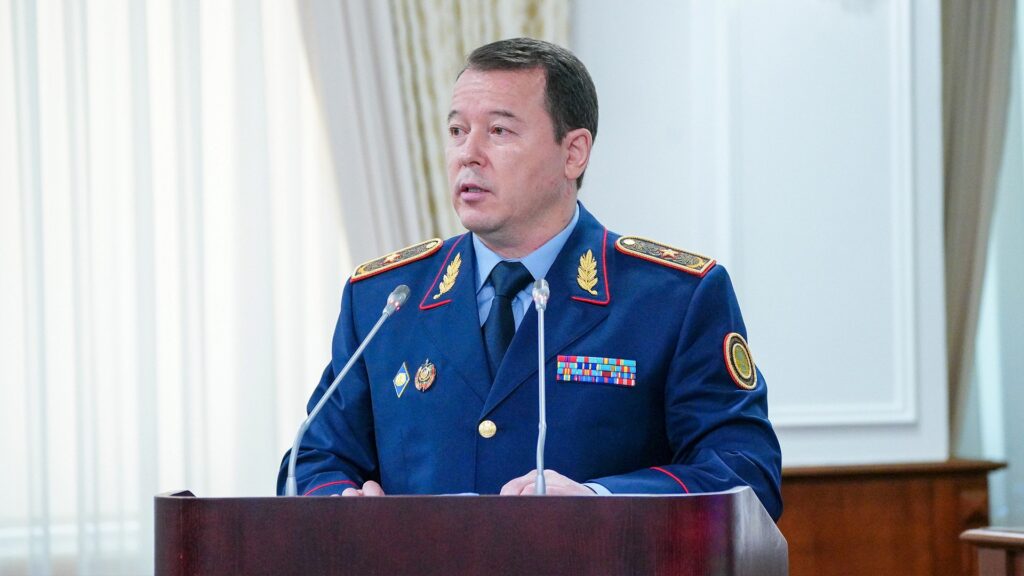
Kazakh President Kassym-Jomart Tokayev has signed a decree dissolving the country’s standalone Anti-Corruption Agency and transferring its functions to the National Security Committee (NSC), in what officials describe as a move to modernize and streamline public administration. According to the decree, the Anti-Corruption Agency, previously a direct presidential subordinate tasked with both strategic and operational anti-corruption efforts, will now be integrated into the NSC as its sixth division. It joins the ranks of other specialized units including the Border Service, Foreign Intelligence Service, Government Communications Service, Special Division “A” (special forces), and the Aviation Service. Some responsibilities, particularly those involving the development and implementation of anti-corruption policy, interagency coordination, and public outreach, will be transferred to the Agency for Civil Service Affairs. That agency will also absorb part of the former Anti-Corruption Agency’s staff and resources. “In order to modernize and improve the efficiency of the public administration system, I hereby decree: to reorganize the Anti-Corruption Agency by merging it with the National Security Committee...” the decree states. The Anti-Corruption Agency was created in 2014 as the successor to the Agency for Combating Economic and Corruption Crimes, also known as the financial police, which had operated since 1994. Throughout its existence, the agency reported directly to the president and was central to the country’s efforts to combat corruption, from policy design to investigations. Under the decree, the NSC must draft new regulations for the anti-corruption division and submit personnel redistribution proposals, particularly concerning the Agency for Civil Service Affairs, within one month. Additionally, the government has until September 1, 2025, to prepare and submit a bill to parliament reflecting the institutional changes. As previously reported by The Times of Central Asia, President Tokayev recently launched a broad reform initiative targeting the entire law enforcement system. The incorporation of anti-corruption functions into the NSC may thus represent only the first phase of a wider restructuring.

Kazakhstan Moves to Ban Face-Coverings in Public

On June 25, Kazakhstan’s Mazhilis, the lower house of parliament, approved amendments to the law “On the Prevention of Offenses,” introducing a new provision that prohibits wearing clothing that obscures the face in public places. While the regulation applies broadly, the most contentious element is its effective ban on the niqab, a religious garment that leaves only the eyes visible. This legislative move echoes ongoing debates in Kazakhstan and across Central Asia, where secular norms are enshrined in law but tensions persist over religious expression. Medical Masks Exempt Earlier, on June 19, Senator Nauryzbay Baikadamov clarified that the amendments would exempt face coverings worn for medical reasons, weather protection, or professional duties. According to Baikadamov, the law aims to enhance public safety and assist in crime prevention. While accessories such as balaclavas are included in the ban, the central controversy surrounds the prohibition of the niqab. The Scarf of Discord Understanding the distinctions among various forms of religious dress is critical to the current debate. The niqab is a face veil that leaves only the eyes uncovered, while the burqa (or paranji), typically worn in Afghanistan, covers the entire face with a mesh screen over the eyes. Burqas are rarely seen in Kazakhstan. Niqabs and black, floor-length dresses have become more visible on Kazakhstan’s streets in recent years, reflecting broader religious shifts. By contrast, the hijab, a headscarf that leaves the face exposed, has become commonplace and enjoys broader acceptance. While niqabs are widely seen as foreign to Kazakh culture, hijabs hold a more complex status. Historically, Kazakh women did not cover their faces, a fact supported by pre-revolutionary photographs. The niqab is viewed by many as an imported practice, largely linked to Islamic teachings from Arab countries. The hijab, however, is often seen as consistent with Kazakh traditions. As such, attempts to ban it have repeatedly stirred controversy. Religious Tensions in Schools In the fall of 2023, more than 150 schoolgirls in the Atyrau region refused to attend classes in protest against a hijab ban. Similar incidents were reported in other southern regions. Authorities reported that the situation was resolved after consultations with parents, but ambiguity remained regarding the scope of the restrictions, particularly whether the hijab was included. President Kassym-Jomart Tokayev ultimately addressed the issue, reaffirming Kazakhstan’s secular identity. “This principle must be strictly observed in all spheres, including education. School is, first and foremost, an educational institution where children come to gain knowledge. Religious beliefs, on the other hand, are a choice and a private matter for each citizen,” Tokayev stated. Still, the legal and cultural status of the hijab remains unresolved. While school uniform policies emphasize secular dress, enforcement is inconsistent, and experts warn of renewed conflict. Religious scholar Asylbek Izbaev noted, “It is not so important what a girl wears on her head as what she thinks.” A Regional Trend Kazakhstan’s move is part of a broader trend across Central Asia. In January 2025, Kyrgyz President Sadyr Japarov signed a law banning face-covering clothing. In...