• KGS/USD = 0.01143 0%
  • KZT/USD = 0.00205 0%
  • TJS/USD = 0.10433 0.1%
  • UZS/USD = 0.00008 0%
  • TMT/USD = 0.28577 0%
  • KGS/USD = 0.01143 0%
  • KZT/USD = 0.00205 0%
  • TJS/USD = 0.10433 0.1%
  • UZS/USD = 0.00008 0%
  • TMT/USD = 0.28577 0%
  • KGS/USD = 0.01143 0%
  • KZT/USD = 0.00205 0%
  • TJS/USD = 0.10433 0.1%
  • UZS/USD = 0.00008 0%
  • TMT/USD = 0.28577 0%
  • KGS/USD = 0.01143 0%
  • KZT/USD = 0.00205 0%
  • TJS/USD = 0.10433 0.1%
  • UZS/USD = 0.00008 0%
  • TMT/USD = 0.28577 0%
  • KGS/USD = 0.01143 0%
  • KZT/USD = 0.00205 0%
  • TJS/USD = 0.10433 0.1%
  • UZS/USD = 0.00008 0%
  • TMT/USD = 0.28577 0%
  • KGS/USD = 0.01143 0%
  • KZT/USD = 0.00205 0%
  • TJS/USD = 0.10433 0.1%
  • UZS/USD = 0.00008 0%
  • TMT/USD = 0.28577 0%
  • KGS/USD = 0.01143 0%
  • KZT/USD = 0.00205 0%
  • TJS/USD = 0.10433 0.1%
  • UZS/USD = 0.00008 0%
  • TMT/USD = 0.28577 0%
  • KGS/USD = 0.01143 0%
  • KZT/USD = 0.00205 0%
  • TJS/USD = 0.10433 0.1%
  • UZS/USD = 0.00008 0%
  • TMT/USD = 0.28577 0%

Viewing results 391 - 396 of 596

Kazakhstan and Uzbekistan Enhance Strategic Partnership

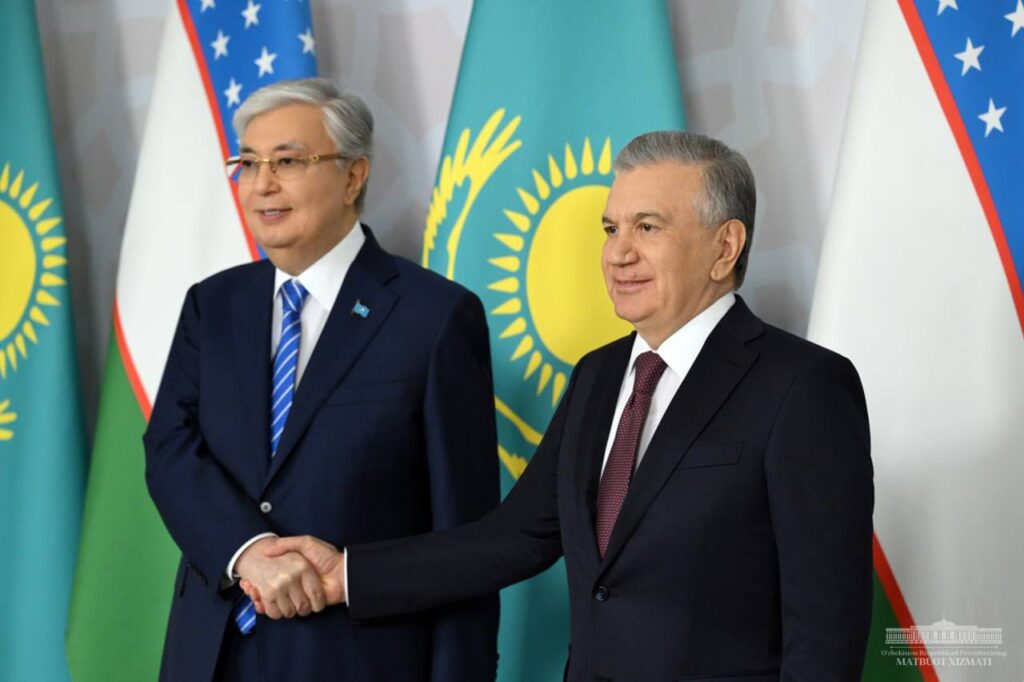
On April 5th, President of Uzbekistan Shavkat Mirziyoyev and President of Kazakhstan Kassym-Jomart Tokayev met in Khiva to discuss further strengthening of the Kazakh-Uzbek strategic partnership and allied relations. The presidents exchanged views on a wide range of economic interactions, including increasing mutual trade, cooperation in the fields of energy, transport, water management, and the IT industry. It was reported that last year, bilateral trade turnover amounted to $4.4 billion, and joint projects are now being implemented in the fields of industry, energy, transport and logistics, and agriculture. The Kazakh-Uzbek portfolio currently includes 60 collaborative projects with investment exceeding $2.5 billion and the creation of more than 13 thousand jobs. Progress is also forging ahead on the construction of an International Centre for Industrial Cooperation between the two countries. The Kazakh president stated that Kazakh-Uzbek collaboration is a vital necessity, and only by working together can sustainable development be ensured. In this regard, Tokayev supported plans to adopt and implement a Program of Strategic Partnership and Allied Relations between Kazakhstan and Uzbekistan until 2034. The leaders also welcomed mutually beneficial initiatives between their countries’ railway administrations. Once in operation, the proposed joint venture will provide cargo terminals on the Kazakh-Chinese border and cargo transportation along the China-Kazakhstan-Uzbekistan route, as well as developments of the Trans-Afghan route.
Kazakhstan’s Ekibastuz Metallurgy Zone To Create Thousands of Jobs

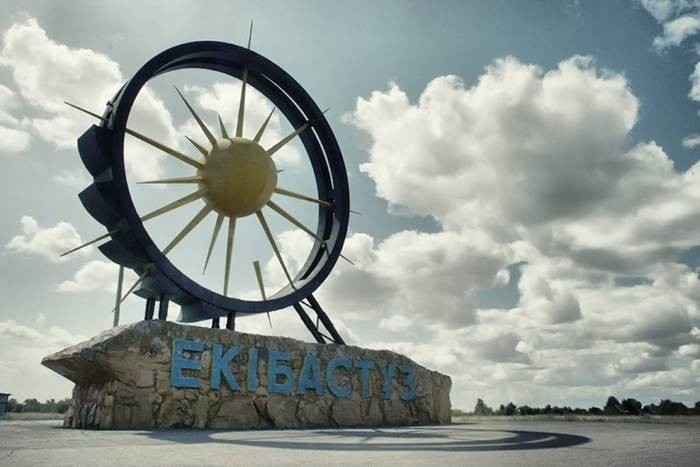
Kazakhstan's minister for industry and construction, Kanat Sharlapaev, recently used a government meeting to touch upon the growth of the town of Ekibastuz. Located in the northern Pavlodar region, Ekibastuz's economy centers on metallurgy and railway construction. Pavlodar region's metallurgical sector is set to benefit from the creation in Ekibastuz of an industrial zone, whose main investor will be a company named Mineral Product LLP. The zone will house an iron smelter, a ferroalloy plant, and a steel plant, creating 800 jobs during the zone's construction and 4,000 once the facilities are in operation. The entire Ekibastuz complex is expected to attract more than 100 billion tenge (~$224 million) in investment. Ekibastuz is one of Kazakhstan's single-industry towns, whose economy is dominated by one industrial sector, or one corporate entity that is focused on a particular sector. Such towns often have a difficult dependence on the performance of a particular enterprise or industry, and are often subject to the gyrations and whims of particular commodities markets.

Kazakhstan Adjusts Migration Rules to Attract Foreign Specialists

The Ministry of Labour and Social Protection of Population has announced that foreigners with qualifications in specific fields can now obtain residence permits, both multi-year and permanent, in Kazakhstan. The aim of the initiative, through a simplified procedure for residency, which negates the need for candidates to demonstrate their financial solvency, is to ultimately reduce the shortage of highly qualified personnel in the fields of science, healthcare, industry and IT. The list of professions that qualify for such privileges will be revised according to proposals from the Ministries of Health; Culture and Sports; Digital Development, and Aerospace. Professionals already listed include neurosurgeons, haematologists, oncologists, specialists in IT infrastructure and software architects. Further applications are sought from specialists in the natural sciences, mathematics, statistics, as well as engineering and construction industries. According to Kazakhstan's Ministry of Labour Residence, permits may be granted for up to 10 years or until the expiration of a foreigner's passport. Since February 1, 2024, 785 foreign labour permits have been issued for workers in various sectors including construction, mining and agriculture from China, Turkey, India and Uzbekistan. In addition, 14,600 foreign labour permits were issued at the beginning of 2024 for skilled professionals. The ministry emphasizes that one of the key objectives of migration policy is to protect the domestic labour market. The total quota for employers set for 2024 is 0.23% of the country's labour force, equivalent to 22,000 jobs.

Kazakhstan and Kyrgyzstan to Unite Against External Military Threat

Proposals are in place for Kazakhstan and Kyrgyzstan to enter an agreement on deepening and expanding allied relations. Drafted by the President of Kazakhstan Kassym-Jomart Tokaye, the decree, ‘On the signing of an agreement on deepening and expanding allied relations between the Republic of Kazakhstan and the Kyrgyz Republic’, was recently published on the Open Regulatory Legal Acts portal. The draft treaty states that when faced with a situation that “represents a threat of armed attack from third states, the parties will immediately hold appropriate consultations with each other, both bilaterally and within the framework of international organizations of which they are members, with a view to adopting measures conducive to its peaceful settlement." Furthermore, Kazakhstan and Kyrgyzstan will “confirm their commitment not to participate in any blocks or alliances, and also refrain from participating in any actions directed against the other party.” The territories and resources of both countries will not be used “for the purpose of preparing or carrying out aggression or other hostile actions against the other party, as well as to the detriment of the state sovereignty, security and territorial integrity of the other party.” Kazakhstan and the Kyrgyz Republic will prevent the use on their territories of “communication systems and other infrastructure by third states for the purpose of preparing or carrying out armed actions against the other party.” The draft document also makes provision for strengthening economic relations between the two countries, in particular “by creating favorable conditions for mutual access of goods, services and investments, their protection in the territories of their states, and the implementation of joint investment projects.”

Kazakhstan’s Ministry of Economy Proposes Canceling 21% of Taxes

The Ministry of National Economy of Kazakhstan has proposed reducing the number of taxes paid in the republic by 21%. The proposal focuses on three taxes: that imposed on the use of specially protected environmental zones, the tax on outdoor (visual) advertising, and the tax on the issuance of licenses to engage in certain types of professional activities. The ministry noted that these taxes bring about 14.4 billion tenge ($32 million) into the federal budget each year. In addition to the abolition of these taxes, the ministry also proposed combining three payments into one - those for the use of water resources drawn from surface sources, for the use of forests, and for the use of wildlife. Instead of separate levies, the ministry put forth a single tax on the use of natural resources. If these initiatives are approved, 77 different tax rates will be abolished - which is 21% of the total number of taxes in Kazakhstan. The ministry has also proposed the abolition of eight levies which bring in about 1.1 billion tenge ($2.5 million) to the budget annually and is seeking to cancel six state duties, which contribute about 299 million tenge ($666,000). These measures will result in the reduction of 89 different fee rates and 53 state duties, respectively.

Kazakhstan’s SMEs Borrowed Almost U$17 Billion from Banks

Kazakhstan's banks are actively supporting small and medium-sized businesses, according to the Kazakh National Bank, and as of February 1, 2024, entrepreneurs and small-business owners have been granted loans totaling 7.6 trillion tenge ($16.9 billion). Furthermore, the growth in lending over the last year amounted to 18.75%, or more than 1.2 trillion tenge ($2.2 billion). The greatest demand for loans is observed among enterprises in the industrial sector, which received loans worth 2.21 trillion tenge ($4.9 billion), an increase of 10.5% annually, as well as in trade, where the volume of lending doubled to 2 trillion tenge ($4.4 billion). At the same time, the smallest loan volume was allocated to representatives of the communications sector - only 52.3 billion tenge ($160 million), which means a 21% decrease over the past year. When analyzing statistics by region, one can note that the largest amounts of lending is to small and medium-sized enterprises (SMEs) from Almaty, which were allocated 3.8 trillion tenge ($8.4 billion), while Astana-based borrowers received 1.25 trillion tenge ($2.8 billion) in loans, an increase of 1%. Earlier, Elena Bakhmutova, head of the Association of Financial Companies (AFC), noted that over the past eight years, lending to legal entities has increased by only 15%, while lending to individuals registered as sole proprietors increased more than five-fold to 1.6 trillion tenge ($3.6 billion) from 300 billion tenge ($665 million).