• KGS/USD = 0.01144 0%
  • KZT/USD = 0.00213 0%
  • TJS/USD = 0.10456 0.19%
  • UZS/USD = 0.00008 0%
  • TMT/USD = 0.28490 0%
  • KGS/USD = 0.01144 0%
  • KZT/USD = 0.00213 0%
  • TJS/USD = 0.10456 0.19%
  • UZS/USD = 0.00008 0%
  • TMT/USD = 0.28490 0%
  • KGS/USD = 0.01144 0%
  • KZT/USD = 0.00213 0%
  • TJS/USD = 0.10456 0.19%
  • UZS/USD = 0.00008 0%
  • TMT/USD = 0.28490 0%
  • KGS/USD = 0.01144 0%
  • KZT/USD = 0.00213 0%
  • TJS/USD = 0.10456 0.19%
  • UZS/USD = 0.00008 0%
  • TMT/USD = 0.28490 0%
  • KGS/USD = 0.01144 0%
  • KZT/USD = 0.00213 0%
  • TJS/USD = 0.10456 0.19%
  • UZS/USD = 0.00008 0%
  • TMT/USD = 0.28490 0%
  • KGS/USD = 0.01144 0%
  • KZT/USD = 0.00213 0%
  • TJS/USD = 0.10456 0.19%
  • UZS/USD = 0.00008 0%
  • TMT/USD = 0.28490 0%
  • KGS/USD = 0.01144 0%
  • KZT/USD = 0.00213 0%
  • TJS/USD = 0.10456 0.19%
  • UZS/USD = 0.00008 0%
  • TMT/USD = 0.28490 0%
  • KGS/USD = 0.01144 0%
  • KZT/USD = 0.00213 0%
  • TJS/USD = 0.10456 0.19%
  • UZS/USD = 0.00008 0%
  • TMT/USD = 0.28490 0%

Viewing results 655 - 660 of 4651

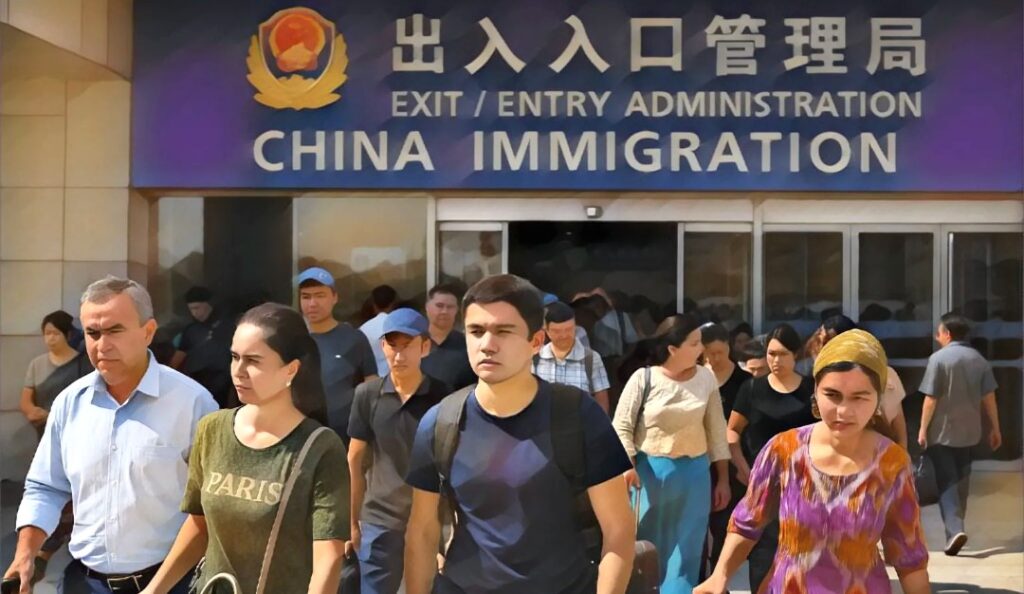
China’s Visa Diplomacy: A Strategic Tool for Influence in Central Asia

As China’s international influence expands, it is refining its approach to global engagement by combining economic strength with crafted instruments of soft power. While in the past China primarily relied on Confucius Institutes and educational exchange programs to promote cultural understanding and strengthen people-to-people connections, its strategy has evolved into a more diverse and multidimensional framework. In recent years, Beijing has expanded its soft power tools to include Luban Workshops, which transfer technical skills and vocational expertise, and medical cooperation initiatives that enhance China’s reputation as a reliable development partner. These efforts have allowed China to project an image of a country that not only builds infrastructure and invests in markets, but also contributes to human capital and social welfare across the developing world. A newer element in this evolving strategy is visa diplomacy. In a global environment where mobility and connectivity shape international relationships, easing travel restrictions has become a subtle yet effective way to deepen engagement.  As of mid-2025, China has signed or implemented visa-free or unilateral visa exemption agreements with 75 countries, covering tourism, business, family visits, and transit travel. This list includes key Central Asian partners such as Kazakhstan and Uzbekistan, both of which maintain mutual visa exemption agreements with Beijing. The expansion of China’s visa diplomacy brings significant benefits for both China and its Central Asian partners, particularly Kazakhstan and Uzbekistan. For Beijing, this initiative advances two major objectives, strengthening its economy and enhancing its soft power.  On the economic side, visa-free agreements allow China to attract a larger and more diverse group of international visitors, expanding its tourism market beyond traditional regions. While travelers from Europe, Asia, and North America remain the most frequent visitors, there has been a noticeable increase in arrivals from Central Asia.  This trend is already visible in official figures, as in 2024 China recorded 20.1 million foreign entries under visa-free arrangements, representing 74.6 percent of total arrivals and marking a growth of more than 112 percent compared with 2023. Visa-free diplomacy also supports China’s broader development goals by making tourism one of the essential drivers of economic growth and a reliable source of revenue. In 2025, China’s tourism sector, including both domestic and international travel, is expected to contribute a record 13.7 trillion yuan to the national economy.  This figure exceeds pre-pandemic levels by more than ten percent and sustains approximately 83 million jobs. As China expands its visa agreements with Central Asian countries, it aims to attract more visitors from the region, increase tourism income, and deepen regional economic ties. Beyond its economic value, visa-free diplomacy enhances China’s soft power across Central Asia. By facilitating more frequent travel and cultural interaction, China has the opportunity to build a more positive image among Central Asian societies and to strengthen long-term people-to-people relations.  These exchanges can create familiarity and trust, which are essential elements of sustainable diplomacy. When combined with other soft power tools such as educational programs, technical cooperation, and media outreach, visa diplomacy helps China build a balanced...
Gor and Landau Tour Central Asia Amid Rising Stakes

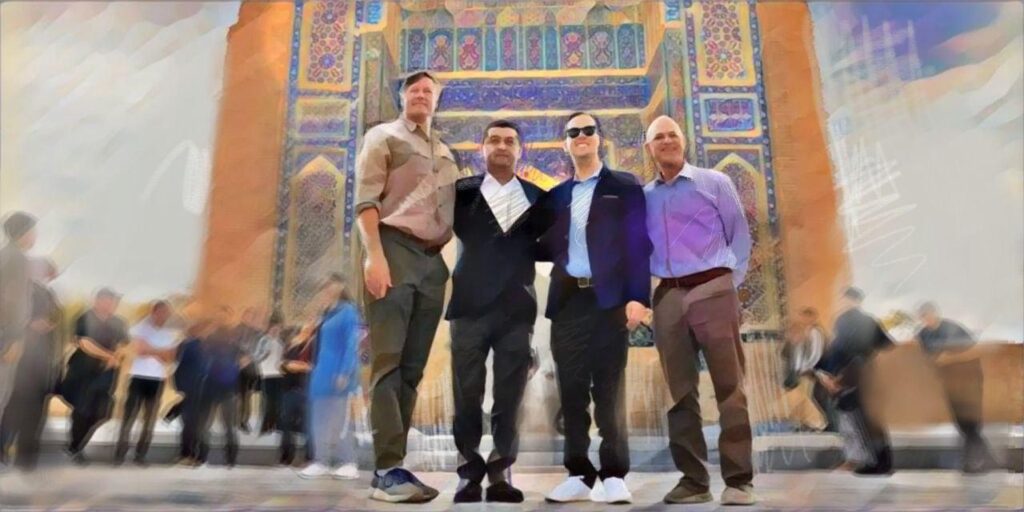
On October 25, U.S. Special Representative for South and Central Asia Sergio Gor and Deputy Secretary of State Christopher Landau arrived in Tashkent on an official visit. The visit to Central Asia was not publicly scheduled in advance, with news of the trip only emerging a few days beforehand. In Uzbekistan, the high-ranking visitors were received with full state honors. A motorcycle escort and blocked roads in the capital are typically reserved for visits by heads of state. Although the American delegation’s visit to Uzbekistan ended by Monday evening, local media coverage remained scant. Apart from posts on the U.S. Embassy in Uzbekistan’s Telegram channel, almost no media outlets covered the event. On the evening of October 25, Gor and Landau held productive talks with representatives of U.S. companies about numerous opportunities to strengthen mutual prosperity. Afterwards, they traveled to Samarkand, where they toured the city often referred to as the pearl of Central Asia. On October 26, the visitors held fruitful talks with Foreign Minister Saidov, thanking him for his leadership and hospitality throughout the visit. His efforts, they noted, are elevating the strategic partnership between the U.S. and Uzbekistan to a new level. The delegation also held “productive” talks with Ministers Bobir Islamov and Laziz Kudratov on expanding trade and investment ties. By Monday evening, Gor and Landau had arrived in Almaty, Kazakhstan. As the largest city in the country, Almaty is also one of Central Asia’s key business hubs. According to sources, the agenda in Kazakhstan includes meetings with business leaders and a cultural program. As in Uzbekistan, there was no official information about the visit released on Monday. This may, however, be because Monday was a national holiday - Republic Day – an event which President Donald Trump extended his congratulations to mark, stating that ““The United States values ​​our close economic and security ties with Kazakhstan and looks forward to further strengthening our expanded strategic partnership in the coming year.” Secretary of State Marco Rubio also sent his “congratulations to the people of Kazakhstan.” By all indications, the lightning-fast visit by the senior U.S. delegation is linked to the recently announced C5+1 summit in Washington on November 6. Beyond cultural sightseeing, the talks reportedly covered cooperation in rare earth mineral processing and other sensitive areas. Recently, U.S. interest in the countries of the region has expanded significantly. While China and, traditionally, Russia are considered the main players in the region, Europe and the U.S. are increasingly seeking a firmer foothold in Central Asia’s strategic landscape. Recent global conflicts have exposed major powers’ dependence on raw materials and logistics routes. The search for new corridors and suppliers now seems both logical and urgent. Sanctions on Russia have also had a direct impact on regional economies, requiring swift responses. The C5+1 format presents an ideal framework for launching coordinated political and business cooperation. Yet, it’s essential to recognize the significant disparities among Central Asian countries. Kazakhstan is the region’s financial heavyweight. According to the IMF, Kazakhstan’s GDP per capita...

Tokayev Backs Azerbaijan to Join Central Asia-U.S. Summit

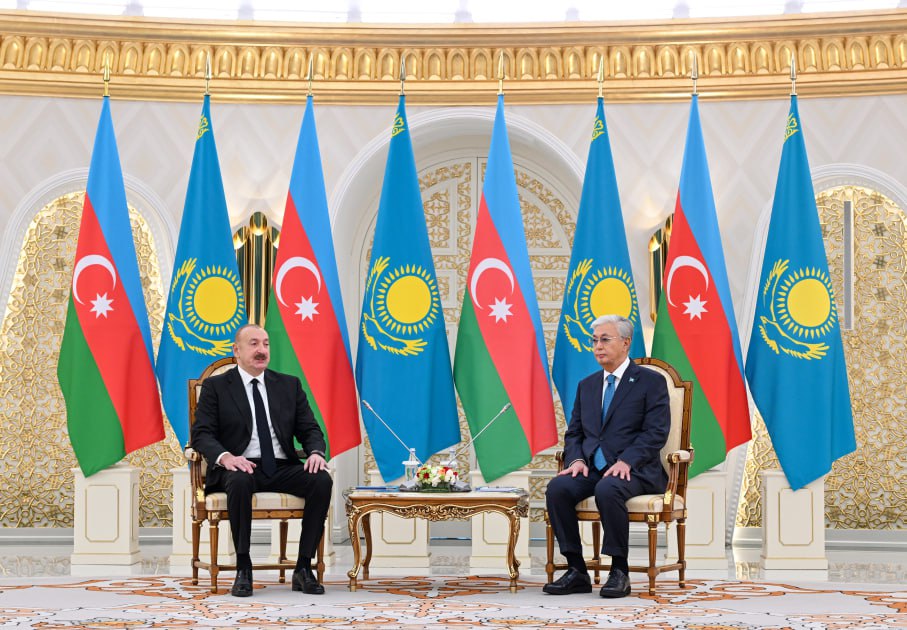
Kazakhstan’s President Kassym-Jomart Tokayev has said he would welcome Azerbaijan’s participation in the upcoming Central Asia-U.S. Summit in Washington. In an exclusive comment to Azerbaijani outlet Minval Politika, Tokayev praised Azerbaijan’s regional role and even called the country a “natural part of Greater Central Asia.” “I consider Azerbaijan’s participation in such an important forum desirable. Given its energy resources, favorable geographic location, strategic vision, and the political will of President Ilham Aliyev, this country plays a crucial role in the South Caucasus and beyond, essentially becoming a regional transport, logistics, and energy powerhouse,” Tokayev said. “Azerbaijan can be considered a natural part of Greater Central Asia. I also consider President Donald Trump’s initiative to hold a summit in Washington in the very near future to be very timely and worthy of support. I am confident this event will be productive and mutually beneficial,” the Kazakh leader noted.  The planned summit on November 6 falls under the C5+1 format that brings together the U.S. and the five countries of Central Asia. It will mark the first such gathering held in Washington, after an initial presidential meeting took place on the sidelines of the UN General Assembly in 2023. Donald Trump has formally invited the leaders of Kazakhstan, Kyrgyzstan, Tajikistan, Turkmenistan, and Uzbekistan to attend. The meeting will coincide with the tenth anniversary of the C5+1 diplomatic platform, which was launched in 2015 to deepen cooperation between Central Asia and the U.S. on security, economic and other issues. Tokayev’s remarks about Azerbaijan reflect a growing view that Azerbaijan is increasingly integrated with Central Asia. In recent years, Baku has been invited to Central Asian heads-of-state consultative summits as a special participant, underscoring what analysts call the “growing importance of the South Caucasus as a gateway for Central Asia to European markets”. During the most recent Central Asia leaders’ meeting in Astana in August, Azerbaijan was designated a key partner in regional initiatives, and Aliyev stressed that Azerbaijan and the Central Asian countries “represent a single historical, cultural, and geopolitical space” with deep-rooted ties. That brotherly affinity is reinforced by Turkic cultural links and mutual strategic interests. Tokayev himself, in talks with Aliyev, has called Azerbaijan “a regional power” and “a fraternal state” for Kazakhstan. Azerbaijan indeed wields significant influence as an energy and transport hub connecting Eurasia. The country is a major oil and gas producer that has steadily expanded exports to Europe, and it anchors the Trans-Caspian trade routes linking China and Central Asia to the West via the Caucasus. Since Russia’s 2022 invasion of Ukraine disrupted traditional east–west corridors, the so-called Middle Corridor -- running from Central Asia across the Caspian Sea through Azerbaijan -- has taken on greater importance. Kazakhstan and Azerbaijan have positioned themselves as “key actors” in this reconfigured Eurasian logistics network that bypasses Russian territory. The United States is also paying close attention to these routes: officials have indicated that the Washington summit will spotlight development of the Trans-Caspian corridor, with the U.S. “keen to promote logistics...

Kazakhstan Eyes Revival of Ili River Corridor as Logistics Artery

River transport has long offered a cost-effective and environmentally friendly alternative for moving cargo. Inland waterways present an alternative route that could unlock new logistics pathways for Kazakhstan and the broader Central Asian region. Yet the development of river navigation remains hindered by several challenges. Kazakhstan’s inland waterway system faces numerous obstacles: insufficient investment, underdeveloped port infrastructure, an aging fleet, and bureaucratic red tape. Despite these issues, reviving river navigation could significantly boost mutual trade, increase cargo volumes, and ease pressure on overburdened road and rail networks. The government has initiated several projects aimed at doing just that. One notable initiative is the proposed route along the transboundary Ili River in the Almaty Region, connecting the city of Konaev with Yining in China’s Xinjiang Uyghur Autonomous Region. Originating in the Tien Shan mountains, where the Kunges and Tekes rivers merge, the Ili River stretches 1,439 km, with 620 km or 43% within Kazakhstan’s borders. [caption id="attachment_38136" align="aligncenter" width="2560"] Image: Ili River Port LLP[/caption] The project is a joint venture between Kazakhstan’s Ili River Port LLP and China International Water & Electric Corp. In an interview with The Times of Central Asia, Marat Julaev, CEO of Ili River Port LLP, stated that the navigable section of the route spans 450 km. Historically, the Ili served as a key transport artery, facilitating trade and connectivity with remote regions. “This route was navigable and operational until 1980. It was used to transport dry goods, ores, petroleum products, and consumer goods from China,” Julaev explained. Following the collapse of the Soviet Union, navigation along the Ili declined sharply. Extensive water usage in China caused water levels to fall, compounding the route’s inability to compete with road and rail alternatives. However, with mounting congestion and capacity constraints in land-based infrastructure, the river’s strategic role is being reconsidered. “In the Almaty Region, we’ve been allocated a 100-hectare plot on the coast of the Kapshagai Reservoir, providing a strategic advantage in reducing delivery time and costs,” Julaev told TCA. “Our Chinese partners, operating in Kazakhstan since 2006, are developing the route between Yining and Konaev.” [caption id="attachment_38137" align="aligncenter" width="2560"] Image: Ili River Port LLP[/caption] A central component of the project is the creation of a transport and logistics hub to consolidate and distribute cargo across Central Asia. The river port will offer terminal services, storage, sorting, equipment maintenance, and passenger transport. Plans also include developing production facilities and cargo terminals on-site. Commissioning is expected in 2027, with an initial cargo turnover capacity of one million tons annually, potentially rising to three million. According to Julaev, this development will enhance Kazakhstan’s foreign trade with China. Julaev emphasized one of the route’s key advantages: the ability to transport oversized cargo, including materials for Kazakhstan’s first nuclear power plant under construction in the village of Ulken on Lake Balkhash, which is fed primarily by the Ili. An equally critical issue is water availability. According to the UN Development Programme in Kazakhstan, over 44% of the country’s river flow originates in...

Future Chelsea Player Satpaev Seals Second Consecutive Title for Kairat

Almaty's Kairat Football Club has secured its second consecutive Kazakhstan Premier League (KPL) championship. The decisive goal in the final match was scored by Kazakhstan national team striker Dastan Satpaev, currently on contract with London’s Chelsea. Last year, Kairat won the national championship for the fourth time in its history. This summer, the club qualified for the UEFA Champions’ League group stage for the first time, intensifying pressure on the team as it competed simultaneously in both domestic and European tournaments. Entering the final round, Kairat held a narrow two-point lead over its closest challenger, FC Astana. Fittingly, the season concluded with a high-stakes home match against the capital’s team. The match took place on Sunday, October 26. Despite Kairat’s territorial dominance, Astana struck first, 38-year-old midfielder Marin Tomasov scored in the 15th minute with a well-placed shot from the penalty area. The visitors threatened further, but Kairat goalkeeper Temirlan Anarbekov delivered several crucial saves to keep the deficit at one. In the second half, Satpaev, who will join Chelsea after he turns 18, scored the equalizer, making it 1-1. The draw was enough to keep Kairat ahead in the standings, two points clear of Astana, and clinch the club’s fifth national title. Tomasov nearly scored a second goal during stoppage time, but his shot struck the crossbar. With this result, Kairat became only the seventh club in KPL history to successfully defend its title. The league’s record for consecutive championships belongs to Astana, who won six straight from 2014 to 2019. Aktobe followed with a three-peat (2007–2009), while Yelimay (1994-1995), Zhenis (2000-2001), Irtysh (2002-2003), and Shakhtar Karagandy (2011-2012) each managed two. Between 2020 and 2024, no team had retained the championship, until now. “There were certainly difficulties during the season, primarily the struggle on several fronts,” said Kairat head coach Rafael Urazbakhtin after the match. He noted that frequent squad rotation, a demanding schedule, and long-distance travel forced the coaching staff to carefully manage the squad’s physical condition. “Over time, the team adapted to the rhythm of two or three matches a week. Endurance and teamwork became key factors,” he added. Kairat’s attention now shifts back to the Champions League, where the club sits in last place in its group with one point from three matches. The next fixture is on November 5 in Milan against second-placed Inter. As previously reported by The Times of Central Asia, Kairat’s Champions League breakthrough was made possible in part by Anarbekov’s standout performance in a penalty shootout victory over Scotland’s Celtic.

“Music Is Born in Pain”: Kazakh Composer Robert Ziganshin on Inspiration, Integrity, and Creative Freedom

Robert Ziganshin is one of Kazakhstan’s most in-demand film composers. A graduate of the Lyon Conservatory in France, where he studied classical guitar and earned master’s degrees in both music for the visual arts and musicology, he returned home to rapidly establish himself in the country's film and television industry. Ziganshin’s credits include music for popular TV series and films such as Alisher Utev’s crime drama 5:32 (IMDB), the box office hit Kazakh Business in Brazil, and Malika, a feature film by Russian director Natalya Uvarova about a family of Ingush migrants. In an interview with The Times of Central Asia, Ziganshin spoke about the influence of the French school, the ethics of film composition, and why writing music “that simply comments on the action” can mean sacrificing artistic integrity. TCA: Robert, you graduated from KIMEP in Kazakhstan. How did you end up in France? Ziganshin: I’ve been passionate about music since early childhood. Even when I was playing with building blocks, I was always humming something, as if adding a soundtrack to my own stories. I didn’t get into music school, and it wasn’t until I was fifteen that I started taking private guitar lessons. There were times I practiced six hours a day. There was no higher education in classical guitar in Kazakhstan at the time, so I enrolled at KIMEP. After graduating, I applied to two conservatories in France and was accepted to the one in Lyon. TCA: Why France? Ziganshin: I spoke fluent French. My father had sent me to language school, and I took part in competitions. Later, a professor from Lyon gave a master class in Almaty, and I helped translate for him. He assessed my level and encouraged me to apply to his course. TCA: Was tuition really that affordable? Ziganshin: For foreign students, it was about €900 per year, including health insurance. Compared to the UK, it was a bargain. I spent four years there and earned a bachelor’s degree. TCA: How did you shift into composing for film? Ziganshin: I met students from the program Musique appliquée aux arts visuels, music created for film, theater, performance, and media art. I wanted to try it. The entrance exam was creative: we had to score scenes and compose music for a three-minute video in a week. I got in on my second try, only twelve of us were accepted. It was a two-year program, starting with orchestration and sound engineering, then moving into practical work on student film projects. TCA: What was the subject of your master’s thesis? Ziganshin: When should a composer start work on a film? Personally, I prefer being involved from the script stage. After finishing that degree, I also enrolled in a master’s in musicology. In 2021, I returned to Kazakhstan. I struggled to find paid work in music and almost joined my father’s printing business. I even started hand-making notebooks, neat and beautiful ones. But soon, small offers started coming in, and I returned to composing full-time, initially...