• KGS/USD = 0.01144 0%
  • KZT/USD = 0.00212 0%
  • TJS/USD = 0.10456 0%
  • UZS/USD = 0.00008 0%
  • TMT/USD = 0.28490 0%
  • KGS/USD = 0.01144 0%
  • KZT/USD = 0.00212 0%
  • TJS/USD = 0.10456 0%
  • UZS/USD = 0.00008 0%
  • TMT/USD = 0.28490 0%
  • KGS/USD = 0.01144 0%
  • KZT/USD = 0.00212 0%
  • TJS/USD = 0.10456 0%
  • UZS/USD = 0.00008 0%
  • TMT/USD = 0.28490 0%
  • KGS/USD = 0.01144 0%
  • KZT/USD = 0.00212 0%
  • TJS/USD = 0.10456 0%
  • UZS/USD = 0.00008 0%
  • TMT/USD = 0.28490 0%
  • KGS/USD = 0.01144 0%
  • KZT/USD = 0.00212 0%
  • TJS/USD = 0.10456 0%
  • UZS/USD = 0.00008 0%
  • TMT/USD = 0.28490 0%
  • KGS/USD = 0.01144 0%
  • KZT/USD = 0.00212 0%
  • TJS/USD = 0.10456 0%
  • UZS/USD = 0.00008 0%
  • TMT/USD = 0.28490 0%
  • KGS/USD = 0.01144 0%
  • KZT/USD = 0.00212 0%
  • TJS/USD = 0.10456 0%
  • UZS/USD = 0.00008 0%
  • TMT/USD = 0.28490 0%
  • KGS/USD = 0.01144 0%
  • KZT/USD = 0.00212 0%
  • TJS/USD = 0.10456 0%
  • UZS/USD = 0.00008 0%
  • TMT/USD = 0.28490 0%

Viewing results 661 - 666 of 4654

“Music Is Born in Pain”: Kazakh Composer Robert Ziganshin on Inspiration, Integrity, and Creative Freedom

Robert Ziganshin is one of Kazakhstan’s most in-demand film composers. A graduate of the Lyon Conservatory in France, where he studied classical guitar and earned master’s degrees in both music for the visual arts and musicology, he returned home to rapidly establish himself in the country's film and television industry. Ziganshin’s credits include music for popular TV series and films such as Alisher Utev’s crime drama 5:32 (IMDB), the box office hit Kazakh Business in Brazil, and Malika, a feature film by Russian director Natalya Uvarova about a family of Ingush migrants. In an interview with The Times of Central Asia, Ziganshin spoke about the influence of the French school, the ethics of film composition, and why writing music “that simply comments on the action” can mean sacrificing artistic integrity. TCA: Robert, you graduated from KIMEP in Kazakhstan. How did you end up in France? Ziganshin: I’ve been passionate about music since early childhood. Even when I was playing with building blocks, I was always humming something, as if adding a soundtrack to my own stories. I didn’t get into music school, and it wasn’t until I was fifteen that I started taking private guitar lessons. There were times I practiced six hours a day. There was no higher education in classical guitar in Kazakhstan at the time, so I enrolled at KIMEP. After graduating, I applied to two conservatories in France and was accepted to the one in Lyon. TCA: Why France? Ziganshin: I spoke fluent French. My father had sent me to language school, and I took part in competitions. Later, a professor from Lyon gave a master class in Almaty, and I helped translate for him. He assessed my level and encouraged me to apply to his course. TCA: Was tuition really that affordable? Ziganshin: For foreign students, it was about €900 per year, including health insurance. Compared to the UK, it was a bargain. I spent four years there and earned a bachelor’s degree. TCA: How did you shift into composing for film? Ziganshin: I met students from the program Musique appliquée aux arts visuels, music created for film, theater, performance, and media art. I wanted to try it. The entrance exam was creative: we had to score scenes and compose music for a three-minute video in a week. I got in on my second try, only twelve of us were accepted. It was a two-year program, starting with orchestration and sound engineering, then moving into practical work on student film projects. TCA: What was the subject of your master’s thesis? Ziganshin: When should a composer start work on a film? Personally, I prefer being involved from the script stage. After finishing that degree, I also enrolled in a master’s in musicology. In 2021, I returned to Kazakhstan. I struggled to find paid work in music and almost joined my father’s printing business. I even started hand-making notebooks, neat and beautiful ones. But soon, small offers started coming in, and I returned to composing full-time, initially...

Kazakhstan Responds to Claims It Has Abandoned Ethnic Kazakhs in Afghanistan

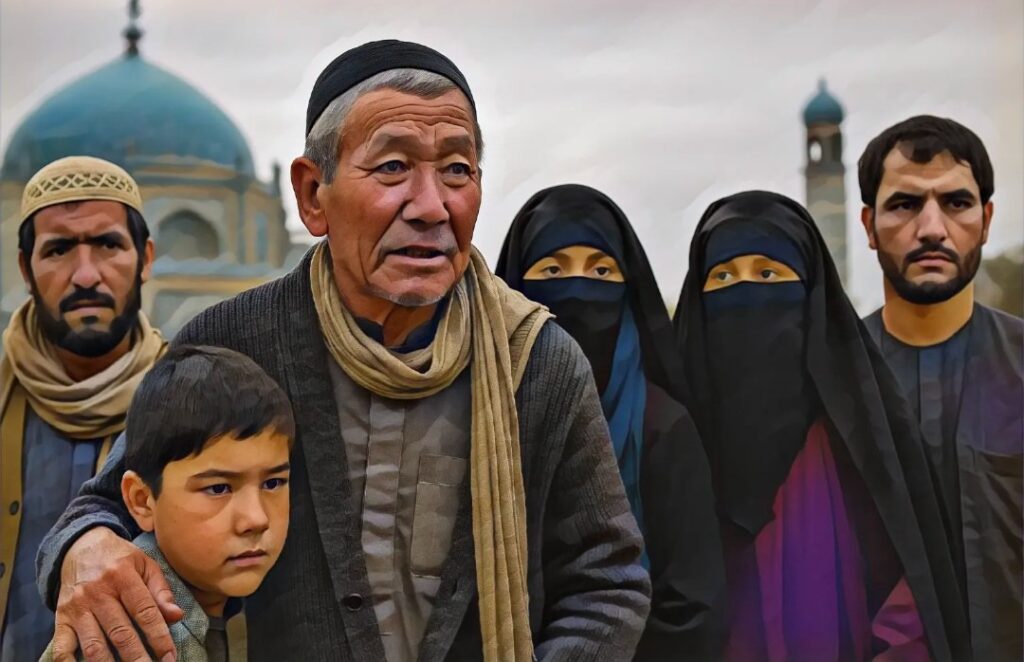
Recent claims circulating on social media have accused the Kazakh government of abandoning ethnic Kazakhs in Afghanistan, with posts often alleging that thousands of Kazakhs have been left to fend for themselves, painting an emotionally charged but factually questionable picture. The Times of Central Asia set out to verify these claims and found a far more complex reality. Historical Background Kazakh migration to Afghanistan dates back over a century. In the late 19th and early 20th centuries, some groups of Kazakhs arrived via Xinjiang, China. Later waves followed during the 1930s, prompted by famine and Stalinist repression in the USSR. Some speculate that early migrants may have included supporters of Kenesary Khan, but this remains the subject of academic debate. While there are no official Afghan census records, estimates suggest that by the mid-20th century, the number of Kazakhs in Afghanistan may have reached 20,000-24,000. However, the repatriation programs of the 1990s drastically reduced these numbers. Since Kazakhstan’s independence, approximately 13,000 Kazakhs have returned from Afghanistan, part of a broader national effort that has repatriated over 1.15 million ethnic Kazakhs from abroad. Even after the Taliban takeover, repatriation efforts continued. In September 2021, for example, 35 ethnic Kazakhs were airlifted to Kazakhstan on a specially arranged flight. Disputed Numbers According to Kazakhstan’s Foreign Ministry and as confirmed by its embassy in Kabul, the number of ethnic Kazakhs remaining in Afghanistan is about 200 people, or roughly 15 families. In contrast, some self-proclaimed “cultural centers” and online activists claim there are “thousands” of families, with some estimates as high as 3,600 people. These figures are not substantiated by either official data or independent research. Verifying Ethnic Identity The Kazakh embassy in Kabul maintains contact with community representatives to track and verify the status of ethnic Kazakhs. Yet, confirming identities is a serious challenge in Afghanistan due to the absence of a comprehensive population registry. Since 2018, Afghan identity cards (e-Tazkira) have included a “nationality” field, but filling it is optional and based primarily on self-declaration or statements by local elders. This system is vulnerable to manipulation. The embassy reports cases where individuals from other ethnic backgrounds have falsely identified as Kazakh in the hope of qualifying for repatriation programs. Additional complications include limited access to remote provinces, weak administrative oversight, and security concerns. The embassy thus relies on field visits, trusted local contacts, and cautious verification to produce its population estimates. Mixed Marriages and Assimilation One of the biggest challenges in identification is interethnic marriage. Over the decades, many Kazakhs in Afghanistan have assimilated into surrounding Uzbek, Turkmen, or Tajik communities. Many no longer speak Kazakh, and identity is maintained through fragmentary knowledge of family genealogies (shezhire), often insufficient for verification. The embassy also raised concerns about “disputed applicants”, individuals attempting to exploit Kazakhstan’s earlier, more lenient kandastar (ethnic repatriation) policy. In the absence of rigorous documentation, ethnicity in Afghanistan has often been based on verbal claims, creating openings for abuse and corruption. Why Not Use DNA? Some social media users...

Kazakhstan Highlights Its Literary Heritage at the 2025 Frankfurt Book Fair

From October 15 to 19, Kazakhstan took part in the 2025 Frankfurter Buchmesse in Germany – one of the world’s most prominent and influential international book fairs. At its national stand, the country presented a diverse selection of new publications from leading Kazakh publishers to a global readership.  Celebrating its 77th edition, this year’s Frankfurt Book Fair featured more than 30 delegates from Kazakhstan, from major publishing houses such as Mektep, Almatykitap, Atamura, ARMAN-PV, Steppe & World Publishing, Evero, Kazformoms, and AmalBooks. [caption id="attachment_38141" align="aligncenter" width="351"] @TCA[/caption] The national pavilion became an important hub for expanding international publishing partnerships. Approximately 350 Kazakh titles were showcased, spanning a wide range of genres from literary fiction and scholarly works to educational and children’s books.  Book Presentations and Highlights Several notable book launches took place during the fair. Of particular interest was the multilingual edition Abai’s “Words of Wisdom: Legacy for Generations”, translated into seven languages and presented with the participation of German writer Anja Tuckermann. Another major highlight was a creative presentation of Mirzhakyp Dulatov’s timeless novel “Unfortunate Jamal”, regarded as one of the classics of Kazakh literature. [caption id="attachment_38142" align="aligncenter" width="224"] @TCA[/caption] The Consul General of Kazakhstan in Frankfurt am Main, Tauboldy Umbetbayev, visited the national pavilion to show support for the Kazakh delegation and to emphasize literature’s vital role in promoting cultural diplomacy. Throughout the fair, publishers from Canada, China, Turkey, Azerbaijan, Denmark, Germany, Singapore, and several other countries met with Kazakh representatives to discuss potential collaborations.

U.S. Backs Private Bid for Kazakhstan’s Tungsten

The United States is facilitating a private American bid by Cove Kaz Capital Group LLC for Kazakhstan’s Upper Kairakty and North Katpar tungsten deposits, in competition with state-backed Chinese bidders. Tungsten is not a rare earth element, but it is a critical raw material. In particular, it underpins armor-piercing ammunition, penetrators, and high-temperature tooling used across aerospace and industrial manufacturing. Reporting indicates direct engagement by senior U.S. officials and active coordination with Kazakhstan’s sovereign-wealth ecosystem. The metal’s significance elevates the commercial negotiation into a strategic policy. The policy driver is diversification away from China’s dominance along the mine-to-powder supply chains. China accounts for well over four-fifths of global tungsten production and processing, and tightened export controls in 2025 have upset pricing and availability. The U.S. has established a procurement deadline of 2027 to avoid sourcing from China or Russia for covered defense uses. All this adds urgency to securing non-Chinese volumes. Kazakhstan’s revived tungsten sector includes a newly opened processing plant, with destinations not yet announced for the concentrate to be produced. The country thus offers a practical non-Chinese source of tungsten. Strategic Stakes and Principal Actors The American role would be one of facilitation and financing, rather than ownership. The administration has supported talks linking Cove Kaz to Kazakhstan’s Samruk-Kazyna and relevant mining entities. Commerce Secretary Howard Lutnick is mentioned as a key interlocutor. Potential financial tools include the U.S. International Development Finance Corporation (DFC) and the Export-Import Bank. Insurance (EXIM), guarantees, or direct loans from these institutions would offset pricing and risk advantages historically offered by Chinese bidders. The U.S. government’s approach is to enable a private operator to compete without placing federal equity as an asset. Kazakhstan’s Samruk-Kazyna and its mining arm Tau-Ken Samruk coordinate with the national exploration company Qazgeology. Kazakhstan has pursued a wider critical-minerals investment agenda, signaling its openness to joint ventures and privatization pathways under a special legal regime that provides a familiar legal and compliance framework for Western partners. That structure streamlines licensing and dispute resolution and has already been used for joint ventures in other critical minerals projects. China remains the current market leader, dominating tungsten mining, ammonium paratungstate (APT) conversion, and downstream powders and carbides. Beijing’s 2025 export controls cover tungsten, tightening an already narrow global market and raising the policy value of non-Chinese options. Reports of Chinese interest in Vietnam’s Nui Phao tungsten complex underscore that non-Chinese sources face active competition, framing Kazakhstan’s appeal to Western buyers. The Assets and Kazakhstan’s Capacity Rebuild Kazakhstan suspended tungsten production after the 1990s but has moved over the past several years to re-establish a mine-to-processing base, with corporate and ministerial communications emphasizing the strategic nature of these deposits for long-term development. Upper Kairakty (also rendered as Verkhneye or Upper Kayrakty) and North Katpar sit in the Karaganda Region and feature repeatedly in Samruk-linked materials as the top tungsten prospects. Upper Kairakty is by itself the world’s largest tungsten deposit, and represents over two-thirds of the total tungsten reserves across the ex-Soviet territories. One...

Poverty in Central Asia: Who Is Living and Who Is Just Surviving

A new analysis by Ranking.kz reveals that Kazakhstan currently has the most favorable poverty indicators among Central Asian countries, while Tajikistan records the highest levels of deprivation. The findings also reflect significant shifts in global poverty estimates following a revision of the World Bank’s methodology. According to Our World in Data, by 2024, the global number of people living in extreme poverty had risen to 817 million, an increase of 125 million compared to previous figures. However, this jump does not signal worsening global conditions. Instead, it stems from a change in measurement criteria. In June 2024, the World Bank raised the international poverty line from $2.15 to $3 per day in purchasing power parity (PPP), based on 2021 prices. This methodological update expanded the scope of people counted as poor, even as real incomes among the poorest rose by approximately 16%. Sub-Saharan Africa continues to bear the brunt of global poverty. Of the 30 countries with the highest poverty rates, 24 are located on the continent. In Central Asia, Tajikistan ranks as the region’s poorest nation, with 61.3% of its population living on less than $3 per day. In contrast, the poverty rate stands at just 2.74% in Kyrgyzstan, 2.72% in Uzbekistan, and 1.93% in Armenia. Kazakhstan reports the region’s lowest rate of extreme poverty; just 0.04% of the population lives below the international threshold. Data for Turkmenistan is not available. According to Kazakhstan’s National Statistics Bureau, the share of citizens earning less than the cost of the basic food basket declined from 0.2% in 2023 to 0.1% in 2024. For the first time, the gap between urban and rural poverty disappeared; previously, rural areas had higher rates. In absolute terms, 16,500 people lived below the food minimum in the first quarter of 2025. The proportion of the population earning less than the national subsistence minimum also decreased, falling from 5.2% in 2023 to 5% in 2024. The breakdown shows 3.8% in cities and 6.9% in villages. The total number of people below the subsistence minimum dropped to 1 million. As of early 2025, the figure had improved further to 4.5%, with the minimum raised to 52,500 tenge (approximately $98) per capita. In terms of daily consumption, Kazakhstani citizens spent an average of $7 per day in 2024. Based on World Bank data, the international dollar was equivalent to 160.93 tenge, reflecting the amount needed in Kazakhstan to purchase a comparable basket of goods and services to that of $1 in the United States.

Trump to Host U.S.-Central Asia Summit on November 6

Kazakhstan’s presidency says a Central Asia–United States summit will be held in Washington on November 6. President Kassym-Jomart Tokayev sent a letter to U.S. President Donald Trump to thank him for the invitation to participate in the summit on that date in the U.S. capital, Tokayev’s press office said on Sunday. President Tokayev regarded the initiative of the American leader as both timely and important, the office said. “The Head of State also noted that he shares the key principles of President Trump’s domestic and foreign policy, in particular the advocacy of traditional values based on common sense, as well as dedication to safeguarding peace and security.” The summit would mark the tenth anniversary of the C5+1 diplomatic forum, which includes the United States and the five Central Asian countries of Kazakhstan, Kyrgyzstan, Tajikistan, Turkmenistan, and Uzbekistan. Citing unidentified sources in Uzbekistan’s presidential administration, Gazeta, a media outlet in Uzbekistan, confirmed the summit plan, saying Uzbek President Shavkat Mirziyoyev was among the Central Asian leaders who had received invitations from Trump to attend the November 6 meeting in Washington. Kyrgyz media have also reported that President Sadyr Japarov will attend the C5+1. According to Azattyq, the invitation was extended to all five Central Asia leaders. The announcement of the summit coincides with a visit to Kazakhstan and Uzbekistan by Sergio Gor, U.S. Special Envoy for South and Central Asia, and Deputy Secretary of State Christopher Landau. Trump met Tokayev and Uzbek President Shavkat Mirziyoyev on the sidelines of the U.N. General Assembly last month. Multi-billion-dollar business deals were announced in connection with those meetings. The U.S. president is currently on an Asia tour during which he is expected to meet Chinese President Xi Jinping to discuss trade tensions. A summit with Central Asian leaders could potentially help the U.S. counter the influence of Russia and China in that region. In an Oct. 20 letter, a U.S. congressional foreign affairs panel urged Trump to host a summit with Central Asian leaders before the end of the year. It noted U.S. interests such as the development of critical minerals, including tungsten, antimony, lithium, and rare earth elements; the full repeal of the Jackson-Vanik amendment, a Cold War-era law that imposes some restrictions on trade with several countries in Central Asia; and counterterrorism efforts against the regional branch of the Islamic State group.