• KGS/USD = 0.01144 0%
  • KZT/USD = 0.00211 0%
  • TJS/USD = 0.10460 0.19%
  • UZS/USD = 0.00008 0%
  • TMT/USD = 0.28490 0%
  • KGS/USD = 0.01144 0%
  • KZT/USD = 0.00211 0%
  • TJS/USD = 0.10460 0.19%
  • UZS/USD = 0.00008 0%
  • TMT/USD = 0.28490 0%
  • KGS/USD = 0.01144 0%
  • KZT/USD = 0.00211 0%
  • TJS/USD = 0.10460 0.19%
  • UZS/USD = 0.00008 0%
  • TMT/USD = 0.28490 0%
  • KGS/USD = 0.01144 0%
  • KZT/USD = 0.00211 0%
  • TJS/USD = 0.10460 0.19%
  • UZS/USD = 0.00008 0%
  • TMT/USD = 0.28490 0%
  • KGS/USD = 0.01144 0%
  • KZT/USD = 0.00211 0%
  • TJS/USD = 0.10460 0.19%
  • UZS/USD = 0.00008 0%
  • TMT/USD = 0.28490 0%
  • KGS/USD = 0.01144 0%
  • KZT/USD = 0.00211 0%
  • TJS/USD = 0.10460 0.19%
  • UZS/USD = 0.00008 0%
  • TMT/USD = 0.28490 0%
  • KGS/USD = 0.01144 0%
  • KZT/USD = 0.00211 0%
  • TJS/USD = 0.10460 0.19%
  • UZS/USD = 0.00008 0%
  • TMT/USD = 0.28490 0%
  • KGS/USD = 0.01144 0%
  • KZT/USD = 0.00211 0%
  • TJS/USD = 0.10460 0.19%
  • UZS/USD = 0.00008 0%
  • TMT/USD = 0.28490 0%

Viewing results 1093 - 1098 of 4609

Kazakhstan Launches Central Asia’s Most Powerful Supercomputer

Kazakhstan has officially launched the most powerful supercomputer in Central Asia, marking a significant milestone in its push for digital sovereignty. President Kassym-Jomart Tokayev attended the inauguration ceremony at the new data center operated by the Ministry of Digital Development, Innovation, and Aerospace Industry. According to the presidential press service, the computing cluster, built on NVIDIA H200 graphics processors, can deliver up to 2 exaflops (two quintillion operations per second) of performance, making it the region’s most advanced high-performance computing system. Tokayev emphasized that the launch will catalyze digital transformation across key sectors of the Kazakh economy. The system will be accessible to startups working in neural networks, universities, research institutions, and both public and private sector enterprises. “Having our own high-performance infrastructure will accelerate the adoption of artificial intelligence, reduce dependence on foreign IT resources, and ensure the country’s technological sovereignty,” said Zhaslan Madiev, Minister of Digital Development. Boosting Domestic Capabilities Madiev noted that many Kazakh companies, including fintech firms and startups, currently rely on foreign cloud providers such as Amazon and Google for computing resources. This dependence leads to capital outflows and heightens risks related to data security. He added that local engineers have received specialized training, and full operational control of the supercomputer will be transitioned to Kazakhstani specialists over the next five years. During his visit to the National Computer Center, Tokayev was introduced to a range of domestic digital initiatives in fields such as healthcare, education, governance, and urban infrastructure. These include: SmartCity Astana: A project aimed at creating a digital twin of the capital, incorporating over 100,000 AI-enabled surveillance cameras for real-time threat detection and public safety monitoring. AlemLLM: A large language model customized for local linguistic and cultural contexts. AI Kitap: An adaptive learning platform that offers personalized digital education based on student levels and preferences. Baspana Hub: A digital ecosystem for real estate, integrating government services, property evaluations, a marketplace, and renovation support. Tokayev also viewed presentations from emerging Kazakhstani tech startups. Among them was Surfaice.pro, a construction technology firm founded by Kazakhstani entrepreneurs in Silicon Valley. The company operates in five U.S. states and has raised $1.5 million in funding from Big Sky Capital and Shadow Ventures. A Strategic Investment in Digital Sovereignty As previously reported by The Times of Central Asia, the launch of the supercomputer aligns with Kazakhstan’s broader ambition to become a regional technology hub. It was developed under a strategic partnership between the Ministry of Digital Development and UAE-based Presight AI Ltd. With its enhanced digital infrastructure and growing ecosystem of AI innovation, Kazakhstan is positioning itself at the forefront of high-performance computing and artificial intelligence in Central Asia.

Tackling Corruption in Kazakhstan: The Latest Trends

As previously reported by The Times of Central Asia, anti-corruption efforts are a cornerstone of President Kassym-Jomart Tokayev’s agenda. Court-ordered funds confiscated from corrupt officials have been used to finance public infrastructure: over the past three years, 150 billion tenge have been allocated to build 89 schools. On June 30, Tokayev signed a decree dissolving the country’s standalone Anti-Corruption Agency and transferring its functions to the National Security Committee (NSC), in what officials described as a move to modernize and streamline public administration. A recent analysis by Ranking.kz sheds light on the latest trends, identifying the institutions most often entangled in scandals and criminal investigations. Corruption Reaches Across All Levels Between January and May 2025, the Kazakh authorities charged 640 individuals with corruption-related offenses, representing a 3% decrease compared to the same period in 2024. However, the number of identified offenders rose to 464, up 4.3% from 445 last year. During the same period, 405 individuals were referred to the courts, an increase of 9.2% year-on-year. The largest number of defendants were employees of Akimats and their subordinate departments, totaling 66 individuals, though this figure is one-third lower than in 2024. In addition, 49 police officers, 16 employees from the Ministry of Finance, 11 from the Ministry of Agriculture, and 7 from the Criminal Executive Committee under the Ministry of Internal Affairs were brought to court. Notably, three regional akims were among those referred to court this year, compared to just one in the same period last year. One judge was also prosecuted. In total, 57 individuals from 12 different ministries faced judicial proceedings, up slightly from 54 last year. However, the data does not encompass all divisions; for instance, the figures for the Ministry of Internal Affairs include only selected departments. Bribery Remains the Most Common Offense Bribery continues to be the most prevalent form of corruption, with 167 recorded cases in the first five months of 2025, a 27.5% increase from the previous year. Internal affairs personnel were the most frequently detained for bribery (22 cases), followed by local government officials (13 cases) and employees of the Ministry of Finance (9 cases). In terms of the number of individuals involved, bribery accounted for 99 people. Corruption-related fraud followed, with 71 cases documented, rounding out the top three categories of offenses. Kazakhstan in Global Perspective Kazakhstan ranked 88th out of 180 countries in the 2024 Corruption Perceptions Index published by Transparency International, scoring 40 out of 100. This position is shared with North Macedonia, Suriname, and Vietnam. The index, based on assessments from organizations such as the World Bank and the World Economic Forum, ranks countries from 0 (most corrupt) to 100 (least corrupt). According to the same report, 17% of Kazakhstani citizens who accessed public services in the previous year admitted to paying bribes. By way of comparison, in Denmark and Finland, the top-ranked countries, only 1% of citizens reported such experiences. Within the Commonwealth of Independent States (CIS), Kazakhstan ranks third, behind Armenia (63rd) and Moldova (77th)....

Kazakhstan and China Boost Rail Trade via Middle Corridor Agreement

Kazakhstan and China have signed a renewed strategic agreement to strengthen rail connectivity and increase freight volumes along the Trans-Caspian International Transport Route (TITR), also known as the Middle Corridor. At a ceremony in Beijing, Kazakhstan Temir Zholy (KTZ) and China State Railway Group concluded a new Agreement on Comprehensive Strategic Cooperation, replacing the framework established in 2014. The updated agreement reflects evolving priorities in railway transport and logistics between the two countries. According to KTZ, the agreement aims to reinforce Kazakhstan’s role as a key logistics hub between East and West and expand the Middle Corridor’s capacity as an alternative trade route linking China and Europe. Surging Freight Volumes and Strategic Exports Rail freight between China and Kazakhstan continues to grow rapidly. From January to May 2025, cargo volumes reached 14.2 million tons, an 11% increase compared to the same period last year. Grain exports, in particular, surged by 46% to 1.6 million tons, underscoring Kazakhstan’s expanding role not only as a transit state but also as a supplier of strategic commodities such as agricultural products and raw materials. This growth aligns with Kazakhstan’s broader economic goals of trade diversification and regional integration. Zhetysu Terminal: A Key Infrastructure Milestone A critical component of the strengthened transport network is the Zhetysu container terminal in Almaty, inaugurated on June 10. Jointly developed by Kazakhstan and China, the terminal is expected to serve as a central logistics hub for the consolidation and distribution of Chinese cargo transported via rail and road. As previously reported by The Times of Central Asia, the terminal is positioned to become a key platform for transshipment along the TITR, further enhancing its competitiveness as a vital link in East-West trade flows. Strategic Implications for the Region As Kazakhstan accelerates transport infrastructure modernization and strengthens rail cooperation with China, the newly signed agreement is anticipated to deliver long-term benefits for regional connectivity, supply chain resilience, and Eurasian trade corridors. The enhanced focus on the Middle Corridor comes amid global efforts to diversify trade routes and reduce dependence on traditional corridors through Russia, reinforcing the geopolitical and economic significance of Kazakhstan’s transport strategy.

Kazakhstan Builds Saxaul Nursery on Dried Aral Seabed

Kazakhstan is ramping up its ambitious afforestation efforts on the dried bed of the Aral Sea, with the establishment of a new saxaul nursery in the Kyzylorda region. Minister of Ecology and Natural Resources Yerlan Nyssanbayev recently visited the site to inspect progress on the project. Located directly on the former seabed, the nursery is designed to cultivate saxaul shrubs-hardy, drought-resistant plants well-adapted to the region’s arid conditions. Drilling work is currently underway to construct a well that will provide essential irrigation. Once operational, the 15-hectare facility is expected to produce 1.5 million saxaul saplings annually. Growing the saplings locally will help reduce transportation costs and improve survival rates by acclimating plants to local soil and climate conditions. Reclaiming a Devastated Landscape Kazakhstan’s large-scale planting initiative aims to restore parts of the Aral ecosystem, which was devastated by Soviet-era irrigation policies. Once the world’s fourth-largest inland sea, the Aral spanned 68,000 square kilometers and straddled the border between Kazakhstan and Uzbekistan. Starting in the 1960s, massive water diversion from the Amu Darya and Syr Darya rivers for cotton farming caused the sea to shrink dramatically. By 2007, the Aral had dwindled to just 10% of its original size. In addition to the new nursery, Nyssanbayev visited an existing saxaul facility in Kazalinsk, located in the Kyzylorda region. This nursery began operations in November 2024, initially sowing seeds across 10 hectares with a capacity to produce up to 3 million saplings. As of 2025, planting has expanded to 11,800 hectares of the dried seabed. According to the Ministry of Ecology and Natural Resources, Kazakhstan aims to afforest 1.1 million hectares of the dried Aral seabed with saxaul. From 2021 to 2024, 475,000 hectares were afforested, including 127,000 hectares in 2024 alone. In 2025, the government plans to plant saxaul on an additional 428,000 hectares. By the end of 2025, Kazakhstan expects saxaul forests to cover approximately 40% of its portion of the dried Aral seabed.

Anthrax Outbreak Reported in Northern Kazakhstan

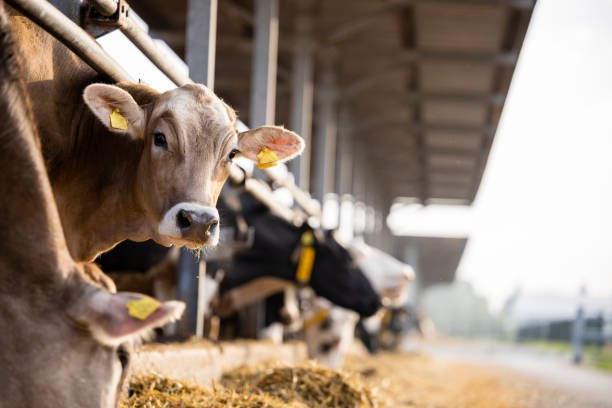
An outbreak of anthrax has been confirmed in the Akmola region of northern Kazakhstan. According to official data, at least seven people have been infected after coming into contact with contaminated livestock. Kazakhstan’s Minister of Agriculture, Aidarbek Saparov, identified the source as unvaccinated and unregistered animals grazing near an old cattle burial ground located approximately seven kilometers from the villages of Magdalinovka and Novomarinovka. Ten infected cattle have been identified and culled. “There are many questions for the owners of these animals. They were not registered anywhere,” Saparov said at a press briefing. Authorities have imposed a quarantine, carried out disinfection procedures, and restricted access to the affected pastures. Sanitary measures have also been intensified in nearby settlements. The Ministry of Health reported that 19 individuals underwent medical examinations, with seven cases confirmed in laboratory tests. One patient is in serious condition, while the remaining six are in stable condition. Four of these cases had been previously reported. Saparov also dismissed speculation that contaminated meat had entered Astana’s markets. "We checked everything, even the door handles. All samples tested negative. Suspicious meat was immediately seized," the minister stated. The outbreak in the Atbasar district has exposed long-standing deficiencies in Kazakhstan’s veterinary oversight and livestock registration systems. Although the country maintains an electronic livestock registration system, its usage is inconsistent, particularly in remote regions where many farmers fail to register or vaccinate their animals. In response, the government has pledged to tighten regulatory enforcement. Inspections will begin in the affected areas, with violators facing increased fines. Authorities also plan to target so-called “dealers,” middlemen trading in unregistered livestock. “This is not just about private property. It is a threat to public health,” Saparov added. The quarantine in the outbreak zone will last a minimum of 15 days. Authorities will assess whether to lift the restrictions following additional inspections. Anthrax is a dangerous bacterial infection transmitted from animals to humans, primarily through contact with infected meat or contaminated soil. Outbreaks occur periodically in Kazakhstan, particularly in areas where Soviet-era cattle burial sites remain unregistered and unmapped. Regional veterinary officials have warned that many of these burial grounds have not yet been properly identified, posing a continuing risk to grazing livestock. In recent days, Minister Saparov proposed introducing criminal liability for the sale of meat that bypasses veterinary and sanitary controls.

Kazakhstan Proposes Criminal Penalties for Illegal Meat Sales

Kazakhstan’s Minister of Agriculture, Aidarbek Saparov, has proposed introducing criminal liability for the sale of meat that bypasses veterinary and sanitary inspections. Speaking at a government meeting, Saparov emphasized that Kazakhstan is undertaking large-scale efforts to digitize its livestock industry. Each farm animal now receives an individual identification number, with all veterinary procedures recorded in an electronic system. However, the minister warned that the system’s effectiveness depends on livestock owners maintaining accurate and transparent records. “We must strengthen oversight of livestock registration and tighten accountability, up to criminal liability, for unscrupulous livestock suppliers and buyers of animal products without proper veterinary documentation,” Saparov stated. Illegal Slaughterhouses a Threat to Public Health Saparov cited recent cases of underground slaughterhouses as a significant public health concern. In December 2024, two unlicensed facilities were discovered in Astana, distributing unregulated meat across the country. Similar operations were uncovered in Semey and Shymkent in spring 2025. Currently, criminal penalties in Kazakhstan apply only to cattle theft. Violations of veterinary and sanitary rules, unless they result in serious harm to human health, are punished administratively. Since the beginning of 2025, 64 veterinary checkpoints have inspected 28,500 vehicles transporting meat. Violations were identified in 547 cases, resulting in administrative fines for the owners. Livestock Industry Growth and Export Expansion Saparov also reported robust growth in livestock production. From January to May 2025, output increased by 4.2% compared to the same period in 2024. Meat production (in carcass weight) rose by 3%. Cow’s milk production grew by 7.5%. Almaty and Akmola regions led in meat output, while North Kazakhstan and Pavlodar regions led in milk production. The livestock population also expanded: Cattle: up 23.4 percent to 9.6 million head Small ruminants: up 7.8 percent to 26.3 million head Horses: up 12.2 percent to 5 million head Camels: up 8.5 percent to 321,300 head Poultry: up 2.2 percent to 47.7 million birds “Current production volumes fully meet domestic demand for beef and mutton and allow us to expand exports to up to 50,000 tons annually,” Saparov said. In 2024, Kazakhstan’s beef exports increased by 1.4 times to over 22,000 tons. Mutton exports grew 2.2 times, reaching 18,000 tons. As previously reported by The Times of Central Asia, Turkey expressed interest in importing Kazakh meat, reportedly offering prices nearly double those proposed by China.