• KGS/USD = 0.01144 0%
  • KZT/USD = 0.00210 0%
  • TJS/USD = 0.10438 0%
  • UZS/USD = 0.00008 0%
  • TMT/USD = 0.28490 0%
  • KGS/USD = 0.01144 0%
  • KZT/USD = 0.00210 0%
  • TJS/USD = 0.10438 0%
  • UZS/USD = 0.00008 0%
  • TMT/USD = 0.28490 0%
  • KGS/USD = 0.01144 0%
  • KZT/USD = 0.00210 0%
  • TJS/USD = 0.10438 0%
  • UZS/USD = 0.00008 0%
  • TMT/USD = 0.28490 0%
  • KGS/USD = 0.01144 0%
  • KZT/USD = 0.00210 0%
  • TJS/USD = 0.10438 0%
  • UZS/USD = 0.00008 0%
  • TMT/USD = 0.28490 0%
  • KGS/USD = 0.01144 0%
  • KZT/USD = 0.00210 0%
  • TJS/USD = 0.10438 0%
  • UZS/USD = 0.00008 0%
  • TMT/USD = 0.28490 0%
  • KGS/USD = 0.01144 0%
  • KZT/USD = 0.00210 0%
  • TJS/USD = 0.10438 0%
  • UZS/USD = 0.00008 0%
  • TMT/USD = 0.28490 0%
  • KGS/USD = 0.01144 0%
  • KZT/USD = 0.00210 0%
  • TJS/USD = 0.10438 0%
  • UZS/USD = 0.00008 0%
  • TMT/USD = 0.28490 0%
  • KGS/USD = 0.01144 0%
  • KZT/USD = 0.00210 0%
  • TJS/USD = 0.10438 0%
  • UZS/USD = 0.00008 0%
  • TMT/USD = 0.28490 0%

Viewing results 1099 - 1104 of 4585

QazElles Brings Kazakh Culture to France

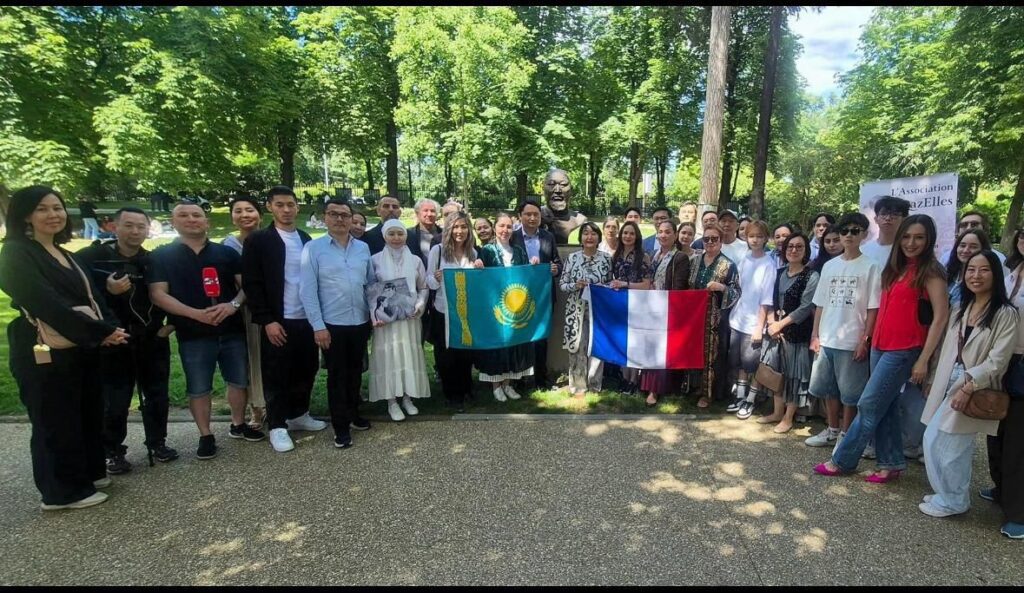
Since 2023, the Association of Kazakh Women in France — QazElles, a name blending "Kazakhstan" with the French word elles (meaning "women") — has gained international recognition for its impactful initiatives well beyond the borders of France. Today, QazElles unites 40 accomplished women living in cities across France, all of whom have personal or professional ties to Kazakhstan. Its diverse membership includes students from leading Parisian universities, engineers at prominent French companies, entrepreneurs, and professionals in the creative industries. The association was established a few years ago in cooperation with the Embassy of the Republic of Kazakhstan in France. “QazElles represents bright, strong, and accomplished daughters of their homeland who dedicate their free time to promoting Kazakh identity in France, building a supportive community of like-minded women," says Madina Kulmanova, president of QazElles, who has lived in France for over 20 years. "Many of us have no close family here in France. This association became our family." Despite its relatively recent founding, QazElles has already organized several high-profile cultural events, all carried out on a fully volunteer basis by Kazakh women living in Paris. In 2023, the group operated a chalet at La Défense, the largest Christmas market in the Paris region, for over a month. Showcasing Kazakh artisans, it quickly became a crowd favorite. Long queues formed for traditional manti (steamed dumplings filled with meat, pumpkin, and dough) and handmade felt slippers. For two consecutive years, a miniature Kazakh aul (village) has come to life during Nauryz (March 21–22) on Place des Ternes, just steps from the Arc de Triomphe. Much like in Kazakhstan, the celebration features a yurt, traditional games, folk music, and festive cuisine. This year, several thousand visitors, mostly local Parisians, many encountering Kazakh culture for the first time, explored the aul. Inside the yurt, guests experienced a guided audio tour written and narrated by Aliya Syzdykova. Outside, dancers from the Kazakh city of Shymkent performed in the square, while artisans sold out of tyubeteikas (traditional embroidered caps). Among the exhibitors was QazElles member Kamila Florenti, a jeweler who creates a distinctive line of delicate silver pieces inspired by Kazakh motifs. "We love this project because it brings people together. There was so much kindness, warmth, and friendship. I think we truly gave Parisians a little journey into a real Kazakh celebration,” shares Madina Kulmanova, her emotion clearly visible. QazElles quickly discovered that the way to a Parisian’s heart is through culinary exploration. One of the association’s most celebrated initiatives was a “four-hands” dinner featuring two renowned chefs: Artem Kantsev from Astana and Frédéric Simonin from Paris. The event was held at Simonin’s Michelin-starred restaurant, where the two chefs collaborated on a unique menu that blended the bold flavors of Kazakh cuisine with the finesse of French culinary tradition. Among the standout dishes was camel meat manti wrapped in coffee-infused dough, served with a sauce made from kurt (a salty, dried fermented dairy product popular in Central Asia) and French cheeses. The success of the event...

Azerbaijani Crew Films in Kazakhstan for Plane Crash Documentary

A film crew from Azerbaijan has visited Kazakhstan to make a documentary about the deadly crash of an Azerbaijan Airlines plane that Azerbaijan says was hit by Russian ground fire. Lada.kz, a media organization based in the city of Aktau in western Kazakhstan, talked to the three-member team from the CBC Azerbaijan TV channel about the project. The filmmakers went to Aktau because the plane crashed on the approach to the city’s airport on December 25 last year after diverting across the Caspian Sea from its planned landing in Grozny, Chechnya. “Several films have already been made in Azerbaijan on this topic, but in our project we want to reconstruct the chronology of events in detail, literally minute by minute,” senior editor Gulzar Mustafayeva told Lada. “It is very important to show how the people of Kazakhstan reacted, how the residents of Aktau united and came to the rescue,” she said, referring to emergency response teams that rushed to help survivors as well as the donation of blood from people in Kazakhstan. The crash killed 38 of the 67 people on board and soured relations between Russia and Azerbaijan, which accused Russian officials of failing to take responsibility. Russian President Vladimir Putin apologized to Azerbaijani leader Ilham Aliyev, but did not acknowledge that Russian fire damaged the plane. Russia has said the area was under attack by Ukrainian drones at the time. Kazakhstan issued a preliminary report on the crash in February. It said the plane had been hit by metal objects, an assertion that appeared to confirm that the aircraft was shot at from the ground. But the report didn’t say Russia was to blame. Mustafayeva and her colleagues visited the crash site, where a simple memorial has been installed. “Despite the fact that everything was cleaned, tidied up, and the main fragments were taken away long ago, small details still remain on the site - scraps of clothing, remnants of shoes, a wheel from a suitcase in which someone was carrying their things,” she told Lada. “This makes a very strong impression. You stand and understand: human lives were cut short here.” She said CBC Azerbaijan TV plans to show the documentary later this year.  

Latest Baikonur Launch Pays Tribute to 1975 Apollo-Soyuz Mission

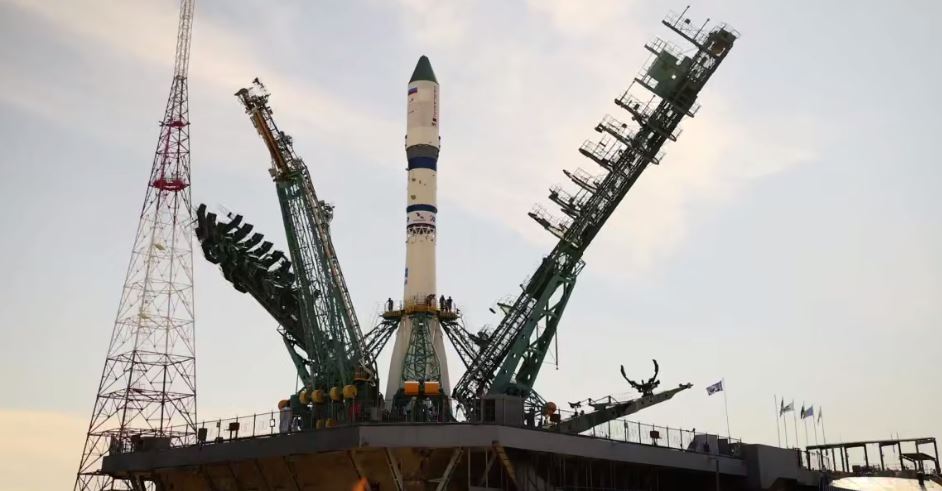
In July 1975, millions of people watched on television as a U.S. Apollo spacecraft docked with a Soviet Soyuz capsule in a crewed mission in orbit that symbolized collaboration between the two superpowers at the height of Cold War enmity. That remarkable moment 50 years ago is being commemorated on a Soyuz rocket carrying a Russian cargo spacecraft that launched from the Baikonur Cosmodrome in Kazakhstan – early on Friday, Baikonur time - and is scheduled to reach the International Space Station after a two-day trip. The spacecraft is loaded with more than 2.5 tons of fuel, drinking water, food, medicine, science equipment, and other supplies for the crew on the station. The Soyuz rocket currently heading to the ISS is painted white and blue and has an emblem marking the anniversary of the Soyuz-Apollo docking, which was the first international space mission. It had begun on July 15, 1975, when two Soviet cosmonauts launched from Baikonur and, hours later, three American astronauts blasted off from Cape Canaveral, Florida. The Russians and the Americans connected in space two days later, shaking hands, exchanging gifts, and sharing a meal. The show of comity in space contrasted with the intense competition between the two global rivals that was known as the “space race,” which included the Soviet launch of the Sputnik satellite into orbit in 1957 and the Apollo 11 landing of American astronauts on the moon in 1969. “I really believe that we were sort of an example … to the countries. We were a little of a spark or a foot in the door that started better communications,” Apollo astronaut Vance Brand had said, according to a NASA account of the Apollo-Soyuz mission. Tensions between Russia and the United States escalated after Moscow launched a large-scale invasion of Ukraine in 2022, though relations improved after U.S. President Donald Trump took office for a second term in January. The U.S. and Russian space agencies have continued to collaborate over the course of the protracted war. Roscosmos, the Russian space agency, refers to the cargo spacecraft currently in orbit as Progress MS-31, while the U.S. agency NASA uses the term Progress 92 because it’s the 92nd Russian resupply craft to launch in support of the International Space Station since its construction began in 1998. The Apollo-Soyuz mission has been described as a precursor of the ISS project.

Spanish Artist Jaume Plensa Unveils “Nades” Sculpture for Almaty Museum of Arts

A new 12-meter sculpture titled Nades, created by internationally acclaimed Spanish artist Jaume Plensa, has been unveiled in Almaty. Commissioned specifically for the future Almaty Museum of Arts, the piece was presented during a special ceremony attended by the museum’s founder, Kazakhstani entrepreneur and arts patron Nurlan Smagulov. “We dreamed of having a work of art next to the museum that would become an important part of Almaty. Nades is the embodiment of female strength, dignity, and beauty,” Smagulov said. The sculpture portrays the head of a young woman with closed eyes and two long braids, a nod to the traditional image of a Kazakh girl. According to Plensa, the work is based on a real face that was scanned and then abstracted into a universal symbol. “I work with real people, I scan their faces and transform the image until their individuality disappears. I want every viewer to recognize themselves in them. These faces become mirrors,” Plensa explained. Born in Barcelona in 1955, Plensa is known for his monumental public sculptures installed in cities around the world. His notable works include Water’s Soul (2020, Jersey City), Julia (2018, Madrid), Roots (2014, Tokyo), Soul (2011, Singapore), and Alchemist (2010, MIT, Boston). The Almaty Museum of Arts, Kazakhstan’s first private contemporary art museum, is set to open in September 2025. It will showcase a collection of over 700 works from Kazakhstan, Central Asia, and beyond, all curated from Smagulov’s personal collection.

Chinese Firm to Invest $600 Million in Waste-to-Energy Plants in Kazakhstan

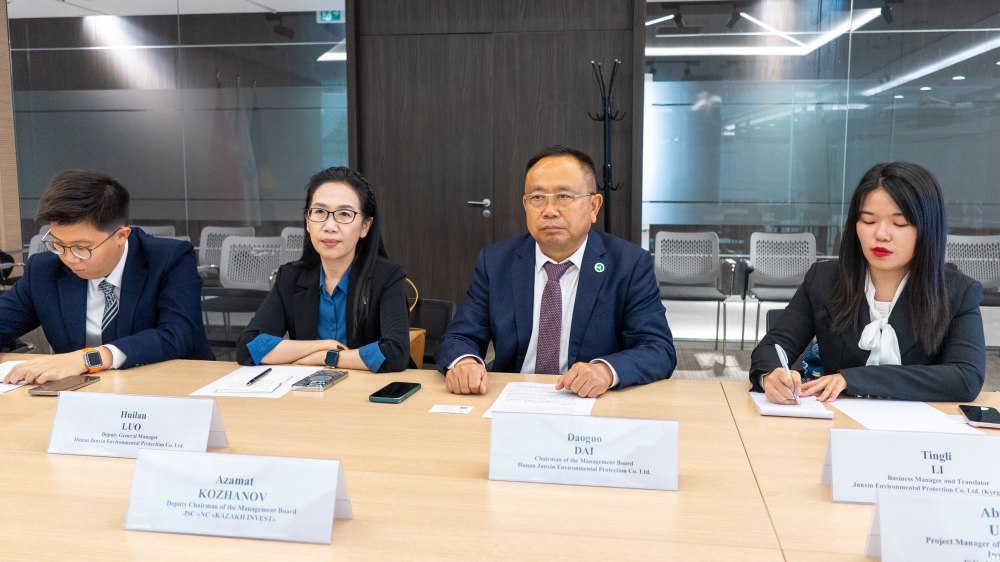
China’s Hunan Junxin Environmental Protection Co. Ltd. plans to invest $600 million in constructing three waste-to-energy plants in Kazakhstan. The project was the focus of a meeting on July 3 between Azamat Kozhanov, Deputy Chairman of the Board at Kazakh Invest, and Dai Daoguo, Chairman of Hunan Junxin’s Board of Directors. According to Dai, the initiative will go beyond waste incineration to establish an integrated technological ecosystem. Plans include green data centers powered by the energy produced, training facilities, and smart waste management systems. “Our goal is not just to build plants, but to implement an innovative approach to waste handling,” Dai said. “We aim to bring technologies to Kazakhstan that integrate recycling, energy generation, and digitalization. I’m confident this will be a major contribution to the region’s sustainable development and environmental safety.” Kozhanov highlighted the importance of large-scale, environmentally focused projects that promote technology localization and sustainable energy. “We see strong potential for joint implementation of green projects that meet international standards. Junxin’s experience, including successful initiatives in China and Kyrgyzstan, can contribute significantly to the development of green infrastructure in our cities,” he said. Hunan Junxin is already active in Kyrgyzstan, where it is implementing similar projects in Bishkek and Osh. As previously reported by The Times of Central Asia, on June 10, the company began construction of a $95 million solid waste incineration facility in Osh, Kyrgyzstan’s second-largest city. The plant will convert municipal waste into electricity and heat. In Bishkek, the company is building a solid waste recycling facility at the city’s sanitary landfill. Initially, the facility will process 1,000 tons of waste per day, with plans to expand capacity to 3,000 tons. Completion is scheduled for December 2025.

Kazakhstan Considers “Green” Tax on Plastic Packaging

Azhar Sagandykova, a deputy in Kazakhstan’s Mazhilis, has proposed introducing a “green” tax on non-environmentally friendly packaging. She announced the initiative during the IX Eurasian Business Forum Green Energy & Waste Recycling Forum (GEWR-2025). The proposed tax would apply to packaging materials that are difficult to recycle or non-biodegradable, such as polyethylene terephthalate (PET) bottles, plastic bags, and other polyethylene-based containers. “It is time to seriously consider introducing a green tax on non-environmentally friendly packaging and directing the funds collected towards the development of waste recycling,” Sagandykova stated. According to the United Nations Development Programme (UNDP), Kazakhstan produces approximately 4.5 million tons of waste annually. Of this, 80% is generated by the municipal sector, while 20% comes from industry, healthcare, and other sectors. Only about 26% of the total waste is recycled. These figures were confirmed by Zhomart Aliyev, Kazakhstan's Deputy Minister of Ecology and Natural Resources, who also addressed the forum. Speaking on the sidelines of the event, Aliyev commented on the complexities of implementing such a tax. “It is very difficult to say at this stage what a green tax on a particular product should look like. It could affect virtually all sectors of the economy. We have begun preparatory work, but it is still at an early stage. We need to calculate the figures for the whole country in detail,” he said. In addition to the tax proposal, Sagandykova advocated for a dedicated law on waste management to clarify responsibilities, define infrastructure needs, and introduce government incentives. “The existing Environmental Code contains a number of vulnerabilities and does not cover all aspects of waste management. Therefore, within the framework of a working group in the Mazhilis, we intend to review the systemic approach to solving this problem,” she explained. During the summer, deputies plan to collect proposals from businesses, environmentalists, and civil society stakeholders. These suggestions will inform a draft bill to be discussed in the fall. Aliyev added that the government is already working on a comprehensive waste management concept, excluding radioactive waste, which remains under the jurisdiction of the Atomic Energy Agency. The concept, commissioned by the prime minister, is expected to be finalized by September, when a decision will be made on whether a standalone waste management law is necessary. As previously reported by The Times of Central Asia, Kazakhstan had aimed to phase out plastic packaging and tableware by 2025. However, due to a lack of sufficient alternatives in domestic production, the government was forced to abandon the timeline.