• KGS/USD = 0.01144 0%
  • KZT/USD = 0.00213 0%
  • TJS/USD = 0.10456 0.19%
  • UZS/USD = 0.00008 0%
  • TMT/USD = 0.28490 0%
  • KGS/USD = 0.01144 0%
  • KZT/USD = 0.00213 0%
  • TJS/USD = 0.10456 0.19%
  • UZS/USD = 0.00008 0%
  • TMT/USD = 0.28490 0%
  • KGS/USD = 0.01144 0%
  • KZT/USD = 0.00213 0%
  • TJS/USD = 0.10456 0.19%
  • UZS/USD = 0.00008 0%
  • TMT/USD = 0.28490 0%
  • KGS/USD = 0.01144 0%
  • KZT/USD = 0.00213 0%
  • TJS/USD = 0.10456 0.19%
  • UZS/USD = 0.00008 0%
  • TMT/USD = 0.28490 0%
  • KGS/USD = 0.01144 0%
  • KZT/USD = 0.00213 0%
  • TJS/USD = 0.10456 0.19%
  • UZS/USD = 0.00008 0%
  • TMT/USD = 0.28490 0%
  • KGS/USD = 0.01144 0%
  • KZT/USD = 0.00213 0%
  • TJS/USD = 0.10456 0.19%
  • UZS/USD = 0.00008 0%
  • TMT/USD = 0.28490 0%
  • KGS/USD = 0.01144 0%
  • KZT/USD = 0.00213 0%
  • TJS/USD = 0.10456 0.19%
  • UZS/USD = 0.00008 0%
  • TMT/USD = 0.28490 0%
  • KGS/USD = 0.01144 0%
  • KZT/USD = 0.00213 0%
  • TJS/USD = 0.10456 0.19%
  • UZS/USD = 0.00008 0%
  • TMT/USD = 0.28490 0%

Viewing results 1117 - 1122 of 4651

Urban Expansion in Astana: Strengths and Strains

July 6 marked Capital Day in Kazakhstan, a national holiday celebrating the country's capital. To mark the occasion, Energyprom.kz released an in-depth analysis of Astana’s socio-economic standing, painting a mixed picture of rapid growth and persistent strain. Competition with Almaty and Global Standing In the 2025 Global City Ranking by Oxford Economics, Astana ranks 276th out of 1,000 cities worldwide. Almaty ranks slightly higher at 258th. While Astana outperforms Almaty in terms of ecological conditions and economic momentum, it lags behind in human capital and quality of life. Both cities are considered national leaders, yet remain far behind the world's top urban centers. According to the National Statistics Bureau, Almaty contributes 21.8% of Kazakhstan’s GDP (29.2 trillion KZT or approximately 56.2 billion USD), while Astana accounts for 11.5% (15.5 trillion KZT or around 29.8 billion USD). In terms of GDP per capita, Astana ranks fourth in the country, behind Atyrau, Ulytau, and Almaty. Its economy is heavily concentrated in services, which make up nearly 80% of its gross regional product. A Magnet for Opportunity and Strain Astana continues to attract internal migrants, particularly from rural regions, largely due to its relatively high wages. The average monthly salary in the capital is 538,000 KZT (around 1,035 USD). Higher salaries are found in resource-rich regions such as Atyrau (633,300 KZT) and Mangistau (580,900 KZT). In Astana, the highest-earning sectors include finance and insurance (1.2 million KZT or 2,310 USD), mining (981,300 KZT or 1,890 USD), and IT (824,600 KZT or 1,587 USD). However, this economic pull has placed growing pressure on the city’s infrastructure. Astana faces ongoing issues related to water supply, sewage systems, disorganized construction, and environmental management. These problems have been highlighted by both President Kassym-Jomart Tokayev and the public. The High Cost of Living Astana leads the country in housing prices. In 2023, the average cost of a new apartment reached 595,500 KZT per square meter (approximately 1,146 USD). In the secondary market, the average price rose to 649,800 KZT (around 1,250 USD). A typical 50-square-meter two-bedroom apartment costs nearly 29.8 million KZT (about 57,370 USD). For a resident earning the city’s average wage, saving for such a home without loans would take 55 months, or over four and a half years. In comparison, it would take just 2.5 years in Atyrau. Rental prices are also high. The average monthly rent for a 50 square meter apartment in Astana was 248,000 KZT in 2023 (around 477 USD), consuming over 46% of the average monthly wage. Only Almaty and Shymkent have higher rent-to-income ratios at 54.4% and 60.3% respectively. Food costs place additional strain on household budgets. Food accounts for 52% of the average consumer budget in Astana, equivalent to 181,600 KZT (around 349 USD) per person per quarter. Prices for 14 of 19 socially significant food items, including chicken, milk, butter, and vegetables, exceed national averages. Food inflation in the capital remains among the highest in the country. A Capital at a Crossroads Astana remains the political and administrative...


Uzbekistan, Azerbaijan, and Kazakhstan Launch Joint Venture for Green Energy Corridor

Energy companies from Uzbekistan, Azerbaijan, and Kazakhstan have launched a joint venture to support the development of the Caspian Green Energy Corridor, according to the press service of National Electric Networks of Uzbekistan. The new company, “Green Corridor Alliance,” was officially established on July 1 in Baku. It brings together three national power operators: Azerbaijan’s Azerenerji, Kazakhstan’s KEGOC, and Uzbekistan’s National Electric Networks. The joint venture is expected to play a pivotal role in exporting green electricity to Europe while bolstering long-term energy security across the region. Officials have highlighted the corridor’s strategic importance in advancing sustainability goals. “This initiative is important for our energy security and green growth,” the Uzbek side stated. As previously reported by The Times of Central Asia, the Caspian Green Energy Corridor is supported by the Asian Development Bank (ADB) and the Asian Infrastructure Investment Bank (AIIB). In April, the three countries signed a Memorandum of Understanding with both institutions in Baku to initiate a feasibility study. The corridor aims to enhance cross-border electricity trade and promote renewable energy use throughout Central Asia and the Caspian region. The long-term objective is to integrate the power grids of Uzbekistan, Kazakhstan, and Azerbaijan, creating a streamlined route for clean energy exports to Europe. The agreement builds on a strategic partnership formalized by the presidents of the three countries during the COP-29 climate summit held in Baku in November 2024.

Astana Leads 2024 Smart City Rankings in Kazakhstan

Kazakhstan’s Ministry of Digital Development, Innovation, and Aerospace Industry (MDIIA) has released its latest evaluation of local governments' efforts to implement Smart City technologies. For 2024, the capital city, Astana, secured the top position. A Smart City integrates multiple information and communication technologies (ICT) and Internet of Things (IoT) solutions to manage urban assets, ranging from residential and commercial properties to transportation and public infrastructure. The core objective is to enhance the quality of life for residents through greater efficiency, safety, and connectivity. Kazakhstan began implementing its Smart City strategy in 2019, introducing a standardized benchmark for assessing the adoption of smart technologies by local authorities. The first national Smart City ranking, published in 2020, placed Almaty, Kazakhstan’s largest metropolis, firmly at the top. In subsequent years, Almaty and Astana alternated between first and second place. In 2023, however, Astana emerged as the clear leader. According to the MDIIA, alongside Astana, the cities of Almaty, Karaganda (Central Kazakhstan), Kostanay (northern Kazakhstan), and Ust-Kamenogorsk (eastern Kazakhstan) rounded out the top five for their effective implementation of urban digital technologies. “These cities have widely adopted systems for monitoring school performance, electronic fare collection, and real-time tracking of public transport,” the ministry reported. “Online registration for outpatient clinics is in place, and unified 109 contact centers handle public inquiries and complaints. The number of surveillance cameras has also increased, improving public safety.” As previously reported by The Times of Central Asia, Kazakh authorities are also planning to construct a new city, Alatau, near Almaty. The project is being designed from the ground up to meet all the criteria of a Smart City.

What Does the Arrest of a Former Top Anti-Corruption Official Signal for Kazakhstan?

On Friday, July 4, Kazakhstani media erupted with news of the arrest of Talgat Tatubayev, former head of the National Anti-Corruption Bureau, predecessor to the current Anti-Corruption Agency. Yet the significance of Tatubayev’s arrest may extend far beyond his own record. Many believe the case is the opening move in a broader probe that could ensnare Kairat Kozhamzharov, a former senator and top security official under Kazakhstan’s first president. Tatubayev’s arrest was amplified by a post from Aset Mataev, head of the KazTAG news agency and the son of Seytkazy Mataev, the current chairman of the Union of Journalists of Kazakhstan. Both father and son were previously prosecuted during Kozhamzharov’s tenure, a period marked by high-profile anti-corruption investigations, including the conviction of former economy minister Kuandyk Bishimbayev. While Kozhamzharov’s leadership was once praised for exposing major corruption cases, many in Kazakhstan’s media remained skeptical. The elder Mataev's case in particular shook the journalistic community, which saw his prosecution as politically motivated. It is widely believed that the Mataevs were targeted after refusing to sell KazTAG to allies of then-Mazhilis Speaker Nurlan Nigmatulin. “In 2016, I had two encounters with Deputy Head of the Financial Police, Talgat Tatubayev,” Aset Mataev wrote on his Telegram channel. “He offered us a deal under Article 65 of the Criminal Code, exemption from liability in exchange for a guilty plea. Others close to Nigmatulin, Yeseyev, Baybek, Zhumagaliyev, and Mailybayev took that route. We refused”. At the time, the Union of Journalists was gaining influence in the blogosphere amid growing distrust in traditional media. According to Aset Mataev, this created an opportunity for authorities to undermine the Mataevs’ reputation and isolate them professionally. Tatubayev’s damaging interview, published on Ratel.kz, appeared to many as a tool in this campaign. “He tried to intimidate us, saying, ‘We have orders, and we’ll crush you anyway,’” Mataev wrote. After Seytkazy’s arrest, Tatubayev allegedly contacted Aset from his father’s phone, urging him to stop speaking to the press. “He promised the case would be dropped. Of course, he lied. We were tortured until the verdict was handed down, while he gave interviews claiming my father admitted guilt.” Unlike Ratel.kz, which was seen as aligned with certain state actors, other outlets mentioned by Mataev allegedly served figures like Bulat Utemuratov, long considered the financial backer of former President Nursultan Nazarbayev, and Karim Massimov, who moved from prime minister to head of the National Security Committee in 2016. The Mataev prosecution sparked widespread condemnation among journalists, who viewed it as a watershed moment in Kazakhstan’s clampdown on press freedom. To this day, the Mataev case is widely believed to have been orchestrated by Nigmatulin and his political allies. Now, with Tatubayev under arrest once more, this time for alleged torture in the notorious Khorgos customs embezzlement case, some observers see the return of unfinished business from the “Old Kazakhstan.” Khorgos, a major border post linking Kazakhstan and China, was the center of large-scale corruption investigations under Kozhamzharov’s leadership. The General Prosecutor’s Office confirmed...

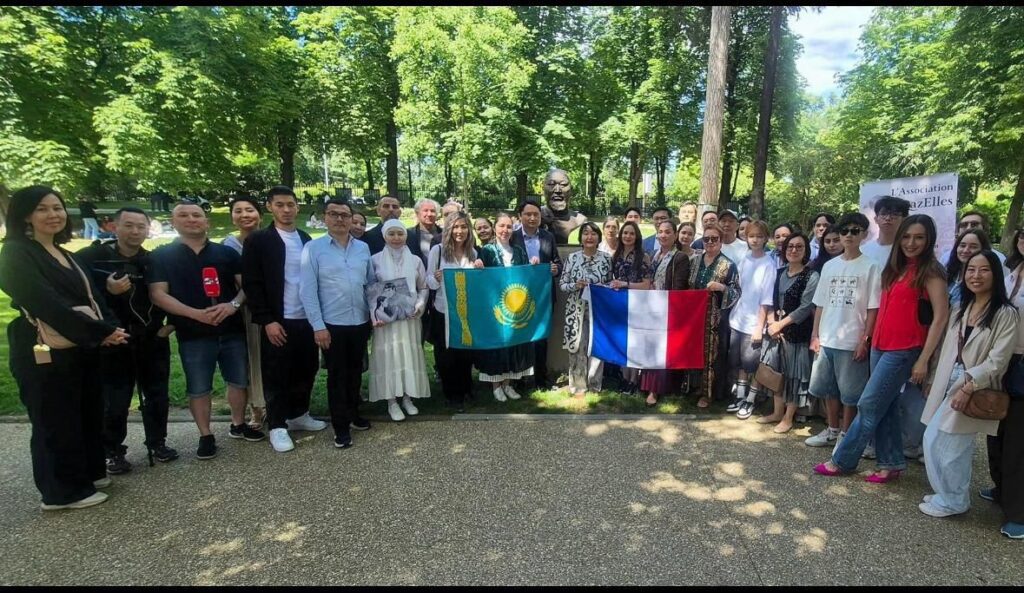
QazElles Brings Kazakh Culture to France

Since 2023, the Association of Kazakh Women in France — QazElles, a name blending "Kazakhstan" with the French word elles (meaning "women") — has gained international recognition for its impactful initiatives well beyond the borders of France. Today, QazElles unites 40 accomplished women living in cities across France, all of whom have personal or professional ties to Kazakhstan. Its diverse membership includes students from leading Parisian universities, engineers at prominent French companies, entrepreneurs, and professionals in the creative industries. The association was established a few years ago in cooperation with the Embassy of the Republic of Kazakhstan in France. “QazElles represents bright, strong, and accomplished daughters of their homeland who dedicate their free time to promoting Kazakh identity in France, building a supportive community of like-minded women," says Madina Kulmanova, president of QazElles, who has lived in France for over 20 years. "Many of us have no close family here in France. This association became our family." Despite its relatively recent founding, QazElles has already organized several high-profile cultural events, all carried out on a fully volunteer basis by Kazakh women living in Paris. In 2023, the group operated a chalet at La Défense, the largest Christmas market in the Paris region, for over a month. Showcasing Kazakh artisans, it quickly became a crowd favorite. Long queues formed for traditional manti (steamed dumplings filled with meat, pumpkin, and dough) and handmade felt slippers. For two consecutive years, a miniature Kazakh aul (village) has come to life during Nauryz (March 21–22) on Place des Ternes, just steps from the Arc de Triomphe. Much like in Kazakhstan, the celebration features a yurt, traditional games, folk music, and festive cuisine. This year, several thousand visitors, mostly local Parisians, many encountering Kazakh culture for the first time, explored the aul. Inside the yurt, guests experienced a guided audio tour written and narrated by Aliya Syzdykova. Outside, dancers from the Kazakh city of Shymkent performed in the square, while artisans sold out of tyubeteikas (traditional embroidered caps). Among the exhibitors was QazElles member Kamila Florenti, a jeweler who creates a distinctive line of delicate silver pieces inspired by Kazakh motifs. "We love this project because it brings people together. There was so much kindness, warmth, and friendship. I think we truly gave Parisians a little journey into a real Kazakh celebration,” shares Madina Kulmanova, her emotion clearly visible. QazElles quickly discovered that the way to a Parisian’s heart is through culinary exploration. One of the association’s most celebrated initiatives was a “four-hands” dinner featuring two renowned chefs: Artem Kantsev from Astana and Frédéric Simonin from Paris. The event was held at Simonin’s Michelin-starred restaurant, where the two chefs collaborated on a unique menu that blended the bold flavors of Kazakh cuisine with the finesse of French culinary tradition. Among the standout dishes was camel meat manti wrapped in coffee-infused dough, served with a sauce made from kurt (a salty, dried fermented dairy product popular in Central Asia) and French cheeses. The success of the event...

Azerbaijani Crew Films in Kazakhstan for Plane Crash Documentary

A film crew from Azerbaijan has visited Kazakhstan to make a documentary about the deadly crash of an Azerbaijan Airlines plane that Azerbaijan says was hit by Russian ground fire. Lada.kz, a media organization based in the city of Aktau in western Kazakhstan, talked to the three-member team from the CBC Azerbaijan TV channel about the project. The filmmakers went to Aktau because the plane crashed on the approach to the city’s airport on December 25 last year after diverting across the Caspian Sea from its planned landing in Grozny, Chechnya. “Several films have already been made in Azerbaijan on this topic, but in our project we want to reconstruct the chronology of events in detail, literally minute by minute,” senior editor Gulzar Mustafayeva told Lada. “It is very important to show how the people of Kazakhstan reacted, how the residents of Aktau united and came to the rescue,” she said, referring to emergency response teams that rushed to help survivors as well as the donation of blood from people in Kazakhstan. The crash killed 38 of the 67 people on board and soured relations between Russia and Azerbaijan, which accused Russian officials of failing to take responsibility. Russian President Vladimir Putin apologized to Azerbaijani leader Ilham Aliyev, but did not acknowledge that Russian fire damaged the plane. Russia has said the area was under attack by Ukrainian drones at the time. Kazakhstan issued a preliminary report on the crash in February. It said the plane had been hit by metal objects, an assertion that appeared to confirm that the aircraft was shot at from the ground. But the report didn’t say Russia was to blame. Mustafayeva and her colleagues visited the crash site, where a simple memorial has been installed. “Despite the fact that everything was cleaned, tidied up, and the main fragments were taken away long ago, small details still remain on the site - scraps of clothing, remnants of shoes, a wheel from a suitcase in which someone was carrying their things,” she told Lada. “This makes a very strong impression. You stand and understand: human lives were cut short here.” She said CBC Azerbaijan TV plans to show the documentary later this year.