• KGS/USD = 0.01144 0%
  • KZT/USD = 0.00215 0%
  • TJS/USD = 0.10691 0.09%
  • UZS/USD = 0.00008 0%
  • TMT/USD = 0.28530 0%
  • KGS/USD = 0.01144 0%
  • KZT/USD = 0.00215 0%
  • TJS/USD = 0.10691 0.09%
  • UZS/USD = 0.00008 0%
  • TMT/USD = 0.28530 0%
  • KGS/USD = 0.01144 0%
  • KZT/USD = 0.00215 0%
  • TJS/USD = 0.10691 0.09%
  • UZS/USD = 0.00008 0%
  • TMT/USD = 0.28530 0%
  • KGS/USD = 0.01144 0%
  • KZT/USD = 0.00215 0%
  • TJS/USD = 0.10691 0.09%
  • UZS/USD = 0.00008 0%
  • TMT/USD = 0.28530 0%
  • KGS/USD = 0.01144 0%
  • KZT/USD = 0.00215 0%
  • TJS/USD = 0.10691 0.09%
  • UZS/USD = 0.00008 0%
  • TMT/USD = 0.28530 0%
  • KGS/USD = 0.01144 0%
  • KZT/USD = 0.00215 0%
  • TJS/USD = 0.10691 0.09%
  • UZS/USD = 0.00008 0%
  • TMT/USD = 0.28530 0%
  • KGS/USD = 0.01144 0%
  • KZT/USD = 0.00215 0%
  • TJS/USD = 0.10691 0.09%
  • UZS/USD = 0.00008 0%
  • TMT/USD = 0.28530 0%
  • KGS/USD = 0.01144 0%
  • KZT/USD = 0.00215 0%
  • TJS/USD = 0.10691 0.09%
  • UZS/USD = 0.00008 0%
  • TMT/USD = 0.28530 0%

Viewing results 1165 - 1170 of 5089

Kazakhstan’s Tax Cut on Old Vehicles Sparks Debate

Kazakhstan will implement an updated Tax Code beginning January 1, 2026, following its signing on July 18. Among the most debated changes is the revision of the transport tax for vehicles over 10 years old. Under the new code, owners of cars aged 11 to 20 years will receive a 30% tax discount, while those with vehicles older than 21 years will benefit from a 50% reduction. The decision stands in contrast to recent trends of increasing the overall tax burden. Yet experts warn that behind the populist optics lie significant environmental and road safety risks. A Political Gesture Ahead of Elections? Tax consultant Aidar Masatbaev views the reform as more political than economic in nature. “People complained that the tax on old cars was too high. Apparently, the advocates of a softer tax policy prevailed,” he said in an interview with inbusiness.kz. Masatbaev added that the measure is unlikely to meaningfully reduce the cost of car ownership. Instead, factors like rising fuel prices and declining real incomes play a more critical role. “The problem is that most people cannot afford to buy a new car,” he noted. Technical and Environmental Risks According to official statistics, more than 80% of Kazakhstan’s vehicle fleet comprises cars over 10 years old. Of these, over 2.2 million vehicles are more than 20 years old. These aging cars not only lag in efficiency but also pose serious safety risks. “Old cars are becoming a source of increased danger. Their consumables are more expensive, and the desire to save on repairs leads to risks on the roads,” Masatbaev warned. He cautioned that offering tax incentives could further entrench the use of obsolete, potentially unsafe vehicles. Additionally, the secondary car market lacks transparency. Many transactions go unregistered, reducing the effectiveness of fiscal measures and minimizing the impact of tax relief on state revenues. Masatbaev also questioned proposals to increase taxes on old vehicles, arguing that such moves would only heighten public dissatisfaction and strain the tax system. He recommended automating debt collection to improve efficiency, but acknowledged this could erode public trust in the tax authority. Kazakhstan’s Aging Car Fleet, by the Numbers According to Ranking.kz, in May 2025, Kazakhstan had 5.34 million registered passenger vehicles, an 11.4% increase from the previous year. Two-thirds, approximately 3.54 million cars, were more than 10 years old. While the share of aging vehicles has slightly declined (from 70.3% in April 2023 to 68.3% in April 2024), the number of cars aged 10-20 years rose 12.4% to 1.27 million. Vehicles over 20 years old now number 2.27 million, a 5.7% increase. The highest concentrations of old cars are found in the Almaty region (449,600), Almaty city (355,200), Karaganda (237,300), Zhambyl (236,200), Turkestan (235,000), and East Kazakhstan (220,100). Zhambyl holds the highest percentage of cars over 10 years old at 83%, followed by Zhetysu (79.3%) and Almaty (78.4%). While tax breaks may offer temporary relief to car owners, analysts argue that without a comprehensive strategy for renewing the vehicle fleet, promoting...
Transboundary Water Inflows Boost Lake Balkhash Levels

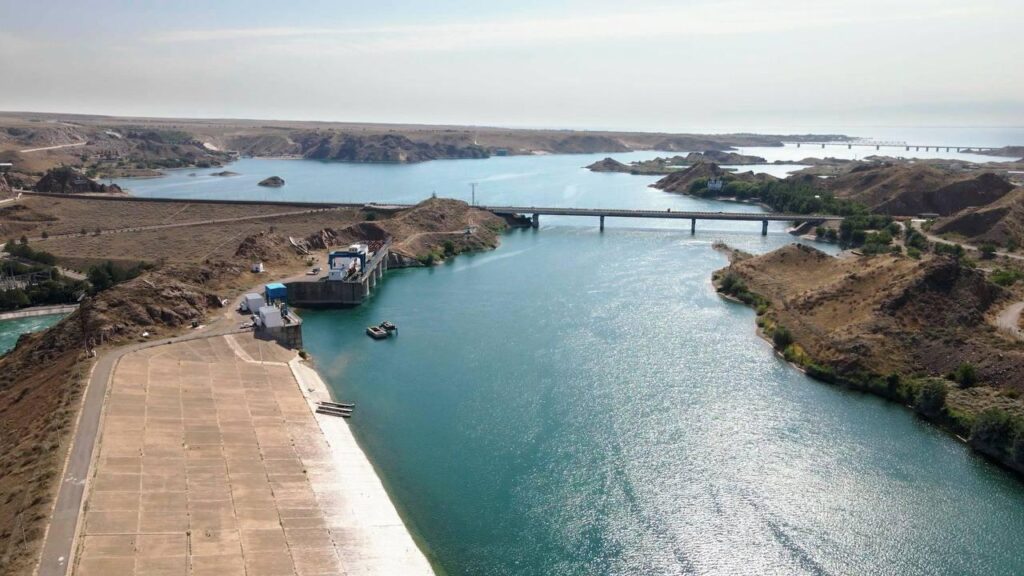
Kazakhstan received 10.2 billion cubic meters of water from China in the first half of 2025 through transboundary rivers, the country’s Ministry of Water Resources and Irrigation announced. Of this total, 4.6 billion cubic meters were supplied via the Irtysh River and 5.6 billion cubic meters via the Ili River. The increased inflow from the Ili River has enabled the Kapchagay Reservoir in the Almaty region to reach full capacity for the second consecutive year. This marks a significant improvement, as 2024 was the first time in a decade the reservoir had filled completely. As a result, 8.52 billion cubic meters of water have been directed downstream to Lake Balkhash since the beginning of 2025. Located approximately 280 kilometers northwest of Almaty, Lake Balkhash is one of Asia’s largest inland lakes and ranks fifteenth globally by surface area. Due to improved water flows, the lake’s water level has risen by an average of 32 centimeters since January. The Ili River alone contributes nearly 70% of Lake Balkhash’s inflow, underscoring its critical importance to the lake’s ecological balance and water levels. Nagima Azhigulova, head of the Department of Water Cooperation with China and Russia at the Ministry, stressed the growing significance of bilateral water management efforts. “In March of this year, Kazakhstan and China signed a Memorandum of Understanding on water cooperation for the first time,” she said. “The agreement focuses on the rational and sustainable use of water resources, the adoption of modern technologies, alternative water sourcing, experience-sharing, and joint training of specialists.” Three major rivers that flow through Kazakhstan, the Irtysh, Ili, and Emel, originate in China, highlighting the strategic importance of cross-border water diplomacy. A recent report by the Eurasian Development Bank (EDB), titled The Irtysh River Basin: Transboundary Challenges and Practical Solutions, offers an in-depth analysis of the Irtysh River’s role in regional water security. At 4,248 kilometers, the Irtysh is the world’s longest transboundary tributary and, along with the Ob River, forms the longest river system in Russia. Flowing from China through Kazakhstan and into Russia, the Irtysh plays a vital role for all three countries and requires close trilateral coordination to ensure the sustainable management of its resources.

Kazakhstan and Turkey to Jointly Develop Trans-Caspian Transport Route

Kazakhstan’s national railway operator, Kazakhstan Temir Zholy (KTZ), and Turkey’s TCDD Taşimacilik A.Ş. have signed a cooperation agreement to enhance railway freight transportation along the Trans-Caspian International Transport Route (TITR), also known as the Middle Corridor. Bypassing Russia, the TITR links China and Europe via Central Asia and the Caspian Sea. Freight volumes along the corridor surged by 60% in 2024, reaching 4.5 million tons. Projections suggest that figure could surpass 10 million tons by 2030. According to KTZ, the agreement outlines several joint initiatives aimed at improving the route’s efficiency and competitiveness. Key measures include: Launching regular rail services between Kazakhstan and Turkey; Increasing freight volumes on the Baku-Tbilisi-Kars railway line; Expanding two-way cargo flows between China and Europe/Africa; Streamlining transit procedures and logistics coordination; Simplifying customs and administrative processes to speed up cross-border cargo movement. The partnership will also focus on implementing digital solutions such as paperless documentation and real-time tracking of containers and rolling stock. These initiatives are expected to enhance Kazakhstan’s transit and logistics capacity and reinforce its strategic role in global supply chains. The agreement was signed during President Kassym-Jomart Tokayev’s official visit to Turkey. During the visit, Tokayev reiterated Kazakhstan’s commitment to developing the Trans-Caspian route and highlighted interest in attracting Turkish investment in key infrastructure sectors, including railways, dry ports, cargo terminals, and shipbuilding. As part of the visit, KTZ also held talks with Mersin International Port, part of the PSA International Group, on expanding cooperation to develop the Middle Corridor and establish more efficient multimodal logistics links between Asia and Europe. KTZ Chairman Talgat Aldybergenov affirmed both sides’ commitment to ensuring stable freight volumes and underscored Mersin’s role as a strategic transshipment hub for the Middle Corridor. To further strengthen the logistics chain, Kazakhstan proposed leveraging the potential of KPMC, a joint venture between KTZ and PSA International, which is already involved in developing multimodal services along the Xi’an-Istanbul route.

Kazakhstan to Boost Oil Exports to Turkey via BTC Pipeline

Kazakhstan plans to increase crude oil exports to Turkey through the Baku-Tbilisi-Ceyhan (BTC) pipeline, President Kassym-Jomart Tokayev announced following bilateral talks with Turkish President Recep Tayyip Erdoğan in Ankara. “Currently, 1.4 million tons of Kazakh oil are transported annually to Turkey through the BTC pipeline. We discussed the possibility of expanding volumes and welcomed Turkish Petroleum’s plans to enter the Kazakh market. Kazakhstan is also interested in Turkish companies’ investment potential and expertise in energy diversification and power plant construction. We are ready to implement large-scale joint projects,” Tokayev stated at a joint press conference. Kazakhstan began exporting oil via the BTC pipeline in 2008, initially at just 300,000 tons per year. Expansion has since been limited by the pipeline’s capacity, 50 million tons annually, with Kazakhstan allocated a quota of 1.5 million tons and by the restricted tanker fleet of KazTransOil, the transport subsidiary of the national oil and gas company KazMunayGas (KMG), which ships crude across the Caspian Sea from the port of Aktau. In 2022, President Tokayev prioritized the development of the Trans-Caspian corridor as part of Kazakhstan’s export diversification strategy. That same year, Azerbaijan signaled readiness to raise Kazakhstan’s BTC quota to 2.2 million tons. As a result, shipments surged 5.5-fold to 1.392 million tons in 2023 and surpassed 1.4 million tons in 2024. The government now aims to reach 1.5 million tons in 2025. During the Ankara visit, KMG Chairman Askhat Khasenov met with Turkish Petroleum Corporation (TPAO) President Ahmet Türkoğlu to discuss potential cooperation in exploration, transport, and oil and gas sector development. “Currently, KMG and TPAO working groups are assessing prospects for joint initiatives in geological exploration in Kazakhstan,” the press release stated. Khasenov emphasized that strengthening ties with Turkey’s leading energy firms aligns with Kazakhstan’s strategic foreign policy. He expressed confidence that enhanced collaboration with TPAO would boost economic relations between the two countries. As previously reported by The Times of Central Asia, Kazakhstan has encountered growing challenges in transporting oil via Russian ports due to new regulations and export bottlenecks.

Kazakhstan and Turkey Reshape Their Eurasian Partnership

President Kassym-Jomart Tokayev’s visit to Ankara consolidated bilateral ties, but it also marked a deeper strategic inflection. The visit marks a broader regional convergence between two major Eurasian actors as they coordinate a strategic regional architecture. Thus, Tokayev’s language emphasized an “expanded strategic partnership,” signaling a move beyond traditional trade or cultural diplomacy. Ankara, for its part, went well beyond symbolic gestures in its response, with binding institutional agreements and substantive infrastructural commitments. The timing of the visit underscores its significance against the current geopolitical backdrop, where Central Asia is once again the object of keen attention from external actors vying for footholds and influence. In this context, the Kazakhstan–Turkey axis appears not as a knee-jerk reaction to outside machinations but as a deliberate autonomous regional vector that enhances the agency of both countries. Strategic Depth of the Tokayev Visit Tokayev’s trip to Turkey represents an assertion of multidimensional regional agency: Kazakhstan’s long-standing multi-vector foreign policy was once a balancing act among great powers, but it has now entered a phase of selective consolidation. This bilateral intensification indexes a shift in the configuration of Eurasian geoeconomics, as strategic weight disperses across an increasingly differentiated agentic field. The Astana–Ankara alignment means that both countries can act with diminished external dependence, even as global architectures become more unstable and contested. Tokayev’s diplomacy suggests the emergence of an equilibrium strategy anchored in regional connectivity rather than bloc affiliation. Ankara’s perspective is equally structural. The shared vocabulary — “coordination,” “deepening,” “integration” — signals a logic of long-horizon strategic cooperation. Complementarities Across the Bilateral Core The current Kazakhstan–Turkey relationship exhibits a structurally complementary relationship rarely sustained at this depth between two regional powers so geographically distant from one another. On one side, Kazakhstan brings economic scale, resource depth, and transit centrality to the Middle Corridor. On the other, Turkey brings not only industrial experience and defense sector credibility but maritime access, NATO membership, and a flexible political reach into Europe, the Middle East, and the Mediterranean basin. The evolution of mutual strategic trust based on converging structural interests binds these capacities of the two sides together. For Kazakhstan, Turkey provides logistical continuity and downstream industrial expansion; Ankara also diversifies Astana's international geoeconomic network. For Turkey, Kazakhstan provides resource access, eastward corridors, and meta-regional relevance beyond the Black Sea. These structural interests converge across multiple material economic sectors: energy, defense-industrial cooperation, agrotechnology, education, and digital logistics. Nor is this convergence driven solely by state policy: both countries’ private sectors increasingly perceive each other as entry points into economic systems adjacent to one another. The Organization of Turkic States (OTS) as an Institutional Amplifier The Organization of Turkic States (OTS), now maturing into an institutionalized platform for regional legitimacy with a shared symbolic and infrastructural vocabulary, enables Kazakhstan–Turkey cooperation to transcend the limits of bilateralism while maintaining its coherence. Joint positions on transport, trade, education, and foreign policy are advanced and discussed within a common multilateral setting where proposals are negotiated horizontally with other Turkic states. Through...

Ukraine Eyes Central Asia: Can War-Weary Kyiv Forge New Regional Alliances?

Despite the ongoing war with Russia, Ukraine is attempting to intensify its diplomatic and economic ties with Central Asia. Kyiv is seeking the region’s de facto political support against Moscow, and aiming to rebuild trade relations with the former Soviet republics. But how do the Central Asian nations view Ukraine’s regional ambitions? Ukraine’s Ministry of Foreign Affairs has recently launched a new department focused on Central Asia – a region that has traditionally been in Russia’s zone of influence. The move comes as no surprise, given that Kyiv is also actively seeking to make diplomatic inroads in Africa, a continent where the Kremlin harbors significant geopolitical ambitions. But unlike in Africa, which represents relatively new ground for Ukraine — and where it struggles to compete with Russia’s growing influence — Kyiv appears to be in a stronger position in Central Asia. Ukraine and the countries of Central Asia share a common Soviet past, which has left its mark on their relations in various areas, including the economy, culture, and education. A Ukrainian diaspora also lives in all of the Central Asian states and serves as an important link between the nations. That, however, does not mean that Kyiv’s diplomatic initiative will go flawlessly. Besides the ongoing war, geography is one of the biggest obstacles to Ukraine’s efforts to increase its presence in Central Asia. As a result of the conflict, the Eastern European nation can no longer use its old transport and trade routes to Central Asia through Russia. Since 2022, trade between Ukraine and the regional countries has dropped significantly, as sending goods back and forth has become more expensive. To bypass Russian territory, products from Ukrainian manufacturers are now transported to Central Asia through countries such as Romania, Bulgaria, Turkey, Azerbaijan, and Georgia. Although these routes are functional, their profitability remains questionable. Moreover, statistics show that Ukraine’s industrial production index collapsed from 101.7% in December 2021 to 69.3% in December 2024, which is why the war-torn nation is no longer among Central Asia’s major trading partners. In 2012, long before the war, trade turnover between Ukraine and Kazakhstan – Central Asian largest economy – amounted to $5.5 billion, while in 2023 it was only $391 million. At the end of 2023, Ukraine ranked 35th in Kazakhstan’s list of trading partners, while before the war, in 2021, it was the energy-rich nation’s 15th largest trade partner. Economic ties between Ukraine and Kyrgyzstan are faring no better. According to Idris Kadyrkulov, Kyrgyzstan’s Ambassador to Ukraine, trade between the two countries has “mostly stopped” because many Ukrainian businesses have been hurt by the war, and shipping goods between Ukraine and Kyrgyzstan has become “at least three times more expensive than before the Russian invasion.” That is why, under the current circumstances, strengthening economic ties between Ukraine and the Central Asian states does not seem realistic. Fully aware of this, Kyiv is counting on the regional nations’ economic support in the post-war era – an area in which Kazakhstan has already shown...