• KGS/USD = 0.01144 0%
  • KZT/USD = 0.00215 0%
  • TJS/USD = 0.10698 0.09%
  • UZS/USD = 0.00008 0%
  • TMT/USD = 0.28530 0%
  • KGS/USD = 0.01144 0%
  • KZT/USD = 0.00215 0%
  • TJS/USD = 0.10698 0.09%
  • UZS/USD = 0.00008 0%
  • TMT/USD = 0.28530 0%
  • KGS/USD = 0.01144 0%
  • KZT/USD = 0.00215 0%
  • TJS/USD = 0.10698 0.09%
  • UZS/USD = 0.00008 0%
  • TMT/USD = 0.28530 0%
  • KGS/USD = 0.01144 0%
  • KZT/USD = 0.00215 0%
  • TJS/USD = 0.10698 0.09%
  • UZS/USD = 0.00008 0%
  • TMT/USD = 0.28530 0%
  • KGS/USD = 0.01144 0%
  • KZT/USD = 0.00215 0%
  • TJS/USD = 0.10698 0.09%
  • UZS/USD = 0.00008 0%
  • TMT/USD = 0.28530 0%
  • KGS/USD = 0.01144 0%
  • KZT/USD = 0.00215 0%
  • TJS/USD = 0.10698 0.09%
  • UZS/USD = 0.00008 0%
  • TMT/USD = 0.28530 0%
  • KGS/USD = 0.01144 0%
  • KZT/USD = 0.00215 0%
  • TJS/USD = 0.10698 0.09%
  • UZS/USD = 0.00008 0%
  • TMT/USD = 0.28530 0%
  • KGS/USD = 0.01144 0%
  • KZT/USD = 0.00215 0%
  • TJS/USD = 0.10698 0.09%
  • UZS/USD = 0.00008 0%
  • TMT/USD = 0.28530 0%

Viewing results 1171 - 1176 of 5089

Kazakhstan to Require Up to 3 Million Skilled Workers in Coming Years

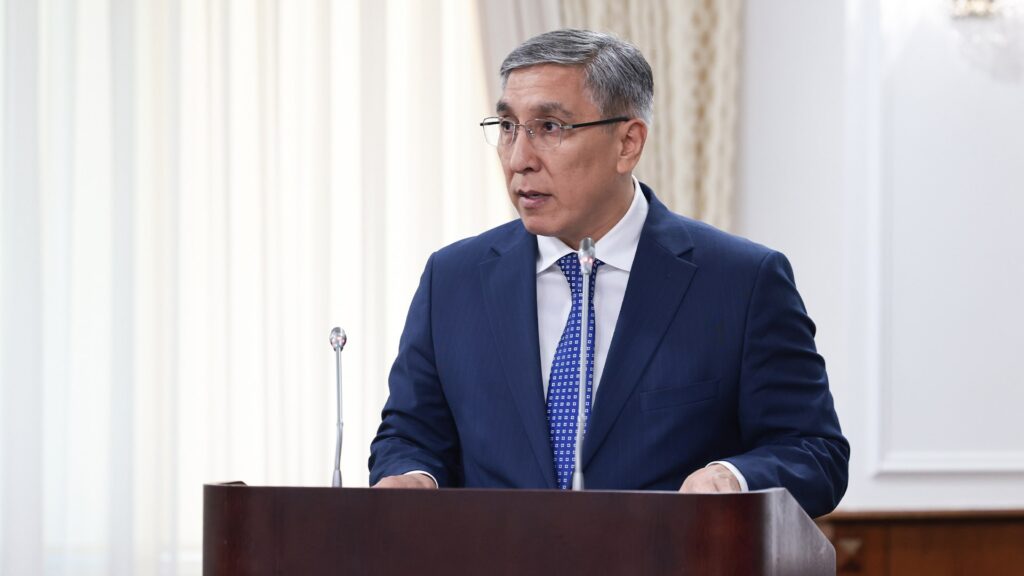
Kazakhstan will need approximately 3 million qualified specialists over the next three to five years, according to Deputy Minister of Labor and Social Protection of the Population Askar Biakhmetov. Speaking at a recent government meeting, Biakhmetov emphasized that this forecast should guide national strategies in education, vocational training, and workforce retraining. Workforce Priorities Data from the Ministry of Labor show that the highest demand (29%) will be for professionals in public services, including government administration, education, healthcare, and social security. This is followed by business services (21%), logistics and transport (16%), industry (13%), and construction and agriculture, each accounting for 7%. “These data must be taken into account when approving professional standards, developing educational programs, allocating state education grants, and organizing retraining initiatives,” Biakhmetov said. He noted the importance of prioritizing retraining programs, as automation and technological change continue to render many professions obsolete, while new sectors demand different competencies. Structural issues persist, including uncompetitive wages and regional imbalances in the labor force, particularly a labor surplus in the south and shortages in the north. Internal migration has also led to oversaturation in major urban centers, straining social and municipal infrastructure. The Ministry also flagged informal employment as a major challenge. In 2024, an estimated 30% of the working-age population were employed without pension contributions. Moreover, about 30% of university graduates are working in fields unrelated to their studies. “Often, graduates don’t study what they want due to low grant scores. As a result, they are trained in one field but work in another,” Biakhmetov explained. By 2025, Kazakhstan’s economically active population is projected to reach 11.3 million, about 60% of the total population of 20.3 million. The unemployment rate currently stands at 4.6%. Looking ahead, the annual growth of the labor force is expected to hit 360,000 by 2035. To address the evolving demands of the economy, the Ministry of Labor is developing an AI-based digital platform designed to identify skills gaps across enterprises and match individuals with relevant job vacancies or training programs. Linking Investment to Job Creation Prime Minister Olzhas Bektenov underscored the need for both foreign and domestic investors to take greater responsibility for employment generation within the scope of active and planned investment projects. He stipulated that at least 30% of investment budgets should be allocated to wages. “An Innovative Project Navigator has been developed to monitor employment trends and ensure investors meet their obligations. Currently, the system covers only large projects, but by September 1, data on all investment projects for 2025-2027 must be entered,” Bektenov said. He also ordered that key performance indicators (KPIs) for regional and municipal leaders regarding employment expansion be introduced starting in 2026. As previously reported by The Times of Central Asia, 979,000 people were employed in Kazakhstan in 2024.
Kazakhstan Reports 134 Human Trafficking Cases in First Half of 2025

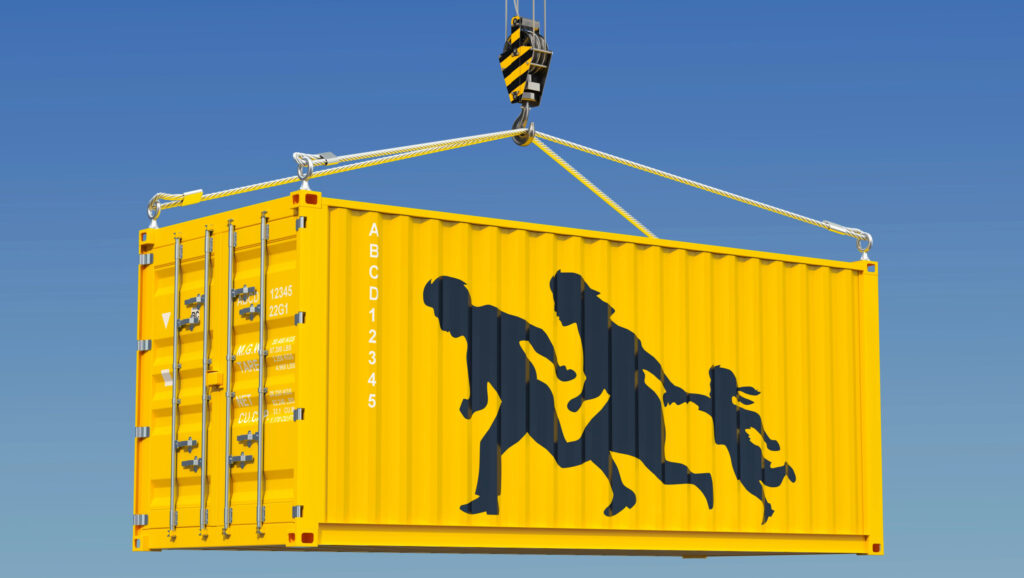
July 30 marks World Day Against Trafficking in Persons, established by the United Nations General Assembly in 2013. On this day, global attention turns to one of the gravest human rights violations: the exploitation of men, women, and children in various forms. According to Kazakhstan’s Ministry of Internal Affairs, 134 human trafficking-related crimes were recorded in the first six months of 2025. The country has maintained an anti-trafficking program since 2002, implemented with the support of the International Organization for Migration (IOM). Over this period, 1,891 victims of labor and sexual exploitation have received assistance. “This day reminds us that human trafficking remains one of the most serious violations of human rights, affecting millions of men, women, and children around the world. No country is immune, whether it is a country of origin, transit, or destination,” the IOM stated. Organized Crime and Exploitation The 2025 IOM campaign theme is “Human Trafficking is Organized Crime - End the Exploitation.” According to the UN, 74% of traffickers are affiliated with organized criminal networks. Between 2020 and 2023, over 200,000 cases of human trafficking were officially reported worldwide, though experts caution the real figure is likely far higher due to underreporting and lack of awareness. Kazakhstan's Role in Regional Trafficking Trends IOM data from 2004 to 2020 indicate that Kazakhstan was the leading destination country for human trafficking victims in Central Asia, with 1,741 cases of exploitation documented. Other destination countries included the UAE (61 cases), Turkey and Russia (28 each), and Iran (7), among others. In terms of origin countries, Uzbekistan accounted for the highest number of trafficking victims (944), followed by Kazakhstan (774), Kyrgyzstan (72), and Russia (28). Smaller numbers came from Tajikistan, Mongolia, Ukraine, the Philippines, and several other countries. [caption id="attachment_34461" align="alignnone" width="300"] @iom.int[/caption] Victim Demographics and Exploitation Types Among the identified victims, 52% were men (981), 47.9% were women (907), and 0.1% (3 individuals) identified as transgender. The majority were working-age adults: 35.8% were aged 18-25, while 36.4% were over 30. Labor exploitation was the most common form, accounting for 1,151 cases (60.9%), followed by sexual exploitation with 711 cases (37.6%). Other forms, such as forced begging, childbirth, or participation in armed conflicts, made up 1.5% (29 cases). Support Mechanisms and Legal Developments Until 2020, IOM played a central role in assisting victims with repatriation, shelter, psychological support, medical care, and documentation. In recent years, these responsibilities have increasingly shifted to the state. In 2024, Kazakhstan enacted a new Law on Combating Trafficking in Persons, developed by the Ministry of Internal Affairs with IOM’s technical support. The legislation outlines protections for victims and mandates public awareness campaigns.

OCA Magazine Shines Spotlight on Education in Eurasia

The latest edition of OCA Magazine (UK) focuses on the challenges and opportunities facing education in Central Asia, the CIS, and neighbouring regions. The special issue, OCA Magazine: Education, explores digital transformation, women’s access to higher education, and the drive to modernise universities in a fast-changing global environment. The special edition includes success stories from Kazakhstan’s Al-Farabi Kazakh National University and Saken Seifullin Kazakh Agrotechnical Research University, where AI, digital campuses, and international double-degree programmes are reshaping learning. The issue also features insights from British tourism expert, Sophie Ibbotson, who predicts that by 2033, tourism in Uzbekistan could generate over 290,000 direct jobs, making hospitality and creative education a national priority. The Methodica School and Tashkent International School, pioneers of innovative and multicultural learning, are also in the spotlight, as well as Tajikistan’s cultural renaissance, where music education and the work of composer Tolibkhon Shakhidi exemplify the fusion of tradition and modernisation. The edition, supported by Hertfordshire Press and the Eurasian Creative Guild (London), is distributed to universities, diplomatic missions, and cultural institutions worldwide. A digital version is available at ocamagazine.com.

Kazakhstan and Turkey Tighten Ties Amid Shifting Caspian Dynamics

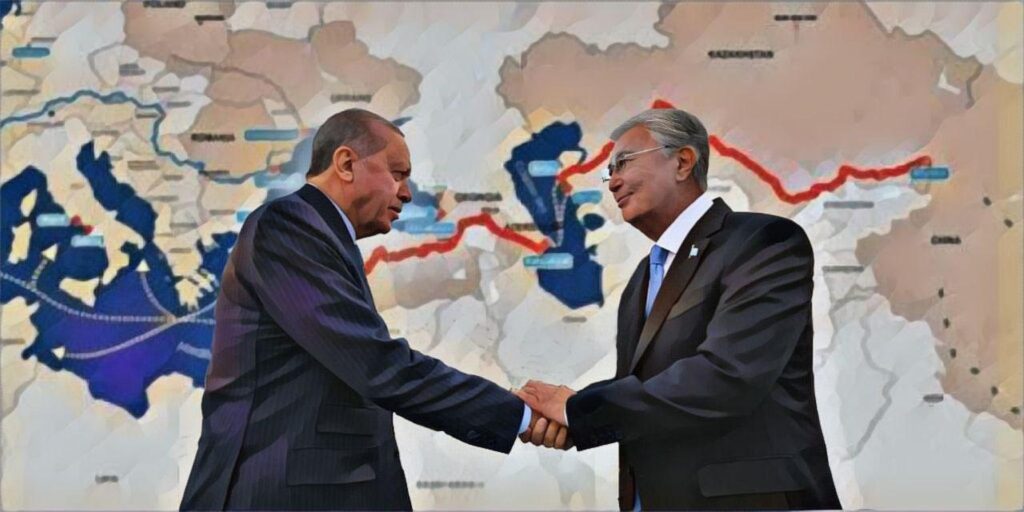
Kazakhstan’s President Kassym-Jomart Tokayev arrived in Turkey on an official visit late on Monday, where he held talks with President Recep Tayyip Erdoğan. The two leaders went on to co-chair the fifth meeting of the Kazakhstan–Turkey High-Level Strategic Cooperation Council. Coming amid heightened tensions in the Caspian region, particularly between Russia and Azerbaijan, the trip appears aimed at recalibrating regional dynamics, though analysts say its full implications remain unclear. Tokayev’s visit ended on a ceremonial high, as Erdoğan bestowed upon him the Devlet Nişanı, Turkey’s highest state honor. Accepting the award, Tokayev — who noted he had previously declined both domestic and foreign distinctions — thanked the Turkish president and people, highlighting Kazakhstan’s political and economic achievements. Erdoğan, in turn, praised Kazakhstan as the “center of peace and stability in its region.” Yet with Kazakhstan straddling both Central Asia and the Caspian basin — each a strategic priority for Ankara — it remains unclear which “region” Erdoğan had in mind. Much of the visit, however, played out behind closed doors. The official press release offered only general statements and few specifics. But the images released were polished and plentiful. Ahead of the summit, Tokayev met with prominent Turkish business leaders already active in Kazakhstan or planning future investments in the country’s economy. Political analyst Adil Kaukenov, a China specialist, weighed in on Tokayev’s business meetings via his Telegram channel, stating that the main topics were processing and logistics. His colleague Daniyar Ashimbayev, meanwhile, interpreted the visit as evidence that Astana is pursuing the foreign policy course it deems necessary. “I have already written about the logistical and geopolitical rivalry between Central Asia, the South Caucasus, and Asia Minor,” Ashimbayev observed. “A strange situation even arose when Kazakhstan signed one agreement on the Trans-Afghan Highway with Kabul, and Tashkent signed another. Or the constant discussion between Tashkent and Baku on the development of the Trans-Caspian corridor without the participation of Ashgabat and Astana. Tensions have risen in relations between Baku and Moscow, which could jeopardize Caspian logistics. Against this backdrop, the Kazakh authorities are methodically pushing through their agenda.” Ashimbayev also recalled Kazakhstan’s recent diplomatic successes, such as securing EU sanctions exemptions for agricultural and coal exports. “In this regard, Tokayev’s trip to Ankara was intended to resolve possible contradictions and misunderstandings in bilateral relations,” Ashimbayev concluded. While official sources emphasized economic and cultural-humanitarian cooperation as the main themes of the visit, Ashimbayev hinted that more sensitive topics may have been discussed privately. “The Turkish release mentions that the parties discussed defense issues, while the Kazakh release says they talked about IT,” he noted. “But by and large, the meaning of the talks is that both leaders calmly sorted out mutual issues, with no one acting as a supplicant or ‘vassal’ (as is sometimes the case at similar meetings). Kazakhstan methodically focused on the issues of interest to it and correctly discussed the issues raised by the host of the summit.” A closer analysis of publications on Akorda, the Kazakh presidential...

EU–Kazakhstan Relations: Strategic Cooperation Amid Geopolitical Shifts

In a recent podcast discussion, EU Ambassador to Kazakhstan Aleška Simkić and Kazakhstan’s Ambassador to the EU and NATO, Roman Vassilenko, discussed the evolving relationship between the European Union and Kazakhstan and broader Central Asia. Their exchange offered insight into the shared strategic interests driving EU–Kazakhstan cooperation across trade, energy, critical raw materials, connectivity, and mobility. Trade and Investment: A Stable Foundation Trade and investment continue to underpin the relationship; the European Union remains Kazakhstan’s largest trading partner and top foreign investor. Bilateral trade reached $49.7 billion in 2024, with the majority comprising energy exports from Kazakhstan, highlighting its role as a key supplier to European markets. The EU collectively accounts for a significant share of Kazakhstan’s FDI, equal to €54.8 billion in 2022, representing approximately 50–55% of Kazakhstan’s total FDI. The Enhanced Partnership and Cooperation Agreement (EPCA), in effect since 2020, underpins the EU–Kazakhstan bilateral relationship, providing a legal framework for cooperation across 29 sectors. As noted by both ambassadors, it enables structured dialogue on trade, energy, governance, and sustainability. While political engagement has increased, both sides acknowledge that deeper implementation is needed to fully leverage the EPCA in line with the EU’s broader strategy for Central Asia. Roman Vassilenko acknowledged the recent momentum: “I think the relationship between Kazakhstan and the EU has strengthened tremendously over the past three and a half years. With a relatively new Commission in place in Brussels, and with the President of Kazakhstan committed to strengthening ties with the European Union as part of our balanced and pragmatic foreign policy, we are at a moment where we can truly advance, deepen, and strengthen our relations in many ways.” [caption id="attachment_34435" align="aligncenter" width="1431"] EU Ambassador to Kazakhstan, Aleška Simkić (left) with Kazakhstan’s Ambassador to the EU and NATO, Roman Vassilenko (right); Image: EU Delegation to Kazakhstan.[/caption] Energy and Raw Materials: Strategic Realignment While energy has long anchored EU–Kazakhstan ties, both ambassadors emphasized a shift toward broader, forward-looking cooperation. Ambassador Vassilenko identified critical raw materials and green hydrogen as emerging areas of strategic importance, offering Kazakhstan opportunities to diversify its economy while supporting the EU’s green transition. Kazakhstan, with its mineral wealth and renewable energy potential, is well-positioned to contribute to Europe’s supply chain resilience in clean technologies. The country’s abundant reserves of critical minerals—such as rare earths, copper, lithium, and cobalt—align with Europe’s need to diversify sources for its green transition. Coupled with growing investment in renewable energy and deepening cooperation with European partners, Kazakhstan stands out as a strategic supplier for clean-tech industries. Both envoys stressed the importance of moving from basic resource exports toward long-term industrial partnerships — including local processing, infrastructure development, and regulatory alignment — as a means of ensuring mutual benefit. Connectivity: The Middle Corridor and Infrastructure Links Connectivity also features prominently. The Trans-Caspian International Transport Route, or “Middle Corridor,” is increasingly viewed as a viable overland route connecting China to Europe via Kazakhstan. Cargo volumes have risen, and both the EU and regional stakeholders are investing in capacity...

Kazakhstan Faces Turbulence as External Pressures Mount

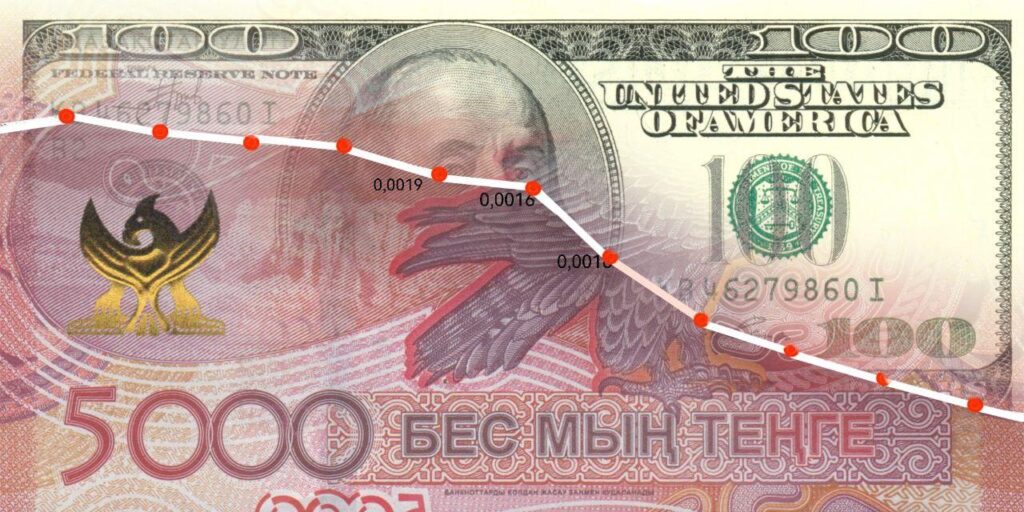
Kazakhstan, Central Asia’s largest economy, is facing a convergence of pressures that President Kassym-Jomart Tokayev and National Bank Chairman Timur Suleimenov must now manage simultaneously, from currency depreciation and geopolitical turmoil to volatile oil markets and contentious fiscal reforms, that are testing its economic resilience. Geopolitical Pressures Escalate By mid-2025, it had become increasingly apparent that Kazakhstan has limited capacity to influence global geopolitical dynamics. Like many “middle powers,” the country must adapt to the actions of larger states, whose unpredictable decisions continue to exert downward pressure on the tenge and fuel inflation. On July 28, U.S. President Donald Trump shortened a previously issued 50-day ultimatum to Russian President Vladimir Putin, giving him just 10-12 days to agree to a peace deal with Ukraine. This development added to the mounting uncertainty already impacting Kazakhstan’s economy. As previously reported by The Times of Central Asia, analysts warn that Trump’s secondary sanctions, 100% tariffs targeting Russia’s trading partners, could potentially be extended to Kazakhstan and other Central Asian economies. Though Kazakhstan is not among Russia’s largest trading partners, its economic links to Moscow are still substantial. The country relies heavily on imports from Russia, including electricity, gasoline, food, and medicine. Adding to the pressure, on July 7, Trump announced a 25% tariff on Kazakhstani goods, effective August 1, 2025. While $1.8 billion of Kazakhstan’s $2 billion in exports to the U.S. (mostly oil, metals, and rare earth elements) are exempt, the move has nonetheless rattled Kazakhstan’s already fragile industrial sector and spooked investors. Oil price instability, largely driven by Western efforts to curtail Russian exports, also poses a major risk. Oil revenues make up the bulk of Kazakhstan’s export income and are a key source of budget financing. Further complicating matters, new Russian restrictions require foreign tankers to obtain Federal Security Service (FSB) approval before accessing key Black Sea ports. This affects the Caspian Pipeline Consortium (CPC), which handles more than 80% of Kazakhstan’s oil exports and is partly owned by U.S. firms Chevron and ExxonMobil. Reuters estimates the new rules could disrupt over 2% of global oil supply. Tenge Hits Historic Low As of July 28, the tenge dropped to a record low of 544.87 per U.S. dollar. The depreciation is driving up the cost of imports, an acute problem in an import-dependent economy, pushing more families to spend over half their income on food. Companies with debt obligations in U.S. dollars are also seeing their liabilities grow, worsening the investment climate and prompting firms to scale back on planned expansions. Central Bank Warns Against Intervention National Bank Chairman Timur Suleimenov cautioned against government intervention in currency markets, a position supported by President Kassym-Jomart Tokayev, who has repeatedly cautioned against short-term administrative measures that can destabilize the economy. Suleimenov noted that past attempts to control the exchange rate led to abrupt and damaging devaluations. Suleimenov attributed the tenge’s vulnerability to rising fiscal injections and an 18% increase in the money supply, stressing that without parallel growth in GDP and industrial output,...