• KGS/USD = 0.01143 0%
  • KZT/USD = 0.00208 0%
  • TJS/USD = 0.10438 -0.1%
  • UZS/USD = 0.00008 0%
  • TMT/USD = 0.28579 0%
  • KGS/USD = 0.01143 0%
  • KZT/USD = 0.00208 0%
  • TJS/USD = 0.10438 -0.1%
  • UZS/USD = 0.00008 0%
  • TMT/USD = 0.28579 0%
  • KGS/USD = 0.01143 0%
  • KZT/USD = 0.00208 0%
  • TJS/USD = 0.10438 -0.1%
  • UZS/USD = 0.00008 0%
  • TMT/USD = 0.28579 0%
  • KGS/USD = 0.01143 0%
  • KZT/USD = 0.00208 0%
  • TJS/USD = 0.10438 -0.1%
  • UZS/USD = 0.00008 0%
  • TMT/USD = 0.28579 0%
  • KGS/USD = 0.01143 0%
  • KZT/USD = 0.00208 0%
  • TJS/USD = 0.10438 -0.1%
  • UZS/USD = 0.00008 0%
  • TMT/USD = 0.28579 0%
  • KGS/USD = 0.01143 0%
  • KZT/USD = 0.00208 0%
  • TJS/USD = 0.10438 -0.1%
  • UZS/USD = 0.00008 0%
  • TMT/USD = 0.28579 0%
  • KGS/USD = 0.01143 0%
  • KZT/USD = 0.00208 0%
  • TJS/USD = 0.10438 -0.1%
  • UZS/USD = 0.00008 0%
  • TMT/USD = 0.28579 0%
  • KGS/USD = 0.01143 0%
  • KZT/USD = 0.00208 0%
  • TJS/USD = 0.10438 -0.1%
  • UZS/USD = 0.00008 0%
  • TMT/USD = 0.28579 0%

Viewing results 2209 - 2214 of 4466

Gods and Demons of Central Asia

In today's dynamic world, Central Asia is emerging as a trendsetter in fashion, culture, lifestyle, and worldview. The ancient Tengrian faith, deeply rooted in Central Asian mythology and superstitions, may soon resurface creatively among the region's people, though it is unlikely to be reinstated as an official religion. While some in Kazakhstan attempt to distance themselves from Abrahamic religions, Tengrism remains a vital part of the cultural heritage, featuring gods, demigods, and dark entities that shaped the beliefs of our ancestors during the pre-Islamic era.   [caption id="attachment_22010" align="aligncenter" width="167"] photo: pininterest: Tengri's domain[/caption]   Divine entities According to Tatar scientist and writer Gali Rahim, shamanism attributes significant roles to various spirits and deities. Among the Turkic peoples, the supreme deity is Tengri, the eternal blue sky. Rahim's lectures on “The Folklore of the Kazan Tatars,” presented at the East Pedagogical Institute in the 1920s, describe Tengri as the primary god in Turkic cosmology, with the earth and humanity emerging from the union of the sky and the earth. Umai, the goddess associated with motherhood and children, stands next in importance. Ancient Turkic inscriptions and symbolic artifacts, such as the stone carving discovered in 2012 in the Zhambyl district of Almaty, Kazakhstan, depict her as a protective figure for children. Teleut pagans represented her as a silver-haired, young woman who descended from heaven on a rainbow to guard children with a golden bow, and the Kyrgyz appealed for her help during childbirth and when children fell ill. Motifs dedicated to Umai by Shorian shamans, were positioned around cradles. Boys' cradles were pierced with an arrow,  girls' with a spindle, and wooden arrows were placed within the those of both. Another prominent character common to Turkic, Mongolian, and Altaic mythology is Erlik or Yerlik Khan. Ruler of the underworld, the horned deity presides over the realm of the dead from a palace of black mud or blue-black iron on the bank of the Toibodym, a river of human tears. A single horsehair bridge is guarded by monsters known as dyutpa whilst the palace is protected by Erlik’s sentries or elchi, brandishing pike poles known as karmak. His breath, carried by a tan, a light warm breeze, was believed to paralyze anyone who inhaled it, which is why the Khakas term for paralysis, tan sapkhany, literally means “wind blow.” Kudai (Khudai), also known as Ulgen, is another central deity who, alongside his brother Erlik, created the land, its vegetation, mountains, and seas. Kudai created man from clay, and Erlik gave him his soul. Kudai created a dog but it was Erlik who clothed it in hair. Whilst Kudai created the first animals, the horse, the sheep, and the cow, Erlik created the camel, the bear, the badger, and the mole. Kudai brought down lightning from the sky and commanded thunder. In a dispute over who was the mightiest creator, Kudai won. The brothers parted ways, and after producing nine sons, from whom the tribes of Kpchak, Mayman, Todosh, Tonjaan, Komdosh, Tyus, Togus,...

Kazakhstan Accredits Chargé D’Affaires of Afghanistan

The Kazakh Foreign Ministry has announced that the country has accredited a chargé d'affaires of Taliban-led Afghanistan to expand trade, economic, and humanitarian cooperation between the two countries. On August 21 in Astana, Deputy Minister of Foreign Affairs Alibek Bakayev met with Muhammad Ur Rehman Rahmani, head of Afghanistan’s diplomatic mission in Kazakhstan. Bakayev stated that Kazakhstan had accredited Mr. Muhammad Rahmani as chargé d'affaires. Early in June, Kazakhstan's President Kassym-Jomart Tokayev announced that his country had removed the Taliban from its list of terrorist organizations, stressing that the move was made to develop trade and economic ties with Taliban-led Afghanistan. In recent years, Kazakhstan has made efforts to increase trade with Afghanistan and participate in Afghan transport and connectivity projects in cooperation with Uzbekistan and Turkmenistan. Kazakhstan has also advocated for consolidating international efforts to provide assistance to Afghanistan and resolve its complex humanitarian problems. To this end, Kazakhstan proposed establishing the UN Regional Centre for Sustainable Development for Central Asia and Afghanistan in Almaty.

Countries of Central Asia Team up as Threat of Natural Disasters Grows

Central Asia is vulnerable to a panoply of natural hazards: Floods, landslides, droughts, sandstorms, avalanches and earthquakes. Countries in the region increasingly seek to collaborate on early warning systems and other emergency precautions, especially since disasters can spill across borders and because the effects of climate change are intensifying. To that end, the heads of the national emergency departments of Kyrgyzstan, Kazakhstan, Tajikistan and Uzbekistan met last week in Cholpon-Ata, a lakeside resort town in northern Kyrgyzstan whose attractions include ancient petroglyphs showing deer, leopards and hunting scenes. Turkmenistan´s flag – green expanse, red stripe with designs and white crescent and stars - was on display in the conference hall, though official announcements did not mention the presence of any delegation from the reclusive Turkmen government. The goal was to share information and experience, and deepen cooperation among the emergency agencies of those Central Asian countries, said Maj. Gen. Boobek Azhikeev, Kyrgyzstan’s minister of emergency situations. The five nations, which have a total of approximately 75 million people and encompass four million square kilometers, face growing risks from natural disasters, and the region has been warming faster than the global average according to a report released in May by the U.N. agency for the coordination of disaster risk reduction and the U.N. Development Programme. The two U.N. bodies, which helped to support the Central Asia meeting on the shores of Kyrgyzstan’s Lake Issyk-Kul on Aug. 15, also mentioned human-made hazards, such as industrial accidents, chemical waste facilities in densely populated areas, and severe air pollution in major cities in all the countries. “Many disaster risk management systems are still reactive, not proactive. Early warning processes are often fragmented, and poorly integrated into countries' development strategies and policies for risk-informed decision-making,” the U.N. agencies said. “There is a lack of anticipation of new and emerging risks, insufficient monitoring and forecasting, and limited financial and technological support. Early warning communication and dissemination are often unclear, especially for the most vulnerable.” The private sector and media can also get more involved in ways of reducing the risk from disasters, they said. The U.N. agencies also noted progress, saying Tajikistan had taken the lead in Central Asia in rolling out an early warning system focused on monitoring, forecasting, communication and other measures. Earlier this month TCA reported that the head of Tajikistan’s committee for emergency situations and civil defense, Rustam Nazarzada, stated that the economic damage caused by natural disasters in the country has amounted to over $12 million in this year alone. Additionally, Uzbekistan is updating an early warning system in the populous, economically important Ferghana valley that will promptly disseminate weather forecasts. Central Asian countries have sought to coordinate on environmental issues in the past, sometimes with mixed results. But the sense of urgency is growing. Earlier this year, Kyrgyzstan was among countries that sent aid to Kazakhstan after floods there that the Kazakh president described as the worst natural disaster in 80 years. Kazakhstan, in turn, sent tons of humanitarian aid to Kyrgyzstan after...

CSTO to Hold Series of Military Exercises in Central Asia

In the coming days, the Collective Security Treaty Organization (CSTO) will hold a series of exercises to protect stability in the Central Asia region. The director of the First Department of the CIS countries, Mikael Agasandyan, told RIA Novosti: “Russia is consistently making efforts to develop the CSTO’s potential as an effective structure responsible for maintaining stability in member states and the vast Eurasian space. In the coming weeks, a series of exercises are planned with various components of the Organization’s Collective Forces on the territory of Kazakhstan, Kyrgyzstan, and Tajikistan, aimed at practicing joint actions in the Central Asian region to protect the stability and collective security, in particular, taking into account the situation in Afghanistan.” He also noted the interest in the CSTO's work on the part of Eurasian states that share the opinion on the importance of creating a single, indivisible, and reliable security space on the continent. The Times of Central Asia has previously written about other CSTO military exercises held in Kazakhstan.

Kazakhstan Bans Wheat Import to Protect Domestic Market

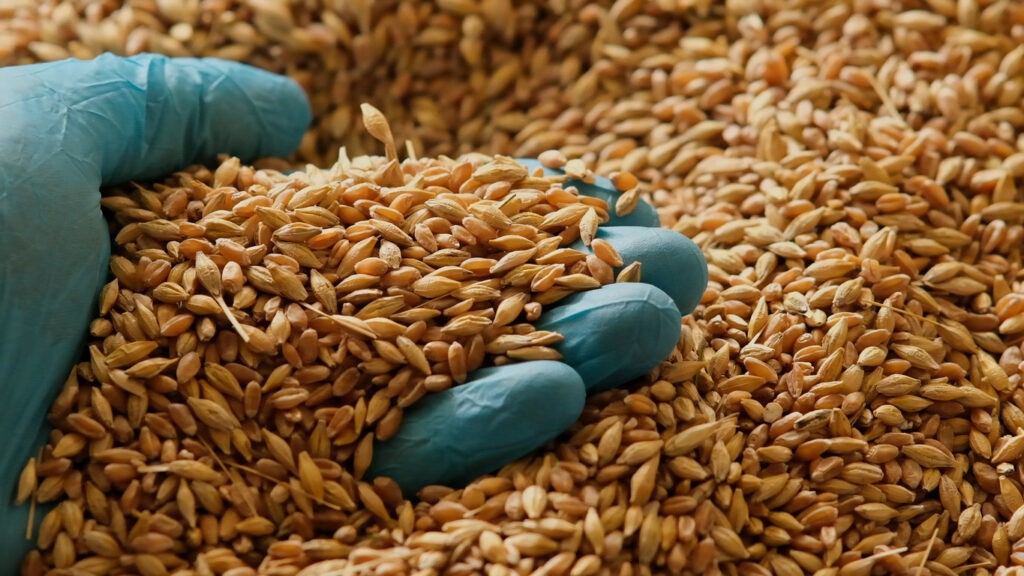
The Kazakh Ministry of Agriculture announced on August 20 a ban on importing wheat to Kazakhstan. This applies to all countries, including fellow members of the Eurasian Economic Union (Armenia, Belarus, Kyrgyzstan, and Russia). The ban applies from August 21 to December 31, 2024, and does not apply to the transit of wheat through Kazakhstan's territory. The ministry explained that the move was necessary to protect the domestic market. In the first half of this year, Kazakhstan imported 1.3 million tons of wheat, which is almost equal to the import volume for the entire 2023. The country's domestic market has sufficient wheat left over from last year's harvest. As of 1 July 2024, Kazakhstan had wheat reserves of 5.1 million tons, including 4 million tons for food. Due to favorable weather conditions during this year’s growing season, the ministry expects a good grain harvest, which would create an excess supply on the domestic grain market, considering the carryover stocks. Kazakhstan's total area under grain crops this year is 16.7 million hectares. Regarding wheat production, Kazakhstan is in 14th place in the world, with a production volume of more than 12 million tons per year. According to the Food and Agriculture Organization of the United Nations (FAO), Kazakhstan’s wheat production in 2023 stood at 12.1 million tons. Wheat exports in the 2023/24 marketing year (July/June) were estimated at 9 million tons.

Kazakhstan to Construct Seven New Offshore Vessels

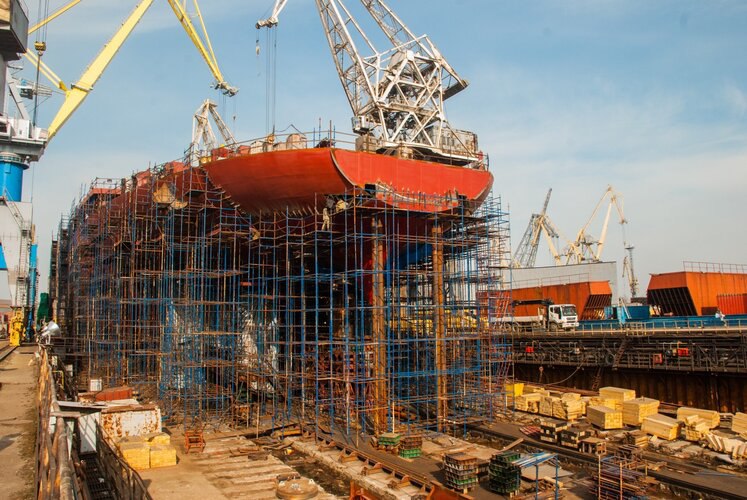
Kazakhstan plans to expand its maritime fleet by building seven new vessels on the Caspian Sea. These vessels will be three tankers, two ferries, and two container ships. The construction of the vessels is part of a broader strategy to develop Kazakhstan's transportation and logistics infrastructure, which will strengthen its position on the Caspian Sea. Today, Kazakhstan's merchant fleet consists of 17 vessels: 10 tankers, four dry bulk carriers, and three container ships. In December 2023, KazMunayGas and Abu Dhabi Ports Group signed an agreement to establish a ship repair and shipbuilding yard in Kazakhstan. This project will provide the necessary base for the repair and construction of new vessels, which will increase the competitiveness of Kazakhstan's fleet on a global level. In addition, Kazakhstan continues to strengthen its ties with Azerbaijan. Tankers have already been purchased to transport oil from Kazakhstan to Azerbaijan for subsequent shipment via the Baku-Tbilisi-Ceyhan oil pipeline. This cooperation will diversify export routes and ensure the stability of supplies. Turkey has become another significant partner of Kazakhstan in shipbuilding. Under an agreement with Turkish companies, new vessels will be built, providing the country with additional opportunities to develop trade relations in the region. This project will also reduce Kazakhstan's dependence on Russia in shipbuilding, and strengthen its position in the Caspian Sea.