• KGS/USD = 0.01143 0%
  • KZT/USD = 0.00208 0%
  • TJS/USD = 0.10438 -0.1%
  • UZS/USD = 0.00008 0%
  • TMT/USD = 0.28579 0%
  • KGS/USD = 0.01143 0%
  • KZT/USD = 0.00208 0%
  • TJS/USD = 0.10438 -0.1%
  • UZS/USD = 0.00008 0%
  • TMT/USD = 0.28579 0%
  • KGS/USD = 0.01143 0%
  • KZT/USD = 0.00208 0%
  • TJS/USD = 0.10438 -0.1%
  • UZS/USD = 0.00008 0%
  • TMT/USD = 0.28579 0%
  • KGS/USD = 0.01143 0%
  • KZT/USD = 0.00208 0%
  • TJS/USD = 0.10438 -0.1%
  • UZS/USD = 0.00008 0%
  • TMT/USD = 0.28579 0%
  • KGS/USD = 0.01143 0%
  • KZT/USD = 0.00208 0%
  • TJS/USD = 0.10438 -0.1%
  • UZS/USD = 0.00008 0%
  • TMT/USD = 0.28579 0%
  • KGS/USD = 0.01143 0%
  • KZT/USD = 0.00208 0%
  • TJS/USD = 0.10438 -0.1%
  • UZS/USD = 0.00008 0%
  • TMT/USD = 0.28579 0%
  • KGS/USD = 0.01143 0%
  • KZT/USD = 0.00208 0%
  • TJS/USD = 0.10438 -0.1%
  • UZS/USD = 0.00008 0%
  • TMT/USD = 0.28579 0%
  • KGS/USD = 0.01143 0%
  • KZT/USD = 0.00208 0%
  • TJS/USD = 0.10438 -0.1%
  • UZS/USD = 0.00008 0%
  • TMT/USD = 0.28579 0%

Viewing results 2215 - 2220 of 4466

Central Asia Takes Steps to Ward off Mpox after WHO Declares Emergency

Central Asian countries have prepared mpox test kits and taken other precautions since the U.N. World Health Organization said last week that the sharp increase in cases of the virus in Africa posed an international health emergency. Kyrgyzstan and Kazakhstan are among countries in the region that say they have not registered any suspected cases of the virus. They are heeding the advice of WHO, which is appealing for a coordinated international response to prevent its wider spread. The U.N. health agency also declared a global health emergency because of mpox in 2022, and cases were reported around the world before declining. Kyrgyzstan’s Ministry of Health said on Monday that it has increased sanitary and quarantine measures at airports, railway stations and border crossings, and is focusing on people coming from countries where cases of mpox have been reported. “Today, sanitary and quarantine points are equipped with thermal imagers and contactless thermometers for the timely detection of people with fever,” the ministry said. It added that WHO had assisted with the delivery to Kyrgyzstan of 3,000 PCR tests for detecting mpox in 2022. Some 500 tests were available as of Monday and efforts are underway to procure more tests, according to the ministry. Kazakhstan and Uzbekistan are also conducting similar precautionary measures. Timur Sultangaziyev, Kazakhstan’s deputy health minister, said methods for detecting people infected with the mpox virus are based on the COVID-19 pandemic and treatment guidelines are in place, according to the Kazinform News Agency. Health officials in Uzbekistan said they are planning for a 21-day medical observation period of anyone who has had contact with a patient sick with mpox. Like other Central Asian countries, they plan to build up their reserve of test kits for the virus. Medical specialists are also being trained in how to handle the disease. Mpox has been reported in the Democratic Republic of Congo, or DRC, for more than a decade, with cases increasing each year, according to WHO. The number of cases reported so far this year is more than last year’s total, with more than 15,000 cases and at least 500 deaths, according to WHO. Some other African countries have reported a far smaller number of cases. The DRC outbreak is being driven by two strains – one that mostly affects children, and a new one that “primarily affects adults and is spreading rapidly, sustained largely, but not exclusively, through transmission linked to sexual contact and amplified in networks associated with commercial sex and sex workers,” WHO said. Mpox symptoms can include fever, skin rash, lesions and chills. Most treatment is aimed at relieving symptoms. The disease can spread through close contact with an infected animal or person.
Kazakhstan and China in Talks on Feeding Lake Balkhash

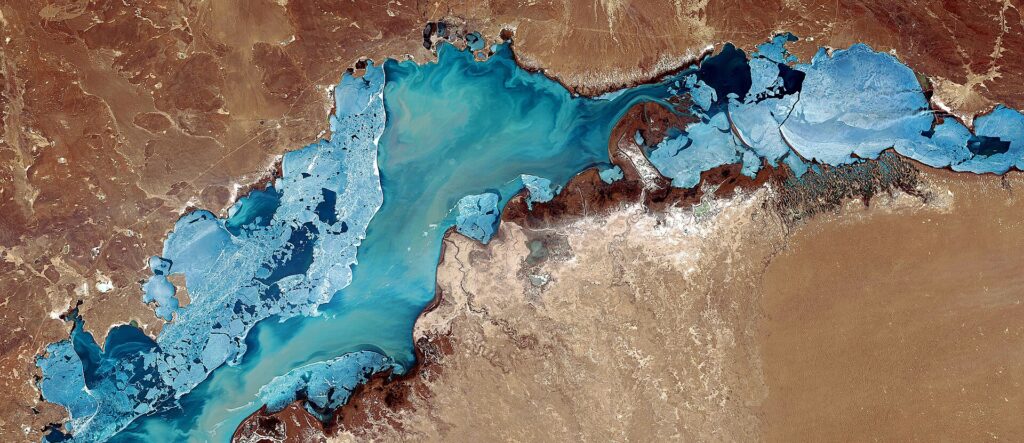
The Kazakh Ministry of Water Resources and Irrigation announced on August 19 that Kazakhstan and China are drafting an agreement on dividing trans-boundary river waters between the two countries. The main objective of the agreement is to ensure that the water in Kazakhstan’s Lake Balkhash remains at an optimal level. Located 280km northwest of the country’s largest city, Almaty, Lake Balkhash is the fifteenth largest lake in the world. It is fed by several trans-boundary rivers flowing from China, the largest of which is the Ili River, which provides about 80% of the lake's water. [caption id="attachment_21931" align="aligncenter" width="1056"] Image: Wikimapia[/caption] Environmentalists in Kazakhstan have been concerned about Lake Balkhash's shallowing. Balkhash has been gradually drying up in recent years, including due to the decline in water volumes in the Ili River. Upstream China has extensively diverted the river over the past half century to produce hydroelectric power and agricultural crops on irrigated land. According to research, as of 2021 China was blocking 40% of the river’s inflow. Moldir Abdualieva, a spokesperson of the Kazakh Ministry of Water Resources and Irrigation, said that the ministry has been paying great attention to providing Lake Balkhash with the necessary volume of water. “Since the beginning of this year, more than 12 billion cubic meters of water have been sent to the lake," she said. In May, it was reported that the water level in Balkhash had risen by 23cm since the beginning of the year due to increased rainfall and floods caused by snow melt this past spring.

The World Nomad Games: Capturing a Sense of the Great Steppe

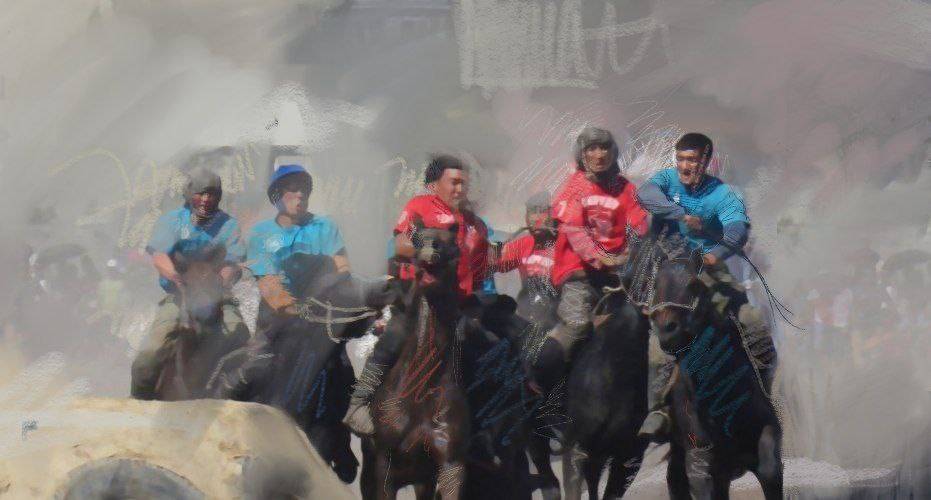
The 5th World Nomad Games, set to be hosted in Astana from September 8-13, is Central Asia's largest national sports competition and, complemented by unique cultural and scientific programs, attracts participants and spectators from throughout the world. As reported by TCA, there is a distinctive festive fizz in the air as the city prepares to welcome visitors, with streets, shopping centers, public spaces and even buses already festooned with flags and colorful decorations. Ablai Kondybaev, the Deputy Head of the Directorate responsible for preparing and organizing the 5th World Nomad Games, spoke to The Times of Central Asia about how the event allows visitors to experience the spirit of the Great Steppe. TCA: The geographical scope of the Nomad Games is steadily expanding worldwide. How many countries will participate this year and how many tourists and spectators are expected to attend? AK: The Games have a ten-year history. Having originated in Kyrgyzstan in 2014, they have since been held three times in the Kyrgyz city of Cholpon-Ata and on the shores of Lake Issyk-Kul. Over the relatively short period since it began, the event has grown dramatically. The first Games attracted participants from 19 countries mainly from Central Asia where there is a historic nomadic culture, whereas the 4th Nomad Games hosted by Iznik, Turkey, in 2022, saw athletes competing from 81 countries. It's very interesting to track the geography of engagement. In previous Games, for example, countries such as New Zealand and Madagascar participated. Superficially, they have nothing to do with nomadic culture, yet consider themselves descendants of nomads. Such things bring us closer together; in the distant past, all humanity was nomadic. To date, we have received applications for participation from 89 countries to compete in this year's event. The Nomadic Games are a new and interesting phenomenon, offering unique and highly engaging spectacular sports, unfamiliar and exotic to European and Western audiences. As such, the Games are becoming increasingly popular abroad. Today's geographical representation of athletes is expansive, with countries including Venezuela, Ireland, Gambia, and Brunei participating for the first time. For ten years, countries from literally all continents have joined the event and perhaps in the future, we will reach a point where interest in our national sports is on a par with the Olympics or soccer championships. [caption id="attachment_21887" align="aligncenter" width="2560"] Falconry in Cholpon-Ata, Kyrgyzstan; image: Stephen M. Bland[/caption]   TCA: Is it significant that the month of September was chosen for the Games? AK: Absolutely. September is when nomads traditionally celebrate the completion of the migration with their caravan of yurts and animals from their summer to winter camp with a toi ; an event comprising  feasts, rituals, games and competitions. TCA: Which competitions generate the most excitement amongst spectators: Horse racing, archery, wrestling? AK: Nomadic life is directly related to horses, and year on year we observe how people who know nothing about steppe culture are particularly fascinated by our equestrian sports. Always spectacular and challenging, they take the audience's breath away. But...

Kazakh Deputy Prime Minister Zhumangarin: Astana Will Not “Blindly Follow” Anti-Russian Sanctions

In an interview with Bloomberg, Kazakhstan's Deputy Prime Minister and Minister of Trade and Integration, Serik Zhumangarin said the country does not intend to “blindly follow” Western sanctions against Russia if they harm Kazakhstan's economy. According to Zhumangarin, Kazakhstan will comply with the sanctions, but will also consider the impact on the domestic market and the country's economic interests. The statement responded to the concerns of Kazakh entrepreneurs, who are already facing difficulties due to disruptions in trade chains and logistical problems caused by the sanctions. The Deputy Prime Minister emphasized that Western sanctions against Russia have caused disproportionate damage to his country. According to the official, Kazakh producers are suffering huge losses, while their former Russian customers have reoriented themselves to suppliers inside Russia and “continue to prosper.” Without the restrictions, “profits would have stayed in Kazakhstan,” the Deputy Prime Minister said. Instead, he said, they are now “going to those against whom” the West has imposed sanctions. The Kazakh Deputy Prime Minister noted that the sanctions imposed against Russia had already hurt Kazakhstan's economy. In particular, in terms of the breakdown of logistics chains and decreased exports to Russia, one of Kazakhstan's largest trading partners. Zhumangarin stated that Astana will continue to adhere to Western restrictions, but stressed that in the context of global instability, Kazakhstan is seeking to pursue a balanced policy to minimize the impact of sanctions at home and maintain stability in the domestic market. Kazakhstan adheres to an independent policy and continues to develop trade relations with other countries, such as Iran and China, Zhumangarin noted. In particular, Kazakhstan is studying the possibility of using routes across the Caspian Sea to expand trade to the south. Kazakhstan is also negotiating with Western countries to allow the sale of Kazakhstani goods to Iran, or to use the country for transit. Kazakhstan's position reflects its desire to maintain economic independence and minimize the risks associated with external sanctions. At the same time, Kazakhstan is currently complying with international rules and is in dialog with Western countries to find compromise solutions that will avoid further pressure on the economy. Thus, remaining faithful to its international obligations, Kazakhstan seeks to protect its national interests, maintain stability, and develop its economy in a difficult foreign policy environment.

An Exploration of Identity by Kazakh Artist Gulnur Mukazhanova

There are some abstract works that can feel like a spiritual encounter. We are all familiar with the work of Mark Rothko, a master in materializing emotions and bringing viewers to transcendence through simple hues, nuances, and color gradients. Far fewer people however, will be aware of Gulnur Mukazhanova, a Kazakh artist whose felt paintings are imbued with a tenderness that offers viewers solace and comfort, and grounded in hope, open new horizons. When I first saw the artist’s work at the Parisian art fair ‘Asia Now’ two years ago, I was immediately struck by her unique use of wool and felt in the creation of abstract art. Delicate and evocative at once, her work successfully elevates craft to the status of fine art. [caption id="attachment_21715" align="alignnone" width="732"] Photo: Estefania Landesmann: Gulnar at work[/caption] Born in Semipalatinsk, Kazakhstan, shortly before the end of the USSR, the artist has been working with textiles since beginning her practice, and influenced by Kazakh traditions, employs felt as a primary material. Mukazhanova studied at the Art Academy in Almaty and later, at the Kunst Hochschule in Berlin Weißensee. She has now lived and worked in Berlin for many years and it was here, that she started to process her Kazakh origins, heritage, and the state of society, with an international audience in mind. Spiritual and emotional, her abstractions are informed by issues concerning identity and the transformation of traditional values of her  native culture in the age of globalization. TCA caught up with Gulnur to discuss her latest work, her creative process, and how her Kazakh origins continue to influence her art. TCA: What initially drew you to art and how did your journey begin? GM: My earliest memories involve drawing animals when I was around five years old. My cousin, also an artist, had a significant influence on me and was the first person to open my eyes to the world of art. I studied art at the university in Kazakhstan and then moved to Berlin, initially to study textile design. However, I quickly realized that design wasn’t my path and so, shifted my focus to more experimental approaches with textiles. By the end of my studies in Berlin, I was fully immersed in working with felt and it has remained a central part of my practice ever since. [caption id="attachment_21716" align="alignnone" width="2500"] Photo: Thierry Bal : Öliara & the Dark Moon[/caption] TCA: Your work often carries deep emotional and historical weight, as illustrated by your series “Öliara: The Dark Moon” and your abstract self-portraits. How do you approach abstraction in these works? GM: “Öliara: The Dark Moon” was a solo show in Mimosa House in London that dealt with dark periods in Kazakh history, particularly the tragic events of "Bloody January" 2022. The series reflects on life, death, and the fragile nature of existence; themes that are unfortunately all too relevant in our world today. The felt pieces in this series are abstract allowing them a deep emotional resonance which would not be afforded by a...

The Yurt : More Than a Humble Abode

Attracted by the region's spectacular, natural landscape, an ever-increasing number of tourists descends on Central Asia each year. For many, one of the highlights, is to experience a night or two in yurts, traditional, humble felt-clad tents which in use for over 2,500 years, were homes to most of Central Asia’s nomads until the 1930’s. [caption id="attachment_21791" align="aligncenter" width="2560"] Photo LH: herders' yurts[/caption] Today’s Kazakh, and Kyrgyz herders are semi-nomadic. Winters are spent in villages but during the warmer months, they migrate with their animals to summer pastures and like their ancestors before them,  live in yurts. More than a humble abode, the yurt encapsulates the cultural, philosophical, and aesthetic values of both Kazakh and Kyrgyz people; a fact recognized by its inclusion in 2014, in the UNESCO Representative List of Intangible Cultural Heritage of Humanity. [caption id="attachment_21792" align="aligncenter" width="1013"] Photo LH: shanyrak[/caption] To gain a better understanding of the cultural significance of the Kazakh yurt in particular, TCA spoke to Art historian Raushan Yeschanova who explained: “A yurt is not just a dwelling; it is a space that reflects the entire philosophy of Kazakh nomadic culture. It is a house that carries the idea of harmony, freedom and connection with nature. The yurt serves not only as a home, but also as a place for rituals, festivals, and gatherings, making it a central element of Kazakh society." A yurt consists of several key elements, each of which has a meaning beyond its mere function. [caption id="attachment_21793" align="aligncenter" width="1962"] Photo LH: shanyrak in situ[/caption] The Shanyrak or Crown The most cherished component of the yurt, carefully preserved and passed down generations from fathers to sons, the ‘crown’ is a circular structure of steam-bent wood located in the center of the roof to ventilate the interior and allow the escape of smoke from the stove. The cultural importance of the Kazakh shanyrak and Kyrgyz tunduk, is such that it features on the national flags of both Kazakhstan and Kyrgyzstan. Regarding rules in erecting the yurt, Raushan states: "In spite of the fact that construction is, as they say, a ‘man's business’, women are actively engaged in the construction of the yurt which takes up to three hours. Its assembly is a special ritual in which each element has its own sacral meaning. Only men are permitted to handle the shanyrak which is lifted to the upper part of the frame with a forked pole known as a bakan. Perceived as a symbol of masculinity, women are forbidden to touch the bakan except during childbirth when it is retained in place for them to lean on to ease their labour.” Kerege The circular foundation of the yurt comprises four or more sections of folding wooden lattice linked together on diagonal axes and to the doorframe with braided rope known as saganak. Uyk Traditionally fashioned from wild willow, these long, steam-bent, or straight wooden poles, extend from the kerege and slot into the crown, to form the roof of the yurt. [caption id="attachment_21794"...