• KGS/USD = 0.01144 0%
  • KZT/USD = 0.00210 0%
  • TJS/USD = 0.10523 0%
  • UZS/USD = 0.00008 0%
  • TMT/USD = 0.28571 0%
  • KGS/USD = 0.01144 0%
  • KZT/USD = 0.00210 0%
  • TJS/USD = 0.10523 0%
  • UZS/USD = 0.00008 0%
  • TMT/USD = 0.28571 0%
  • KGS/USD = 0.01144 0%
  • KZT/USD = 0.00210 0%
  • TJS/USD = 0.10523 0%
  • UZS/USD = 0.00008 0%
  • TMT/USD = 0.28571 0%
  • KGS/USD = 0.01144 0%
  • KZT/USD = 0.00210 0%
  • TJS/USD = 0.10523 0%
  • UZS/USD = 0.00008 0%
  • TMT/USD = 0.28571 0%
  • KGS/USD = 0.01144 0%
  • KZT/USD = 0.00210 0%
  • TJS/USD = 0.10523 0%
  • UZS/USD = 0.00008 0%
  • TMT/USD = 0.28571 0%
  • KGS/USD = 0.01144 0%
  • KZT/USD = 0.00210 0%
  • TJS/USD = 0.10523 0%
  • UZS/USD = 0.00008 0%
  • TMT/USD = 0.28571 0%
  • KGS/USD = 0.01144 0%
  • KZT/USD = 0.00210 0%
  • TJS/USD = 0.10523 0%
  • UZS/USD = 0.00008 0%
  • TMT/USD = 0.28571 0%
  • KGS/USD = 0.01144 0%
  • KZT/USD = 0.00210 0%
  • TJS/USD = 0.10523 0%
  • UZS/USD = 0.00008 0%
  • TMT/USD = 0.28571 0%

Viewing results 355 - 360 of 946

Kyrgyzstan Faces Critical Shortage of 5,000 Doctors

Kyrgyzstan's hospitals are struggling with a shortage of medical staff, with an estimated need for around 5,000 more doctors nationwide, according to Deputy Health Minister Kaarmanbek Baidavletov. He shared these figures during a Jogorku Kenesh meeting, highlighting the urgency of the issue. To address this issue, the Ministry of Health is negotiating with the president's regional representatives to develop solutions. In some districts, local authorities are helping young specialists by taking over utility payments to ease doctors' working conditions. Baidavletov said there should be one doctor for every 1,500 people, but more staff is needed in remote regions and central hospitals. Kyrgyzstan's healthcare system faces several serious challenges. One key problem is the need for more medical personnel, especially in remote regions that lack hematology, neonatology, and pediatrics specialists. In addition, the country has a high incidence of non-communicable diseases such as hypertension and diabetes mellitus, especially among women. The Women's Health initiative has been launched to enhance awareness and early diagnosis of these diseases. Another initiative focuses on antimicrobial resistance (AMR), which the WHO supports. This program provides diagnostic tools and training for medical staff and assesses the prevalence of AMR in Kyrgyzstan to improve clinical protocols and policies in this area.
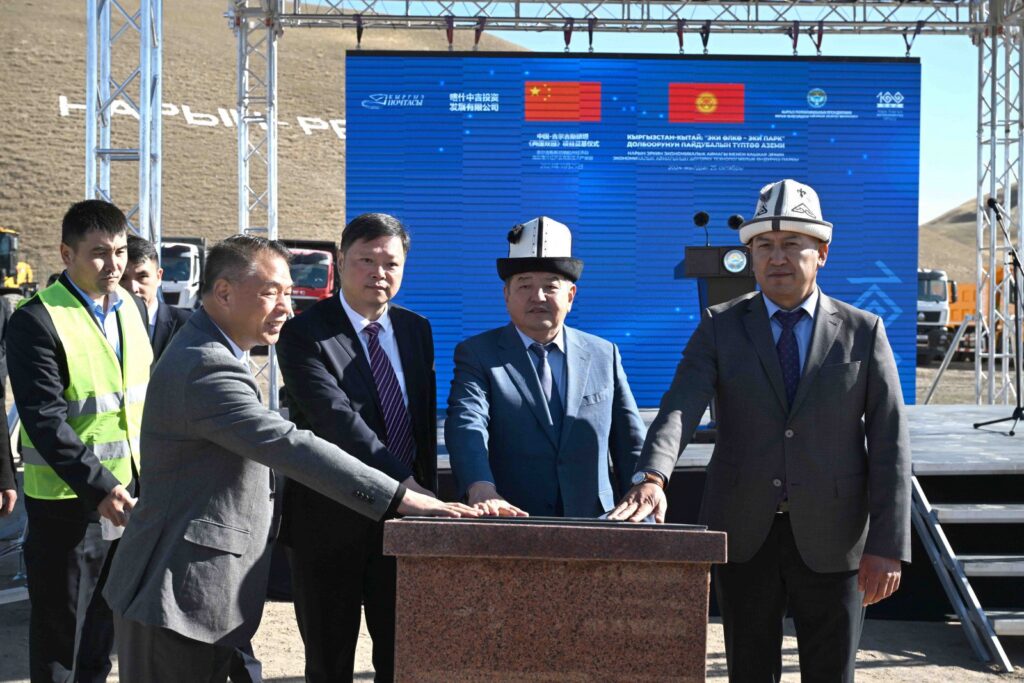
Chinese Investors to Build New Industrial Plants and Residential Compound in Kyrgyzstan’s Naryn

On October 25, Chinese investors launched the construction of four extensive production facilities in Kyrgyzstan's Naryn region: a car assembly plant, an LED lamp manufacturing plant, a toilet paper and napkin plant, and an agricultural drone manufacturing plant. At a capsule-laying ceremony, Akylbek Japarov, Chairman of the Cabinet of Ministers of Kyrgyzstan, emphasized that this event proves that Kyrgyzstan has reached “a new, higher level of relations” with its neighbor. Chinese partners will invest $130 million in the Naryn-Shumkar car assembly plant, which will manufacture more than 20,000 cars annually and create 1,000 jobs. $10 million will be invested in the LED lamp plant, which will produce 30 million lamps per year and create about 200 jobs. Another $10 million will be invested in the toilet paper and napkin plant, which will produce 6,000 tons of paper annually and create more than 100 jobs. On the same day, Japarov attended a ceremony to begin the construction of a new residential compound, Tien Shan City, in the town of Naryn. The residential compound will consist of six 10-storey apartment blocks. The developer, a construction company from the Chinese city of Kashgar, plans to complete high-quality modern housing construction within a year. The company will also build an administration house for all government services for the local population.

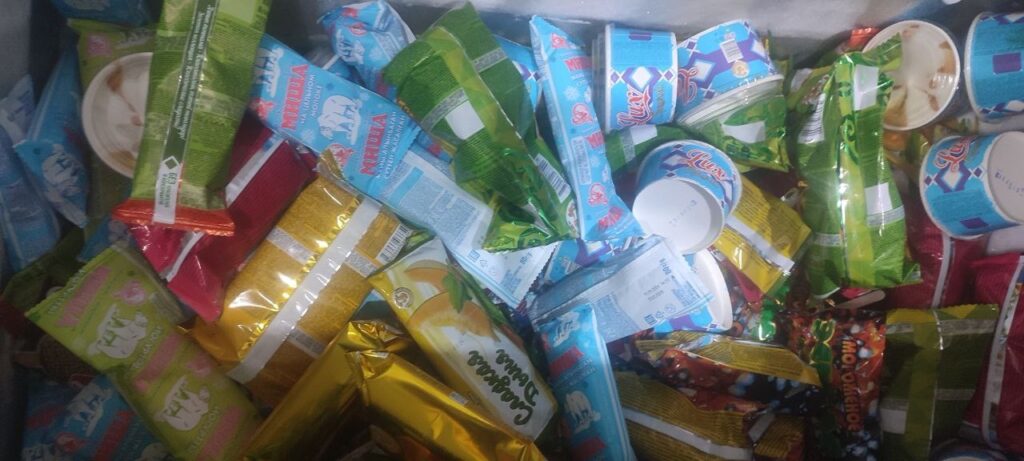
Kyrgyzstan Triples Ice Cream Exports

Kyrgyzstan has doubled its ice cream production in the last five years, and tripled its exports to other countries in the region. Last year, the country produced 10,800 tons of ice cream, up from 5,200 tons five years earlier. This increase is due to growing demand for Kyrgyz ice cream in other Eurasian countries, primarily Kazakhstan, Uzbekistan, and Russia. Exports to these countries have increased from 2,800 tons per year to 6,100 tons since 2019. “At the same time, imports of ice cream have shown good dynamics recently, and they have decreased from 2,788 tons (per year) to 1,969 tons. This indicates the substitution of imported products with domestic production,” said the Ministry of Agriculture of the Kyrgyz Republic. According to official data, Kyrgyzstan imports ice cream from Turkey, Belarus, and Lithuania. While a kilogram of ice cream from Russia costs 240 KGS ($3), Lithuania and Turkey ask an average of 570 KGS ($7). The cost of one kilogram of ice cream from Kyrgyzstan is just over 200 KGS ($2.5).

Kyrgyzstan Bans Commissions on Online Transfers

The National Bank of the Kyrgyz Republic (NBRK) has adopted a resolution requiring commercial banks to prohibit commissions on money transfers in the national currency, the som (KGS), within the country. The NBKR said such measures are taken to popularize banking services for the population. “The measure will contribute to ensuring accessibility of banking services for all segments of the population and accelerate the introduction of digital technologies in the banking sector,” the bank said. The NBKR resolution will be in force until the end of 2025. The country's authorities have been popularizing non-cash payments for years. President Sadyr Japarov has stated that such payments would bring the economy out of the shadows. “The development of cashless payments is a step towards modernizing our economy, strengthening financial security, and increasing financial inclusion. We must make the payment process so convenient and simple that even those who are used to cash could not resist the transition to new technologies,” said the head of the Cabinet, Akylbek Japarov, at a government meeting.

Kyrgyzstan and Russia Set to Expand Cooperation

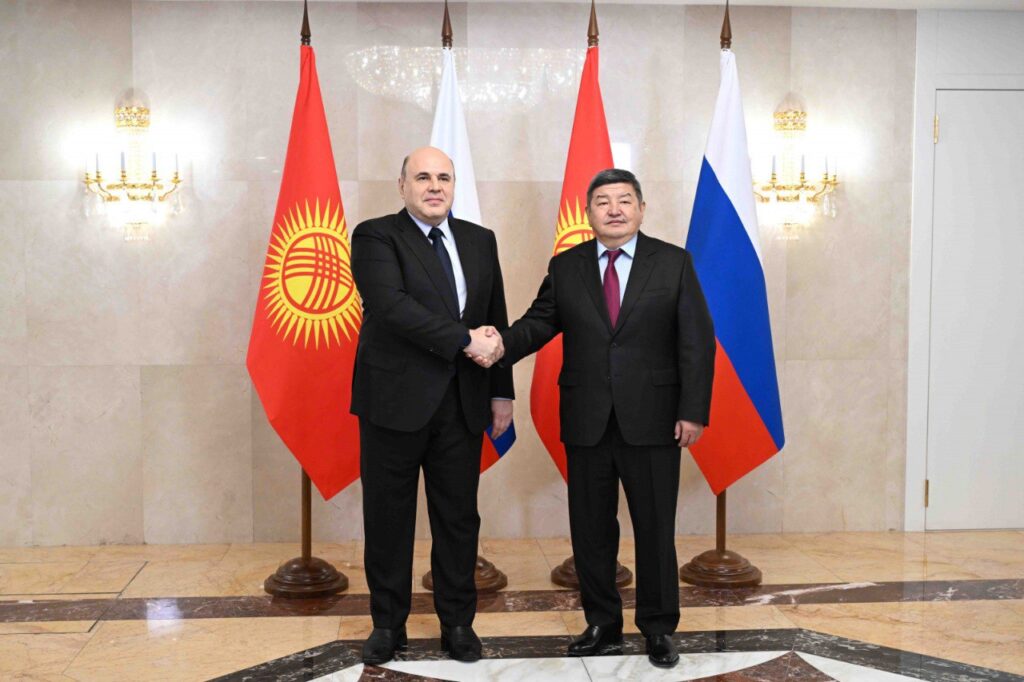
On October 21, in Moscow, Akylbek Japarov, the Chairman of Kyrgyzstan's Cabinet of Ministers, and Mikhail Mishustin, the Chairman of the Russian Government, chaired a joint meeting of the governments of both countries. Japarov's visit was planned to coincide with the centenary of the formation of the Kara-Kyrgyz Autonomous Region, and also with the beginning of the Days of Culture of Kyrgyzstan in Russia. “The establishment of the Kara-Kyrgyz Autonomous Region in 1924 as part of the Russian Soviet Federative Socialist Republic, followed by the formation of the Kyrgyz Autonomous Soviet Socialist Republic in 1926 and later the Kyrgyz Soviet Socialist Republic in 1936, was of colossal importance for our people, becoming the foundation of the sovereign Kyrgyz Republic. The friendship between the Kyrgyz and Russian peoples has been forged over the centuries, has gone through difficult times, but has given many examples of devotion and loyalty,” Japarov said. Noting that Kyrgyz-Russian relations have elevated to the status of "deepened relations" of alliance and strategic partnership, Japarov stated: "We are very pleased that Russian private businesses and investors have paid attention to Kyrgyzstan's possibilities and have intensified their work. We are always open to Russian investments and are ready to provide maximum assistance in implementing investment proposals." Mishustin in turn expressed Russia’s interest in further developing bilateral cooperation in all areas. "During the first eight months of this year, [Kyrgyz-Russian] trade turnover has grown by 16 percent. The share of the ruble in mutual settlements has reached almost 90 percent. We want to maintain this trend to ensure stable and predictable conditions for doing business," Mishustin said.

OTS Countries Take Steps Towards Turkic Integration

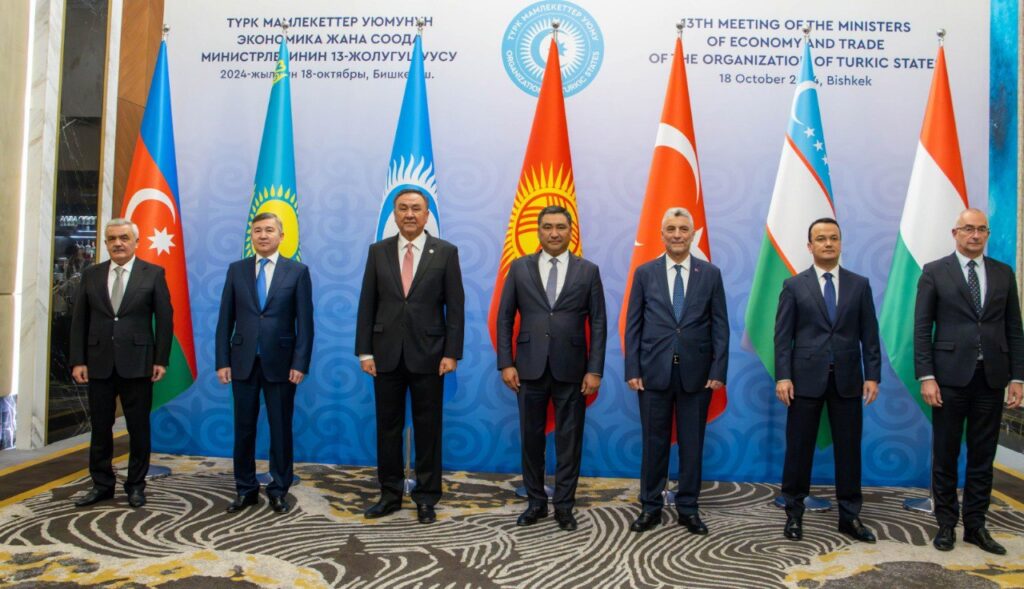
On October 18, Bishkek hosted the 13th meeting of the Organization of Turkic States (OTS), wherein Ministers of Economy and Trade aimed to strengthen economic cooperation between the OTS member states. The OTS, currently comprising Azerbaijan, Kazakhstan, Kyrgyzstan, Turkey, Uzbekistan, and Turkmenistan, with Hungary and the Turkish Republic of Northern Cyprus as observers, was founded in 2009 to foster comprehensive cooperation among Turkic-speaking nations. During the meeting, Chairman of the Cabinet of Ministers of Kyrgyzstan, Akylbek Japarov, stated that in recent years, Kyrgyzstan's trade turnover with the OTS member states has grown by almost 62%, with Kyrgyz exports increasing by 54.6%, and imports by 66%. The Deputy Prime Minister - Minister of National Economy of Kazakhstan, Nurlan Baibazarov, emphasized Kazakhstan’s adherence to the development of Turkic integration and announced that the "Turkic Investment Fund created within the OTS demonstrates a common desire to expand economic and investment cooperation, implement joint investment projects, and attract capital, technology, and talent for our countries' dynamic growth and prosperity." OTS ministers supported Kazakhstan's initiatives to create a Green Finance Council, a Council of Central (National) Banks of the OTS member states, and the inauguration of the Turan Special Economic Zone in the Kazakh city of Turkestan, where the next meeting will be held. In January-August 2024, trade between Kazakhstan and the OTS countries amounted to $7.2 billion, and according to the Turkish Ministry of Finance, by the end of 2024, the Turkic states are poised to play an important role in the world economy, reaching an economic volume of $1.9 trillion and a population of 178 million. As previously reported by The Times of Central Asia,  the Turkic Investment Fund, with an authorized capital of $1 billion, will begin financing major joint projects of the OTS member countries from January 2025.