• KGS/USD = 0.01144 0%
  • KZT/USD = 0.00217 0%
  • TJS/USD = 0.10456 0%
  • UZS/USD = 0.00008 0%
  • TMT/USD = 0.28571 0%
  • KGS/USD = 0.01144 0%
  • KZT/USD = 0.00217 0%
  • TJS/USD = 0.10456 0%
  • UZS/USD = 0.00008 0%
  • TMT/USD = 0.28571 0%
  • KGS/USD = 0.01144 0%
  • KZT/USD = 0.00217 0%
  • TJS/USD = 0.10456 0%
  • UZS/USD = 0.00008 0%
  • TMT/USD = 0.28571 0%
  • KGS/USD = 0.01144 0%
  • KZT/USD = 0.00217 0%
  • TJS/USD = 0.10456 0%
  • UZS/USD = 0.00008 0%
  • TMT/USD = 0.28571 0%
  • KGS/USD = 0.01144 0%
  • KZT/USD = 0.00217 0%
  • TJS/USD = 0.10456 0%
  • UZS/USD = 0.00008 0%
  • TMT/USD = 0.28571 0%
  • KGS/USD = 0.01144 0%
  • KZT/USD = 0.00217 0%
  • TJS/USD = 0.10456 0%
  • UZS/USD = 0.00008 0%
  • TMT/USD = 0.28571 0%
  • KGS/USD = 0.01144 0%
  • KZT/USD = 0.00217 0%
  • TJS/USD = 0.10456 0%
  • UZS/USD = 0.00008 0%
  • TMT/USD = 0.28571 0%
  • KGS/USD = 0.01144 0%
  • KZT/USD = 0.00217 0%
  • TJS/USD = 0.10456 0%
  • UZS/USD = 0.00008 0%
  • TMT/USD = 0.28571 0%

Viewing results 361 - 366 of 940

Decrease Expected in Central Asia’s Economic Growth

According to the World Bank, economic growth in Europe and Central Asia (ECA) is expected to slow to 3.3% this year, down from 3.5% in 2023. This is much lower than the average growth of 4.1% seen between 2000 and 2019, and is not enough for many of the region's middle-income countries to become high-income. Growth in the region has mainly been driven by an increase in people's spending, rising wages, and government policies, while demand from outside the area, especially from the EU, remains weak. Although the average yearly inflation rate had dropped to 3.6% by August 2024, from 4.6% at the end of last year, it is still higher than the 2.7% average seen in 2018-2019. Prices of goods have grown more slowly in most countries, but prices for services remain high because of rising labor costs. Some central banks have lowered interest rates as inflation has slowed, but are cautious. Government spending has not been reduced in most of the region's countries and indeed, has dramatically increased, especially on public wages, pensions, social benefits, and defense. The economies of Central Asia are expected to grow by 4.3% in 2024; slower than the 5.6% growth seen last year. In Kazakhstan, growth is predicted to slow to 3.4%, down from 5.1% in 2023, mainly because the expansion of the Tengiz oil field is taking longer, and the government is spending less. For other Central Asian countries, growth estimates have been raised by an average of nearly one percentage due to increased consumer spending, more government spending, and ongoing support from money sent home by workers in Russia and trade with Russia. However, despite these improvements, the growth per capita GDP (the average income per person) in Central Asia is only expected to be 2.7% this year, making it the slowest in the region, apart fromTurkey. The Central Asian sub region, with growth expected at 5%, will outpace all other sub regions in 2025. This is driven primarily by renewed strong growth in Kazakhstan amid rising oil production. However, growth in the rest of Central Asia is projected to slow as trading and remittance flows from Russia normalize. The lowest median consumer price growth rate was recorded in the South Caucasus, at 1.5% year-on-year in August 2024. In contrast, Central Asia had the highest median consumer price inflation rate, at 6.1%. This rate reflects 10% inflation in Uzbekistan, driven by removing energy subsidies in May 2024.

Chinese Investment in Major Trade and Logistics Center in Northern Kyrgyzstan

On October 17, the Chairman of the Cabinet of Ministers of Kyrgyzstan, Akylbek Japarov, and the Chinese Ambassador to Kyrgyzstan, Du Dewen, attended a capsule-laying ceremony for the construction of a large trade and logistics center in the village of Leninskoye in the country’s northern Chui region. Located just north of the capital, Bishkek, and a few kilometers from the border with Kazakhstan, the Manas Trade and Logistics City, will include a trading hub, an international exhibition center, a warehouse and logistics center with bonded areas, retail marketplaces, hotels, and residential compounds. The facility will be built in partnership between a Chinese investor and a management company in which the Kyrgyz Cabinet of Ministers will have a 49% share. In his address at the ceremony, the Cabinet’s head, Japarov, stated: "We are launching a major project—not just the construction of a trade and logistics center, but an entire town. It will have 30,000 retail outlets, -cover-700 hectares, and a total investment of $4.2 billion. $700 million will be invested in the first stage of construction. This center can be compared with the largest sea ports in terms of its importance and functions." Japarov added that the creation of the facility will significantly contribute to the expansion of regional and international trade, the creation of new jobs, and the improvement of conditions for product exports. China is now one of Kyrgyzstan's largest trading partners. According to official statistics, bilateral trade reached $20 billion in 2023, 32% more than in 2022.

Chinese Company to Build FMD Vaccine Production Plant in Kyrgyzstan

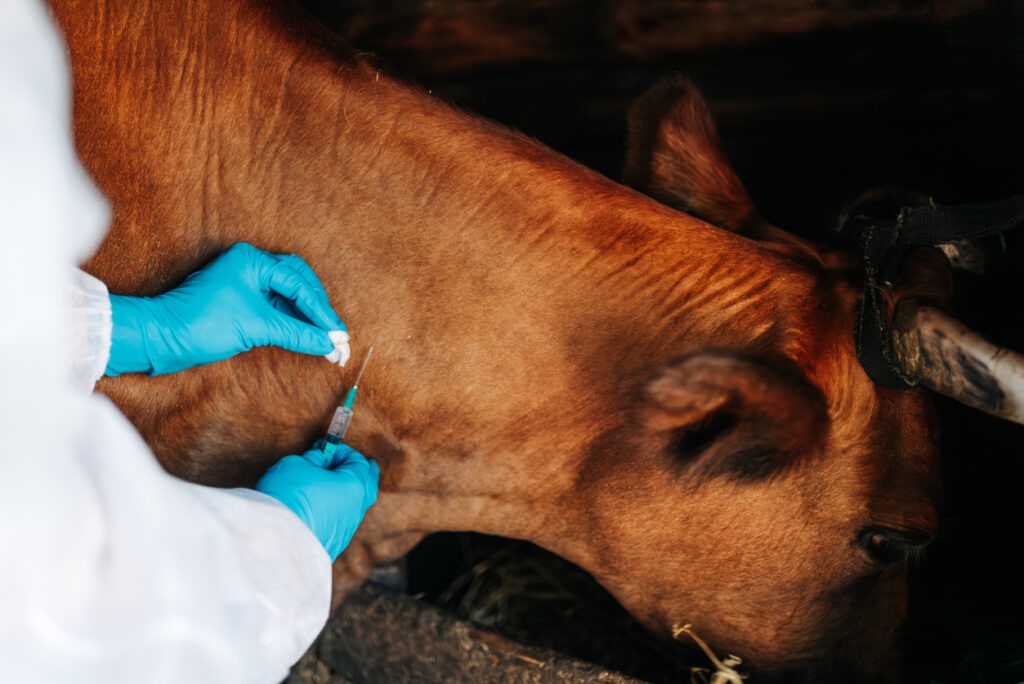
China’s Yangling Jinhai Biotechnology Co., Ltd. plans to build a plant in Kyrgyzstan to produce foot-and-mouth disease (FMD) vaccines, according to the country’s Ministry of Water Resources, Agriculture, and Processing Industry. The announcement followed a meeting between Kyrgyzstan’s Deputy Chairman of the Cabinet of Ministers and Minister of Water Resources, Agriculture, and Processing Industry, Bakyt Torobaev, and a delegation from the Chinese company. The project includes the entire production cycle, from raising and fattening livestock to vaccination and slaughtering. Yangling Jinhai Biotechnology Co., Ltd. is ready to invest in plant construction, transfer advanced technologies, and train local specialists. The parties agreed to establish a working group to implement the project. According to the World Organization for Animal Health,FMD is a severe and highly contagious viral livestock disease with a significant economic impact. It is a transboundary animal disease that profoundly affects livestock production and disrupts regional and international trade in animals and animal products. The parties emphasized the project's importance for strengthening Kyrgyzstan’s veterinary security, as domestically produced vaccines would significantly reduce the spread of infectious diseases among farm animals. Kyrgyzstan is an agricultural country, and livestock farming is the country's primary source of income for its rural population. In September 2024, the Ministry of Water Resources, Agriculture and Processing Industry reported that Kyrgyzstan had 1,802,299 head of cattle (cows), 542,527 horses, 6,216,125 sheep and goats, 6,988,968 poultry, and 29,676 pigs.

Kazakhstan, Kyrgyzstan and Uzbekistan Determine Operating Mode for Toktogul Reservoir

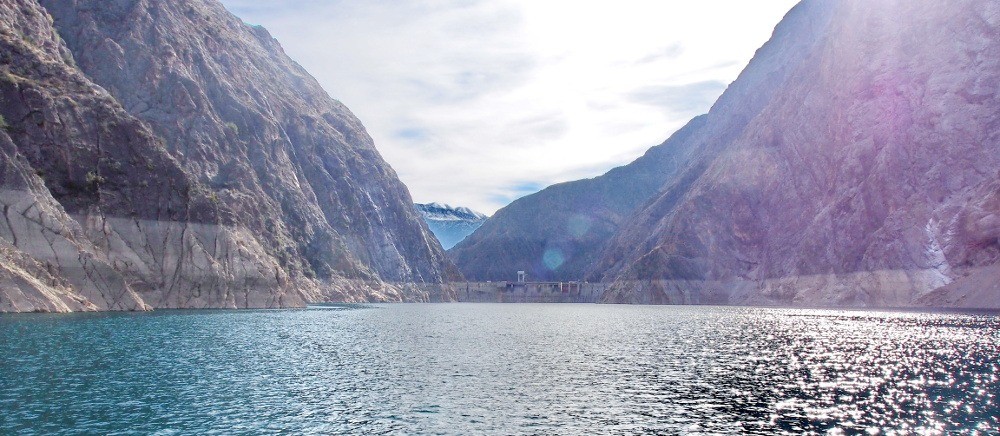
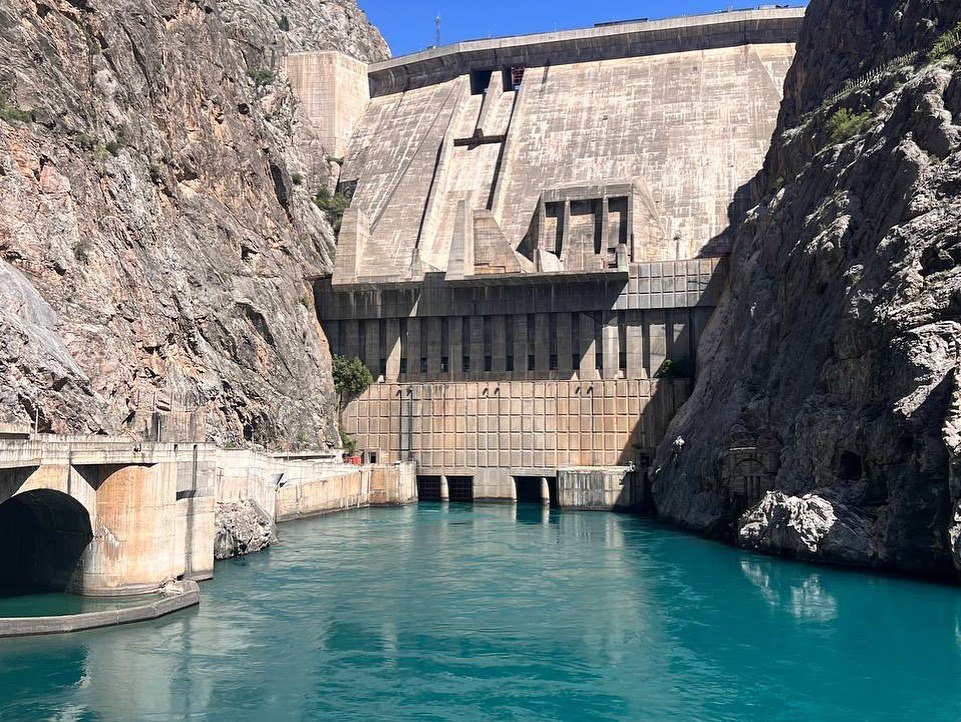
Following a meeting in Tashkent to coordinate the region's water and energy balance, ministers from Kazakhstan, Kyrgyzstan, and Uzbekistan determined a preliminary operating mode for Kyrgyzstan’s Toktogul reservoir for the autumn-winter period. Kyrgyzstan’s largest Toktogul hydroelectric power plant (HPP) reservoir on the Naryn River releases water downstream to Kazakhstan and Uzbekistan providing essential irrigation for fields in Kazakhstan's dry southern regions. In winter, the plant which produces around 40% of Kyrgyzstan’s electricity, releases more water to generate electricity to meet the country’s power shortages. Kazakhstan and Uzbekistan are now interested in helping Kyrgyzstan maintain a sufficient volume of water in the Toktogul reservoir for use during the 2025 irrigation season; a goal which could be achieved by exporting Kazakh and Uzbek electricity to Kyrgyzstan during the winter months. Commenting on the proposal, Kazakhstan’s Minister of Water Resources and Irrigation Nurzhan Nurzhigitov, stated: "An important area of cooperation for our countries is the water and energy sector. This year has become a vivid example of deepening such regional cooperation. We [Kazakhstan] have met our water needs thanks to the joint measures. For a downstream country, this is extremely important. First, it is used to fill the North Aral Sea. We will continue to adhere to the agreements reached for the autumn-winter period to provide farmers with irrigation water next year." The Kazakh Ministry of Water Resources and Irrigation announced on October 14 that the irrigation season had ended in all regions of the country and during the growing season, from April 1,  the Ministry supplied Kazakhstan's farmers with about 11.2 billion cubic meters of water.  Nurzhigitov also drew attention to the vital role of water diplomacy in preventing a shortage of irrigation water this year, with  Kyrgyzstan, Tajikistan, and Uzbekistan sending more water to Kazakhstan than planned. As previously  reported by The Times of Central Asia the Toktogul reservoir accumulated more water this year than last.

Kyrgyz Government Adopts Strategic Task to Construct Eco-City

On October 14, Kyrgyzstan's President Sadyr Japarov signed a Decree to construct the eco-city "Asman" near the village of Toru-Aigyr on the northern shore of Lake Issyk-Kul, the country's  main region for tourism and recreation. Spanning 4,000 hectares, some 200km southeast of the capital Bishkek and dubbed a "smart city", Asman aims to become the country’s new economic and tourist hub and home to modern business, recreational and sports facilities, hi-tech parks, and financial institutions. It will also provide homes for around  500,000 residents. From a bird's eye view, Asman (the Kyrgyz word for "sky") will resemble a komuz, a traditional Kyrgyz string musical instrument and one of Kyrgyzstan's national symbols. According to Kyrgyz officials, the new city financed by foreign investors, will be built over the next 7-10 years but although the capsule-laying ceremony took place in June 2023, construction has yet to begin. Speaking at the ceremony, President Japarov remarked that “the city of Asman will become a financial hub connecting East and West, North and South.” As reported by the presidential press service, the construction of the eco-city is a “strategic task” for the country’s Cabinet of Ministers and local authorities of the Issyk-Kul region, with a key objective to protect the biosphere territory adjacent to the lake. According to the decree, the Cabinet of Ministers should develop and approve a concept for the construction of Asman by March 1, 2025, ensuring the preservation and protection of the environment during the city’s construction. It has also been recommended that a ban be placed in the city on hydrocarbon-fueled (gasoline, diesel, gas) transport in preference for electric transport and bicycles. For this purpose, the decree orders the creation of electric transport infrastructure and charging stations, as well as necessary conditions for the use of bicycles to ensure mobility of the city's population. In addition, the decree orders the use of energy-saving solutions and smart home technologies in the construction of buildings, and compliance with the World Health Organization's environmental standards for greening cities and introducing an environmentally safe waste management system. The realization of such a mega project has inevitably raised questions regarding finance, with construction costs currently estimated at around $20 billion. The Asman project shares similarities to the city of Arkadag in Turkmenistan. Unveiled in June 2023, the “smart” city of Arkadag was built from scratch 30 km south of Turkmenistan’s capital, Ashgabat. Designed to accommodate a population of  70,000, it cost billions of dollars to construct.

Donor Delegation Visits Kyrgyzstan to Assess Progress on Kambarata-1 HPP

As reported by the Kyrgyz Ministry of Energy, on October 7-11 Kyrgyzstan received a delegation from the Donor Coordination Committee for the construction of the flagship Kambarata-1 Hydropower Plant (HPP) comprising representatives of the World Bank, the Asian Development Bank, the Islamic Development Bank, the European Union, the European Investment Bank, the United States Agency for International Development, and the UK Foreign, Commonwealth & Development Office. The Committee, established at the Kyrgyz Republic International Energy Investment Forum, in Vienna on June 10, 2024, comprises major international financial institutions and development partners, including the World Bank, the OPEC Fund, the Asian Development Bank, the Asian Infrastructure Investment Bank, the Islamic Development Bank, and the European Bank for Reconstruction and Development. The Kambarata-1 HPP, with a projected capacity of  1,860 megawatts and an average annual generation of 5.6 billion kilowatt-hours of electricity, is to be constructed at preliminary  cost exceeding $4 billion in the upper reaches of the Naryn River in Kyrgyzstan. Once completed, the largest hydropower plant in Kyrgyzstan is expected to end the country’s electricity shortages. In addition, the ambitious project, jointly implemented with Kazakhstan and Uzbekistan, aims to strengthen cooperation within Central Asia in water and energy resource management. During their visit, delegates reviewed progress on the Kambarata-1 HPP and in addition, met Kyrgyz Minister of Energy Taalaibek Ibrayev and representatives of Kazakhstan and Uzbekistan to discuss and establish a mechanism for regular consultations and data exchange to ensure effective cooperation on the project. Last month, Minister Ibrayev reported significant progress on the development of the HPP construction and said that all preparatory stages will be completed by next May. Early in September, Kyrgyzstan’s Cabinet of Ministers and the World Bank organized a roundtable on the selection of a dam for the Kambarata-1 HPP. The Swiss engineering company AFRY proposed various options for the project, and based on the type of dam chosen, the Kyrgyz Ministry of Energy stated that a feasibility study would be prepared by May 2025.