• KGS/USD = 0.01144 0%
  • KZT/USD = 0.00217 0%
  • TJS/USD = 0.10456 0%
  • UZS/USD = 0.00008 0%
  • TMT/USD = 0.28571 0%
  • KGS/USD = 0.01144 0%
  • KZT/USD = 0.00217 0%
  • TJS/USD = 0.10456 0%
  • UZS/USD = 0.00008 0%
  • TMT/USD = 0.28571 0%
  • KGS/USD = 0.01144 0%
  • KZT/USD = 0.00217 0%
  • TJS/USD = 0.10456 0%
  • UZS/USD = 0.00008 0%
  • TMT/USD = 0.28571 0%
  • KGS/USD = 0.01144 0%
  • KZT/USD = 0.00217 0%
  • TJS/USD = 0.10456 0%
  • UZS/USD = 0.00008 0%
  • TMT/USD = 0.28571 0%
  • KGS/USD = 0.01144 0%
  • KZT/USD = 0.00217 0%
  • TJS/USD = 0.10456 0%
  • UZS/USD = 0.00008 0%
  • TMT/USD = 0.28571 0%
  • KGS/USD = 0.01144 0%
  • KZT/USD = 0.00217 0%
  • TJS/USD = 0.10456 0%
  • UZS/USD = 0.00008 0%
  • TMT/USD = 0.28571 0%
  • KGS/USD = 0.01144 0%
  • KZT/USD = 0.00217 0%
  • TJS/USD = 0.10456 0%
  • UZS/USD = 0.00008 0%
  • TMT/USD = 0.28571 0%
  • KGS/USD = 0.01144 0%
  • KZT/USD = 0.00217 0%
  • TJS/USD = 0.10456 0%
  • UZS/USD = 0.00008 0%
  • TMT/USD = 0.28571 0%

Viewing results 427 - 432 of 940

Kyrgyzstan Proposes Banning Foreign Currencies in Domestic Transactions

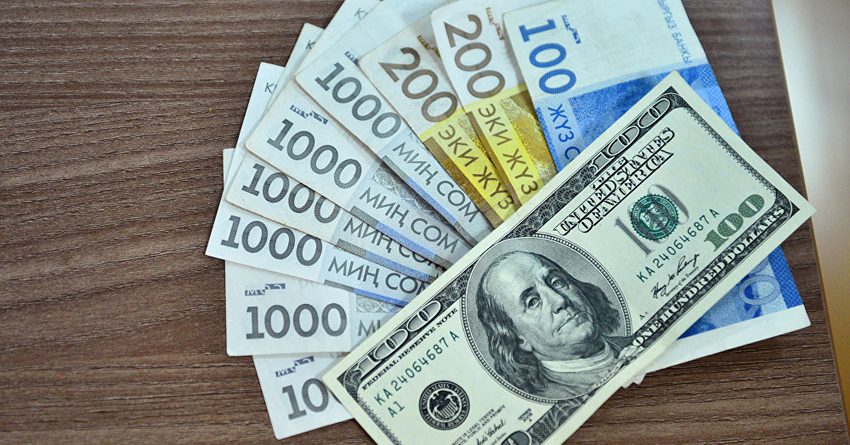
Members of Kyrgyzstan's Parliament, the Jogorku Kenesh, have proposed that the national currency, the som, be established as the only means of payment in the country. The draft bill establishes that the som must be used in all domestic transactions, except for those related to export and import. It is seen as a step to reduce Kyrgyzstan's dependence on foreign currency, and stabilize the country's financial system. The draft law emphasizes that using foreign currencies -- especially in real estate, vehicle purchasing, and lending transactions -- creates additional risks for citizens. Sharp fluctuations in exchange rates make it more difficult for borrowers to repay debts. Similar measures have also been taken in Turkmenistan, where using foreign currency for everyday payments is almost entirely outlawed. Iraq has banned all domestic transactions to strengthen and stabilize the local currency, the Iraqi dinar.

South Korea Helps Launch A New Payment System in Kyrgyzstan

On August 27, a Kyrgyz-Korean joint company, BC Card Kyrgyzstan, officially opened as a partnership between the leading South Korean companies BC Card and Smartro and the Interbank Processing Center of Kyrgyzstan. The chairman of Kyrgyzstan's Cabinet of Ministers, Akylbek Japarov, attended the opening ceremony and made the first payment in the BC Card Kyrgyzstan system. In his speech, Japarov emphasized the importance of this event for further developing the country's financial infrastructure. "The company was created to modernize and adapt the advanced payment processing system developed by BC Card Korea to the conditions of the financial market of Kyrgyzstan. The company's main objective is to ensure optimal processing of domestic payments using cards of international payment systems and managing the business of POS terminals and payment services within Kyrgyzstan," he said. The head of the Cabinet of Ministers added that in recent years, the government has consistently supported the development of non-cash payments in Kyrgyzstan. "The development of non-cash payments is not only a step towards modernizing our economy, but also towards strengthening financial security and increasing financial inclusion," Japarov stated.

Kyrgyzstan Seeks to Increase Production and Export of Fish

On August 23, Bakyt Torobayev,  Minister of Water Resources, Agriculture, and Processing Industry of Kyrgyzstan, attended ceremonies to launch the construction of two fish processing plants in the country’s northern Chui region. The first plant, to be built in the village of Leninskoye at the cost of over $4.3 million, will have an annual capacity is up to 3,000 tons of processed fish products (mainly trout) and up to 8,000 kg of black sturgeon caviar. When operational, the second in the village of Ak-Jol, will create 45 new jobs and have an annual production capacity of 1,000 tons of chilled trout, 1,000 tons of frozen trout, 800 tons of smoked fish, and 400 tons of dried fish. Kyrgyzstan currently produces about 30,000 tons of fish annually, of which only  5,000 tons are exported. Citing the fact that the country had conditions to produce 105 thousand tons and export 50 thousand tons of fish,  Torobayev recommended that emphasis be placed on the construction of processing enterprises. According to official statistics, in 2023, Kyrgyzstan produced 33,600 tons of fish and exported 5,556 tons of fish and fish products, mainly to Russia, Kazakhstan, Uzbekistan, and Lithuania. Fish (mainly trout) are produced in Kyrgyzstan at artificial ponds and fishery farms at lakes Issyk-Kul and Son-Kul.

National Bank of Kyrgyzstan Comments on Suspension of Money Transfers with Russia

In regard to the  suspension by some Kyrgyz banks of money transfers between Kyrgyzstan and Russia, the National Bank explained to The Times of Central Asia that second-tier banks are working to prevent the negative impact of international sanctions. “To minimize the risk of secondary sanctions, measures are taken to strengthen control over clients and counterparties, to conduct thorough checks to ensure that they are not on the sanctions lists,” said  representatives of the financial regulator, before adding that the National Bank is remotely supervising compliance with international sanctions. All commercial banks in Kyrgyzstan must check their counterparties in adherence to the policy “know your client,” and request documents from clients confirming the origin of funds. It should be noted that money transfers between Kyrgyzstan and Russia are still carried out through ruble details of other Russian banks, which have not fallen under sanctions. In addition, it is possible to transfer funds through money transfer systems. On June 12, 2024, the U.S. Treasury Department's Office of Foreign Assets Control (OFAC) added the Moscow Exchange, the Russian Center, and the National Settlement Depository National Cleari to its sanctions list. As a result, trading in the U.S. dollar and euro was halted at the Moscow Exchange. Then, eight commercial banks from Kyrgyzstan restricted their work to Russian money transfer systems. But after a few days, work with Russian-sanctioned banks was resumed. In April this year, Kyrgyzstan stopped accepting Russian MIR cards due to the risk of secondary sanctions. Later, the head of the Kyrgyz Cabinet of Ministers, Akylbek Japarov, said that once a processing center is created, they will continue to work with Russian banking systems. Currently, the Interbank Processing Center of Kyrgyzstan is serviced by a Latvian company providing work software.

Banks Suspend Transfers between Kyrgyzstan and Russia

More than a dozen banks in Kyrgyzstan have suspended money transfers to Russia to avoid falling under secondary sanctions, which could lead to blocked operations and loss of access to international financial markets. The list of banks involved includes large and regional institutions. By suspending transfers, the banks aimed to reduce risks associated with international payment systems such as SWIFT, which can be used to pressure financial institutions linked to Russia. The situation became more complicated after several Western countries began to monitor financial transactions related to Russia and apply sanctions to banks that continue such transactions. Nevertheless, some banks in Kyrgyzstan have found ways to maintain financial flows between the two countries by using transfers that are less dependent on international systems. For example, Optima Bank and Aiyl Bank employ alternative systems that are not subject to Western sanctions. Inter-country remittances play an essential role in the Kyrgyz economy, contributing to economic stability and supporting the well-being of many families. The imposition of restrictions could significantly impact the country, especially since numerous households in Kyrgyzstan depend on remittances from Russia for a significant portion of their income. In June, several banks in Kyrgyzstan suspended work with Russian money transfer systems amid the expansion of U.S. sanctions. At the time, Mbank explained that the temporary restriction was caused by “volatility of the exchange rate and possible sharp fluctuations in the currency market.” In addition to MBank, restrictions were imposed by Doscredobank, KICB, Keremet Bank, Kompanion Bank, RSK Bank, KCB Bank, and Bai-Tushum Bank, but later lifted by some to resume accepting transfers from Russia.

Better Buses Help Air Quality in Bishkek to Improve

Officials claim that the air quality in Kyrgyzstan’s capital, Bishkek, has significantly improved over the last two years due to the ongoing renewal of the municipal transport fleet, switching residential heating from coal to natural gas, and extinguishing the sanitary landfill near Bishkek that had burned for decades. Chyngyzbek Abdymalik Uulu, an atmospheric air specialist at the Kyrgyz Ministry of Natural Resources, Ecology, and Technical Supervision, told Birinchi Radio that the primary sources of air pollution in Bishkek were low-quality coal, exhaust gases from motor transport, and the burning of municipal solid waste at the city landfill. The official says that, in large part, the air quality has improved due to the decreasing number of minibuses on Bishkek streets. Over the past 30 years, "markhrutka" minibuses — mainly aged Mercedes minivans — have been the primary type of municipal transport in Bishkek, vastly surpassing in number the limited fleet of large buses and trolleybuses. Running on diesel, these old marshrutkas spew harmful gases into the atmosphere and congest city traffic, since they stop anywhere on demand. Abdymalik Uulu said more than 3,000 minibuses ran in the capital until 2022. After their number was reduced over the last two years, diesel fuel consumption decreased by 100 tons daily. The Bishkek municipality has now removed the minibuses from the central part of the city and replaced them with large buses running on liquefied natural gas. In 2023, Bishkek purchased a thousand large buses from China, which have been arriving in the capital city in batches over the past year. Today, the municipal fleet has 1,200 buses. In addition, by the end of 2024, the city will receive 100 12-meter-long buses, and 120 electric buses will arrive in the second quarter of 2025. Both officials and analysts agree that renewing the municipal transport fleet will improve the air quality in Bishkek. Abdymalik Uulu added that gasification is another reason for the improved air quality. To date, about 20,000 households have been connected to natural gas networks, which has decreased coal burning by 58,000 tons. Also, he said, all of Bishkek’s 74 large boiler houses that used to burn large amounts of coal daily have now been converted to electricity and natural gas. Finally, the Bishkek sanitary landfill, which burned for decades and released large volumes of harmful emissions, has been completely extinguished.