• KGS/USD = 0.01144 0%
  • KZT/USD = 0.00211 0%
  • TJS/USD = 0.10460 0.19%
  • UZS/USD = 0.00008 0%
  • TMT/USD = 0.28490 0%
  • KGS/USD = 0.01144 0%
  • KZT/USD = 0.00211 0%
  • TJS/USD = 0.10460 0.19%
  • UZS/USD = 0.00008 0%
  • TMT/USD = 0.28490 0%
  • KGS/USD = 0.01144 0%
  • KZT/USD = 0.00211 0%
  • TJS/USD = 0.10460 0.19%
  • UZS/USD = 0.00008 0%
  • TMT/USD = 0.28490 0%
  • KGS/USD = 0.01144 0%
  • KZT/USD = 0.00211 0%
  • TJS/USD = 0.10460 0.19%
  • UZS/USD = 0.00008 0%
  • TMT/USD = 0.28490 0%
  • KGS/USD = 0.01144 0%
  • KZT/USD = 0.00211 0%
  • TJS/USD = 0.10460 0.19%
  • UZS/USD = 0.00008 0%
  • TMT/USD = 0.28490 0%
  • KGS/USD = 0.01144 0%
  • KZT/USD = 0.00211 0%
  • TJS/USD = 0.10460 0.19%
  • UZS/USD = 0.00008 0%
  • TMT/USD = 0.28490 0%
  • KGS/USD = 0.01144 0%
  • KZT/USD = 0.00211 0%
  • TJS/USD = 0.10460 0.19%
  • UZS/USD = 0.00008 0%
  • TMT/USD = 0.28490 0%
  • KGS/USD = 0.01144 0%
  • KZT/USD = 0.00211 0%
  • TJS/USD = 0.10460 0.19%
  • UZS/USD = 0.00008 0%
  • TMT/USD = 0.28490 0%

Viewing results 43 - 48 of 919

Kyrgyzstan Intends to Reduce the Storage Period for Negative Credit Information

Kyrgyz authorities are moving to ease regulations surrounding credit history retention in an effort to stimulate the banking sector and provide indirect support to small and medium-sized enterprises. A draft law from the Ministry of Economy and Commerce has been submitted for public discussion. The proposed changes would reduce the retention period for negative credit information from five years to three, and for positive information from seven years to five. According to estimates by local economists, the credit portfolio of Kyrgyzstan’s commercial banks reached approximately $5.27 billion last year. The share of overdue loans stood at around $151 million, or about 2% of the total. The ministry believes that easing access to credit will help stimulate entrepreneurial activity. Broader borrowing opportunities could support business development, increase employment, and generate additional tax revenue. As of now, approximately 1.5 million Kyrgyz citizens have a credit history, of whom 302,000 have negative records, including nearly 200,000 individuals blacklisted by financial institutions. If the law is enacted, a substantial number of these citizens may regain access to formal banking services. Authorities also expect the reform to reduce reliance on shadow lending and curb dependence on microloans outside the official financial sector. Under the internal policies of most commercial banks, a loan delinquency of more than 90 days typically qualifies as negative credit history, severely diminishing a borrower's chances of securing new financing. The bill has already passed its first reading in parliament. Given that it has been approved by the relevant ministries and agencies, its eventual adoption appears likely.

Kyrgyzstan Launches Unified Digital Tax Platform

Almambet Shykmamatov, chairman of Kyrgyzstan’s State Tax Service (STS), has unveiled a new digital platform that consolidates all tax-related data into a single system. The automated tax analysis platform, Salyq Kuzot, enables online tracking of the tax status of every citizen and company operating in the country. According to Shykmamatov, tax officials previously had to manually collect data on tax payments, insurance contributions, and financial statements from multiple sources and agencies. With the launch of Salyq Kuzot, this information is now integrated into a unified system, significantly improving efficiency. During a demonstration of the system, the STS head showcased its functionality, including detailed reports on state budget revenues broken down by region, district, and city. The platform also allows for real-time identification of companies evading tax obligations. The launch of Salyq Kuzot comes amid a broader national effort to reduce bureaucracy across public administration. Since early last year, the National Institute for Strategic Studies of the Kyrgyz Republic (NISI) has led reforms aimed at streamlining citizens’ interactions with state institutions and improving the efficiency of government operations. As part of these reforms, redundant government bodies are being phased out. The National Statistical Committee of Kyrgyzstan, for example, has closed several regional offices, resulting in the layoff of approximately 100 employees. One of the most significant policy changes is a new regulation prohibiting ministries and agencies from requesting information directly from citizens if the data can be obtained through interagency cooperation. The measure is intended to speed up administrative processes and reduce the bureaucratic burden on the public.

Kyrgyzstan to Launch Unified Digital Tourism Platform to Attract Foreign Visitors

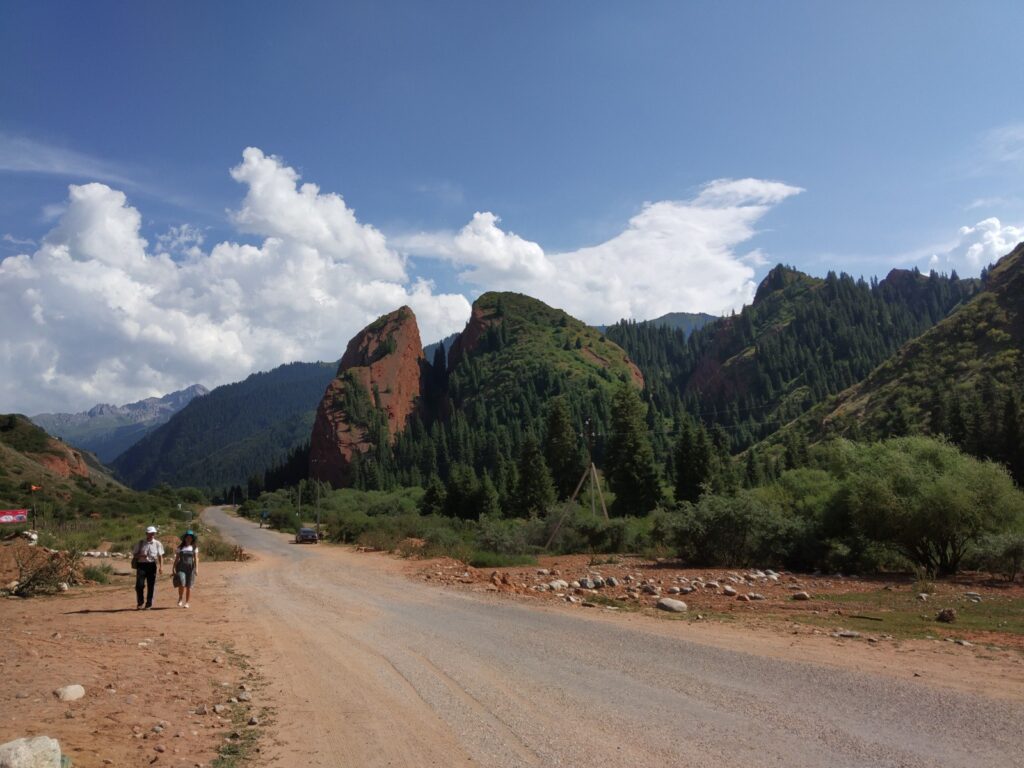
Kyrgyzstan is preparing to launch a unified Digital Tourism Platform designed to simplify travel procedures and strengthen the country’s appeal to foreign tourists. At a government meeting on January 26, Chairman of the Cabinet of Ministers Adylbek Kasymaliev pointed to long-standing structural challenges in the tourism sector, including fragmented services for visas, logistics, and insurance, as well as the absence of a centralized coordination mechanism. “Tourists should not face bureaucracy and language barriers at every stage. A single-window platform must integrate government services, private-sector offerings, and payment instruments from entry to exit,” Kasymaliev stated. He directed the Department of Tourism, the Ministry of Digital Development, and the Ministry of Finance, in coordination with the Tunduk State Portal of Electronic Services, to secure funding and oversee the platform’s technical implementation. Tourism’s economic contribution is steadily increasing. In 2025, the sector accounted for 4.3% of Kyrgyzstan’s GDP, with nearly 10 million tourist arrivals, according to Adilet Januzakov, Director of the Tourism Support and Development Fund, speaking on Sputnik Radio. Januzakov noted a shift in government policy from maximizing tourist numbers to improving infrastructure and service standards. The aim is to create comfortable conditions for a wide range of travel experiences, from ecotourism and camping to premium hospitality. Key initiatives include the construction of an Olympic village on Lake Issyk-Kul, the development of ski resorts and amusement parks, and the continued digitalization of tourist routes, such as integrating eco-trails into the 2GIS navigation system. Authorities also plan to implement a national classification system for hotels and guesthouses, designed to increase market transparency and provide consistent service quality for visitors. According to the National Statistical Committee, revenue from foreign tourists exceeded $813 million between January and September 2025, making tourism one of Kyrgyzstan’s key non-resource sectors.

Electricity Generation in Kyrgyzstan Stagnates as Demand Surges

Electricity consumption in Kyrgyzstan has surged by nearly 25% over the past five years, rising from 15.4 billion kWh in 2020 to 19.3 billion kWh in 2025. However, electricity generation has remained virtually flat, increasing by just 0.1 billion kWh during the same period, according to data presented at the Ministry of Energy’s board meeting on January 23. The widening gap between supply and demand is attributed to sustained economic growth, the launch of new industrial facilities, and delays in commissioning new power infrastructure. Compounding the issue, hydropower output, the backbone of Kyrgyzstan’s energy mix, is increasingly constrained by declining water levels linked to climate change. In 2025, Kyrgyzstan's electricity generation structure was as follows: 12.9 billion kWh - large hydropower plants 0.223 billion kWh - small hydropower plants 0.234 billion kWh - mini-hydro, solar, and wind power plants 2.01 billion kWh - thermal power plants To meet domestic demand, the country imported 3.8 billion kWh of electricity from neighboring states. A key long-term solution lies in the construction of the Kambarata-1 hydropower plant, a strategic regional project being developed in cooperation with Kazakhstan and Uzbekistan. Once completed, the plant is expected to have a capacity of 1,860 MW and generate 5.6 billion kWh annually. In 2025, Kyrgyzstan updated the project’s feasibility study, originally prepared in 2014, finalized the dam type, and signed a contract with the tender winner. The World Bank is considering up to $1.5 billion in financing, while nine international donors have expressed interest in contributing an additional $2.5 billion. In parallel, the country is expanding its renewable energy portfolio. Eight small hydropower plants with a combined capacity of 44.6 MW and solar plants totaling 102 MW were commissioned in 2025. Investment agreements have also been signed for the construction of five solar plants and one wind farm with a total capacity of 3,150 MW. These projects represent a planned investment of approximately $4.2 billion. Additionally, on January 23, the Cabinet of Ministers signed a memorandum of understanding with China’s Kyrgyzstan Reclaim Co. Ltd. to build a 200 MW cascade of small hydropower plants on the Tar River in the Osh region. The investment is projected at around $300 million. Officials say these projects are aimed at boosting generation capacity and enhancing Kyrgyzstan’s long-term energy resilience amid growing domestic consumption.

Kyrgyzstan Turns to Coal Power Amid Electricity Shortages

Kyrgyzstan is turning to coal-fired electricity generation as a key strategy to address its chronic energy deficits, particularly acute during winter, when heating demand spikes and reliance on costly imports increases. While the country continues to expand hydropower capacity, the government is emphasizing the role of thermal power as a stable, year-round energy source. Unlike hydropower, which is vulnerable to fluctuating river flows worsened by climate change, coal-fired generation offers a more consistent electricity supply. On January 22, Energy Minister Taalaibek Ibrayev met with representatives of an international consortium that includes the German consulting group GPRC, along with NRP and KCG. The minister proposed the construction of thermal power plants at domestic coal sites. According to the Ministry of Energy, the consortium has expressed its intention to design, finance, and build three coal-fired power plants, each with a capacity of 350 MW for a total of 1,050 MW. The proposed facilities would utilize clean coal technologies aligned with international environmental standards. Before construction begins, specialists will assess coal quality and geological conditions at the proposed sites. Kyrgyzstan’s coal reserves are estimated at around 2 billion tons. In 2024, the country produced 4.396 million tons of coal, with nearly half mined in the Naryn region and the rest in Batken, Osh, and Jalal-Abad. The country’s largest coal deposit is Kara-Keche, a lignite mine in Naryn operated by the state-owned Kyrgyzkomur. In June 2025, Electric Stations OJSC, which generates about 86% of Kyrgyzstan’s electricity, announced a tender to build a 1,200 MW coal-fired power plant near Kara-Keche. The project was structured in two phases: the first involving two 300 MW units at a cost of $934.38 million, and the second, a 600 MW unit valued at $370.6 million. The proposed plant was expected to generate 7.8 billion kWh annually. However, the tender was declared invalid in September 2025 due to incomplete documentation from bidders. Despite the setback, the Ministry of Energy remains committed to attracting international investors, viewing coal-fired power as a transitional solution until long-term hydropower projects are fully operational. Kyrgyzstan exported 1.1 million tons of coal in 2024, valued at $52.7 million. Uzbekistan was the largest buyer, while exports to China surged to 118,200 tons, up from just 13,000 tons in 2023. As electricity demand rises and hydropower faces increasing climate-related constraints, officials see coal-based generation as a pragmatic measure to stabilize the national grid and bolster energy security during a critical transition period.

Central Asia Launches Regional Electricity Market with World Bank Support

On January 22, the World Bank’s Board of Executive Directors approved the 10-year Regional Electricity Market Interconnectivity and Trade (REMIT) Program, an ambitious initiative to establish Central Asia’s first regional electricity market. The program aims to boost cross-border electricity trade, expand transmission capacity, and lay the foundation for large-scale renewable energy integration across the region. Electricity demand in Central Asia is projected to triple by 2050 under a business-as-usual scenario. Yet electricity trade in the region currently accounts for only 3% of total demand. The REMIT Program seeks to harness Central Asia’s diverse and complementary energy resources: hydropower in Kyrgyzstan and Tajikistan, thermal power from coal and natural gas in Kazakhstan, Turkmenistan, and Uzbekistan, and the region’s rapidly expanding solar and wind potential. Over the next decade, REMIT aims to: Increase regional electricity trade to at least 15,000 GWh annually, enough to supply millions of consumers Triple regional transmission capacity to 16 GW Enable up to 9 GW of clean energy integration The initiative is designed to enhance regional energy security, reduce power outages, lower electricity costs, and promote a more resilient and interconnected grid system. Total indicative financing for the program is $1.018 billion, to be deployed in three phases. These funds will support the creation and operation of a regional energy market, boost transmission infrastructure, introduce digital technologies to improve grid reliability, and strengthen regional energy institutions and coordination mechanisms. Investments are also expected to generate both construction-related employment and high-skilled jobs tied to market operations. In the program’s first phase, Kyrgyzstan, Tajikistan, Uzbekistan, and the Central Asian Countries’ Coordinating Dispatch Center (CDC) Energia will benefit from grants and concessional financing totaling $143.2 million. This comprises $140 million from the World Bank’s International Development Association (IDA) and $3.2 million from the Central Asia Water and Energy Program (CAWEP). “The REMIT Program supports Central Asian countries’ ambition to deepen energy cooperation and create a regional electricity market,” said Najy Benhassine, World Bank Regional Director for Central Asia. “This will enable more efficient use of energy resources, including cross-border deployment of clean energy, improve access to reliable and affordable electricity, and support jobs. By 2050, stronger regional connectivity could generate up to $15 billion in economic benefits.” Charles Cormier, World Bank Regional Infrastructure Director for Europe and Central Asia, added that REMIT will advance energy security and unlock private sector investment. “The first phase alone is expected to enable about 900 MW of new clean energy capacity, leveraging $700 million in private investment. This will pave the way for a more resilient and interconnected power system across this dynamic region,” he said. CDC Energia will lead the implementation of market and institutional activities, while national transmission companies will be responsible for infrastructure investments.