• KZT/USD = 0.00215
  • TJS/USD = 0.10810
  • UZS/USD = 0.00009
  • TMT/USD = 0.29760
  • KZT/USD = 0.00215
  • TJS/USD = 0.10810
  • UZS/USD = 0.00009
  • TMT/USD = 0.29760
  • KZT/USD = 0.00215
  • TJS/USD = 0.10810
  • UZS/USD = 0.00009
  • TMT/USD = 0.29760
  • KZT/USD = 0.00215
  • TJS/USD = 0.10810
  • UZS/USD = 0.00009
  • TMT/USD = 0.29760
  • KZT/USD = 0.00215
  • TJS/USD = 0.10810
  • UZS/USD = 0.00009
  • TMT/USD = 0.29760
  • KZT/USD = 0.00215
  • TJS/USD = 0.10810
  • UZS/USD = 0.00009
  • TMT/USD = 0.29760
  • KZT/USD = 0.00215
  • TJS/USD = 0.10810
  • UZS/USD = 0.00009
  • TMT/USD = 0.29760
  • KZT/USD = 0.00215
  • TJS/USD = 0.10810
  • UZS/USD = 0.00009
  • TMT/USD = 0.29760
30 August 2026

Viewing results 37 - 42 of 770

Kyrgyzstan Seeks Alternative Fuel Suppliers as Russian Export Restrictions Hit

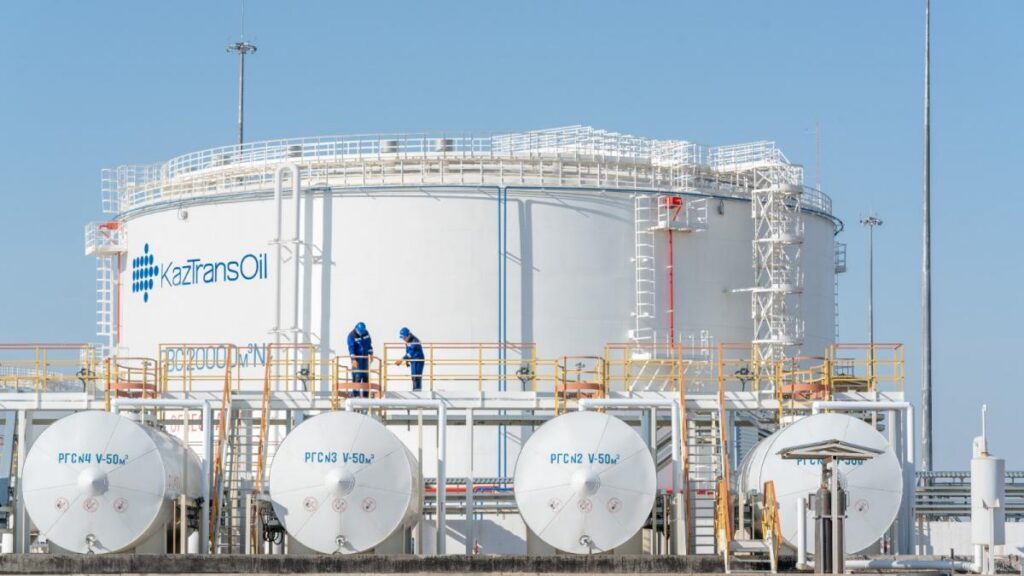
Russia’s restrictions on fuel exports are expected to put pressure on Kyrgyzstan, which remains heavily dependent on Russian petroleum supplies, First Deputy Prime Minister Daniyar Amangeldiev has said. Amangeldiev told 24.kg that the government had already moved to extend the existing duty-free fuel import mechanism in order to help stabilize the domestic market. “This issue has already been agreed within the ‘group of five’,” he said, referring to the member states of the Eurasian Economic Union. He said the fuel market remained stable for now and assured the public that the government was taking steps to prevent shortages of gasoline, diesel and aviation fuel. The comments followed an emergency meeting chaired by Prime Minister Adylbek Kasymaliev on fuel supply security, during which officials reviewed stock levels and import flows. Government officials said geopolitical tensions and disruptions to logistics were continuing to affect fuel markets and add pressure on prices. Authorities are also accelerating efforts to diversify fuel imports. Participants in the meeting said new supply channels were already being negotiated, with some concrete agreements reached. Kasymaliev ordered daily monitoring of fuel supplies and weekly coordination meetings to ensure a rapid response to emerging risks. On July 1, Kyrgyzstan’s Energy Ministry said it had launched talks with several countries to expand fuel imports and reduce dependence on a single supplier. Official requests have been sent to authorities in Russia, Kazakhstan, Belarus, Azerbaijan, Uzbekistan, and Turkmenistan as Bishkek seeks to secure additional supplies. The ministry said Kyrgyzstan imports the vast majority of its fuel and remains vulnerable to fluctuations in global oil prices, geopolitical instability in the Middle East, and disruptions to international logistics. Officials added that domestic fuel reserves are currently sufficient and that deliveries under previously signed contracts are continuing. The Energy Ministry said it is conducting daily monitoring together with the anti-monopoly regulator and holding consultations with fuel traders on logistics, pricing and stockpiling. As previously reported by The Times of Central Asia, the impact of Russia’s fuel restrictions is already being felt across the region. Kyrgyzstan has recently reported supply disruptions involving premium AI-95 and AI-98 gasoline. Kanatbek Eshatov, head of the country’s Association of Oil Traders, said some filling stations had experienced interruptions because of reduced and irregular Russian deliveries, combined with seasonal demand. Kyrgyzstan receives more than 90% of its gasoline imports from Russia. Between January and May 2026, Russia supplied more than 251,000 tons of gasoline, 235,150 tons of diesel fuel, and 48,150 tons of jet fuel to Kyrgyzstan, according to industry estimates.

Kyrgyzstan Nears Limit on Duty-Free Electric Vehicle Imports for 2026

Kyrgyzstan has almost exhausted its 2026 quota for duty-free electric vehicle (EV) imports under the Eurasian Economic Union (EAEU), showing rapid growth in EV demand and re-export activity in the region. As of this week, 14,014 of the 15,000 vehicles allowed under this year’s quota had already been imported, leaving just 986 duty-free slots available, customs data showed. Kyrgyzstan, a member of the EAEU, benefits from an annual quota allowing duty-free imports of electric vehicles alongside fellow member states Armenia, Belarus, Kazakhstan, and Russia. The State Customs Service operates a real-time online counter showing quota use, which is updated automatically when EVs are cleared under the exemption scheme. Officials warned that once the quota is fully used, imported electric vehicles will face a 15% customs duty under the EAEU’s common external tariff. In 2025, Kyrgyzstan’s quota was set at 10,000 vehicles and was fully exhausted by September. The number of electric vehicles in Kyrgyzstan has risen steadily, supported by a separate value-added tax exemption. Official data show that more than 200 EVs are imported into the country each day. Even so, electric vehicles still account for only about 0.8% of Kyrgyzstan’s total vehicle fleet, or roughly 15,200 cars, according to the Ministry of Natural Resources, Ecology and Technical Supervision. China remains the main supplier of EVs to Kyrgyzstan. However, industry analysts say many Chinese-made vehicles imported into Kyrgyzstan are later re-exported to Russia. According to Sergey Tselikov, head of the Russian automotive analytics agency Autostat, Kyrgyzstan remains Russia’s second-largest channel for new passenger car imports after China. Tselikov said 84% of vehicles imported into Russia via Kyrgyzstan were manufactured in China, including Chinese, European, and Japanese brands. Autostat data show Kyrgyzstan was the largest supplier of new passenger cars to Russia among EAEU member states in 2025, with 53,600 vehicles, compared with 17,100 from Belarus, 11,000 from Kazakhstan, and 344 from Armenia. The figures show Kyrgyzstan’s growing role as a regional trade hub for Chinese-made vehicles entering the wider Eurasian market.

New Kyrgyzstan Ship Registry Raises Oversight Questions

Kyrgyzstan is preparing to enter the global ship-registration market despite having no direct access to the sea, a move that could generate revenue but also expose the country to new regulatory and reputational risks. Kyrgyz lawmakers have adopted legislation allowing merchant ships to register under the national flag, giving the landlocked Central Asian country a potential foothold in an industry normally associated with maritime powers. Lawmakers approved the Merchant Shipping Code and related legislation in late June, including provisions for Kyrgyzstan's accession to 14 international conventions developed under the International Maritime Organization (IMO). The Ministry of Economy and Commerce says the code gives Kyrgyzstan the legal tools to regulate merchant shipping and formalizes its right, under international law, to access the seas and participate in maritime trade, despite having no coastline. In practical terms, the legislation allows seagoing vessels to be registered under the Kyrgyz flag and lays the groundwork for an International Ship Register. It also sets out rules on maritime safety, seafarers’ rights, insurance, and shipowner liability. The move follows Kyrgyzstan’s accession to the IMO in 2024, when it became the organization’s 176th member state. Officials have presented the legislation as a way to give Kyrgyz-registered ships international recognition, attract investment, and create opportunities for Kyrgyz companies in global shipping. The more immediate use case is simpler: a ship registry can generate fees by allowing foreign-owned vessels to sail under a national flag. According to 24.kg, ministry officials told parliament that the registry could eventually bring Kyrgyzstan $10 million-$15 million a year, though they said exact calculations were not yet possible because the number and tonnage of future vessels were unknown. That model is legal and not unusual. Mongolia, another landlocked Asian state, operates a ship registry and was cited by Deputy Economy Minister Sultan Akhmatov when he presented the draft code to lawmakers. But several deputies were unconvinced. Dastanbek Dzhumabekov said the government needed to explain the proposal in clearer language, asking what the code would actually give the country and whether it would become another document that “gathers dust.” Another concern is control. In May, Dzhumabekov warned that if a vessel sailing under the Kyrgyz flag carried sanctioned goods, the result could be a damaging international scandal. Another deputy, Bolot Sagynayev, later claimed that open shipping databases already showed more than 100 vessels sailing under the Kyrgyz flag. Akhmatov said Kyrgyzstan had issued no such permissions, because the maritime administration and ship register had not yet been created, and suggested the listings could be fraudulent. The registry could prove attractive to foreign shipowners looking for a new flag jurisdiction. Open ship registries, often described as “flags of convenience,” are widely used in global shipping and are not illegal. But they have also come under scrutiny because vessels involved in sanctions evasion and shadow-fleet activity often change flags, obscure ownership, or rely on weak registry oversight. There is no evidence that Kyrgyzstan’s new registry is intended for sanctions-busting. But if the country builds a fleet on paper rather...

Turkish Company Launches Construction of $3 Billion Hydropower Cascade in Kyrgyzstan

Construction of the Kazarman cascade of hydroelectric power plants on Kyrgyzstan’s Naryn River officially began on June 25, marking one of the country’s largest energy infrastructure projects since independence. The project, located in the Jalal-Abad region, includes three hydropower plants, Ala-Buga, Kara-Bulun-1, and Kara-Bulun-2, with a combined installed capacity of 912 megawatts and expected annual electricity generation of more than 3.75 billion kilowatt-hours. The cascade is being developed under an investment agreement with Orta Asya Investment Holding, a subsidiary of Turkey’s İhlas Holding, with total investments estimated at $3 billion. At the official launch ceremony, Kyrgyz President Sadyr Japarov described the Kazarman cascade as one of the largest energy projects in the country’s modern history. Japarov said Kyrgyzstan is accelerating hydropower and renewable energy development to strengthen energy security and reduce dependence on electricity imports. “Without developing the electric power industry, it is impossible to ensure the country’s sustainable development,” Japarov said. He noted that Kyrgyzstan imported about 3 billion kWh of electricity during winter in 2020, a figure that has now risen to 4 billion kWh, reflecting growing domestic demand. According to Japarov, electricity consumption continues to outpace new generation capacity despite ongoing construction of small and medium-sized hydropower plants, as well as solar and wind energy facilities. The president said the increase in demand is driven by rapid industrial expansion, with hundreds of new factories and social infrastructure facilities commissioned annually in recent years. Construction of the Kazarman cascade is scheduled for completion by 2031. Japarov said that once the Kazarman cascade and the strategic Kambarata-1 Hydropower Plant become operational, Kyrgyzstan expects to fully cover domestic electricity demand and begin exporting surplus energy to neighboring countries. Kambarata-1, which is being developed jointly with Kazakhstan and Uzbekistan, will have an installed capacity of 1,860 MW and annual generation of 5.6 billion kWh. In addition to the Kazarman project, İhlas Holding is also involved in building a 250 MW gas-fired combined heat and power plant in Bishkek. The company is further expanding its energy footprint in Kyrgyzstan through the Suusamyr-Kokomeren hydropower cascade, for which the Eurasian Development Bank and Orta Asya Investment Holding signed a feasibility study agreement in September 2025. That project will include three hydropower plants with a combined capacity of 1,305 MW. Under the agreements, Orta Asya Investment Holding will operate the facilities for 20 years, while Kyrgyzstan guarantees the purchase of the generated electricity.

Kyrgyzstan Launches Accommodation Classification System

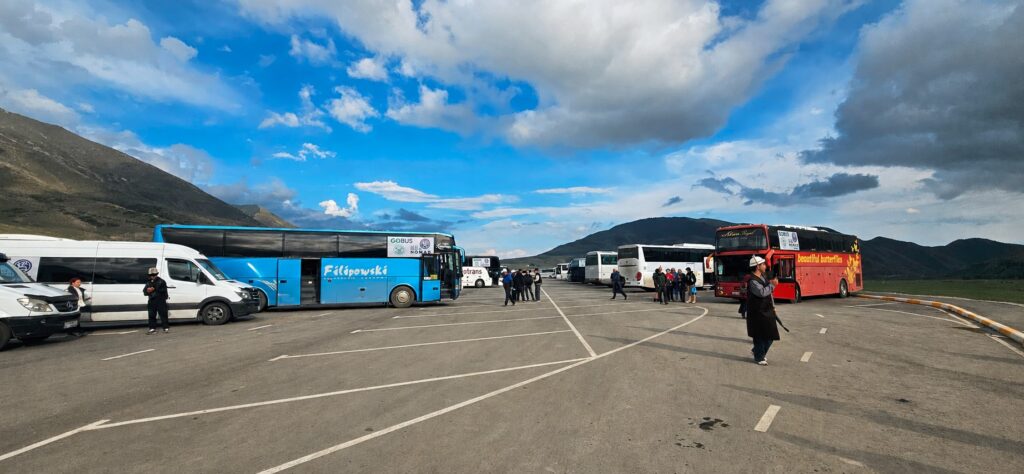
Kyrgyzstan has begun accepting applications from hotels, guesthouses, yurt camps, and resorts for a new accommodation classification system aimed at improving service quality and increasing transparency in the country’s tourism sector. The State Agency for Tourism Development said the system will set common standards for accommodation providers and make the market more transparent. It is also intended to increase confidence among tourists. Applications can be submitted online, after which businesses must provide access to an expert for assessment. The classification will include three categories: “stars” for hotels and resorts, “edelweisses” for guesthouses, and “tunduks” for yurt camps. A tunduk is the central wooden crown of a traditional Kyrgyz yurt. The system is voluntary. For businesses, the new classification offers a way to officially confirm their service level, build trust with guests and partners, use the assigned category in advertising, and be included in the Register of Classified Accommodation Facilities. After receiving certificates, accommodation providers will be allowed to display their category on signs, websites, and booking platforms. Tourism is one of Kyrgyzstan’s key economic sectors. Eduard Kubatov, director of the State Agency for Tourism Development, said the country expects to receive about 12 million tourists in 2026. In 2025, about 10 million tourists visited Kyrgyzstan, while the tourism industry’s contribution to the economy exceeded $1 billion. According to Kubatov, tourism currently accounts for more than 5% of GDP, with the figure expected to rise to 7.5% in the coming years.

Kyrgyzstan Approves Chinese Loan for CKU Railway

Kyrgyzstan’s parliament has approved in the first reading a bill ratifying a preferential loan agreement with the Export-Import Bank of China to help finance the country’s share in the construction of the China-Kyrgyzstan-Uzbekistan (CKU) railway, one of Central Asia’s largest transport infrastructure projects. The CKU railway is a flagship regional connectivity initiative designed to improve trade routes between China, Central Asia, and beyond. Construction officially began on December 27, 2024, in Kyrgyzstan’s Jalal-Abad region. Once completed, the 523-kilometer railway will connect Kashgar in China with Torugart, Makmal, and Jalal-Abad in Kyrgyzstan before continuing to Andijan in Uzbekistan. The route is expected to carry up to 15 million tons of cargo annually. The project is particularly significant because neither Kyrgyzstan nor Uzbekistan currently has a direct rail connection with China. At present, Kazakhstan is the only Central Asian country with such a link. Construction is being managed by China-Kyrgyzstan-Uzbekistan Railway Company LLC, a joint venture established by the three participating countries. The railway is expected to cost $4.7 billion. About half will be financed through a 35-year Chinese loan to the joint project company, which will be responsible for repayment. The remaining $2.3 billion will be contributed as equity, with China holding 51%, while Kyrgyzstan and Uzbekistan will each contribute 24.5%. According to Kyrgyzstan’s Deputy Minister of Transport and Communications Almaz Turgunbaev, Kyrgyzstan will use a $304.5 million preferential loan from the Export-Import Bank of China to finance half of its contribution to the joint company, which will oversee the railway project. Kyrgyzstan’s total share in the project amounts to roughly $609 million, with half funded directly by the state budget and the rest through borrowed funds. The loan has a term of 25 years, including a five-year grace period, with an annual interest rate of 1.5%. According to Kyrgyzstan's Finance Ministry, the grant element of the loan stands at 35.46%. Officials said the funds will be used exclusively to finance Kyrgyzstan’s equity contribution to the joint railway company and cover construction costs. As of January 31, 2026, Kyrgyzstan’s debt to Eximbank stood at about $1.5 billion, making China the country’s largest external creditor. The Kyrgyzstan section of the railway will stretch more than 304 kilometers and is considered the most technically challenging part of the project. It will include 50 bridges and 29 tunnels with a combined length of about 120 kilometers, meaning around 40% of the route inside Kyrgyzstan will consist of tunnels and bridges. The railway is expected to improve regional logistics by creating a shorter trade route between China and Europe via Central Asia, bypassing existing northern corridors.