

• KGS/USD = 0.01143 0%
  • KZT/USD = 0.00216 0%
  • TJS/USD = 0.10684 -0.28%
  • UZS/USD = 0.00008 0%
  • TMT/USD = 0.28571 0%
  • KGS/USD = 0.01143 0%
  • KZT/USD = 0.00216 0%
  • TJS/USD = 0.10684 -0.28%
  • UZS/USD = 0.00008 0%
  • TMT/USD = 0.28571 0%
  • KGS/USD = 0.01143 0%
  • KZT/USD = 0.00216 0%
  • TJS/USD = 0.10684 -0.28%
  • UZS/USD = 0.00008 0%
  • TMT/USD = 0.28571 0%
  • KGS/USD = 0.01143 0%
  • KZT/USD = 0.00216 0%
  • TJS/USD = 0.10684 -0.28%
  • UZS/USD = 0.00008 0%
  • TMT/USD = 0.28571 0%
  • KGS/USD = 0.01143 0%
  • KZT/USD = 0.00216 0%
  • TJS/USD = 0.10684 -0.28%
  • UZS/USD = 0.00008 0%
  • TMT/USD = 0.28571 0%
  • KGS/USD = 0.01143 0%
  • KZT/USD = 0.00216 0%
  • TJS/USD = 0.10684 -0.28%
  • UZS/USD = 0.00008 0%
  • TMT/USD = 0.28571 0%
  • KGS/USD = 0.01143 0%
  • KZT/USD = 0.00216 0%
  • TJS/USD = 0.10684 -0.28%
  • UZS/USD = 0.00008 0%
  • TMT/USD = 0.28571 0%
  • KGS/USD = 0.01143 0%
  • KZT/USD = 0.00216 0%
  • TJS/USD = 0.10684 -0.28%
  • UZS/USD = 0.00008 0%
  • TMT/USD = 0.28571 0%

Viewing results 283 - 288 of 1084

Iran–Israel War Highlights Central Asia as Zone of Strategic Stability

The explosive conflict between Iran and Israel, including coordinated U.S. strikes on Iranian nuclear infrastructure, has drawn global attention to the Persian Gulf and Levant. The escalatory spectacle, however, has blinded most observers to a quieter structural shift. This is the rising indispensability of Central Asia, including its linkages with the South Caucasus. Unaligned in rhetoric and untouched by spillover, Central Asia's very stability quietly threw into relief its increasing centrality to Eurasian energy and logistics calculations. As maritime chokepoints came into question and ideological rhetoric became more inflamed, Central Asia offers a reminder that the most valuable nodes in a network are the ones that continue operating silently and without disruption. Neither Israel nor Iran has real operational depth in Central Asia, and this has made a difference. Unlike Lebanon, Iraq, or Yemen — where proxy networks or ideological leverage allowed Tehran to externalize confrontation — no such mechanisms exist east of the Caspian Sea. Iran’s efforts in Tajikistan, grounded in shared linguistic heritage and periodic religious diplomacy, today remain cultural and informational rather than sectarian and clientelist. The influence of Iran's Islamic Revolutionary Guard Corps (IRGC) in Central Asia is minimal; Israeli presence, while diplomatically steady in places like Kazakhstan and Uzbekistan, is neither controversial nor militarized. There are no significant arms flows or dual-use infrastructure for either side to use. As a result, Central Asia has remained untouched by the conflict. Although the Iran–Israel conflict is relatively geographically localized, it has shed light on global systems far beyond the immediate zone of combat. Although not so far from the missile trajectories and nuclear facilities, Central Asia and the South Caucasus are remarkably insulated from their effects. Rather than becoming another theater of contestation, they have demonstrated their value as stabilizing elements at a time of heightened geostrategic volatility. It is no longer optional to take into account the Central Asian space, which geoeconomically includes Azerbaijan, now a permanent fixture at the region's summits. As the war now produces a phase of reactive adaptation in international geoeconomics and diplomacy, the region has become a control parameter of the international system rather than a fluctuating variable dependent upon it. The Iran–Israel conflict has drawn new attention to the vulnerability of maritime energy corridors, especially the Strait of Hormuz, through which a fifth of the world’s oil passes. While contingency planning has focused on naval logistics and airpower deterrents in the Gulf, the Eurasian interior has remained materially unaffected, reflecting its structural indispensability. Central Asia and the South Caucasus, particularly Kazakhstan and Azerbaijan, offer existing and potential overland alternatives that bypass maritime chokepoints entirely. Kazakhstan’s oil continues to flow via the Caspian Pipeline Consortium (CPC) pipeline to the Black Sea, while Azerbaijan’s infrastructure, anchored by the Baku–Tbilisi–Ceyhan (BTC) corridor, links Caspian energy to Mediterranean terminals. These routes are not replacements for Persian Gulf volumes, but, as redundancies, they acquire significance as stabilizing arteries as well as increased relevance in moments of system stress. The war has thus sharpened a fact...

World Bank: Over 65,000 Premature Deaths a Year in Central Asia Linked To Air Pollution

Air pollution remains one of the most pressing environmental and public health challenges in Central Asia, with significant consequences for human life and regional economies. A new World Bank assessment highlights the scale of the crisis, linking poor air quality to more than 65,000 premature deaths in 2021 across the region. The report identifies pollution from fossil fuel combustion, especially for heating and transportation, as a major contributor to declining air quality in both urban and rural areas. Transboundary sand and dust storms are compounding the problem, affecting multiple countries simultaneously. In many Central Asian cities, concentrations of fine particulate matter (PM2.5) exceed safe limits by a wide margin. During the winter, levels can spike to six to twelve times higher than the World Health Organization’s recommended thresholds. The economic burden is also staggering: the annual health costs associated with air pollution are estimated at $15-21 billion, representing 3-5% of the region’s GDP in 2022. Human-Caused Emissions Dominate According to experts, 50-80% of PM2.5 exposure is due to human activity, primarily the burning of solid fuels for heating in households and small businesses. While natural dust is a contributing factor in some areas, anthropogenic sources remain the dominant driver. The World Bank argues that this crisis can be mitigated with the right policy interventions. Effective strategies include reducing emissions from household heating, traffic, and industrial operations, as well as expanding urban green spaces. To better coordinate efforts, the Bank advocates for an “airshed approach”, a governance model that promotes joint responsibility between national and local authorities to improve air quality. Additional recommendations include strengthening air quality laws and monitoring systems, updating standards, raising public awareness, and enhancing cross-border cooperation among Central Asian states. Impact on Children A separate report by UNICEF underscores the disproportionate toll air pollution takes on children. In 2021, approximately 6,441 children and teenagers across Europe and Central Asia died from air pollution-related causes, 85% of them under the age of one. UNICEF stressed that these deaths were entirely preventable. Experts maintain that improving air quality could yield wide-ranging benefits, including increased productivity, reduced healthcare costs, and enhanced quality of life. They urge governments to integrate air quality management into climate and development plans to unlock additional financial and technical assistance.

South Korea to Support Electric Transport Infrastructure Development in Bishkek

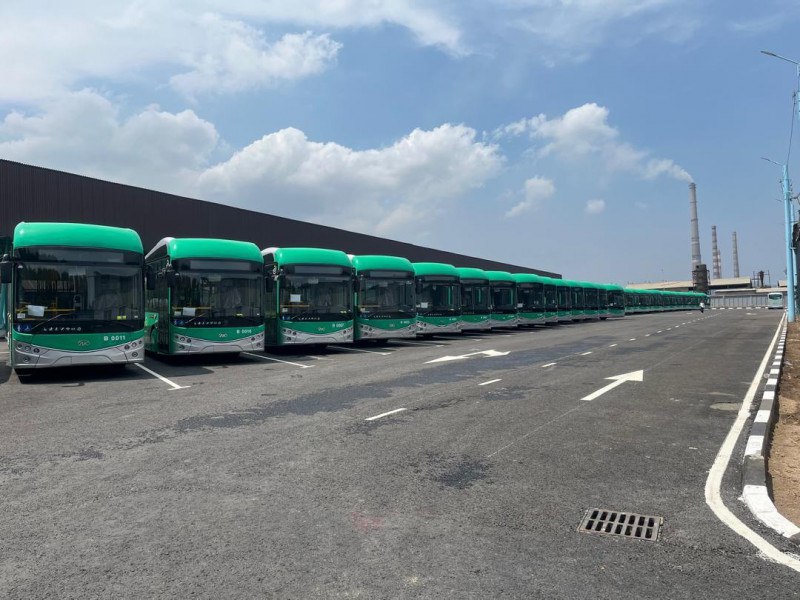
South Korean companies will assist Bishkek in building a modern charging infrastructure for electric public transport, following agreements reached between Kyrgyz Deputy Minister of Economy and Trade Sanzhar Bolotov and representatives of the Korea Environmental Transport Association, along with several private firms. The collaboration aims to jointly develop, implement, and operate a state-of-the-art network of charging stations for electric buses in the Kyrgyz capital. It also includes the introduction of improved environmental practices. “The South Korean side expressed its readiness not only to help with infrastructure, but also to transfer to Bishkek expert knowledge and technology in the field of eco-friendly transport, as well as to conduct extensive information campaigns to promote electric transport among the population,” the Kyrgyz Ministry of Economy and Trade stated. The agreement also encompasses a range of environmental initiatives. South Korean experts will assist Bishkek in improving air quality and reducing carbon emissions, critical objectives for a city frequently plagued by severe air pollution, particularly in the autumn and winter months. An important component of the agreement is the training of young specialists in South Korea. “Particular attention will be paid to the formation of a system of interaction between industry and the academic community, which will ensure the employment of trained specialists and the development of local expertise in the field of charging infrastructure operation,” the ministry added. Bishkek has pursued a consistent strategy of replacing traditional public transport with electric alternatives. Initially, the city phased out route taxis, replacing them with buses powered by gas and petrol. More recently, city authorities purchased 120 electric buses manufactured in China, with some units already delivered, through a project in collaboration with the Asian Development Bank. Concurrently, the city has begun phasing out its aging trolleybus fleet, a move that has sparked public debate. The infrastructure previously used for trolleybuses is being repurposed for the electric bus network. However, the process has faced delays, and several tenders for modifying the existing contact network have been cancelled. Starting in 2025, the popular Ala-Archa Nature Park will ban entry for vehicles with internal combustion engines. Tourists will be transported exclusively by municipal electric buses or allowed to use their own electric vehicles.

Former Kyrgyz Prime Minister Proposes Special Status for Citizens in Russia

At the St. Petersburg International Economic Forum (SPIEF-2025), Temir Sariyev, head of the Kyrgyz Chamber of Commerce and Industry and former prime minister, proposed granting Kyrgyz citizens a special status in Russia. The statement sparked mixed reactions in both Moscow and Bishkek. Speaking at the Kyrgyzstan-Russia business dialogue, Sariyev, who was involved in Kyrgyzstan’s accession negotiations to the Eurasian Economic Union (EAEU), highlighted Bishkek’s consistent political and economic support for Moscow. He drew on historical ties, citing Kyrgyz support during the Great Patriotic War. “If we recall the Great Patriotic War, it was the 28 Panfilov Guardsmen who defended Moscow. It was a turning point. When the special military operation began, the first to extend a helping hand, without fear, was the Kyrgyz Republic,” Sariyev said, referring to the Russian invasion of Ukraine. He proposed exploring the possibility of granting Kyrgyz migrants in Russia a special status, citing longstanding bilateral ties. However, the initiative met resistance in the Russian State Duma. Konstantin Zatulin, First Deputy Chairman of the Duma Committee on CIS Affairs, dismissed the proposal, noting that Kyrgyz citizens already enjoy considerable privileges under the EAEU framework, such as visa-free entry, the right to work without a permit, and exemption from patent requirements. “What additional special status could we be talking about? It is impractical. Kyrgyzstan is already in a more advantageous position than other Central Asian countries that are not members of the Union,” Zatulin said. Pushback also came from within Kyrgyzstan. Deputy Prime Minister Edil Baisalov criticized both Sariyev's proposal and the broader outcomes of Kyrgyzstan's EAEU membership. In a post on X, Baisalov wrote: “Of course, our people have a special status, but not because of their participation in the 1941-1945 war. Special status should come from real membership in the EAEU, which hastily accepted us without sufficient guarantees. In reality, there is neither equal access to the labor market nor full access to our goods.” He urged Kyrgyz authorities not to appeal to “pity” or “sympathy,” but instead to demand the full implementation of EAEU commitments. As of now, Sariyev’s proposal has not been officially introduced. Analysts suggest that amid Russia’s sensitive migration and geopolitical climate, the initiative is unlikely to gain traction in the near term.

After U.S. Bombs Iran, Central Asia Calls for Diplomacy and Restraint

In the early hours of June 22, the United States launched airstrikes on Iran’s nuclear facilities, triggering widespread concern across Central Asia. Despite the potential economic upside for Kazakhstan, with the possibility of rising oil prices, the region’s governments have uniformly called for restraint and a peaceful resolution. The operation, dubbed “Midnight Hammer” by the U.S. Department of Defense, reportedly targeted facilities in Fordow, Natanz, and Isfahan. While Washington claimed success, the Iranian authorities asserted they had evacuated uranium from the Fordow site in advance, calling the mission a failure. Military experts continue to debate the extent of the damage. Coordinated Responses from Central Asian Capitals The foreign ministries of Kazakhstan, Uzbekistan, Kyrgyzstan, Turkmenistan, and Tajikistan issued similarly worded statements expressing concern over the rapidly deteriorating situation. Kazakhstan’s Ministry of Foreign Affairs stated that the U.S. airstrikes marked a dangerous escalation and emphasized the need for negotiations grounded in the UN Charter. “Kazakhstan is part of the group of Caspian countries and is developing cooperation with Iran in various areas. Our country believes that all disagreements, including nuclear issues, should be resolved through negotiations,” the statement said. It also urged international efforts to prevent nuclear proliferation and establish security guarantees for nations adhering to the non-proliferation regime. Uzbekistan’s Foreign Ministry echoed this sentiment and advised citizens to avoid traveling to Israel and Iran. It also urged those currently in those countries to leave high-risk areas where possible. Kyrgyzstan called on all parties to exercise “maximum restraint” and avoid steps that could exacerbate the crisis. Turkmenistan reaffirmed its policy of "positive neutrality," stressing the importance of diplomacy and adherence to international law. Ashgabat stated that it “does not accept the use or threat of force as a means of resolving political and other disputes”. Tajikistan, meanwhile, issued the strongest statement, condemning the U.S. and Israeli strikes outright and warning that the conflict could lead to a prolonged regional war. Dushanbe called on the UN, IAEA, and other global bodies to prevent violations of international law and work towards peace and environmental safety. The Economic Subtext: Rising Oil Prices While official reactions were uniformly cautious, analysts in Kazakhstan noted the economic implications. Expert Olzhas Baidildin pointed out that shares in KazMunayGas surged by 11% following the strikes, with its market capitalization rising to 10.3 trillion KZT ($19.8 billion). Baidildin previously argued that Iran is unlikely to follow through on threats to block the Strait of Hormuz. Nevertheless, he noted that such a move would dramatically increase the strategic importance of Kazakhstan and other Central Asian energy producers to major consumers such as China and India. Financial analyst Andrei Chebotarev agreed, stating: "Iran’s threat to close the Strait of Hormuz is no longer the ace it once was. The West has diversified away from Gulf oil, while the real impact would fall on China, the region’s largest importer. Meanwhile, the U.S. could benefit from a price surge through its shale exports". It is estimated that China purchases approximately 90% of Iran's oil exports...

Central Asia and Israel, a Pragmatic Relationship That Never Truly Blossomed

The conflict between Israel and Iran is having both international and regional repercussions. The situation has been further inflamed by the U.S. bombing of several Iranian nuclear sites over the weekend, with Tehran responding by threatening retaliation on U.S. soil through the use of sleeper terrorist cells and the possible closure of the Strait of Hormuz, through which over a fifth of the world’s oil supply passes. While Israel's geographical position places it at the heart of the Middle East, Iran's location brings the Islamic Republic into close contact with Central Asia. The consequences of the conflict are therefore likely to be felt heavily in the Central Asian region. The close relations between Tehran and the capitals of Central Asia, due in part to their geographical proximity, are often highlighted. Less explored is the nature of the relationship between Tel Aviv and Central Asia and the lines along which it has developed since the dissolution of the Soviet Union. On both the Israeli and Central Asian sides, despite all the differences, relations began in the early 1990s, mainly based on certain mutual interests. From Israel's point of view, relations with Central Asia would mean expanding the circle of Muslim countries with which it had friendly ties, gaining greater influence in the region, and reducing its diplomatic isolation. From the Central Asian perspective, the appeal lay in increasing the number of its international partners, coupled with a desire to access Israeli know-how in numerous fields, and the possibility, through relations with Tel Aviv, of having a privileged channel of dialogue with the United States. More than three decades after the dissolution of the Soviet Union, relations remain good for the most part. “The positive relationship between Israel and Central Asia is driven by a combination of strategic, economic, and geopolitical factors,” Dr Zeev Levin, Coordinator of the Central Asian Research Unit at the Harry S. Truman Institute, told The Times of Central Asia. “One of the primary drivers is mutual interest in security and counterterrorism. Economically, Israel’s expertise in water management, agriculture, and technology is highly attractive to the arid, resource-seeking nations of Central Asia that aim to modernize their infrastructure and diversify their economies beyond oil and gas. Additionally, fostering ties with Israel provides a means of diversifying the foreign policy portfolios of the Central Asian republics.” This positive relationship, however, seems to have lost momentum in recent years due to several factors. Central Asian republics have increasingly oriented towards the East, moving closer to China and other players such as South Korea, Japan, and India, or towards other partners, such as the European ones, with Italy at the forefront in this regard. As Levin points out, the relation has cooled due to several factors: “Central Asian republics did look to Israel in the first decade of independence, but in the last decade to a much lesser extent, since Turkey and China are less complicated and cheaper options. For Israel, the region was never a priority or a point of...
