• KGS/USD = 0.01144 0%
  • KZT/USD = 0.00212 0%
  • TJS/USD = 0.10432 -0.29%
  • UZS/USD = 0.00008 0%
  • TMT/USD = 0.28571 0.28%
  • KGS/USD = 0.01144 0%
  • KZT/USD = 0.00212 0%
  • TJS/USD = 0.10432 -0.29%
  • UZS/USD = 0.00008 0%
  • TMT/USD = 0.28571 0.28%
  • KGS/USD = 0.01144 0%
  • KZT/USD = 0.00212 0%
  • TJS/USD = 0.10432 -0.29%
  • UZS/USD = 0.00008 0%
  • TMT/USD = 0.28571 0.28%
  • KGS/USD = 0.01144 0%
  • KZT/USD = 0.00212 0%
  • TJS/USD = 0.10432 -0.29%
  • UZS/USD = 0.00008 0%
  • TMT/USD = 0.28571 0.28%
  • KGS/USD = 0.01144 0%
  • KZT/USD = 0.00212 0%
  • TJS/USD = 0.10432 -0.29%
  • UZS/USD = 0.00008 0%
  • TMT/USD = 0.28571 0.28%
  • KGS/USD = 0.01144 0%
  • KZT/USD = 0.00212 0%
  • TJS/USD = 0.10432 -0.29%
  • UZS/USD = 0.00008 0%
  • TMT/USD = 0.28571 0.28%
  • KGS/USD = 0.01144 0%
  • KZT/USD = 0.00212 0%
  • TJS/USD = 0.10432 -0.29%
  • UZS/USD = 0.00008 0%
  • TMT/USD = 0.28571 0.28%
  • KGS/USD = 0.01144 0%
  • KZT/USD = 0.00212 0%
  • TJS/USD = 0.10432 -0.29%
  • UZS/USD = 0.00008 0%
  • TMT/USD = 0.28571 0.28%

Viewing results 463 - 468 of 949

Kyrgyzstan Presents its Candidacy for UN Security Council

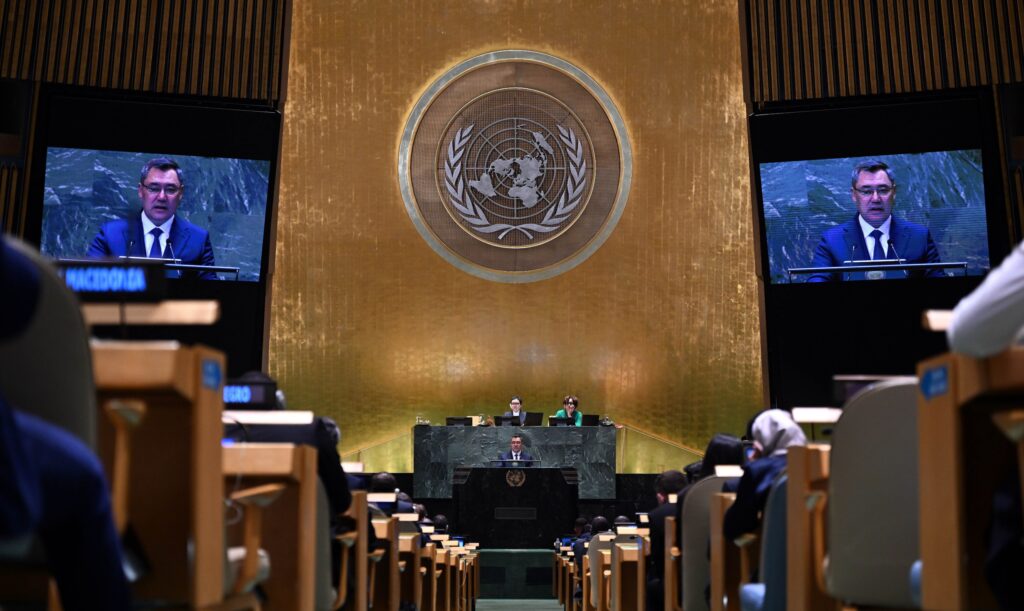
Speaking at the 79th session of the UN General Assembly in New York, Kyrgyz President Sadyr Japarov called on the global community to reduce arms spending and international tensions. During the general debate, Japarov nominated Kyrgyzstan's candidacy for the Security Council, saying the time has come to address historical injustices. “If elected, Kyrgyzstan will work to improve the efficiency and transparency of the Security Council and to expand it with balanced regional representation. It is time to eliminate the historical injustice of 60 member states, including Kyrgyzstan, who have never been elected to the Security Council, and to correct the under-representation of African countries on the Council,” Japarov said. The Kyrgyz leader said the world is becoming increasingly unpredictable and complex. He urged all states to continue to support the UN in its core mission of ensuring peace and preventing modern risks and threats in this “turbulent period.” “Unfortunately, this is happening in a world where many nations and peoples still lack access to basic clean water, healthcare, and education. We need to ensure that the money that goes to wars, destruction, and death goes to creating or solving global challenges for all,” Japarov said. The council has 15 members, including five permanent members. The next elections to the Council will be held in June 2026.

Kyrgyzstan Asks IAEA for $45 Million for Nuclear Waste Remediation

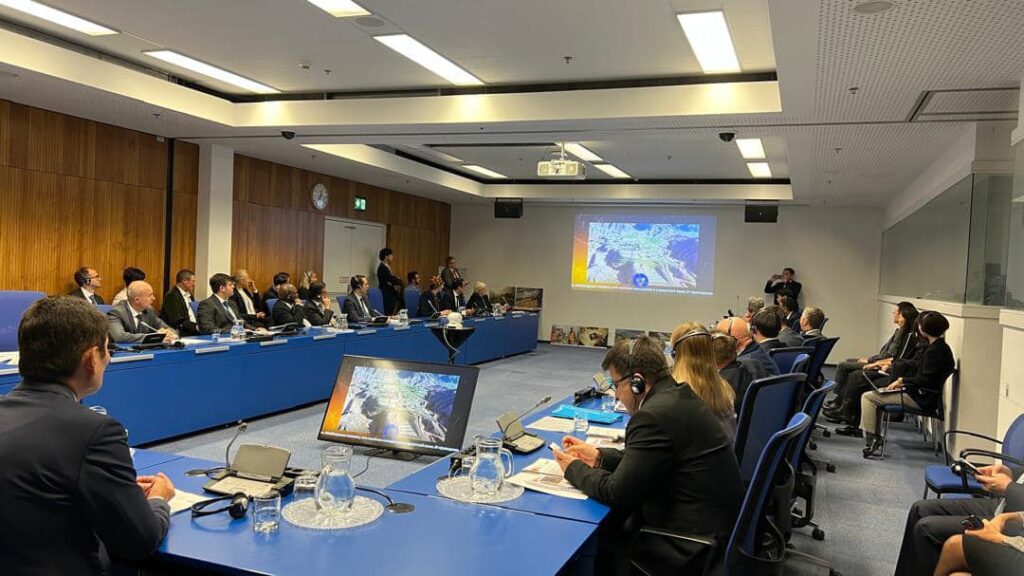
Kyrgyzstan's Deputy Minister of Emergency Situations, Azamat Mambetov, has asked for support from Central Asian countries at the International Atomic Energy Agency's General Session in Vienna, Austria. The 68th session of the IAEA General Conference is taking place from September 16 to 20, 2024. An official from the Kyrgyz Republic Ministry of Emergency Situations made a speech that called for attention to be paid to the importance of ensuring environmental safety in the region. “In his speech, Azamat Mambetov emphasized the importance of the problem of radiation safety in Central Asia and called for the intensification of international efforts to reclaim uranium tailings in the region,” the Ministry of Emergency Situations stated. The IAEA adopted a resolution on “The Role of the International Community in Preventing Radiation Threats in Central Asia.” A strategic master plan was developed to reclaim uranium sites in the region and create a special account for environmental remediation in Kyrgyzstan, Uzbekistan, and Tajikistan. The Deputy Minister of Emergency Situations of Kyrgyzstan informed IAEA members about the process of completing the reclamation of two nuclear waste sites in the country's south. This has allowed about 80,000 people in that area to live safely. The Kyrgyz Ministry of Emergency Situations stressed that it is grateful to all countries and international organizations that have made a significant contribution to the environmental rehabilitation of the tailing dumps left over from Soviet-era uranium mining in Central Asia. However, approximately another $45 million is needed to implement the Strategic Master Plan fully. According to the Kyrgyz Ministry of Emergency Situations, there are currently 92 toxic and radioactive waste dumps in the country. Of these, 23 tailings contain uranium elements, while the rest contain radioactive rock residues, heavy metals, and cyanide.

A Bone of Contention: Kazakhstan and Kyrgyzstan at Loggerheads Following World Nomad Games Kokpar Final

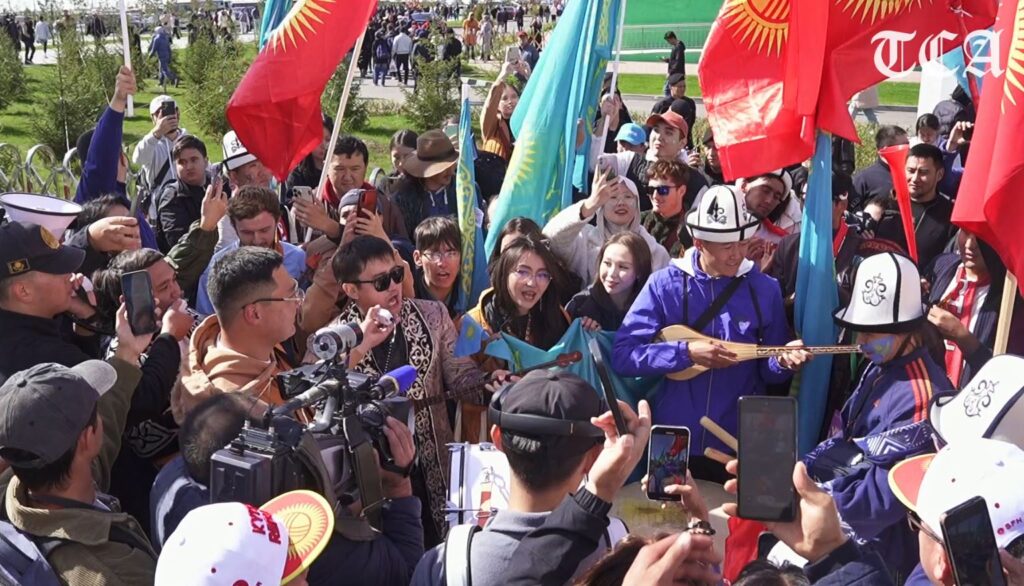
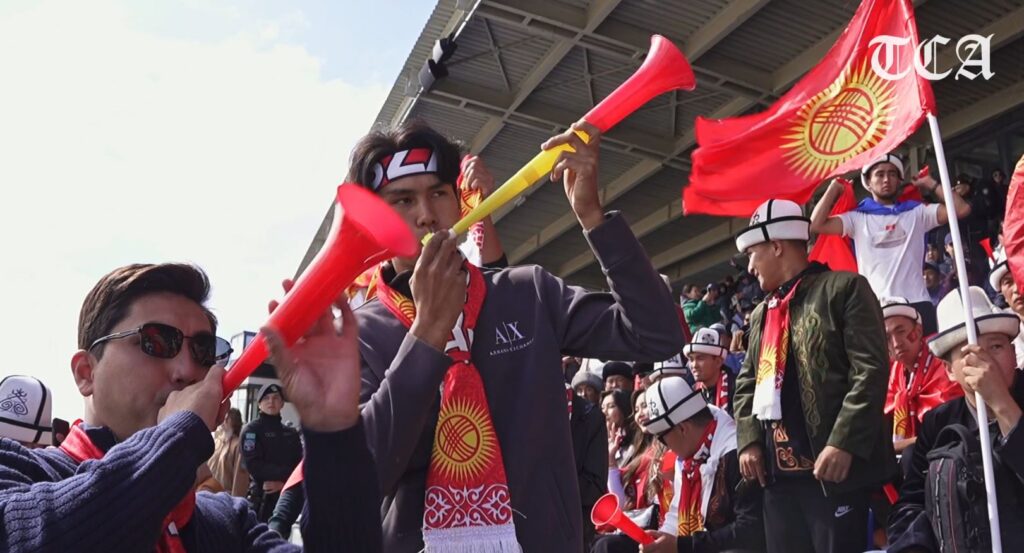
Astana largely managed to turn the 5th World Nomad Games into an exemplary international sporting event free of politics and disagreements. Overall, the Games stood in stark contrast to the Olympics in Paris earlier this year, when the International Olympic Committee’s decision to allow a handful of athletes from Russia and Belarus to compete under a neutral flag led to calls from some counties for a boycott. However, the culmination of the Nomad Games saw an unpleasant incident at the final of the most popular event, which resulted in a fallout between Kazakhstan and Kyrgyzstan. [video width="1920" height="1080" mp4="https://timesca.com/wp-content/uploads/2024/09/nomad-game-2.mp4"][/video]   A blow with a kamcha On September 12, an incident occurred during the Kokpar final, in which the national teams of Kazakhstan and Kyrgyzstan met, when a player from the Kazakh team, which was underperforming, struck a Kyrgyz rider with a kamcha (whip). At this point, the game was stopped, and a squad of law enforcement officers immediately surrounded the culprit. After the offender was suspended from proceedings and given a time penalty, the game continued, and Kazakhstan, having leveled the score, won the match in overtime. The Kokpar final at the previous Nomad Games, hosted by Turkey, also ended with a marginal Kazakh victory in the derby between the long-standing rivals. However, unlike in 2022, this time the Kyrgyz national team did not accept defeat in silence. At the awards ceremony, the Kyrgyz team ripped off their silver medals, raised their country's flag, and defiantly left the arena. “We knew it would be unfair, but not to this extent. The referees were swearing at us, and the police were beating our players," the Kyrgyz captain said. "A KNB (national security) officer came up to me, showed me his ID card, took my picture, and started to intimidate me, saying I was sowing discord between nations. The pressure was strong. After the scuffle, when the score was 3-1 in our favor, we were asked to leave the game. They said the refereeing would be fair... We didn't think the Kazakhstani side would allow such disorganization and injustice. If Kazakhstanis have pride, they won't celebrate such a victory.” The press service of Kazakhstan's National Security Committee promptly denied the allegations, saying their officers were not involved in providing security for the Games. Tastanbek Yesentaev, the Chief Judge of the World Nomad Games in Astana, threatened the Kyrgyz team with a 2-3 year suspension from the competition for showing disrespect. This statement only served to further inflame proceedings. At a briefing on September 16, four days after the final, Ramis Kudaibergenov, an expert on the Kyrgyz Kok-Boru Federation, stated that the Kazakh national team committed 14 gross violations of rules in the final of the Kokpar, and given a level playing field, the Kyrgyz team would have won 5-1. “Everyone blames the referee, but the whole system is culpable. We prepared the players based on previous games, but there were so many infractions we didn't take into account. We were able to...

Kyrgyz Authorities Urge Migrants to Return Home From Russia

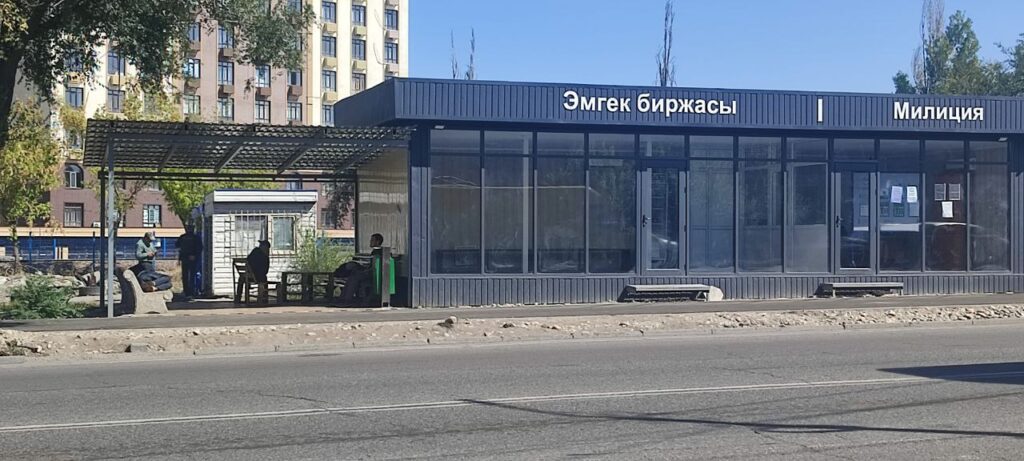
Kyrgyzstan's presidential spokesperson Askat Alagozov has urged Kyrgyz citizens who have gone to work in Russia to return and work at home. However, only some people share the government's position on the issue. Alagozov noted that the country desperately needs construction and textile workers. “Of course, the salary you expect will be the same as what you get in Russia. But, most importantly, it is better to work in your homeland and near your family. Come and work in your own country,” Alagozov wrote on social media. Alagozov published the Ministry of Labor and Social Development hotline number, where citizens can get help with employment. In comments to the post, citizens noted that salaries in Russia are higher than in Kyrgyzstan. A migrant in Russia receives an average of 80 to 200 thousand KGS ($950 - 2,350), while in Kyrgyzstan, the average salary is 30 to 50 thousand KGS ($350 - 600). “90% of Kyrgyz migrate to buy an apartment. Working here [in Kyrgyzstan], it is impossible to buy a house. The most important factor is migrants' need for housing,” one of Alagozov's followers said. As of August 1, 57,500 unemployed citizens were registered at the labor exchange. According to the National Statistical Committee, registered unemployment decreased by 21% over the past year. The Ministry of Labor and Social Development also claims that more than 230,000 citizens across the country have been employed over the past few years, while 58,000 have received vocational training. Meanwhile, workers registered at the labor exchange told The Times of Central Asia that the Kyrgyz labor market is not as good as the authorities make it out to be. To earn money, people have to take any job offered. “We are standing here on Lev Tolstoy Street, and everyone in Bishkek knows you can find workers if you come here. People here take on any work: construction and landscaping, concrete work, unloading, and transport work,” said a construction worker named Ulukbek. Permanent work is hard to find in the city, he said. “I can earn 1,500-2,000 KGS (US $18) daily, but not always, and sometimes you don't make any money. There is a mafia here; no one will give you a good job for nothing. There is massive competition in the warm seasons. In summer, people stand on both sides of the road, and there is more business to be had,” Ulukbek explained. Talk of a shortage of qualified construction workers in Kyrgyzstan began during the recent construction boom.

Rejuvenating Kyrgyzstan’s Traditional Performing Arts: Razia Syrdybaeva on the Ustatshakirt Ensemble

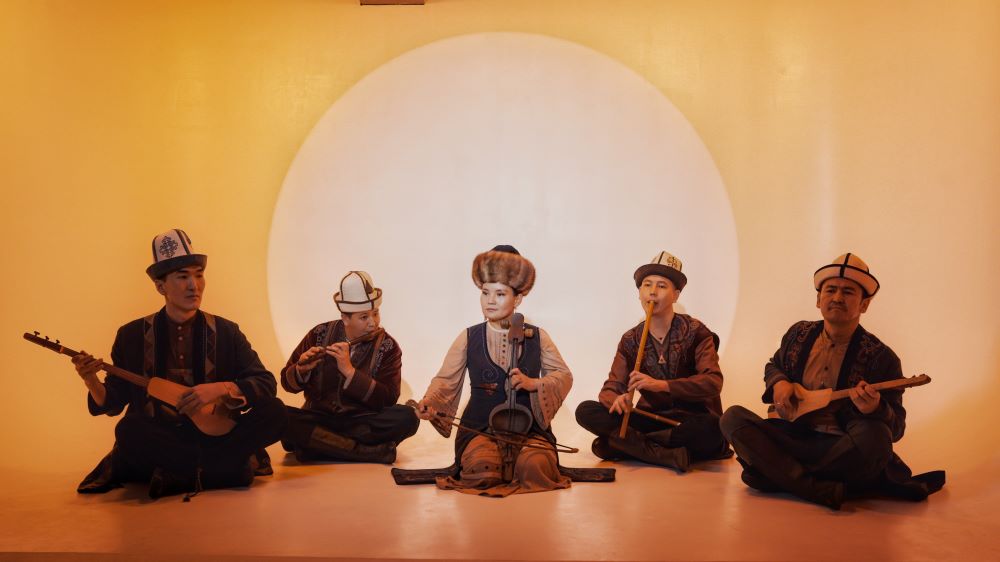
On August 13, Kyrgyzstan’s Ustatshakirt Ensemble, a five-piece group of traditional musicians, gave its first ever performance at Edinburgh’s International Festival. Following a mesmerizing, sell- out concert, Kyrgyz author Shahsanem Murray spoke on behalf of TCA, to musicologist Razia Syrdybaeva about Ustatshakirt , its origins, aims and future plans. [caption id="attachment_23314" align="aligncenter" width="1665"] Photo: TCA Razia Syrdybaeva and the Ustatshakirt Ensemble[/caption]   TCA:  Razia, please tell us a little about yourself and the Ustatshakirt Ensemble. I am a musicologist, producer, and researcher of Kyrgyz culture, and hold a PhD in Philology. Twenty years ago, I established Ustatshakirt; an NGO educational organization with a mission to preserve Kyrgyzstan’s centuries-old musical heritage. The name Ustatshakrit - Ustat meaning master, and shakirt, student - embodies our aim to serve as a bridge between old masters and young musicians. Founded in 2003, with support from the Aga Khan Music Programme (AKA) the Ustatshakrit Center now has branches offering tuition in music, literature, and theatre to pupils in 41 primary & secondary schools across Kyrgyzstan. Over the past twenty years, through the development of faster and more effective methodology, we have taught over 10,000 children to play traditional Kyrgyz instruments such as the komuz and temir ooz komuz. We also provide tuition in other performing art forms including basic theater skills in our ‘dramalab’, and singing epics. The key goal of our work is to introduce children to their native music and help them appreciate and fall in love with their ancient culture. This is very important, especially in the present climate where exposed to external influences and technology, young people are increasingly moving away from their roots, their native language, and music. Attracted by modern rhythms and gadgets, they have little time and few opportunities to listen to their ancestral music. To more effectively engage both our pupils and audiences, we are constantly implementing the development of special methodological textbooks, music notation programs, etc. Authored by our teachers, musicians and prominent figures in the Arts, our now comprehensive collection of publications is used by Kyrgyzstan’s music educational institutions, from children's art schools to universities and conservatories. TCA: Concerts of traditional Kyrgyz music accompanied by excerpts from the great Manas epic are rarely performed in the UK, and especially, Scotland. What challenges did you face in securing a venue at the Edinburgh Festival? We heard about the festival several years ago. Getting to Edinburgh involved a lot of planning and expense and was only made possible thanks to the generous support of the Aga Khan Trust for Culture, the Aga Khan Music Program and its director Fairouz Nishanova, and our sponsors Sir Ewan & Lady Brown together with Flure Gossart. Work on repertoires for international audiences has now been ongoing for two years, and over many months prior to playing at Edinburgh, we focused on creating a program that would embrace the rich traditions of Kyrgyzstan’s music and culture. TCA: What were your impressions of the Edinburgh audience? We were all delighted by the high...

Video Highlights: World Nomad Games Day Five

On the fifth day of the World Nomad Games, themed as the “Gathering of the Great Steppe,” TCA soaked up the raucous atmosphere and took in the finals of the equestrian events, including the ever-popular kokpar and kok boru: [video width="1920" height="1080" mp4="https://timesca.com/wp-content/uploads/2024/09/nomad-game-1.mp4"][/video]