• KGS/USD = 0.01144 0%
  • KZT/USD = 0.00215 0%
  • TJS/USD = 0.10680 0.19%
  • UZS/USD = 0.00008 0%
  • TMT/USD = 0.28530 0%
  • KGS/USD = 0.01144 0%
  • KZT/USD = 0.00215 0%
  • TJS/USD = 0.10680 0.19%
  • UZS/USD = 0.00008 0%
  • TMT/USD = 0.28530 0%
  • KGS/USD = 0.01144 0%
  • KZT/USD = 0.00215 0%
  • TJS/USD = 0.10680 0.19%
  • UZS/USD = 0.00008 0%
  • TMT/USD = 0.28530 0%
  • KGS/USD = 0.01144 0%
  • KZT/USD = 0.00215 0%
  • TJS/USD = 0.10680 0.19%
  • UZS/USD = 0.00008 0%
  • TMT/USD = 0.28530 0%
  • KGS/USD = 0.01144 0%
  • KZT/USD = 0.00215 0%
  • TJS/USD = 0.10680 0.19%
  • UZS/USD = 0.00008 0%
  • TMT/USD = 0.28530 0%
  • KGS/USD = 0.01144 0%
  • KZT/USD = 0.00215 0%
  • TJS/USD = 0.10680 0.19%
  • UZS/USD = 0.00008 0%
  • TMT/USD = 0.28530 0%
  • KGS/USD = 0.01144 0%
  • KZT/USD = 0.00215 0%
  • TJS/USD = 0.10680 0.19%
  • UZS/USD = 0.00008 0%
  • TMT/USD = 0.28530 0%
  • KGS/USD = 0.01144 0%
  • KZT/USD = 0.00215 0%
  • TJS/USD = 0.10680 0.19%
  • UZS/USD = 0.00008 0%
  • TMT/USD = 0.28530 0%

Viewing results 19 - 24 of 766

Kyrgyzstan to Install 300,000 Smart Electricity Meters Purchased from China

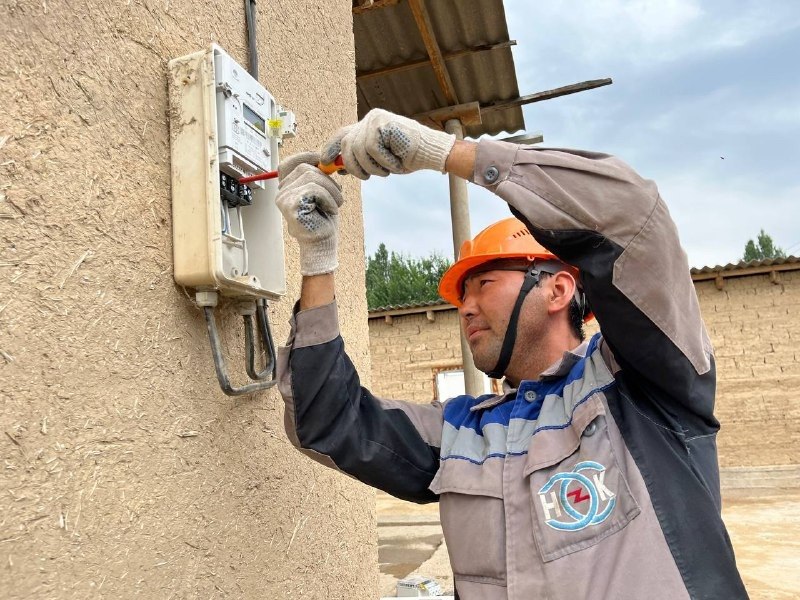
Kyrgyzstan’s Ministry of Energy has signed a contract with Shenzhen Kaifa Technology for the purchase of 300,000 smart electricity meters for the National Electric Network in 2026, according to the ministry. Negotiations are also underway for an additional 90,000 units. The National Electric Network of Kyrgyzstan has introduced an automated electricity control and metering system that has helped strengthen financial discipline in the energy sector. As of the end of 2025, 500,100 smart meters had been installed across the country, bringing the total number of installed meters to more than 923,000. This has improved metering accuracy and reduced electricity losses from 11.7% to 10.6%. Smart meters offer several advantages. They enable automatic data transmission, with readings sent to a central server in real time, eliminating the need for manual inspections. They also allow for remote control: electricity supply can be automatically suspended in cases of non-payment and restored once payment is made. In addition, smart meters help protect against overloads, support voltage stability in the grid, and reduce human error by minimising manual data entry. This also contributes to lowering electricity theft. The rollout is part of the Kyrgyz Energy Modernization and Sustainability Project, supported by the World Bank. The project aims to modernise the energy sector, improve the accuracy of electricity metering, and reduce power losses. Smart metering is particularly important for Kyrgyzstan, which continues to face electricity shortages and relies on imports to meet growing demand from industry and households.


Bishkek Seeks Stable Grain Supplies from Astana for Flour Millers

The Kyrgyz government is considering new measures to support the flour milling industry, including intensified negotiations with Kazakhstan to ensure stable grain supplies. Industry representatives, speaking at a meeting with the Ministry of Agriculture, said Kyrgyz flour millers are seeking long-term contracts for the supply of Kazakh grain with fixed volumes and prices. Despite an increase in imports, they noted that enterprises continue to face shortages of raw materials. According to industry estimates, processing capacity utilization currently stands at around 50%. Millers also pointed to ongoing problems with illegal grain trade at the Kyrgyz-Kazakh border. The Ministry of Agriculture of Kyrgyzstan said it is conducting negotiations with the Kazakh side, including through diplomatic channels, and expects to secure unimpeded transit of grain and direct deliveries to processing enterprises in the near future. Authorities also plan to provide preferential financing for the construction of grain storage facilities. According to the Ministry of Agriculture of Kazakhstan, flour exports to Kyrgyzstan increased 1.8 times over the past seven months, rising from 194,000 to 354,000 tons. Kazakhstan attributes this growth to improved logistics. At the same time, Kyrgyzstan’s Prime Minister Adylbek Kasymaliev has said that logistical challenges between the two countries remain unresolved. He stressed the need to accelerate the digitalization of transport and customs procedures to improve transparency and speed up cargo inspections. He also noted that, in some cases, additional control measures are applied at border crossings, including tax assessments and the confiscation of goods.

Air Quality Report Shows Central Asia’s Air Getting Rapidly Worse

Tajikistan ranked as the world’s third most polluted country in 2025, according to the latest World Air Quality Report by IQAir. The report analyzed PM2.5 concentrations across 9,446 cities in 143 countries and territories. PM2.5, fine particulate matter measured in micrograms per cubic meter, is widely used as a key indicator of air pollution. The five most polluted countries in 2025 were Pakistan (67.3 µg/m³), Bangladesh (66.1 µg/m³), Tajikistan (57.3 µg/m³), Chad (53.6 µg/m³), and the Democratic Republic of the Congo (50.2 µg/m³). Only 13 countries and territories met the World Health Organization annual PM2.5 guideline of 5 µg/m³, including Australia, Iceland, and Estonia. Overall, 130 out of 143 countries exceeded the guideline. Kazakhstan records the cleanest air in Central Asia, but still had the 29th worst air globally in 2025, a very significant decline from 71st in 2024. Uzbekistan has the region's dirtiest air, and the 10th worst worldwide, while Kyrgyzstan is only slightly better, in 19th. Like Kazakhstan, both countries have fallen down the rankings since they were last put together in 2024. Kyrgyzstan had been in 41st place, while Uzbekistan has fallen from 19th. Turkmenistan, which was also among the 30 most polluted countries in 2024, was not included in the 2025 report due to a lack of available data. Karaganda in Kazakhstan is Central Asia's most polluted city, ranking 26th globally in 2025. The city recorded an annual PM2.5 level of 72.6 µg/m³, more than ten times the WHO guideline. Other heavily polluted cities in the region included Fergana (30th, 68.8 µg/m³), Dushanbe (51st, 57.3 µg/m³), Guliston (100th), and Tashkent (225th, 39 µg/m³). The report also noted that the world’s 25 most polluted cities in 2025 were all located in India, Pakistan, and China, with India accounting for three of the top four.

Snow Leopard Designated as Official Mascot of World Nomad Games in Kyrgyzstan

The snow leopard has been designated as the official mascot of the sixth World Nomad Games, which Kyrgyzstan will host from August 31 to September 6, it has been announced. “The snow leopard is more than a symbol of strength. It reflects inner resolve, dignity, and clarity of purpose. It carries the spirit of Kyrgyzstan, the character of nomadic culture, and the energy of forward movement,” the Games' Secretariat said. In October 2025, Kyrgyzstan’s Cabinet of Ministers officially designated the snow leopard as the country’s national symbol and approved a corresponding logo. Snow leopards are considered a key indicator of ecological health in mountainous regions across 12 Asian countries, including Kyrgyzstan. The country has played a prominent role in global conservation efforts, most notably by spearheading a United Nations General Assembly initiative that led to the establishment of October 23 as International Snow Leopard Day. Launched by Kyrgyzstan in 2012, the World Nomad Games aim to revive and preserve the cultural heritage of nomadic civilizations. The inaugural Games were held in September 2014 in the resort town of Cholpon-Ata on the shores of Lake Issyk-Kul. Kyrgyzstan also hosted the second and third editions in 2016 and 2018. The 2022 Games were held in Turkey, and the 2024 edition took place in Kazakhstan. Over the years, the Games have evolved into a major international festival showcasing Central Asia’s cultural traditions through events featuring birds of prey, equestrian sports, traditional wrestling, archery, and displays of physical skill and endurance. In February 2026, the Director-General of UNESCO, Khaled El-Enany, announced the decision to grant the organization’s patronage to the 6th World Nomad Games following an official request from the Kyrgyz government. The granting of UNESCO’s patronage underscores international recognition of the 2026 Games as an important global initiative for preserving and promoting traditional sports and games, which form part of humanity’s intangible cultural heritage. It is also expected to support broader international participation and raise the global profile of Kyrgyzstan’s cultural heritage. The opening of the 6th World Nomad Games will take place alongside a summit of the Shanghai Cooperation Organization (SCO), which Kyrgyzstan will host.

Kyrgyzstan Develops Territories Received from Tajikistan

The Kyrgyz authorities have adopted a resolution that transfers into state ownership land and real estate received from Tajikistan under the agreement on the delimitation and demarcation of the state border. According to the decision of the Cabinet of Ministers, the State Agency for State Property Management must register the transferred assets on its balance sheet, after which they will be handed over to local administrations in the Batken and Leylek districts of Batken region. District authorities are expected to distribute the property among citizens who lost their homes and assets as a result of the border agreement, as well as those whose properties were demolished during the construction of border infrastructure. The government has also instructed the State Agency for Land Resources, Cadastre, Geodesy, and Cartography to conduct an inventory of land plots in the region, while the Ministry of Construction will develop master plans for settlements in the transferred territories. The resolution notes that the list of real estate assets may be revised as the border line is refined during the demarcation process. The border agreement was reached following negotiations between the two countries' presidents, Sadyr Japarov and Emomali Rahmon, and was subsequently ratified by the parliaments of both countries. Under its terms, the sides exchanged territories, including previously disputed areas. Following the agreement, Kyrgyzstan began constructing barriers along the new border line. Authorities in both countries expect that completing the demarcation process will help stabilize the situation and prevent further conflict.

Kyrgyzstan Elected First Vice-Chair of UN Mountain Partnership

Kyrgyzstan has been elected First Vice-Chair of the Steering Committee of the Mountain Partnership for the 2026-2030 period, reflecting its continued engagement in advancing the global mountain agenda. Founded in 2002, the Mountain Partnership is a United Nations alliance of governments and organizations aimed at improving the livelihoods of mountain communities and protecting mountain ecosystems. The initiative was established by the governments of Italy and Switzerland, the United Nations Environment Programme (UNEP), and the Food and Agriculture Organization, which hosts the partnership’s secretariat. The new Steering Committee was elected during the 7th Global Meeting of the Mountain Partnership, held from March 26 to 28 in Andorra under the theme “Mountains for the Future: Responsible Tourism, Thriving Communities.” The meeting brought together representatives from Germany, Armenia, Azerbaijan, Italy, Mongolia, Montenegro, Nepal, and Kyrgyzstan, as well as officials from international organizations including FAO, UN Tourism, UNESCO, the OSCE, UNEP, the United Nations Development Programme, and the United Nations Framework Convention on Climate Change. Italy, the partnership’s main donor, retained its position as Chair. Kyrgyzstan was represented by Dinara Kemelova, the president’s special representative for the mountain agenda, who called for stronger coordination among mountain countries to advance shared priorities on global platforms. Kemelova also announced that the second “Bishkek+25” Global Mountain Summit will be held in Kyrgyzstan from October 21 to 23, 2027. She highlighted the country’s implementation of the Five Years of Action for the Development of Mountain Regions (2023-2027), with a focus on ecotourism and organic production. An exhibition of Kyrgyz mountain products was also organized on the sidelines of the meeting. The meeting concluded with the adoption of the Andorra Declaration, a strategic document aimed at strengthening international commitment to sustainable mountain development. The declaration recognizes the role of mountains in combating climate change, preserving biodiversity, and ensuring food security, while also highlighting their vulnerability to global environmental impacts. Mountains cover around one quarter of the Earth’s land surface and are home to approximately 1.2 billion people, while also encompassing 25 of the world’s 36 biodiversity hotspots. The document outlines several priority areas, including promoting sustainable tourism as a key economic driver for mountain regions, increasing climate and environmental financing, strengthening research and scientific cooperation, and supporting local communities, including women, youth, and indigenous groups. It also emphasizes the need to improve connectivity in mountain areas, reduce the digital divide, and enhance resilience to natural hazards through early warning systems and adapted infrastructure.