• KGS/USD = 0.01143 0%
  • KZT/USD = 0.00205 0%
  • TJS/USD = 0.10433 0.1%
  • UZS/USD = 0.00008 0%
  • TMT/USD = 0.28577 0%
  • KGS/USD = 0.01143 0%
  • KZT/USD = 0.00205 0%
  • TJS/USD = 0.10433 0.1%
  • UZS/USD = 0.00008 0%
  • TMT/USD = 0.28577 0%
  • KGS/USD = 0.01143 0%
  • KZT/USD = 0.00205 0%
  • TJS/USD = 0.10433 0.1%
  • UZS/USD = 0.00008 0%
  • TMT/USD = 0.28577 0%
  • KGS/USD = 0.01143 0%
  • KZT/USD = 0.00205 0%
  • TJS/USD = 0.10433 0.1%
  • UZS/USD = 0.00008 0%
  • TMT/USD = 0.28577 0%
  • KGS/USD = 0.01143 0%
  • KZT/USD = 0.00205 0%
  • TJS/USD = 0.10433 0.1%
  • UZS/USD = 0.00008 0%
  • TMT/USD = 0.28577 0%
  • KGS/USD = 0.01143 0%
  • KZT/USD = 0.00205 0%
  • TJS/USD = 0.10433 0.1%
  • UZS/USD = 0.00008 0%
  • TMT/USD = 0.28577 0%
  • KGS/USD = 0.01143 0%
  • KZT/USD = 0.00205 0%
  • TJS/USD = 0.10433 0.1%
  • UZS/USD = 0.00008 0%
  • TMT/USD = 0.28577 0%
  • KGS/USD = 0.01143 0%
  • KZT/USD = 0.00205 0%
  • TJS/USD = 0.10433 0.1%
  • UZS/USD = 0.00008 0%
  • TMT/USD = 0.28577 0%

Viewing results 235 - 240 of 652

EDB Chief Economist Outlines Central Asia’s Water Challenges and Proposes Solutions

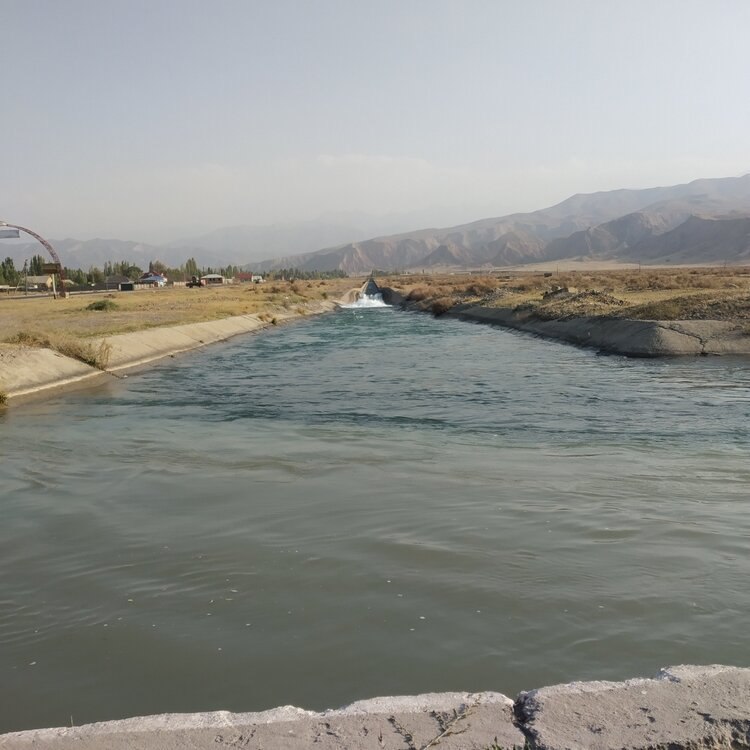
Evgeny Vinokurov, Vice-Chairman and Chief Economist of the Eurasian Development Bank (EDB), presented a sobering assessment of Central Asia’s water and energy challenges at the Annual Meetings of the Association of Development Financing Institutions in Asia and the Pacific (ADFIAP) on April 23. The event, held in Muscat, Oman, featured a plenary session dedicated to sustainable water management and practical strategies for addressing mounting environmental pressures in the region. Shrinking Glaciers and Growing Demand Vinokurov unveiled findings from the EDB’s think tank research, which paint a stark picture: Central Asia’s glaciers have shrunk by 30% over the past 50 years, while water demand continues to rise. Despite this, much of the region's water infrastructure remains outdated and inefficient, resulting in a loss of 40-55% of available water. Additionally, 10 million people in Central Asia still lack access to safe drinking water. Without targeted intervention, annual water scarcity could reach 5-12 cubic kilometers by 2028. National Commitments and Regional Coordination The EDB report emphasized water conservation as a critical pillar in the region’s response to these challenges. Several countries are already pursuing large-scale water-saving initiatives: Kazakhstan plans to expand water-saving irrigation technologies to 150,000 hectares per year by 2030. Uzbekistan has committed to saving 15 billion cubic meters of water. Kyrgyzstan aims to construct 106 new reservoirs to secure water supply. “Central Asia’s water crisis cannot be solved in isolation,” said Vinokurov. “Our research provides a roadmap for efficiency, investment, and, most importantly, regional cooperation. This is why the water-energy nexus remains a strategic priority for our Bank, both in terms of investments and research.” Localizing Water Solutions The EDB, in partnership with the United Nations Industrial Development Organization (UNIDO), recently published a report titled Irrigation Equipment Production in Central Asia: Industrialising the Water Sector, calling for localized production of irrigation equipment to enhance water efficiency and reduce dependency on imports. Another key publication from the EDB, The Irtysh River Basin: Transboundary Challenges and Practical Solutions, focuses on the Irtysh River basin shared by China, Kazakhstan, and Russia. The report outlines increasing water demand across the basin and proposes measures for managing cross-border water resources through collaborative frameworks. Uzbekistan Joins the EDB On April 9, Uzbekistan became the seventh member of the Eurasian Development Bank, joining Armenia, Belarus, Kazakhstan, Kyrgyzstan, Russia, and Tajikistan. The move is expected to provide new avenues for Uzbekistan to modernize its infrastructure, particularly in the transport, energy, and water sectors, and support its broader industrial and agricultural development goals.

Kyrgyzstan’s UN Mission Opens Environmental Art Exhibition in New York

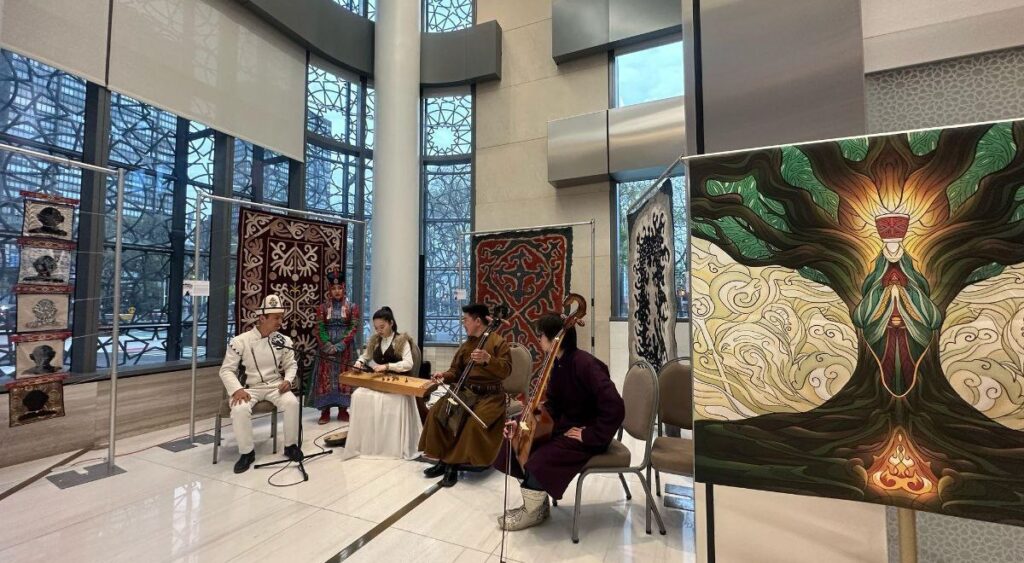
In honor of International Mother Earth Day, the Permanent Mission of the Kyrgyz Republic to the United Nations has opened an art exhibition in New York, highlighting the planet’s environmental challenges. The exhibition features works by young Kyrgyz artists that explore the intricate relationship between climate change, human development, and the natural world. Through a mix of paintings and installations, the artists aim to emphasize the environmental threats affecting global stability. [caption id="attachment_31162" align="aligncenter" width="900"] @mfa.gov.kg[/caption] Speaking at the opening, Aida Kasymalieva, Kyrgyzstan’s Permanent Representative to the UN, underscored the urgent need for intergenerational dialogue and collective responsibility in tackling environmental degradation. “Humanity must realize its shared duty to nature and future generations,” she said, calling for stronger efforts to reduce pollution, curb biodiversity loss, and increase funding for green initiatives. “This exhibition supports the Kyrgyz Republic’s broader commitment to environmental sustainability both nationally and internationally,” the Kyrgyz Foreign Ministry stated in a press release. “Kyrgyzstan is actively implementing programs to preserve mountain ecosystems, protect biodiversity, and transition to a green economy.” [caption id="attachment_31163" align="aligncenter" width="900"] @mfa.gov.kg[/caption] Kyrgyzstan has long sought to draw international attention to the unique vulnerabilities of mountain regions. Since the early 2000s, the country has positioned itself as a global advocate for highland communities, particularly in the context of climate resilience and sustainable development.

China and Russia Remain Kyrgyzstan’s Largest Foreign Investors

The National Statistical Committee of Kyrgyzstan has released updated figures on foreign direct investment (FDI), revealing that China and Russia remained the country’s largest investors in 2024. According to the data published on April 15, Kyrgyzstan received $872.6 million in FDI in 2024, marking an increase from $844.9 million in 2023. China accounted for 23.9% of total FDI, followed by Russia with 22.7%, Turkey (10.2%), Luxembourg (8.8%), Kazakhstan (5.7%), the Netherlands (4.9%), and Azerbaijan (3.4%). The remaining 20.4% came from a mix of other countries. Compared to the previous year, Kyrgyzstan saw increased investment from Azerbaijan, Luxembourg, Germany, Turkey, the Netherlands, and Russia, while inflows from the UK, UAE, Kazakhstan, and China declined. Sector Breakdown The manufacturing sector attracted the largest share of foreign investment, receiving 33.2% of total FDI. This was followed by the financial sector (20.6%), wholesale and retail trade (18.7%), the mining industry (11.3%), and geological exploration (8.3%). Sharp Rise in Overall Investment The total volume of investments in fixed assets from all sources in the first quarter of 2025 reached 56.8 billion Kyrgyz som, reflecting a 90.6% increase year-on-year. This marks a significant acceleration compared to the 63.9% growth recorded during the same period in 2024. Officials attribute the sharp rise primarily to a 2.1-fold increase in domestic financing, while the volume of foreign investment in fixed assets during the same period decreased by 1.5 times compared to the first quarter of 2024.

Kyrgyzstan Sets Date for 2027 Presidential Election

Kyrgyz President Sadyr Japarov has submitted a draft law to parliament establishing the official date for the country’s next presidential election. The parliamentary committee on constitutional legislation has approved the proposal in all three readings. According to the newly adopted law, the presidential election will take place on January 24, 2027, in line with amendments that designate the fourth Sunday of January as the official election date in the year the president’s term expires. Under the current Constitution, the president of Kyrgyzstan is elected for a single six-year term, with no possibility of re-election. President Japarov was elected on January 28, 2021, and later initiated constitutional reforms, including a nationwide referendum that expanded presidential powers. Changes to Parliamentary Elections The same parliamentary committee has also approved a second reading of a draft law altering the electoral system for members of the Jogorku Kenesh (parliament). The reforms would eliminate single-mandate constituencies, moving to an entirely majoritarian, multi-member district model. Under the new system, 30 electoral constituencies will be established, with three deputies elected in each, bringing the total to 90 MPs, all elected on a majoritarian basis. Both political parties and self-nominated individuals will be able to field candidates. Notably, 30 of the 90 seats will be reserved for women, aimed at enhancing gender representation. Currently, Kyrgyzstan’s parliament is composed of 54 deputies elected by party lists and 36 by single-mandate districts. If approved in its final reading, the draft law would overhaul the country's mixed electoral model in favor of a purely constituency-based approach.

Kyrgyzstan’s Ex-President Kurmanbek Bakiyev May Return to the Country

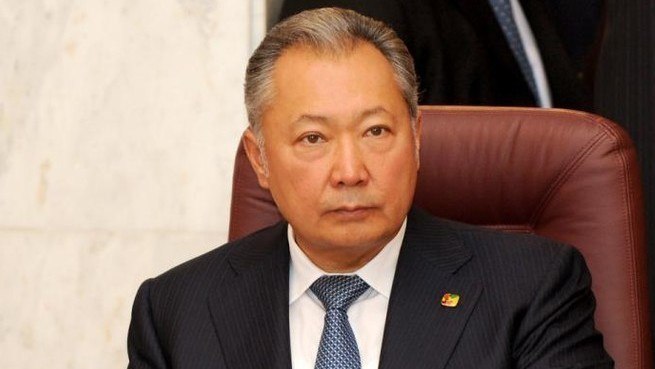
Kurmanbek Bakiyev, the former president of Kyrgyzstan currently living in exile in Belarus, is seeking a review of his convictions handed down in absentia. His lawyer, Ikramidin Aitkulov, recently told local media that Bakiyev wishes to challenge the court’s decisions and possibly return to Kyrgyzstan to participate in legal proceedings personally. According to Aitkulov, Kyrgyzstan’s Criminal Procedure Code does not provide clear regulation for trials conducted in absentia. This legal ambiguity, he argues, results in inconsistent interpretations and infringes upon a citizen’s right to a fair trial. He has appealed to the Constitutional Court to examine the relevant provisions of the procedural code. Aitkulov emphasized that, although thousands of individuals are currently wanted by Kyrgyz authorities, relatively few are actually tried in absentia, making Bakiyev’s case unusual. Background of Bakiyev's Convictions In 2016, Kurmanbek Bakiyev was sentenced to 30 years in prison for complicity in the mass killings of April 7, 2010, when security forces opened fire on protesters in central Bishkek. His brother, Jenish Bakiyev, then head of the State Guard Service, was also found guilty in connection with the events. In 2023, Bakiyev received an additional 10-year sentence for corruption related to the Kumtor gold mining enterprise. According to his lawyer, if these two convictions are overturned, Bakiyev could return to Kyrgyzstan and be physically present for any retrial. “We need to file for a review of the cases in the Supreme Court. If the decisions taken in absentia are canceled, then he (Kurmanbek Bakiyev) will personally participate in the consideration of his case in the second court instance,” Aitkulov said. Constitutional Court Responds In response to Aitkulov’s appeal, the Constitutional Court of Kyrgyzstan stated that trying Bakiyev in absentia was legally permissible, given that he had deliberately evaded justice by fleeing the country. Attempts by Kyrgyz law enforcement agencies to extradite him had failed. “The conduct of court proceedings in absentia is not an arbitrary aspect of the criminal process, but rather an exceptional measure to safeguard public interest and ensure the inevitability of punishment,” the Constitutional Court stated. However, the court also clarified that any individual convicted in absentia has the right to a case review upon return to Kyrgyzstan, provided they are physically present during the proceedings. If Bakiyev voluntarily returns, he would still be detained but granted the opportunity to appeal his convictions.

Kyrgyz Authorities Arrest Critic of Kyrgyzstan-Tajikistan Border Agreement

Kyrgyzstan and Tajikistan earned international praise last month when they signed a border agreement ending years of tension that had sometimes spilled into deadly violence. A recent arrest in Kyrgyzstan suggests that authorities are sensitive to any criticism of a deal that was widely hailed as a big step for closer ties among Central Asian countries.  Kanyshai Mamyrkulova, who has been described by Kyrgyz media sources as a journalist and an activist, was arrested on March 20, a week after President Sadyr Japarov of Kyrgyzstan and Emomali Rahmon, Tajikistan’s leader, signed the peace agreement following painstaking negotiations over the delineation of the nearly 1,000-kilometer border between the two countries. This week, a court upheld an earlier ruling that Mamyrkulova be held in pre-trial detention until May 19, in one of the latest cases in Kyrgyzstan that pits advocates of free speech against a government that increasingly views unfettered opinions and alleged disinformation as a threat to national stability. While critics warn that Kyrgyzstan is clamping down on free expression, the environment there is relatively looser than in Tajikistan, where the state exercises tighter controls over the media. Mamyrkulova appears to have fallen foul of the authorities for critical posts on social media rather than any journalistic reports.  She spread “false information regarding the Kyrgyzstan–Tajikistan border issue” on Facebook, the Bishkek city police department said last month. “The individual made calls aimed at destabilizing the socio-political situation in the Kyrgyz Republic by inciting mass disorder and promoting interethnic hatred between citizens of Kyrgyzstan and neighboring countries,” the department said. It added that Mamyrkulova had “previously been held accountable for similar actions — spreading misinformation and escalating tensions during past incidents involving border issues between the Kyrgyz and Uzbek republics.”  A review of some of Mamyrkulova’s Facebook posts reveals a stream of comments and barbs about alleged corruption, official wrongdoing, and prosecutions, often delivered with cheeky humor. Some are indirect or use metaphors to make a point. Several that refer to the border agreement suggest the Kyrgyz government was not transparent enough with its citizens and imply that Tajikistan got the better of the deal.   In a letter released last week, Mamyrkulova said she hadn’t done anything wrong.  “I did not kill anyone, did not steal from the state, and did not take bribes. I’ve only posted about legal, political, economic, and social issues affecting the public. Regarding the criminal charges brought against me under Article 278 (part 3) and Article 330 (part 1) of the Criminal Code of the Kyrgyz Republic — I have never committed, nor will I ever commit such crimes,” she said in the statement, which was posted on the Facebook account of supporter Amanbol Babakulov.   “They spun a criminal case from thin air simply because I wrote what the public was thinking, in a way that struck a nerve. I know this well myself — as do the lawyers, the attorneys, and those who work closely with the justice system,” she said.  The Media Action Platform of...