• KGS/USD = 0.01144 0%
  • KZT/USD = 0.00194 -0%
  • TJS/USD = 0.10822 -0.18%
  • UZS/USD = 0.00008 0%
  • TMT/USD = 0.28571 0%
  • KGS/USD = 0.01144 0%
  • KZT/USD = 0.00194 -0%
  • TJS/USD = 0.10822 -0.18%
  • UZS/USD = 0.00008 0%
  • TMT/USD = 0.28571 0%
  • KGS/USD = 0.01144 0%
  • KZT/USD = 0.00194 -0%
  • TJS/USD = 0.10822 -0.18%
  • UZS/USD = 0.00008 0%
  • TMT/USD = 0.28571 0%
  • KGS/USD = 0.01144 0%
  • KZT/USD = 0.00194 -0%
  • TJS/USD = 0.10822 -0.18%
  • UZS/USD = 0.00008 0%
  • TMT/USD = 0.28571 0%
  • KGS/USD = 0.01144 0%
  • KZT/USD = 0.00194 -0%
  • TJS/USD = 0.10822 -0.18%
  • UZS/USD = 0.00008 0%
  • TMT/USD = 0.28571 0%
  • KGS/USD = 0.01144 0%
  • KZT/USD = 0.00194 -0%
  • TJS/USD = 0.10822 -0.18%
  • UZS/USD = 0.00008 0%
  • TMT/USD = 0.28571 0%
  • KGS/USD = 0.01144 0%
  • KZT/USD = 0.00194 -0%
  • TJS/USD = 0.10822 -0.18%
  • UZS/USD = 0.00008 0%
  • TMT/USD = 0.28571 0%
  • KGS/USD = 0.01144 0%
  • KZT/USD = 0.00194 -0%
  • TJS/USD = 0.10822 -0.18%
  • UZS/USD = 0.00008 0%
  • TMT/USD = 0.28571 0%
18 December 2025

Viewing results 91 - 96 of 575

After U.S. Bombs Iran, Central Asia Calls for Diplomacy and Restraint

In the early hours of June 22, the United States launched airstrikes on Iran’s nuclear facilities, triggering widespread concern across Central Asia. Despite the potential economic upside for Kazakhstan, with the possibility of rising oil prices, the region’s governments have uniformly called for restraint and a peaceful resolution. The operation, dubbed “Midnight Hammer” by the U.S. Department of Defense, reportedly targeted facilities in Fordow, Natanz, and Isfahan. While Washington claimed success, the Iranian authorities asserted they had evacuated uranium from the Fordow site in advance, calling the mission a failure. Military experts continue to debate the extent of the damage. Coordinated Responses from Central Asian Capitals The foreign ministries of Kazakhstan, Uzbekistan, Kyrgyzstan, Turkmenistan, and Tajikistan issued similarly worded statements expressing concern over the rapidly deteriorating situation. Kazakhstan’s Ministry of Foreign Affairs stated that the U.S. airstrikes marked a dangerous escalation and emphasized the need for negotiations grounded in the UN Charter. “Kazakhstan is part of the group of Caspian countries and is developing cooperation with Iran in various areas. Our country believes that all disagreements, including nuclear issues, should be resolved through negotiations,” the statement said. It also urged international efforts to prevent nuclear proliferation and establish security guarantees for nations adhering to the non-proliferation regime. Uzbekistan’s Foreign Ministry echoed this sentiment and advised citizens to avoid traveling to Israel and Iran. It also urged those currently in those countries to leave high-risk areas where possible. Kyrgyzstan called on all parties to exercise “maximum restraint” and avoid steps that could exacerbate the crisis. Turkmenistan reaffirmed its policy of "positive neutrality," stressing the importance of diplomacy and adherence to international law. Ashgabat stated that it “does not accept the use or threat of force as a means of resolving political and other disputes”. Tajikistan, meanwhile, issued the strongest statement, condemning the U.S. and Israeli strikes outright and warning that the conflict could lead to a prolonged regional war. Dushanbe called on the UN, IAEA, and other global bodies to prevent violations of international law and work towards peace and environmental safety. The Economic Subtext: Rising Oil Prices While official reactions were uniformly cautious, analysts in Kazakhstan noted the economic implications. Expert Olzhas Baidildin pointed out that shares in KazMunayGas surged by 11% following the strikes, with its market capitalization rising to 10.3 trillion KZT ($19.8 billion). Baidildin previously argued that Iran is unlikely to follow through on threats to block the Strait of Hormuz. Nevertheless, he noted that such a move would dramatically increase the strategic importance of Kazakhstan and other Central Asian energy producers to major consumers such as China and India. Financial analyst Andrei Chebotarev agreed, stating: "Iran’s threat to close the Strait of Hormuz is no longer the ace it once was. The West has diversified away from Gulf oil, while the real impact would fall on China, the region’s largest importer. Meanwhile, the U.S. could benefit from a price surge through its shale exports". It is estimated that China purchases approximately 90% of Iran's oil exports...

Central Asia and Israel, a Pragmatic Relationship That Never Truly Blossomed

The conflict between Israel and Iran is having both international and regional repercussions. The situation has been further inflamed by the U.S. bombing of several Iranian nuclear sites over the weekend, with Tehran responding by threatening retaliation on U.S. soil through the use of sleeper terrorist cells and the possible closure of the Strait of Hormuz, through which over a fifth of the world’s oil supply passes. While Israel's geographical position places it at the heart of the Middle East, Iran's location brings the Islamic Republic into close contact with Central Asia. The consequences of the conflict are therefore likely to be felt heavily in the Central Asian region. The close relations between Tehran and the capitals of Central Asia, due in part to their geographical proximity, are often highlighted. Less explored is the nature of the relationship between Tel Aviv and Central Asia and the lines along which it has developed since the dissolution of the Soviet Union. On both the Israeli and Central Asian sides, despite all the differences, relations began in the early 1990s, mainly based on certain mutual interests. From Israel's point of view, relations with Central Asia would mean expanding the circle of Muslim countries with which it had friendly ties, gaining greater influence in the region, and reducing its diplomatic isolation. From the Central Asian perspective, the appeal lay in increasing the number of its international partners, coupled with a desire to access Israeli know-how in numerous fields, and the possibility, through relations with Tel Aviv, of having a privileged channel of dialogue with the United States. More than three decades after the dissolution of the Soviet Union, relations remain good for the most part. “The positive relationship between Israel and Central Asia is driven by a combination of strategic, economic, and geopolitical factors,” Dr Zeev Levin, Coordinator of the Central Asian Research Unit at the Harry S. Truman Institute, told The Times of Central Asia. “One of the primary drivers is mutual interest in security and counterterrorism. Economically, Israel’s expertise in water management, agriculture, and technology is highly attractive to the arid, resource-seeking nations of Central Asia that aim to modernize their infrastructure and diversify their economies beyond oil and gas. Additionally, fostering ties with Israel provides a means of diversifying the foreign policy portfolios of the Central Asian republics.” This positive relationship, however, seems to have lost momentum in recent years due to several factors. Central Asian republics have increasingly oriented towards the East, moving closer to China and other players such as South Korea, Japan, and India, or towards other partners, such as the European ones, with Italy at the forefront in this regard. As Levin points out, the relation has cooled due to several factors: “Central Asian republics did look to Israel in the first decade of independence, but in the last decade to a much lesser extent, since Turkey and China are less complicated and cheaper options. For Israel, the region was never a priority or a point of...

Japan-Backed Tunnel Project Begins on Kyrgyzstan’s Bishkek–Osh Highway

Construction has begun on a 750-meter tunnel along Kyrgyzstan’s vital Bishkek–Osh highway, the country’s only overland route connecting the northern and southern regions. The project marks a major step in modernizing national transport infrastructure and improving safety in an area prone to rockfalls, landslides, and harsh weather conditions. The tunnel is being built at the 400-kilometer mark of the highway by Japan’s Takenaka Civil Engineering & Construction Co., using advanced Japanese technologies designed to meet the region’s complex geological challenges. A formal groundbreaking ceremony took place on June 19, attended by Kyrgyz Transport and Communications Minister Absattar Syrgabayev and Japanese Ambassador to Kyrgyzstan Hideki Goda. Minister Syrgabayev described the tunnel as a key solution to the dangers posed by the mountainous terrain. “In this area, the risks are high. A tunnel is the safest and most reliable solution,” he said. Stretching 655 kilometers, the Bishkek–Osh highway runs through the regions of Chui, Talas, Jalal-Abad, and Osh, linking the capital with the country’s second-largest city. It plays a crucial role in both domestic mobility and regional trade, forming part of international corridors that connect Kyrgyzstan with Kazakhstan, Uzbekistan, Tajikistan, and China. The tunnel reflects the government’s continued efforts to strengthen the safety and reliability of one of its most important infrastructure assets.

XI Jinping’s Five Points: How China Is Looking To Reshape Central Asia

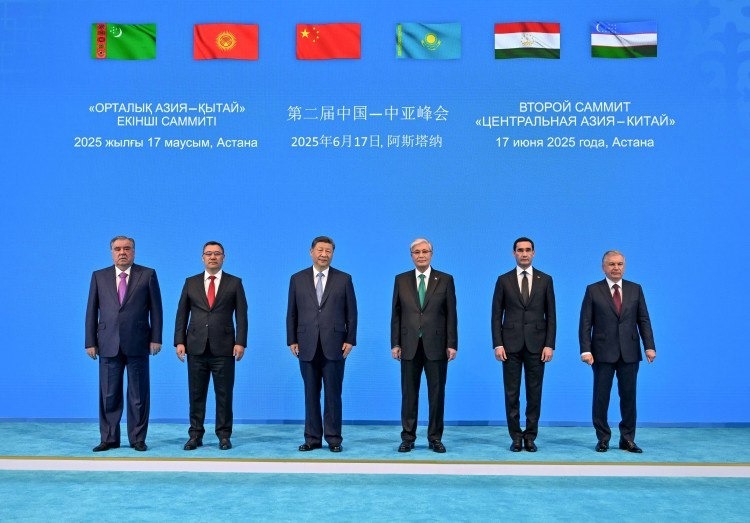
The second China-Central Asia summit on June 17, held in Astana, Kazakhstan, underscored the strengthening ties between China and the region. This event marked a significant milestone in solidifying the China-Central Asia cooperation framework with the signing of the Treaty on Eternal Good-Neighborliness, Friendship, and Cooperation. Experts note that Central Asian countries, once unable to adopt an intra-regional treaty, collectively reached this broader agreement with China. The summit also featured a range of side events, including the Energy Forum “Energy of Central Asia - China,” the Forum on Humanitarian Exchange, the Second Forum on Industrial and Investment Cooperation, and the Central Asia-China Business Council meeting, among others. These gatherings highlighted cooperation in energy, trade, and cultural exchange, reflecting China’s deepening influence in the region. Kazakh President Kassym-Jomart Tokayev praised China’s approach to equal partnership, stating that relations between the two nations are “stable and free from the negative impacts of geopolitical challenges and shocks as well as the international circumstances. China has never imposed any political conditions regarding cooperation with Kazakhstan.” “This is a very important point, Kazakhstani Sinologist Adil Kaukenov explained, “as the head of state, being at the forefront of Kazakhstan's foreign and domestic policies, faces political games, manipulation, and pressure at various levels, which require considerable restraint, experience as a statesman, and popular support to overcome.” During the summit, the heads of the Central Asian states articulated their priorities for cooperation with China. Kazakhstan emphasized projects like the creation of a joint cargo terminal in the port of Kuryk on the Caspian Sea, cooperation in the fields of nuclear energy and artificial intelligence, and counteracting international cybercrime. Kyrgyzstan focused on security, transport, e-commerce, energy, and tourism. Tajikistan prioritized industrial development, trade, food security, and green economy initiatives. Uzbekistan, meanwhile, sought the further integration of Afghanistan into the region, and proposed an “Electronic Silk Road” trade platform, and the development of a long-term strategy called the “Central Asia-China Industrial and Infrastructure Belt.” Chinese President Xi Jinping used his address to outline five key points that shape China’s vision for the future of its relationship with Central Asia. “Our cooperation is rooted in more than two thousand years of friendly relations, consolidated by the solidarity and mutual trust that has been established for 30 years since the establishment of diplomatic relations, and has made great progress thanks to mutually beneficial cooperation in the new era,” Xi stated in his keynote speech. According to Xi, China considers Central Asia one of the priorities of its foreign policy, and this building of peaceful, inclusive partnerships was marked by the historical milestone of the signing of the treaty at the summit. “We will improve the architecture of cooperation, which is characterized by pragmatism, efficiency, and deep integration,” the Chinese president said, adding that 2025–2026 have been declared the Years of High-Quality Development of China-Central Asia Cooperation. This initiative will focus on trade, transport connectivity, green energy, agriculture, and technology. Notably, China pledged 1.5 billion yuan ($208 million) in grants for projects aimed...

Citizens of Central Asia Face New Entry Restrictions To Russia and the U.S.

Citizens of Central Asian countries are encountering a wave of new travel restrictions from two major global powers, Russia and the United States. In recent weeks, Moscow and Washington have both introduced or expanded measures that complicate entry for citizens of the region, raising concerns about migration rights, bilateral relations, and regional security. Russia Tightens Border Rules Starting June 30, 2025, citizens from visa-free countries, including Kazakhstan, will be required to obtain a special QR code to enter Russia. The code must be secured in advance via the Gosuslugi RuID app, at least 72 hours before travel, or four hours in emergency cases. The app is not yet operational, but Russian Prime Minister Mikhail Mishustin has confirmed its planned launch on the same date. While Russia maintains visa-free arrangements with over 30 countries, including Argentina, Brazil, Israel, and all CIS members, these new digital entry requirements apply broadly. Exceptions include citizens of countries already subject to visa regimes, diplomats, and citizens of Belarus, a Union State member. Additionally, as of January 1, 2025, the allowable visa-free stay in Russia for citizens of these countries has been reduced from 90 days per half-year to 90 days per calendar year. Many Kazakhstani travelers fear that the new rules will result in long queues and technical delays at border crossings. More broadly, critics point out that the move undermines the spirit of the Eurasian Economic Union (EAEU), whose member states, Kazakhstan, Kyrgyzstan, Armenia, Belarus, and Russia, are supposed to enjoy facilitated mobility. Response to the Crocus City Hall Attack The changes come in the wake of the March 22, 2024 terrorist attack at Moscow’s Crocus City Hall, which left at least 145 dead and more than 500 injured. The suspects in the attack were reportedly citizens of Tajikistan, sparking a wave of anti-migrant sentiment in Russia. According to Temur Umarov, a Berlin-based political analyst at the Carnegie Center, Russian authorities are prioritizing security over economic necessity. "Russia is doing everything possible to reduce the number of migrants from Central Asia," he said, noting the vital role these workers play in several Russian industries. Regional Backlash Public figures and officials in Kyrgyzstan, Uzbekistan, and Tajikistan have expressed frustration over Russia’s tightened migration policy. In Kyrgyzstan, the Ministry of Foreign Affairs lodged a formal protest with the Russian ambassador following a widely publicized incident in which Kyrgyz citizens were forcibly removed from a Moscow bathhouse. Member of Parliament Zhana Akayev strongly condemned the treatment of Kyrgyz nationals: “Partners and allies do not behave like this. They are humiliating our citizens,” he said. Tajik Foreign Minister Sirojiddin Muhriddin criticized Russia’s approach as inhumane and called for migration policies that respect mutual interests and fundamental rights. In Uzbekistan, several bloggers have gone further, calling for entry bans on Russian public figures, including Foreign Ministry spokeswoman Maria Zakharova, for alleged chauvinistic remarks. Kazakhstan has taken a more measured stance. Aibek Smadiyarov, a spokesman for the Kazakh Foreign Ministry, emphasized that the QR code system does not constitute a...

China Strengthens Partnerships Across Central Asia at Landmark Summit

Chinese President Xi Jinping’s visit to Astana on June 16, ahead of the Second China-Central Asia Summit, marked a significant milestone in fostering deeper partnerships between China and Central Asia. With all of the region’s nations in attendance, the summit saw agreements signed across sectors such as energy, infrastructure, agriculture, and technology, solidifying China’s growing influence in the strategically vital region. According to Kazinform, China and the Central Asian nations are poised to finalize over 35 memorandums collectively valued at more than $17 billion during the second China-Central Asia Business Council meeting in Astana on June 17. A Lavish Welcome and Key Agreements [caption id="attachment_33021" align="aligncenter" width="2560"] Image: Akorda[/caption] Xi Jinping arrived in Astana amid unprecedented pomp and ceremony, including an honor guard, traditional dances, children in national costumes, and an escort of Kazakh Air Force fighter jets. This grand welcome highlighted the importance of the China-Kazakhstan partnership. During talks with Kazakh President Tokayev, the two leaders oversaw agreements spanning areas such as energy, space, agriculture, intellectual property, tourism, healthcare, science, and the digital economy. Tokayev spoke about Kazakhstan’s plans to build several nuclear power plants, including one with the involvement of China National Nuclear Corporation (CNNC). Characterizing CNNC as a “reliable strategic partner,” he also emphasized Kazakhstan’s role as a supplier of natural uranium and nuclear fuel to China. “CNNC is known worldwide for its high competence, so it will certainly occupy a worthy niche in our market,” Tokayev stated. Infrastructure development under China's Belt and Road Initiative (BRI) also took center stage. Plans to modernize logistics corridors, simplify customs procedures, and build new border facilities were discussed, reinforcing Kazakhstan’s role as a critical transit hub. The bilateral meeting was preceded by joint events, where business leaders from both nations signed dozens of agreements, including a $1 billion loan from the China Development Bank to the Development Bank of Kazakhstan. Another significant agreement saw Kazakhstan partnering with CNNC, Xiamen Wanli Stone, and the Satpayev Institute of Geological Sciences to explore cross-border ore belts and uranium extraction. Kazakhstan’s Role as a Regional Leader Kazakhstan has become central to China’s regional strategy, a focus reinforced during Xi Jinping’s visit, where Tokayev described China as a “close friend and reliable partner.” Kazakh Deputy Prime Minister and Minister of the National Economy, Serik Zhumangarin, meanwhile, highlighted the increasing significance of cooperation in agriculture and logistics within the region. “Central Asia is a key region for the development of dryland farming in the world. Currently, the countries of the region are actively promoting and diversifying the export of organic agricultural products to the Chinese market. Camel milk from Kazakhstan, cherries from Uzbekistan, dried fruits from Tajikistan, honey from the Kyrgyz Republic, and cotton from Turkmenistan are increasingly entering the Chinese market and are highly appreciated by consumers,” he stated. Zhumangarin also stressed the critical role of transport infrastructure in facilitating connectivity. At present, over 80% of land transportation between China and Europe passes through Kazakhstan. “We are interested in further deepening cooperation within China’s...