• KGS/USD = 0.01144 0%
  • KZT/USD = 0.00209 0%
  • TJS/USD = 0.10429 0.1%
  • UZS/USD = 0.00008 0%
  • TMT/USD = 0.28530 0%
  • KGS/USD = 0.01144 0%
  • KZT/USD = 0.00209 0%
  • TJS/USD = 0.10429 0.1%
  • UZS/USD = 0.00008 0%
  • TMT/USD = 0.28530 0%
  • KGS/USD = 0.01144 0%
  • KZT/USD = 0.00209 0%
  • TJS/USD = 0.10429 0.1%
  • UZS/USD = 0.00008 0%
  • TMT/USD = 0.28530 0%
  • KGS/USD = 0.01144 0%
  • KZT/USD = 0.00209 0%
  • TJS/USD = 0.10429 0.1%
  • UZS/USD = 0.00008 0%
  • TMT/USD = 0.28530 0%
  • KGS/USD = 0.01144 0%
  • KZT/USD = 0.00209 0%
  • TJS/USD = 0.10429 0.1%
  • UZS/USD = 0.00008 0%
  • TMT/USD = 0.28530 0%
  • KGS/USD = 0.01144 0%
  • KZT/USD = 0.00209 0%
  • TJS/USD = 0.10429 0.1%
  • UZS/USD = 0.00008 0%
  • TMT/USD = 0.28530 0%
  • KGS/USD = 0.01144 0%
  • KZT/USD = 0.00209 0%
  • TJS/USD = 0.10429 0.1%
  • UZS/USD = 0.00008 0%
  • TMT/USD = 0.28530 0%
  • KGS/USD = 0.01144 0%
  • KZT/USD = 0.00209 0%
  • TJS/USD = 0.10429 0.1%
  • UZS/USD = 0.00008 0%
  • TMT/USD = 0.28530 0%

Viewing results 73 - 78 of 1450

Tajikistan Admits Over 600 Students Following Expulsion or Entry Denial in Russia

More than 6,000 applicants from Tajikistan were admitted to Russian universities in 2025, signaling that Russia is still the primary destination for Tajik students pursuing higher education abroad. The figures were announced by Tajikistan’s Minister of Education and Science, Rahim Saidzoda, during a press conference, according to Russia’s state news agency TASS. Saidzoda reported that during the 2025-2026 academic year, a total of 6,665 Tajik applicants enrolled in foreign universities. Of these, 551 chose destinations other than Russia, while more than 6,000 began their studies at Russian institutions. Admissions took place both through government-allocated quotas and standard entry procedures. At the same briefing, Deputy Minister of Education Lutfia Abdulholikzoda stated that over 600 Tajik students that had previously been expelled or denied entry to Russia in 2025 were subsequently admitted to universities in Tajikistan. She did not elaborate on the reasons for their removal but confirmed that they had been able to resume their education at home. Russian education remains highly popular among Tajik students. Each year, Russia allocates approximately 1,000 government-funded study placements for Tajik nationals. In October 2025, Russia’s Ambassador to Tajikistan, Semyon Grigoryev, said that out of 43,000 Tajik students studying abroad, more than 30,000 were enrolled in Russian institutions. Russian higher education is also present within Tajikistan. The Russian-Tajik Slavonic University enrolls over 6,000 students, while local branches of Moscow State University, the National University of Science and Technology MISIS, and the Moscow Power Engineering Institute collectively educate more than 8,000. In addition, several schools in Tajikistan operate entirely in Russian, and five Russian-funded schools built in 2022 follow Russian educational standards.

Turkmen Football Fans Moved to Worse Seats for Match with Cristiano Ronaldo’s Al-Nassr

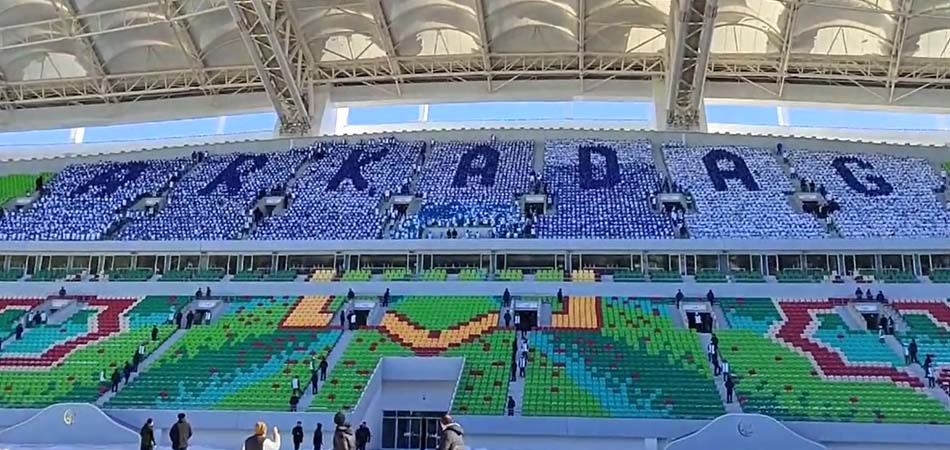
Fans who have bought tickets to the upcoming Asian Champions League match between Turkmenistan's Arkadag and Saudi Arabia’s Al-Nassr on February 11 have been informed, sometimes repeatedly, that their seats are being changed to make room for “organized support” groups. According to a source in Ashgabat, notifications are being sent via users’ personal accounts on ticketing platforms. The vacated sections, the source said, are being allocated to students who are reportedly being trained in advance to provide choreographed support for the home team. Affected spectators are often offered seats with worse visibility, and in many cases, fans, especially families and groups, are being split across different sectors of the stadium, making it nearly impossible to watch the match together. Public frustration has grown as a result. “A 45,000-seat stadium was specifically allocated for this match. If officials had plans for some sections, they could have decided in advance and sold tickets accordingly. If they can’t even organize one match properly, how can we expect them to handle more serious events?” the source said. Some fans have opted not to attend the match at all, despite having already paid for tickets. Others are seeking to resell their tickets, though doing so is complicated. Ticket purchases required passport details, and it is believed that ID checks may be enforced at the gates, making resale risky. Adding to the discontent is the asymmetry in ticketing policy: the Ashgabat city administration’s ticket regulations prohibit buyers from exchanging or returning tickets, while allowing organizers to unilaterally reassign seats. According to reports, the most prominent seating sections will not be occupied by club supporters, but by students compelled to rehearse chants and routines for the game. Arkadag will host Al-Nassr in the last 32 round of the AFC Champions League. The Saudi club’s lineup includes global football star Cristiano Ronaldo. The return leg is scheduled to take place in Saudi Arabia on February 17 or 18.

Kyrgyzstan and China to Launch Direct Flight Between Osh and Kashgar

A new air route connecting Osh, Kyrgyzstan’s second-largest city, with Kashgar in China’s Xinjiang Uyghur Autonomous Region is expected to launch in April, according to a statement from Airports of Kyrgyzstan JSC. The announcement follows a meeting held on January 30 with the Commercial Aircraft Corporation of China (COMAC). The new flight is intended to enhance transport connectivity between the two neighboring countries, deepen bilateral trade and economic ties, and promote tourism and cultural exchange. The route is expected to be operated by Chengdu Airlines, a COMAC-affiliated carrier, using COMAC’s C919 aircraft, China’s first domestically developed short-to-medium-range turbofan jet, which can accommodate up to 97 passengers. Osh already has an existing air link to Xinjiang. In November 2025, China Southern Airlines resumed flights between Osh and Urumqi, the region's capital. Xinjiang serves as a strategic gateway to China for Kyrgyzstan, and Kashgar is the departure point for the China-Kyrgyzstan-Uzbekistan (CKU) railway, an ambitious regional infrastructure project aimed at connecting China with Central Asia, the Middle East, and Europe. The 523-kilometer railway will run from Kashgar to Andijan, Uzbekistan, passing through Kyrgyzstan via Torugart, Makmal, and Jalal-Abad. Construction on the CKU railway officially began on December 27, 2024, in Kyrgyzstan’s Jalal-Abad region. New transport links by air and rail are expected to further boost trade between Kyrgyzstan and China. According to Chinese Ambassador to Kyrgyzstan Liu Jiangping, bilateral trade reached a record $27.2 billion in 2025, up 20% from the previous year.

Tata Steel Chess Contest Has A New Champion – From Uzbekistan

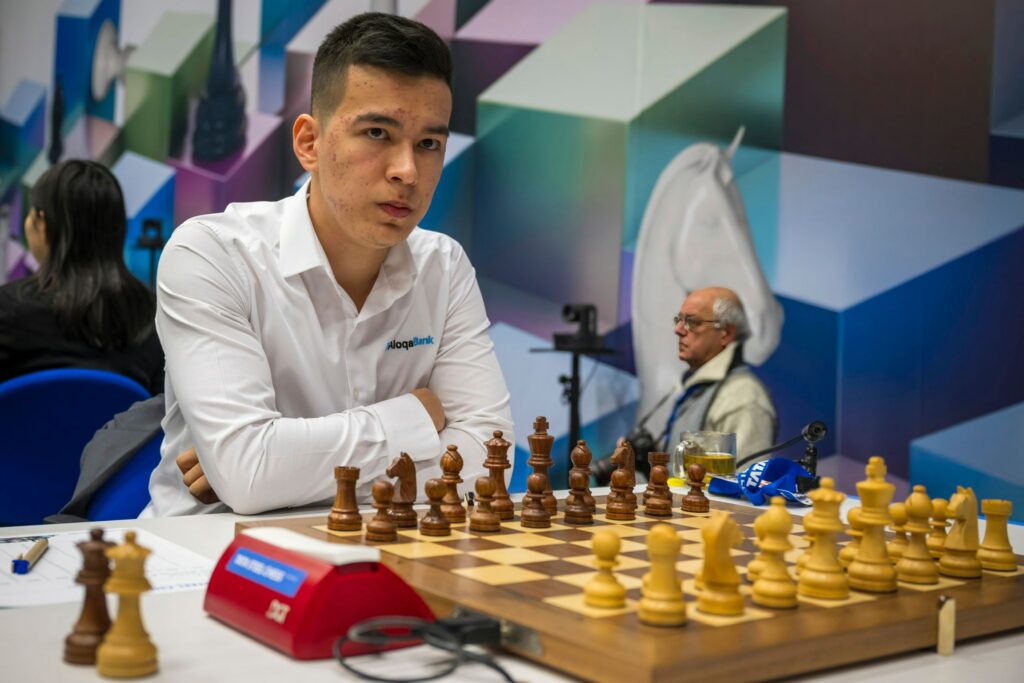
When he was a child, Nodirbek Abdusattorov dreamed of winning the elite Tata Steel Chess Tournament in the Netherlands. On Sunday, the 21-year-old from Uzbekistan did just that. Abdusattorov secured the champion´s title after raising his point total to nine, playing with the black pieces in a final round victory over Indian Arjun Erigaisi. Another grandmaster from Uzbekistan, 20-year-old Javokhir Sindarov, came second with eight and a half points. “I can’t express my happiness with words. It was a long way for me,” Abdusattorov said in an interview posted on the tournament website. He said he had come close to winning the contest in previous years, and finally doing so was a highlight of his career. “I had a dream to win this tournament when I was a kid and finally my dream came true,” he said. “I just told myself: ‘Don’t let it slip this year.´” Uzbekistan´s top player had six wins, six draws and one loss in the 13-round tournament. “For three straight years, Nodirbek Abdusattorov was right there on top going into the final weekend. Three times, the title slipped through his fingers. This year, he came back and finished the story. From heartbreak to redemption,” the tournament said on X. Abdusattorov won the FIDE World Rapid Chess Championship in 2021 and was part of the team from Uzbekistan that won gold at the 2022 Chess Olympiad in Chennai, India. FIDE is the international governing body of chess. “I gave everything I had,” Abdusattorov said. “I don’t have plans for celebration but obviously I’m going to do something.” Sindarov had four wins, nine draws and no losses at the Tata Steel event, where he was the only unbeaten player. He won the FIDE World Cup in 2025, qualifying for this year’s Candidates Tournament, which determines who can challenge the world champion. The current champion is India’s Gukesh Dommaraju. Over the years, the Tata Steel tournament in the seaside town of Wijk aan Zee has attracted greats of the game including Garry Kasparov, Anatoly Karpov and Magnus Carlsen. The strong showing by Uzbek players in the 14-participant Masters competition this year shows the growing strength of chess talent in Uzbekistan.    

Kazakhstan’s Rybakina Wins Australian Open, Her Second Major

Elena Rybakina became the first player from Kazakhstan to win the Australian Open on Saturday, defeating world No. 1 Aryna Sabalenka 6-4, 4-6, 6-4 in the final in Melbourne. Rybakina, the 2022 Wimbledon champion, didn’t drop a set on her way to the final, capitalizing on her big serve and aggressive groundstrokes. She was down 0-3 in the third set against Sabalenka, but then won five consecutive games and closed out the match with an ace. She raised her arms in triumph and, after a brief embrace with the Belarusian at the net, jogged to her box to acknowledge her team. “Thank you so much to Kazakhstan,” Rybakina, 26, said in her victory speech, nodding in the direction of a group of fans in the stands. “I felt the support from that corner a lot.” The world No. 5 had lost to Sabalenka in three sets in the Australian Open Final in 2023. But Russia-born Rybakina defeated the world’s top player to win the WTA Finals in November after a year in which she won two WTA 500 titles but did not advance past the fourth round at any of the majors. “I just hope that we’re going to play many more finals together,” Rybakina said in Melbourne. Sabalenka has a head-to-head record of 8-6 over Rybakina.

Unbent, Unbowed, Unbroken: The Art of Saule Suleimenova

“I’m a very emotional person,” says artist Saule Suleimenova with a bright, open laugh from her home studio in Almaty. Widely recognized as one of the most significant Kazakh artists working today, Suleimenova’s spontaneity and passion emerge clearly as the artist lightens up when talking about the joy and necessity of making work, when she excavates memories of the early days of making art, or when suddenly, she grows gloomy, remembering some of the most painful moments in the history of her country. Behind her back stands a large canvas, where translucent elements, almost resembling stained glass from a distance, slowly reveal themselves as fragments of discarded plastic bags fused together through heat and a whole lot of patience. Born in 1970, Suleimenova has developed a practice that spans painting, drawing, photography, and public art, consistently navigating the delicate and often hard to define boundary between personal memory and collective history: “I feel my personal life can’t be detached from politics and everything that happens around me,” she says, embodying, in a way, a motto from the seventies: “the personal is political.” Suleimenova was an early member of the Green Triangle Group, an experimental artist collective known for its avant-garde and punk-influenced art, which emerged during the Perestroika era and the collapse of the USSR, playing a significant role in revolutionizing contemporary art in Kazakhstan. Today, she is working mostly with archives, vernacular imagery, and the visual language of contemporary urban space. In her work, she investigates how narratives are formed, distorted, and even rewritten over time, particularly within the historical and political context of Kazakhstan. An example is her ongoing series, Cellophane Paintings, composed entirely from used plastic bags, transforming everyday waste into luminous, layered pictorial fields that hold together subjects as vast as socio-political trauma, from the Kazakh famine of 1930–1933, human rights violations, Karlag, one of the largest Gulag labor camps, and the Uyghur genocide. Those heavy themes are associated with some that are more intimate: family members, flowers, and cityscapes. Suleimenova is currently participating in the Union of Artists at the Center of Modern Culture Tselinny in Almaty (15 January – 19 April 2026), curated by Vladislav Sludsky, an exhibition reflecting on artistic partnerships as systems of survival in a region where art historically survived through shared spaces and personal alliances between artists, rather than institutional support. The Times of Central Asia spoke to Suleimenova about memory, material, and the ways personal experience and political history converge in her art. [caption id="attachment_42718" align="aligncenter" width="2500"] From the series, One Step Forward[/caption] TCA: Your recent work at the Bukhara Biennial, Portraits of the people of Bukhara, was made from polyethylene bags collected by the community itself. Can you tell me how your work on this project took shape? Suleimenova: From the beginning, the work was meant to be collaborative with local artists or artisans rather than something already finished and brought from outside. I decided to collaborate with a folk ensemble of Bukhara women - the retired performers...