• KGS/USD = 0.01144 0%
  • KZT/USD = 0.00204 0%
  • TJS/USD = 0.10394 -0.38%
  • UZS/USD = 0.00008 0%
  • TMT/USD = 0.28490 -0.28%
  • KGS/USD = 0.01144 0%
  • KZT/USD = 0.00204 0%
  • TJS/USD = 0.10394 -0.38%
  • UZS/USD = 0.00008 0%
  • TMT/USD = 0.28490 -0.28%
  • KGS/USD = 0.01144 0%
  • KZT/USD = 0.00204 0%
  • TJS/USD = 0.10394 -0.38%
  • UZS/USD = 0.00008 0%
  • TMT/USD = 0.28490 -0.28%
  • KGS/USD = 0.01144 0%
  • KZT/USD = 0.00204 0%
  • TJS/USD = 0.10394 -0.38%
  • UZS/USD = 0.00008 0%
  • TMT/USD = 0.28490 -0.28%
  • KGS/USD = 0.01144 0%
  • KZT/USD = 0.00204 0%
  • TJS/USD = 0.10394 -0.38%
  • UZS/USD = 0.00008 0%
  • TMT/USD = 0.28490 -0.28%
  • KGS/USD = 0.01144 0%
  • KZT/USD = 0.00204 0%
  • TJS/USD = 0.10394 -0.38%
  • UZS/USD = 0.00008 0%
  • TMT/USD = 0.28490 -0.28%
  • KGS/USD = 0.01144 0%
  • KZT/USD = 0.00204 0%
  • TJS/USD = 0.10394 -0.38%
  • UZS/USD = 0.00008 0%
  • TMT/USD = 0.28490 -0.28%
  • KGS/USD = 0.01144 0%
  • KZT/USD = 0.00204 0%
  • TJS/USD = 0.10394 -0.38%
  • UZS/USD = 0.00008 0%
  • TMT/USD = 0.28490 -0.28%

Viewing results 97 - 102 of 1438

Epiphany in Central Asia: Orthodox Traditions and Regional Unity

On the night of January 18-19, Orthodox Christians across Central Asia gather at frozen rivers and lakes to celebrate the feast of Epiphany by plunging into icy waters, three times each, in line with tradition. Though rooted in the Christian faith, this ritual has evolved into a broader cultural event, drawing participation from people of many backgrounds. A Test of Faith and Endurance In Central Asia, Epiphany coincides with some of the coldest days of the year, often referred to as the "Epiphany frosts." Despite subzero temperatures, participation in ice bathing continues to grow. According to Orthodox tradition, Epiphany commemorates the baptism of Jesus in the River Jordan. While the climate in Israel was mild, believers in the region embrace the symbolic cleansing despite the extreme cold. The Orthodox Church does not consider ice bathing a requirement for the faithful. Instead, the central ritual of the holiday is the Great Blessing of Water, performed both on Epiphany and the evening before. Priests encourage believers to collect holy water from churches, sprinkle it throughout their homes, and drink it in small amounts on an empty stomach. Many believe this brings health and protection for the year ahead. Nevertheless, in the main Orthodox churches of Central Asia, fonts and pools are prepared for those who wish to immerse themselves. Designated ice holes are also opened in lakes and rivers for traditional bathing. Strict Safety Measures in Kazakhstan In Kazakhstan, authorities take extensive precautions to ensure public safety during Epiphany bathing. In Astana, the celebration began with a religious procession from the Constantine and Helen Cathedral to the embankment of the Ishim River, where the water was consecrated despite temperatures dipping to minus 30 degrees Celsius. Warm changing rooms were provided, and teams from the Ministry of Emergency Situations, along with paramedics and rescue personnel, were on hand throughout the night. In Almaty, where temperatures hovered around minus 15 degrees, Epiphany fonts were set up at 10 churches. Authorities reminded residents that swimming in non-designated natural bodies of water is prohibited due to the risk of slipping or falling through the ice. However, safety teams and patrols were stationed at approved bathing sites, including the Bolshaya Almatinka, Malaya Almatinka, Butakovka, Goryachiy Istochnik, and Gorenik rivers. Officials advised those with cardiovascular or endocrine conditions to avoid the ritual and warned against participating while intoxicated. A Cultural Tradition Embraced by Many Over time, Epiphany bathing in Central Asia has grown beyond a strictly religious practice. In Kazakhstan, many ethnic Kazakhs and other non-Christian residents eagerly take part, viewing the ritual as a source of health and vitality. It has become a powerful symbol of interethnic and interfaith unity in the region. While Muslim clerics typically do not encourage participation, they generally refrain from direct criticism, recognizing the tradition's broader cultural significance. Orthodox priests also emphasize that the ritual is more custom than doctrine, open to anyone. Some compare Epiphany bathing to the festive atmosphere of Kurban Ait, when Muslims share food in public spaces. Likewise,...

Mapping the Inner Landscape: An Interview with Oyjon Khayrullaeva

In recent years, a new generation of Uzbek artists has begun to reshape how culture, history, and identity are visually narrated. Among them is Oyjon Khayrullaeva, whose practice moves fluidly between photography, digital collage, and large-scale public installations. Born after independence and largely self-trained outside formal art institutions, Khayrullaeva works with inherited visual languages such as Islamic ornament and traditional textiles, reassembling them into contemporary forms that speak to the present moment. Her recent project for the Bukhara Biennial, called “Eight Lives,” marks a turning point in this exploration. Installed in the public and historical spaces of the ancient city, the work consists of monumental mosaic organs that connect physical vulnerability with emotional states and collective memory. Through the human body, Khayrullaeva maps experiences of anxiety, healing, spirituality, and social pressure, transforming ornament into anatomy and architecture into inner landscape. The Times of Central Asia spoke with the artist to trace how Eight Lives emerged, how collaboration with mosaic masters shaped its final form, and how audiences in Uzbekistan are responding to seeing contemporary art in public spaces. TCA: Can you tell me about your beginnings as an artist? Did you always want to become one? Khayrullaeva: From early childhood, my parents noticed that there was something a bit unusual about me. My father has always called me - and still does - an “alien,” because I’m probably the only person in my family who chose a creative path. No one else in my family has been involved in art, at least not for the past seven generations. I was always a creative child, but I never imagined that I would become an artist. As a child, I tried many things; I went to music school, studied piano, and attended various creative clubs. Still, the idea of pursuing art professionally never crossed my mind. Becoming an artist was, in many ways, an unexpected turn in my life. For a very long time, honestly, until around the age of 24, I had no clear idea of what I wanted to do or what my profession would be. I was never certain about it. So yes, life is an interesting thing. You never really know where it’s going to lead you. TCA: Your artistic journey began with photography before evolving into digital collage. How did your early work in photography shape the way you now approach layering, texture, and composition in your digital pieces? Khayrullaeva: When I was around 17 or 18, I became interested in photography. At that time, I didn’t have a camera, so I was shooting with my phone. For my birthday, I was given some money, and I decided to use it to buy a camera. My father added a bit more, and I bought my very first one. It was an incredible feeling taking photos, holding the camera, and shooting. Mobile photography and working with a camera are completely different experiences, and that difference brought me so much joy. I remember the pure pleasure of photographing everything...

4 Killed in Bus Accident in Kazakhstan; Reports Say Dozens Injured

A bus crashed in the Mangystau region of southwestern Kazakhstan early Friday, killing four people, according to authorities. Citing regional police, some reports said dozens of people were injured. “According to preliminary information, the driver of the vehicle traveling from the city of Aktau towards the village of Beineu lost control of the steering, causing the vehicle to overturn,” the Ministry of Transport said. The ministry said three people were also injured, though some media outlets in Kazakhstan said police later reported that 42 people were injured. Seventeen of those injured were hospitalized and the rest received outpatient treatment, reported the Lada outlet, which covers the Mangystau region. About 50 people were on the bus when it crashed around 1 a.m. Video purportedly from the crash site showed the bus on its side and emergency responders and their vehicles with flashing lights. Transport officials said no defects were found on the road and that signs for drivers had been correctly installed. The bus, which passed an inspection last month, is registered to the Caspian Trans Corporation LLP, a logistics and transportation company. An investigation is ongoing. In September, 10 people died and several others were injured when a minibus crashed into a ditch on a highway in Mangystau.

Kazakhstan’s Yenlik Brings Her Sound to COLORS

Kazakhstani singer and songwriter Yenlik has made history by becoming the first artist from Kazakhstan to be featured on the international music platform COLORSxSTUDIOS. Founded in Berlin in 2016, COLORSxSTUDIOS, commonly known as COLORS, has grown from a small creative experiment into one of YouTube’s most influential music platforms. Recognized for its minimalist visual style, each performance is filmed against a single-color backdrop without set design or special effects, placing the focus squarely on the music, the voice, and the artist. The channel now counts more than 8.2 million subscribers and over 3.5 billion views, cementing its status as a global tastemaker in contemporary music. Over the years, COLORS has showcased a wide range of talent, from emerging artists to international stars such as Billie Eilish, Drake, Doja Cat, and Joji. The platform describes its mission as an effort to “connect people, countries, and cultures on a creative and emotional level,” framing its global, genre-spanning approach as a form of cultural exchange as much as a musical one. Yenlik’s Voice: Rooted in Culture, Reaching Beyond Borders Yenlik, born Enlik Kurarbek, is one of the most prominent figures in Kazakhstan’s emerging musical wave. Her sound blends alternative pop with modern R&B influences, creating a style that feels both personal and closely tied to her cultural identity. The Kazakh language plays a central role in her work, not as a folkloric reference but as a contemporary form of expression. Her music reflects a broader shift in which Kazakh is increasingly present in global pop contexts without being confined to traditional or ethnic frameworks. Yenlik’s authorial sound, shaped by contemporary production and subtle national influences, is paired with an emotionally restrained vocal delivery that has become her signature. Observers suggest it was this originality that drew the attention of the COLORS curators. Known for prioritizing authenticity over commercial success, the platform seeks artists with strong individuality and a distinctive voice, qualities that align closely with Yenlik’s creative vision. From Rejection to Recognition For Yenlik, the invitation from COLORS marked a long-awaited milestone. She had previously applied to the project without receiving a response, making the eventual outreach from the platform all the more meaningful. “When the invitation came, I was overjoyed and burst into tears,” she recalled. “This project always felt so distant. Two years ago, we submitted an application with no response. And now, COLORS reached out to us first.” The performance was filmed outside Kazakhstan and completed within a few hours. Yenlik was struck by the production’s simplicity, defined by an absence of elaborate sets and large crews, and by the quiet intimacy that has become a hallmark of COLORS. The team fostered a welcoming atmosphere, and she was even able to choose the episode’s background color, which she described as symbolizing “true gentle strength,” a visual reflection of the emotional tone of her performance. Rising Digital Momentum Yenlik’s digital presence has continued to grow steadily, with her music gaining traction among younger audiences on social media. Her songs often circulate...

Kazakhstan’s Transport Ministry to Investigate “Serious Aviation Incident” Involving Russian and Uzbek Flights

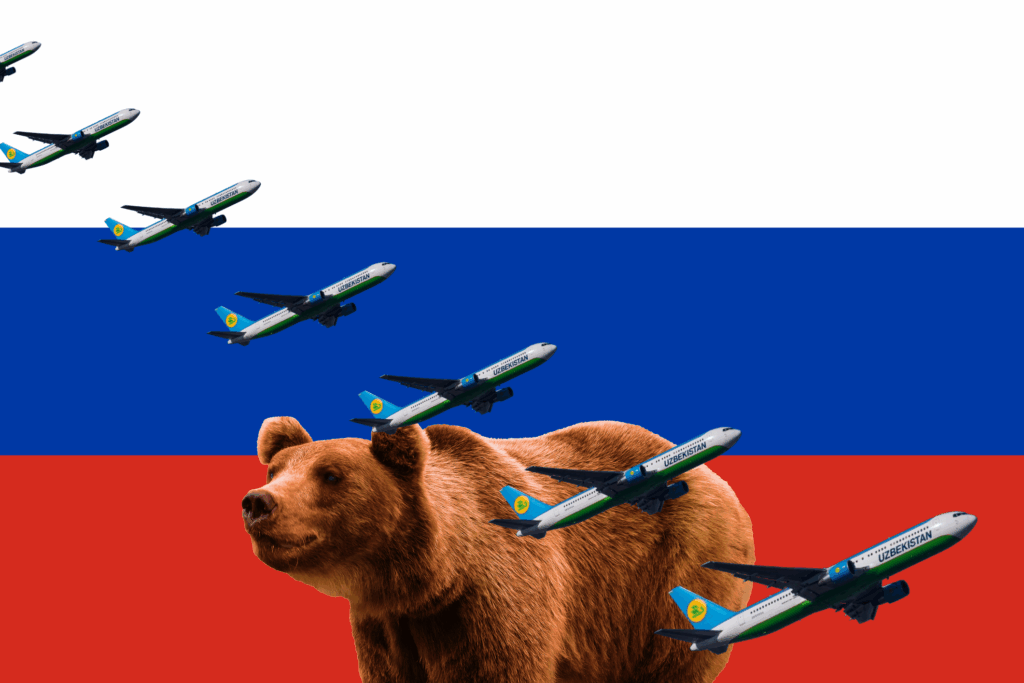
A serious aviation incident involving Russian and Uzbek commercial aircraft occurred in the airspace over southern Kazakhstan, according to Kazakhstan’s Department for the Investigation of Transport Accidents and Incidents. The incident was first reported by Kazinform, citing official comments from the agency. The event took place on the morning of January 10, within the area of responsibility of the Shymkent regional air traffic control center. At approximately 05:42 Astana time, air traffic controllers were managing two international flights when the incident occurred. The aircraft involved were Pobeda Airlines flight PBD997, en route from Moscow’s Vnukovo airport to Samarkand, and Uzbekistan Airways flight UZB9609, flying from Termez to Moscow. “In the A2I sector of the Shymkent regional dispatch center, during the handling of Pobeda Airlines flight PBD997 and Uzbekistan Airways flight UZB9609, an aviation event occurred,” the department stated, as quoted by Kazinform. The incident was classified as a “serious aviation incident” under national regulations, triggering a mandatory investigation by the relevant authorities. Kazakhstan’s Ministry of Transport has announced the formation of a special commission to investigate the case. According to the ministry’s press service, the standard duration for such investigations, from the establishment of the commission to the approval of the final report, is typically no more than three months, barring the need for additional analysis or technical assessments. At this stage, no information has been released regarding injuries, aircraft damage, or specific operational details, as the investigation remains ongoing. This incident follows a similar near-miss that occurred in September 2025, when an Uzbekistan Airways passenger jet narrowly avoided a collision with a private business aircraft in Russian airspace near Serpukhov, south of Moscow.  That event took place shortly after midnight on September 29, during descent into Vnukovo airport. It involved an Uzbekistan Airways Airbus A320 arriving from Samarkand and an Embraer Legacy 650 business jet flying from Bodrum in Turkey. Investigators later attributed the incident to radio miscommunication, which resulted in a breach of the minimum required separation between the two aircraft.

American Scholar Mark Reese Fights Intellectual Property Theft of Uzbek Classic ‘Bygone Days’

When American scholar Mark Reese set out to share Uzbekistan’s most celebrated novel with the world, he never imagined that his work would be pirated by the very institutions he had hoped to support. Reese, who first came to the country as a Peace Corps volunteer in the 1990s, spent more than a decade translating O‘tkan Kunlar (Bygone Days), the seminal 1920s novel by Abdulla Qodiriy. His English edition was a scholarly milestone – the first time the novel, considered Uzbekistan’s literary classic, had been made accessible to English-speaking readers. The book was warmly received. In 2019, Reese was awarded the Uzbek state’s Order of Do‘stlik, or Friendship, for his contribution to cultural understanding. During a follow-up visit the next year, he gave signed copies of the book to universities and ministries across the country. “All parties asked how they could support my work,” he tells The Times of Central Asia. “I presented a copy and explained that they could purchase more at a steep discount.” Each donation came with a clear stipulation: the book was not to be copied, resold, or distributed further. For a time, the project seemed to blossom. Uzbek students used the book in academic papers. One university even adapted it into an English-language stage play. Reese granted permission for such use, as long as it remained non-commercial and he was credited. By 2021, he had entered a publishing partnership in Tashkent and was preparing to distribute 5,000 official copies in 2026. Agreements to publish in Turkey and Qatar were also underway. Then, quietly, the book escaped his hands. Reese learned from students in the Ferghana Valley that a full PDF of the translation had been uploaded to the Telegram channel of a university library. When he opened the file, he recognized something chilling – his own handwriting on the inside cover. The scan had been made from a gifted copy. It was high-resolution and clearly done using professional equipment. The source of the leak soon became clear. The rector of Uzbekistan’s State World Languages University, known locally as Jahon Tilli, confirmed in an interview that his vice rector had scanned the book as part of a digitisation initiative. “They did so without my permission,” Reese said. “And the file was then shared with 1.3 million university students and 6.3 million school students.” The book was everywhere – on servers, in group chats, on flash drives. In at least one case, students tried to send the file to a printer and sell it. Reese took the case to court. The verdict was in his favour: the court ruled that copyright theft had occurred. But instead of holding the university responsible, the judge placed the blame squarely on the vice rector. Reese believes this was a calculated move. “It’s a common ploy to reduce damages,” he said. “I’m now expected to sue the individual for up to $30,000, but courts usually award just 20 to 40 percent of that.” This, for Reese, is the deeper problem. There...