• KGS/USD = 0.01144 0%
  • KZT/USD = 0.00193 -0%
  • TJS/USD = 0.10858 0.09%
  • UZS/USD = 0.00008 0%
  • TMT/USD = 0.28571 0%
  • KGS/USD = 0.01144 0%
  • KZT/USD = 0.00193 -0%
  • TJS/USD = 0.10858 0.09%
  • UZS/USD = 0.00008 0%
  • TMT/USD = 0.28571 0%
  • KGS/USD = 0.01144 0%
  • KZT/USD = 0.00193 -0%
  • TJS/USD = 0.10858 0.09%
  • UZS/USD = 0.00008 0%
  • TMT/USD = 0.28571 0%
  • KGS/USD = 0.01144 0%
  • KZT/USD = 0.00193 -0%
  • TJS/USD = 0.10858 0.09%
  • UZS/USD = 0.00008 0%
  • TMT/USD = 0.28571 0%
  • KGS/USD = 0.01144 0%
  • KZT/USD = 0.00193 -0%
  • TJS/USD = 0.10858 0.09%
  • UZS/USD = 0.00008 0%
  • TMT/USD = 0.28571 0%
  • KGS/USD = 0.01144 0%
  • KZT/USD = 0.00193 -0%
  • TJS/USD = 0.10858 0.09%
  • UZS/USD = 0.00008 0%
  • TMT/USD = 0.28571 0%
  • KGS/USD = 0.01144 0%
  • KZT/USD = 0.00193 -0%
  • TJS/USD = 0.10858 0.09%
  • UZS/USD = 0.00008 0%
  • TMT/USD = 0.28571 0%
  • KGS/USD = 0.01144 0%
  • KZT/USD = 0.00193 -0%
  • TJS/USD = 0.10858 0.09%
  • UZS/USD = 0.00008 0%
  • TMT/USD = 0.28571 0%
22 December 2025

Viewing results 127 - 132 of 1053

Urban Night Almaty: Creative Communities and the Future of Central Asia

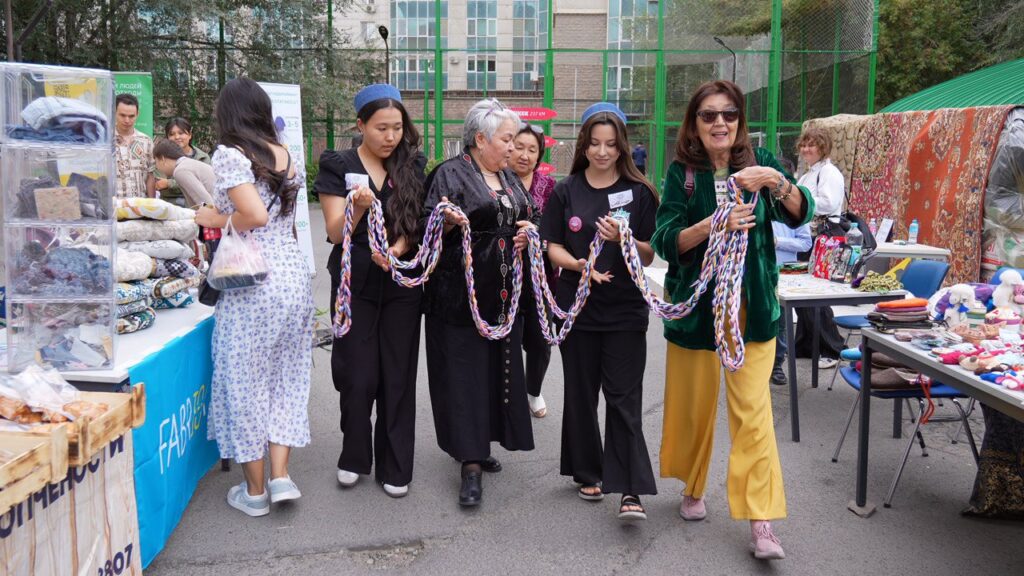
Ecology, entrepreneurship, and innovation in urban life were the central themes of Urban Night Almaty, a one-day festival held last Saturday in Kazakhstan’s largest city. The event sought to answer a key question: Can small-scale initiatives and grassroots communities meaningfully improve life in a metropolis? Organizers and attendees alike believe they can. The festival drew together a wide array of participants, recycling advocates, artists, artisans, confectioners, cosmetics producers, startup founders, writers, journalists, students, sociologists, urbanists, architects, and entrepreneurs, each contributing to a shared vision of sustainable, inclusive urban development. [caption id="attachment_36181" align="aligncenter" width="350"] @Eduard Galeev[/caption] “Each of us lives in our own information bubble, and events like this push us to step outside of it. We’re all different, but we can achieve something together,” said ecologist Pakizat Sailaubekova. “Looking at the people who came to the festival and how moved they are, it’s inspiring.” Discussion and Decision-Making Urban Night Almaty was organized around several thematic zones. One area was dedicated to public discussions on technology, education, and ecology. Bekežan Kaigaliev, founder of Food Recycling and Aquajem, presented on the use of fly larvae to process organic waste in large cities. Alexey Kupriakov, founder of the Green Workout movement, shared ideas on integrating eco-friendly practices into urban planning. Zhuldyz Saulbekova, CEO of the Almaty Air Initiative, spoke about technological solutions for combatting air pollution and chronic smog. [caption id="attachment_36180" align="aligncenter" width="350"] @Eduard Galeev[/caption] Other panels focused on educational innovation. Journalist and PR expert Anuarbek Zhalel, alongside Nursultan Amirkhan, product manager at Daryn.online, discussed promoting startups and integrating new tools in learning environments. A separate session brought together alumni of U.S. internship programs. Among them were athlete and IT specialist Aina Dosmakhambet, lawyer Zhibek Karamanova, and Yerzhan Nauruzbayev, a Forbes 30 Under 30 honoree with professional experience across three continents. Practice and Inspiration Beyond the panels, attendees participated in workshops and creative performances. Highlights included a sports-themed cleanup organized by Kupriakov and an urban exploration of Almaty led by the GoroZhanym project. An eco-themed market showcased small-scale producers offering food, toys, jewelry, souvenirs, and hygiene products. Many entrepreneurs shared stories of how their ventures, though modest in scale, contribute to making Almaty cleaner and more future-oriented. [caption id="attachment_36183" align="aligncenter" width="233"] @Eduard Galeev[/caption] “We often speak in terms of global problems, but it’s essential to respect action at the micro level,” said political analyst Dosym Satpaev. “Thanks to social media, even the smallest project can gain traction. The more of these we have, the stronger our creative economy becomes. These are the foundations for national stability, development, and retaining talent.” Satpaev also hosted a futurology session addressing the challenges and prospects artificial intelligence presents for Central Asia. The festival concluded with a tұsaуkeser ceremony, a Kazakh tradition that involves cutting a symbolic cord representing a newborn's first steps. The cords, handcrafted by members of the Niti Dobra movement (which supports premature infants), symbolized renewal and the strengthening of ties between citizens and their city. [caption id="attachment_36179" align="aligncenter" width="350"] @Eduard Galeev[/caption] Regional Reach “Our...

East Kazakhstan’s Akbaur Stones: An Ancient Site Shrouded in Mystery

East Kazakhstan is home to one of Central Asia’s most enigmatic archaeological sites, the Akbaur complex. Often dubbed the “Kazakh Stonehenge,” it has been linked to ancient rituals, astronomical observations, and even cosmological legends. Despite decades of study, Akbaur continues to raise more questions than it answers. The Mysteries of Akbaur Archaeologists regard Akbaur as a unique cultural monument, though its true purpose remains debated. Some view it as an open-air temple, others as an ancient observatory or a major cult center for early civilizations of the region. More than a tourist attraction, Akbaur is a symbol of East Kazakhstan’s deep and still-unrevealed history. The site is not just a scattering of stones. It is a vast historical and architectural complex covering some 70,000 hectares, long surrounded by legends. Today, this area is protected by the state, and special permission is required to visit it, but just a few decades ago, both tourists and livestock roamed freely here. [caption id="attachment_36128" align="aligncenter" width="352"] @Yulia Chernyavskaya[/caption] For local residents, Akbaur holds sacred meaning. A tradition of leaving offerings has persisted through the centuries: small pieces of meat or fat are placed in shallow man-made depressions in stone slabs. A stone staircase, also human-made, leads to a grotto carved into the rock, and is believed to have carried symbolic as well as functional significance. Even the name “Akbaur” is contested. Possible Kazakh translations include “white liver,” “close relative,” and “mountain slope.” Though varied, each carries symbolic resonance with the site’s layered history. A Portal Between Worlds? The Akbaur complex is located near the village of Besterek, about 38 kilometers from Ust-Kamenogorsk. At first glance, the arrangement of boulders and slabs might appear natural. Archaeologists, however, identify the site as a Bronze Age monument. A conical grotto sits six meters above the mountain base, decorated with petroglyphs dating to the early 3rd millennium BCE. Around 80 images have been recorded, depicting humans, animals, dwellings, and tools, alongside more mysterious symbols. Interpretations range from cosmological signs to religious symbols, with fringe theories suggesting messages for descendants or even references to extraterrestrials. [caption id="attachment_36130" align="aligncenter" width="350"] @Yulia Chernyavskaya[/caption] [caption id="attachment_36131" align="aligncenter" width="350"] @Yulia Chernyavskaya[/caption] What makes the petroglyphs unique is their use of red ochre, a rare pigment in the region’s rock art. Some scholars speculate blood may have been mixed into the paint, adding a ritual dimension. The site’s natural features are equally intriguing. Above the grotto lies a massive slab with a heart-shaped hole, believed by some to have functioned as a “sky window” for astronomical observations. Elsewhere, stone “bowls” reveal remarkable precision: during the spring equinox, sunlight reflecting on water in one cavity aligns exactly with another, suggesting their use as a solar calendar. Other theories propose more practical functions. The depressions could have been used in sacrifices or metallurgy, given the discovery of nearby ingots matching their shapes. What Does Akbaur Hide? Systematic study of Akbaur began in the 1970s under archaeologist Zainolla Samashev, a native of East Kazakhstan. Since 2019, excavations...

Bukhara Craftsman Keeps Ancient Woodcarving Traditions Alive

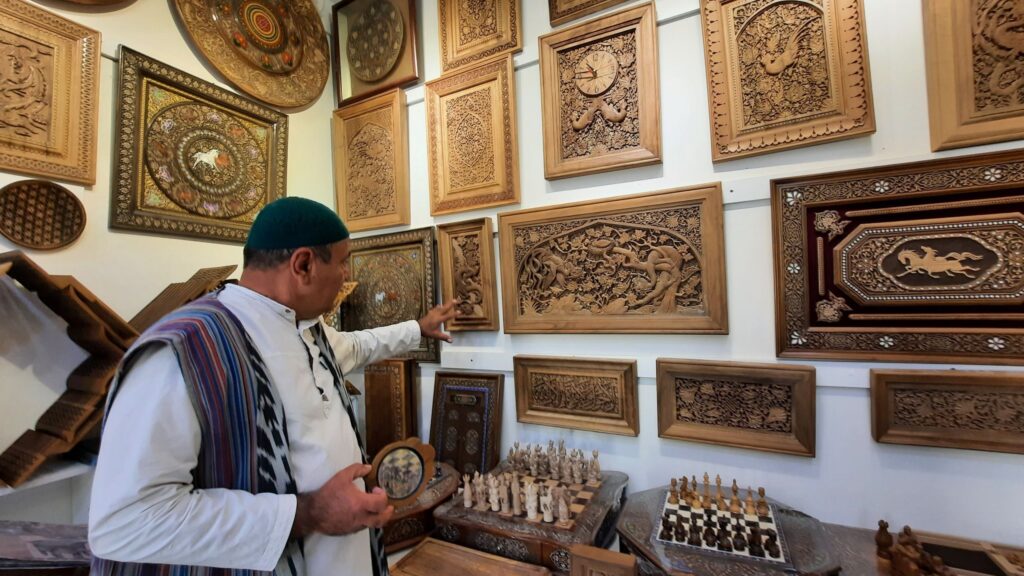
In the heart of Bukhara, one of Uzbekistan’s most historic cities, the sound of chisels meeting wood still resonates through the workshop of Shavkat Ashurov. At 57, he has dedicated more than two decades to the art of woodcarving, a tradition that has endured through centuries of upheaval and modernization in Central Asia. Ashurov’s workshop feels like a living museum. The patterns he carves are not modern inventions but trace their lineage back to the fifth and sixth centuries, long before the spread of Islam in the region. “There is only one similar piece left in Shahrisabz," Ashurov explains, "on the museum door connected to Amir Temur, and another in Turkistan. What we do here is to keep these traditions alive.” [caption id="attachment_36145" align="aligncenter" width="2560"] Ashurov's workshop. @Sadokat Jalolova[/caption] For Ashurov, woodcarving is more than a profession, it is a family legacy. “We are the fourth generation,” he said. “I only try to pass on what I know. I don’t add more than I can. What I learned from my forefathers, I hand over to my students.” He began carving more than 35 years ago, but for the past two decades has devoted himself almost entirely to the craft. Over the years, he has trained nearly 100 apprentices, though today he works with just four. The reason, he admits, is the patience the art requires. “This work takes time and patience, and not everyone can manage that,” he said. “Some of my students chose other professions. But with the ones I have, I continue.” The work itself is painstaking. A simple carved bowl may take about 40 minutes if the wood is well-prepared, but larger projects can span months. “One of our biggest works took nine months to complete,” he recalled. “It depends on inspiration too. Sometimes you work every day; sometimes you pause, waiting for the right moment to continue.” [caption id="attachment_36146" align="aligncenter" width="1280"] Chess pieces from an 83-year-old apprentice working with his teacher Ashurov. @Sadokat Jalolova[/caption] Ashurov’s designs are rich with symbolism. Many incorporate chessboard-like patterns, interlocking stars, or subtle references to family and genealogy. Over centuries, foreign influences have entered Uzbek woodcarving, but artisans like Ashurov have absorbed them into a distinctly local tradition. “Miniature lacquer work came from Europe and Russia, and we placed it into our art,” he said. “The use of mother-of-pearl came through Iran and Turkey. But we reworked them into our own tradition.” Equally important to him is honesty. “I tell customers about product defects before selling them, and I teach my students to be honest too. Honesty is as important as the design itself.” Woodcarving is both an art and a livelihood. His workshop supports not only his own household but four other families. Income is unpredictable from modest sums to as much as 100 million soums (around $8,000) depending on commissions. “It is 50 percent local buyers, 50 percent foreigners,” he said. “Our people also value this work, but foreigners are often very interested.” Social media has become an unexpected...

Kazakhstan Sees Growth in Urban Cancer Cases

The incidence of cancer has risen in Kazakhstan’s cities, while rural areas have seen a decline, according to Energyprom.kz, which cited data from the Ministry of Health. In 2024, cancer incidence in urban areas reached 239.2 cases per 100,000 people, up from 230 the previous year. The highest rates, exceeding the national average, were recorded in the Karaganda region (353.5 per 100,000), Kostanay region (352.7), East Kazakhstan region (349.4), and Abay region (302.4). Environmental factors are believed to contribute. Karaganda, the hub of Kazakhstan’s coal and metallurgical industries, was ranked the world’s third most polluted city in 2024, according to the World Air Quality Report by IQAir. By contrast, cancer incidence in rural areas decreased to 147.1 per 100,000 people in 2024, down from 173.8 in 2023. Regional Data The total number of cancer patients in Kazakhstan reached 230,900 in 2024, an increase of 12,800, or 5.8%, compared to the previous year. Almaty, the country’s largest city, recorded the highest number of patients: 34,200. However, its incidence rate per 100,000 people was slightly below the national average. Karaganda region ranked second with 21,400 patients. Astana followed with 16,800. In 2024, 41,300 people in Kazakhstan were diagnosed with cancer for the first time. The largest numbers of new cases were in Almaty (5,200), Karaganda region (3,800), and Astana (3,000). Medical statistics also showed that the rate of primary diagnoses declined slightly, from 208.6 to 204.8 per 100,000 people. Kazakhstan in Regional Contex Within Central Asia, Kazakhstan has the highest cancer incidence, followed by: Kyrgyzstan - 86 per 100,000 Uzbekistan and Turkmenistan - 74.1 Tajikistan - 32.1 The cancer mortality rate in Kazakhstan also rose in 2024, from 65.1 to 68 deaths per 100,000 people. Measures to Combat Cancer To expand treatment access, Kazakhstan has launched domestic production of oncological drugs. In October 2024, Swiss pharmaceutical company F. Hoffmann-La Roche Ltd., in partnership with Nobel Almaty Pharmaceutical Factory JSC, began producing three biotechnological medicines in Almaty for the treatment of HER2-positive breast cancer, an aggressive form affecting up to 20% of breast cancer patients in Kazakhstan. Each year, around 5,000 new cases of breast cancer are registered in the country, with about 1,200 resulting in death.

Learning Across Borders: Education at the Heart of Central Asia–Japan Relations

For more than three decades, Japan has cultivated a distinctive partnership with the countries of Central Asia, one rooted not in geopolitics or grand strategy alone, but in human connection. Education has emerged as one of the strongest pillars of this relationship, as young people from Uzbekistan, Kyrgyzstan, Kazakhstan, Tajikistan, and beyond increasingly look to Japan for academic training, language study, and professional development. Tokyo’s support for scholarships, university exchanges, and Japanese language programs reflects a long-term vision: to invest in people-to-people ties that strengthen mutual understanding and prepare a new generation of leaders across the region. The Times of Central Asia spoke with Central Asian students at the International University of Japan to gauge their experiences. Ilyos from Uzbekistan: "As an international student, I found Japan to be a country of fascinating contrasts - deeply rooted in tradition, yet highly modern. I was struck by the coexistence of fast-paced, bustling cities and quiet, remote towns, each offering a very different atmosphere and way of life. "I chose Japan because I’d previously studied in South Korea at the undergraduate level. That experience made me curious about Japan, as I expected certain similarities but also wanted to explore the differences. I thought that if Japan were similar to Korea, the adjustment would be smooth, and if it offered something new, it would be an even greater opportunity to broaden my perspective and prepare for my career. "I’ve been truly impressed by how consistently Japanese people follow rules, respect social order, and demonstrate a high level of etiquette in everyday interactions. This has left a strong impression on me and has shaped the way I think about discipline, respect, and community values." Farrukh from Tajikistan: "I first visited Japan back in 2019. At that time, it was a business trip, and I spent a month here. I’d been thinking about studying in Japan for a long time, but I finally had the opportunity last year when the JICE JDS Scholarship in my home country was announced. "In the time I’ve been here, I’ve never felt I was treated differently from other people, even locals. There have been minor instances when Japanese people acted very strictly, but I guess that’s how they usually are. In terms of cultural differences, one thing I noticed was how hard they work; there is a lack of work-life balance." Azmat from Uzbekistan: "Most of my colleagues from work got their Master’s degrees in Japan, and we have some agreements between the Japanese government and our organization about studying here. My ex-director, my current deputy director, and the head of division are graduates of Japanese universities. So, listening to their stories, I ended up studying in Japan. "I find the people of Japan to be very polite and patient. The way they treat us as foreigners is really good. Of course, there are some difficulties - Japan is a country of rules - but they’re minor." As Central Asia deepens its educational links with Japan, the stories of...

Tajik Book on Cultural Ties Gains International Recognition, but Remains Overlooked at Home

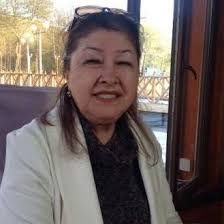
Orientalist and art historian Munira Shahidi, daughter of the renowned Tajik composer Ziedullo Shahidi, has brought international attention to her book “Cultural Ties Between East and West in the 21st Century.”  The work explores cultural parallels and literary connections between civilizations, highlighting the Tajik people’s role as guardians of the intellectual legacy of great thinkers. While presented at events in Cambridge and Berlin, the book has yet to be showcased in Tajikistan. From Oslo to Amazon “I showed that in Tajikistan people speak the language of great classics such as Khayyam, Hafiz, Ferdowsi, and Mawlavi, who are also recognized in the Western world. This demonstrates a new dignity of the Tajik people to the world,” Shahidi explained. Publishing the book, however, was not straightforward. With no funding available, unexpected assistance came from two Iranian visitors to the Ziedullo Shahidi Museum of Music Culture, who offered to publish it free of charge. The book was released in Oslo at the end of 2024 in both Tajik and English. The publication soon entered Amazon’s global network and spread through major universities worldwide. Yet, this platform does not cover Tajikistan. Only ten copies of the book reached the country, purchased by the Tajik Embassy in Uzbekistan. European Presentations The book’s first public presentation was held in Baku at a conference supported by the Tajik Ministry of Culture. Shahidi was subsequently invited to the Azerbaijan Center for Cultural Studies. Later, during a four-month stay in Cambridge, England, she presented her work three times at university colleges. “Students realized that British Orientalists were among the first translators of Khayyam, Hafiz, Ferdowsi, and Mawlavi into English,” she noted. The book was also introduced in Berlin, Prague, London, and Samarkand. No official presentation has yet been organized in Tajikistan. An Undervalued Heritage Shahidi laments that classical Tajik and Persian literature is insufficiently studied in her homeland. “If their works were included in school and university programs, conversations would become more pleasant, and people’s behavior would improve. The philosophy of Mawlavi, for example, is a whole world of treasures,” she said. She also expressed concern over declining interest in reading, suggesting that television and radio could play a larger role in promoting literature and the arts through live programs and discussions on poets, philosophers, and composers. Another source of disappointment for Shahidi is the neglect of her father’s creative legacy. “The songs of my father, Ziedullo Shahidi, are no longer heard on radio or television. Yet songs like ‘Vatan, Vatan,’ ‘My Star,’ ‘Our Home,’ and ‘Your Village’ were once very popular,” she said. To address these challenges, the Ziedullo Shahidi International Foundation was established and now operates under the Public Council of the President of Tajikistan. According to Munira, the foundation regularly raises issues of art and international cooperation. “The art of the Tajik people is great, but the world does not know it. We need to establish more ties with Iran and Afghanistan and present our potential to the world,” she concluded.