• KGS/USD = 0.01144 0%
  • KZT/USD = 0.00216 0%
  • TJS/USD = 0.10659 0%
  • UZS/USD = 0.00008 0%
  • TMT/USD = 0.28530 0%
  • KGS/USD = 0.01144 0%
  • KZT/USD = 0.00216 0%
  • TJS/USD = 0.10659 0%
  • UZS/USD = 0.00008 0%
  • TMT/USD = 0.28530 0%
  • KGS/USD = 0.01144 0%
  • KZT/USD = 0.00216 0%
  • TJS/USD = 0.10659 0%
  • UZS/USD = 0.00008 0%
  • TMT/USD = 0.28530 0%
  • KGS/USD = 0.01144 0%
  • KZT/USD = 0.00216 0%
  • TJS/USD = 0.10659 0%
  • UZS/USD = 0.00008 0%
  • TMT/USD = 0.28530 0%
  • KGS/USD = 0.01144 0%
  • KZT/USD = 0.00216 0%
  • TJS/USD = 0.10659 0%
  • UZS/USD = 0.00008 0%
  • TMT/USD = 0.28530 0%
  • KGS/USD = 0.01144 0%
  • KZT/USD = 0.00216 0%
  • TJS/USD = 0.10659 0%
  • UZS/USD = 0.00008 0%
  • TMT/USD = 0.28530 0%
  • KGS/USD = 0.01144 0%
  • KZT/USD = 0.00216 0%
  • TJS/USD = 0.10659 0%
  • UZS/USD = 0.00008 0%
  • TMT/USD = 0.28530 0%
  • KGS/USD = 0.01144 0%
  • KZT/USD = 0.00216 0%
  • TJS/USD = 0.10659 0%
  • UZS/USD = 0.00008 0%
  • TMT/USD = 0.28530 0%

Viewing results 31 - 36 of 1678

Kazakhstan to Introduce AI in Driver’s License Exams

Kazakhstan plans to introduce artificial AI technologies into both the theoretical and practical components of driver’s license exams. At the same time, citizens will be allowed to take the exams an unlimited number of times without having to repeat training at driving schools. The initiatives were presented by Zhaslan Madiyev, Minister of Digital Development, Innovation and Aerospace Industry, together with representatives of the Ministry of Internal Affairs. According to the proposed changes, augmented reality (AR) technologies will be used in the theoretical exam, while computer vision systems will monitor practical driving tests. These measures are intended to increase transparency and prevent the use of prohibited devices. “These measures will make it possible to minimize the use of prohibited technical tools and to record violations,” the government press service said. A pilot project is set to be launched at a branch of the National Testing Center under the Ministry of Science and Higher Education in Astana. The project will test technologies aimed at ensuring academic integrity, as well as conduct psychometric analysis of exam questions to verify their reliability and alignment with safe driving standards. The new rules provide for the possibility of an unlimited number of exam attempts on a paid basis, with a mandatory interval of at least 10 calendar days between attempts. Currently, applicants are granted three free attempts, two with a one-day interval and a third after 30 days. After exhausting these attempts, retraining at a driving school is required. According to the government, the new approach will make the process more accessible and reduce corruption risks by eliminating incentives to obtain licenses illegally. Plans also include strengthening the information security of digital systems used in the licensing process by classifying them as critical information infrastructure. This would introduce stricter liability for unauthorized interference, including criminal penalties. Administrative liability will also be introduced for individuals who assist in illegally obtaining driver’s licenses. Violations such as the use of micro earpieces, hidden cameras, and other transmitting devices will be punishable by fines and disqualification from taking the theoretical exam for up to one year. The reforms will also affect driving schools. Licensing requirements are expected to be introduced, and their performance will be evaluated based on training quality and public feedback. Licenses may be revoked in cases of consistently poor standards. As previously reported by The Times of Central Asia, Senator Gennady Shipovskikh had earlier proposed restoring state oversight of private driving schools.

Kazakhstan Begins First Public-Private Partnership Sports Facility Project

Construction has begun in the Atyrau region on Kazakhstan’s first sports boarding school for athletically gifted children, to be implemented under a public-private partnership (PPP) model. According to the Ministry of Tourism and Sports, the private partner will be responsible for the full project cycle from design and construction to technical maintenance of the facility for five years after its completion, which is scheduled for May 2027. The new school will feature modern academic buildings and residential facilities. The 3.2-hectare site will include an academic block for 400 students, a 300-bed dormitory, 13 gyms, a swimming pool, a cafeteria, a library, a stadium, running tracks, and basketball and volleyball courts. The project in Atyrau is intended as a pilot, with plans to replicate similar facilities in other regions of the country. The school is expected to train 400 young athletes across 13 Olympic sports. Officials say the project will create improved conditions for developing the country’s sports reserve by integrating academic education with professional training. In recent years, the development of sports in Kazakhstan has received increased state support, contributing to stronger performances by Kazakh athletes in international competitions. In the first quarter of 2026, Kazakhstani athletes won 200 medals at international events: 79 gold, 57 silver, and 64 bronze. At the 2026 Winter Olympic Games in Milan, Italy, in February, Kazakhstan won one gold medal and finished 19th in the overall medal standings. This marks the country’s best result since 1994, when it placed 12th at the Lillehammer Olympics, where skier Vladimir Smirnov won gold. In 2026, Kazakhstan’s only medal was secured by figure skater Mikhail Shaidorov, who became the country’s first Olympic champion in figure skating. At the Paralympic Games in Italy in March 2026, Kazakhstan placed 18th out of 55 countries in the medal standings. Yerbol Khamitov won two medals, gold in the biathlon pursuit and bronze in cross-country sprint, becoming the first Kazakhstani athlete to win two medals at a Winter Paralympics.

Contemporary Theater in Kazakhstan: Between Tradition and Experiment

Contemporary theater in Kazakhstan is undergoing a period of active development, balancing the preservation of cultural heritage with the search for new forms of expression. The Times of Central Asia spoke with Abai Kazbayev, an actor at the Zhambyl Regional Russian Drama Theater who is currently studying acting and directing, about how the theater scene is evolving, the challenges faced by actors and directors, and why experimentation has become essential. TCA: Tell us about yourself. How did your journey into theater begin, and what influenced your decision to become an actor? Abai: I entered the profession through my love of cinema. At first, I took part in crowd scenes, and then I became fascinated with the filmmaking process itself. To deepen my involvement, I joined a private theater on the recommendation of friends. There, I had the opportunity to work with Saulius Varnas from Lithuania, as well as with professionals such as Marat Amirayev and Altynshash Shayakhmetova. Today, I'm studying acting and directing at university, while also working at the Zhambyl Regional Russian Drama Theater. TCA: How do you assess the current state of contemporary theater in Kazakhstan? Abai: If we distinguish contemporary theater from traditional formats, most such productions are concentrated in Almaty. In other cities, theater tends to follow a more academic style, although there are exceptions. Personally, I'm drawn to how contemporary theaters reinterpret and reimagine classical works. This approach attracts both new and more discerning audiences. TCA: What makes Kazakhstani theater distinctive compared to that of other countries? Abai: Its uniqueness lies in the combination of cultures. We have European forms, ballet and opera, alongside contemporary interpretations, including those inspired by Bulat Ayukhanov. On the one hand, there are traditional productions about khans and batyrs; on the other, there are stories such as that of a boxer in Almaty in the 1980s, a stage adaptation of Martin Scorsese’s Raging Bull. TCA: How can contemporary theater preserve national traditions while remaining engaging for younger audiences? Abai: Through experimentation. For example, last year in Taraz, a sound drama based on Alexander Grin’s novella Scarlet Sails was staged. It offered a new interpretation: some lines were delivered in Kazakh, and Captain Grey’s song was also performed in Kazakh. It was an attempt to reflect Kazakhstan’s multiculturalism. Interestingly, the production was staged by students from GITIS in Russia. I believe such experiments help attract younger audiences while preserving national traditions. TCA: How important are elements of national culture, language, music, and folklore in today’s productions? Abai: There's currently a broader trend across the arts of returning to cultural roots, and theater is no exception. Every culture seeks self-identification. In cinema, folklore characters are widely used, particularly in the horror genre. In the theater, however, folklore tends to remain within traditional productions and is often treated with a sense of reverence. At the same time, it is worth mentioning the ballet Aldar Köse at the Abai Kazakh National Theater of Opera and Ballet in Almaty. TCA: How do you view experimental...

Tajikistan Didn´t Qualify for World Cup, But Its Young Players Are Winning

Uzbekistan have qualified for this year's FIFA World Cup, while Tajikistan didn’t make it to the tournament. But their fortunes were reversed in a Central Asian junior event, suggesting that Tajik football is poised for a brighter future. Coached by Jafar Akhmedov, Tajikistan’s team won the Central Asian Football Association U17 championship on Monday, securing the title with a 0-0 draw with second-placed Uzbekistan in Tashkent. Tajikistan was top of the field with 10 points, while Uzbekistan had eight. Previously, Tajikistan’s team beat Turkmenistan (5-1), Kyrgyzstan (4-0) and Afghanistan (3-2). Two players on the Tajik team were recognized individually by the tournament. Bihisti Rajabzod was awarded the prize of most valuable player, or MVP, and the top scorer was Sioyosh Nazarov with four goals. The headquarters of the Central Asia Football Association, a sub-group of the Asian Football Confederation, is in Dushanbe, Tajikistan. Its six members are Afghanistan, Iran, Kyrgyzstan, Tajikistan, Turkmenistan and Uzbekistan. Kazakhstan has been a member of the Union of European Football Associations, or UEFA, since 2002. Uzbekistan will compete in the World Cup for the first time this year and faces Colombia, Portugal and Democratic Republic of Congo in Group K. Uzbekistan’s team is led by coach Fabio Cannavaro, captain of Italy’s winning team in the 2006 World Cup in Germany. Tajikistan turned in some solid performances in World Cup qualifying games, including a 1-1 draw against Saudi Arabia and a 3-0 win over Pakistan. Although Tajikistan didn’t manage to qualify for this year’s expanded tournament, it has qualified for the AFC Asian Cup in Saudi Arabia next year.

Kazakhstani Neurosurgeon Galymzhan Issabekov on Brain Research in Berlin

In an era of globalization, science has become an increasingly borderless field dedicated to advancing human well-being. This is especially evident in neuroscience, where ongoing discoveries are deepening understanding of the human brain, one of the body’s most complex and least understood organs, while shaping the future of medicine. Among the emerging researchers in this field is Kazakhstani neurosurgeon and PhD scholar Galymzhan Issabekov. Issabekov is part of a new generation of scientists building international careers in research and medicine. His academic path began at Peking University, where he received medical training and developed a strong foundation in research. He later completed a residency in functional neurosurgery in Beijing, combining clinical practice with scientific work and focusing in particular on hemispherectomy, a complex procedure used to treat severe pediatric epilepsy. [caption id="attachment_46916" align="aligncenter" width="300"] From G.Issabekov's personal archive[/caption] Seeking further professional development, Issabekov continued his training in Japan. With support from the Takeda Science Foundation, he joined Tokyo Women’s Medical University as a fellow, working alongside neurosurgeon Professor Takaomi Taira. This period was instrumental in shaping his research interests and integrating him into the international scientific community. He is currently based in Berlin, where he conducts research at Charité University Hospital. His work focuses on improving deep brain stimulation (DBS), an advanced therapy used to treat Parkinson’s disease. The procedure involves implanting electrodes in deep brain structures to regulate abnormal neural activity. As Issabekov explains, some DBS procedures are performed while the patient is conscious. During these operations, neurophysiologists monitor electrical brain activity in real time, providing neurosurgeons with highly precise, navigation-like guidance. This enables the accurate placement of electrodes in extremely small regions such as the subthalamic nucleus. Experienced specialists can even identify these areas through the distinct patterns, or “sounds,” of neuronal signals, reflecting a high level of surgical precision. Together with his colleagues, Issabekov is developing a new intraoperative protocol that allows for simultaneous brain stimulation and real-time monitoring of neural responses. Previously, combining these processes posed significant technical challenges. The new method is expected to offer deeper insight into the mechanisms of DBS and support more individualized treatment approaches. The research team has reached an important stage, with initial findings now being prepared for publication. Early results indicate strong potential for meaningful scientific advances. Despite working abroad, Issabekov maintains close ties with Kazakhstan’s academic community. He is co-founder and vice president of the Global Central Asian Science and Technology (CAST) Association, which connects more than 150 researchers from Kazakhstan and across Central Asia in over 30 countries. The organization supports early-career scientists by facilitating international placements and promoting global collaboration. “Many Kazakh researchers abroad are willing to contribute to the development of science in their home country,” Issabekov said. “What has been missing is a structured platform to connect them. Our association aims to fill that gap. We also help participants in the Bolashak program, particularly within the '500 Scientists’ initiative, find suitable research institutions and laboratories overseas.” Beyond his scientific work, Issabekov highlights a broader...

Pilots for Turkmenistan Airlines to Be Trained in Turkey

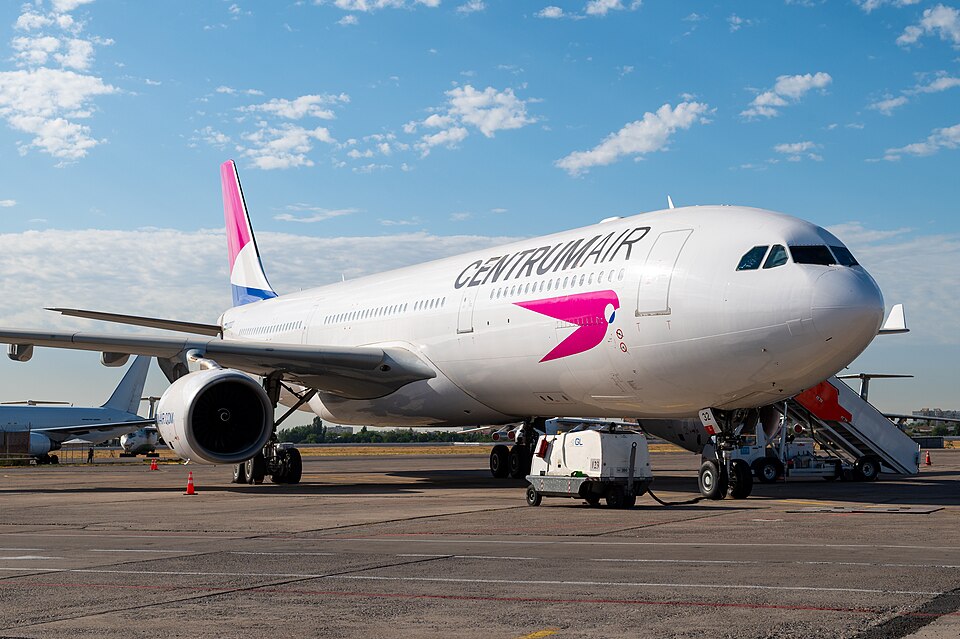
Turkmenistan Airlines has announced a recruitment campaign for candidates to study aviation at the Turkish Aeronautical Association University. The four-year program will be funded by the airline. Selection will be conducted on a competitive basis. Applicants must be male, under the age of 25, hold Turkmen citizenship, and have completed secondary education. Additional requirements include passing a medical examination at the Ashgabat Airport Medical Center and holding a valid military ID. The admission process consists of several stages. Candidates first undergo an initial interview with airline representatives, followed by entrance exams and an interview with representatives of the Turkish university. In the final stage, applicants must pass a medical examination in Ankara. The airline will cover tuition fees, dormitory accommodation, and travel costs, including flights to Ankara at the start of the academic year and return travel to Ashgabat upon completion of the program. However, students will be responsible for certain expenses, including visa fees, health insurance, meals, communication, and local transportation. Upon graduation, participants are required to work for the airline for ten years. Limited Progress in Air Connectivity Despite this initiative, Turkmenistan’s broader aviation sector continues to face challenges. No new international routes have been launched, and several previously announced flights have yet to begin operations. Plans to expand the country’s international air connectivity have been discussed for years, but tangible progress remains limited.