Almaty Facade Renovations Leave Small Businesses in the Dust
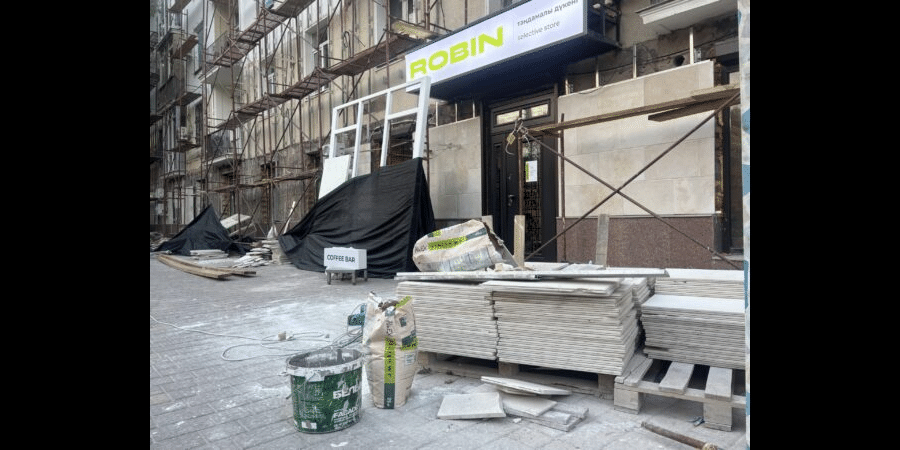
When Gaukhar Osmonalieva rented a space in central Almaty for a pet grooming salon and coffee shop, renovations to the building’s facade were already underway. She was assured the work would be finished soon. Her business opened in August, but instead of a busy street and an outdoor terrace, she found herself surrounded by scaffolding, a torn-up sidewalk, and constant dust. By mid-October, construction was still underway, and the customers she had hoped to attract by choosing the location were coming less frequently. “At one point, the construction workers dug up the entire road, and foot traffic dropped noticeably. We chose this location because it was convenient and had heavy pedestrian traffic, but those are precisely the advantages we have now practically lost,” Osmonalieva told The Times of Central Asia. Almaty is Kazakhstan’s largest city and commercial hub. In 2026, the city launched a large-scale renovation of residential building facades, many dating back to the Soviet era. The original program covered 176 buildings in three central districts – Almaly, Bostandyk, and Medeu. More than 25.8 billion tenge (approximately $57 million) was allocated for the work. Many of the buildings house cafes, shops, and small businesses on their ground floors. [caption id="attachment_58399" align="aligncenter" width="2560"] Classes continue as normal at a language school on Abay Avenue as restoration goes on outside.[/caption] City officials promised to update the facades while preserving the buildings’ architectural features. But questions about how the work was organized emerged as early as spring. Local news outlet Vlast found that construction had begun at some sites in March, before public tenders were announced and contracts signed. Under the tender terms, renovating a single building was supposed to take three to five months. By August, only nine of the 178 buildings listed in updated district administration figures had been fully renovated. Authorities in Bostandyk expected to complete most of the work by September, while those in Almaty targeted October. Osmonalieva was initially told the renovations would take three weeks, then that they would be completed by September. After complaining via e-Otinish, Kazakhstan’s government complaints platform, she was given a new deadline: October 15. “But today is already October 12, and judging by the condition of the facade, I wouldn’t say even half the work has been done,” she said. According to Osmonalieva, there are often only three or four construction workers on the building. Tools are left near the entrance, while workers cut cladding materials beside the salon, filling the area with dust. [caption id="attachment_58396" align="aligncenter" width="2560"] A coffee shop on Kunaev Street, with construction materials stacked outside.[/caption] The coffee shop has suffered most. Osmonalieva had planned to open an outdoor terrace, a popular feature in Almaty, where warm weather lasts for several months. But scaffolding made it impossible to set up tables outside. “As a result, we missed the entire season. This had a significant impact on the coffee shop: demand was lower than expected, and we couldn’t reach our planned targets,” she said. The construction has created additional...