
• KGS/USD = 0.01144 0%
  • KZT/USD = 0.00205 0%
  • TJS/USD = 0.10784 0%
  • UZS/USD = 0.00008 0%
  • TMT/USD = 0.28490 0%
  • KGS/USD = 0.01144 0%
  • KZT/USD = 0.00205 0%
  • TJS/USD = 0.10784 0%
  • UZS/USD = 0.00008 0%
  • TMT/USD = 0.28490 0%
  • KGS/USD = 0.01144 0%
  • KZT/USD = 0.00205 0%
  • TJS/USD = 0.10784 0%
  • UZS/USD = 0.00008 0%
  • TMT/USD = 0.28490 0%
  • KGS/USD = 0.01144 0%
  • KZT/USD = 0.00205 0%
  • TJS/USD = 0.10784 0%
  • UZS/USD = 0.00008 0%
  • TMT/USD = 0.28490 0%
  • KGS/USD = 0.01144 0%
  • KZT/USD = 0.00205 0%
  • TJS/USD = 0.10784 0%
  • UZS/USD = 0.00008 0%
  • TMT/USD = 0.28490 0%
  • KGS/USD = 0.01144 0%
  • KZT/USD = 0.00205 0%
  • TJS/USD = 0.10784 0%
  • UZS/USD = 0.00008 0%
  • TMT/USD = 0.28490 0%
  • KGS/USD = 0.01144 0%
  • KZT/USD = 0.00205 0%
  • TJS/USD = 0.10784 0%
  • UZS/USD = 0.00008 0%
  • TMT/USD = 0.28490 0%
  • KGS/USD = 0.01144 0%
  • KZT/USD = 0.00205 0%
  • TJS/USD = 0.10784 0%
  • UZS/USD = 0.00008 0%
  • TMT/USD = 0.28490 0%

Viewing results 49 - 54 of 432

Kazakhstan in Afghanistan: From Rhetoric to Infrastructure

The visit of Kazakhstan's Foreign Minister Murat Nurtleu to Kabul (July 10–11) was a turning point not only for bilateral relations but also for the entire regional logistics agenda. While Astana's previous statements about its readiness to participate in the Trans-Afghan Corridor were viewed by many with skepticism as a demonstration of goodwill without practical substance, these doubts have now been dispelled. Kazakhstan has not only reaffirmed its commitment to the project but also reinforced it with concrete commitments. An interdepartmental memorandum on the implementation of the Torgundi-Herat railway line has been signed, and Astana has confirmed its readiness to invest up to $500 million in the Trans-Afghan railway project. This is an important step in the formation of future transport corridors within the Central Asia to South Asia (CA2SA) initiative. Practical matters such as tariff policy, border crossing procedures, logistics, and digitalization were also discussed. The visit also carried diplomatic weight. Kazakhstan is demonstrating its willingness to engage pragmatically with Afghanistan’s de facto authorities. This is not a step towards recognizing the Taliban regime, but an effort to involve Kabul in economic processes without altering Kazakhstan’s legal or political stance. Attempts to link this visit to Russia's recognition of the Taliban appear superficial. Such trips are not planned spontaneously — in diplomatic practice, visits at this level are prepared for weeks, if not months. The very structure of the negotiations made it clear what the priorities were: infrastructure, transport security, and economic cooperation, not political recognition. Given Kazakhstan’s balanced foreign policy, formal de jure recognition of the Taliban regime is unlikely in the foreseeable future. The current status quo — practical cooperation without political legitimization — is acceptable to all parties, regional states, and Afghanistan alike. At most, we may see an elevation of diplomatic representation. Currently, both countries are represented by temporary chargés d'affaires. After the visit, extraordinary and plenipotentiary ambassadors may be appointed. However, even this would not mean recognition. Diplomatic missions are a means of communication, not a political endorsement. Kazakhstan’s position continues to be guided by that of the United Nations. Until the Credentials Committee changes its position on the Afghan side's participation in the General Assembly, Astana will not force events. From 2021 to 2024, the committee rejected the Taliban's applications for accreditation, which de facto means a refusal of international recognition at the global level. Although these decisions are not legally binding, they serve as the main political guideline for states that adhere to a collective approach. In matters of recognition, it is essential not to get ahead of geopolitical realities. It is important that Kazakhstan's actions are not isolated: they are in line with other countries in the region, especially those bordering Afghanistan. Whereas previously the policy of Central Asian countries towards their southern neighbor was determined by security issues, the focus is now shifting to trade, logistics, and infrastructure development. Across all regional capitals, there is growing recognition that supporting Afghanistan is not a formality, but a rational strategic choice. After...

Opinion: As Kazakhstan-China Trade Booms, Tokayev and XI Strengthen Relations

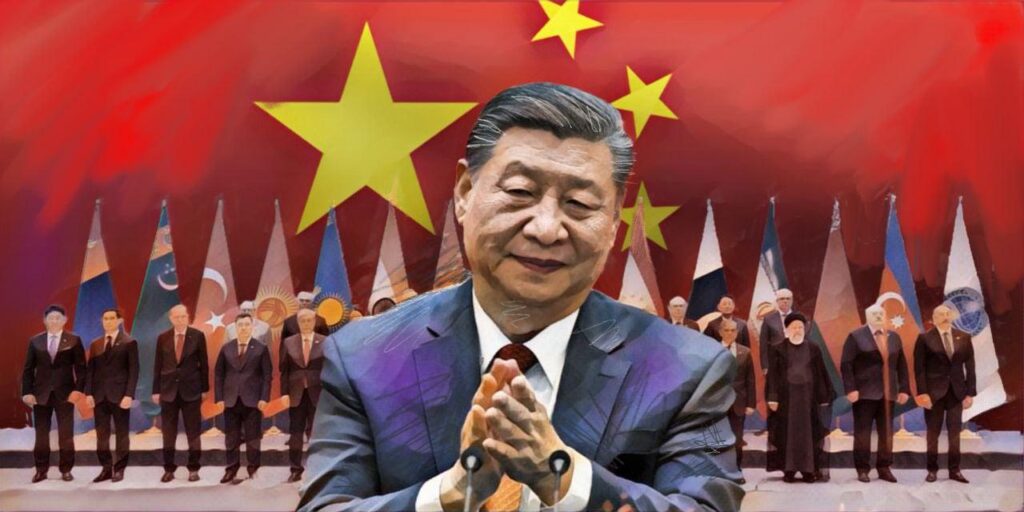
On June 16th, Kazakhstan’s President Tokayev hosted Chinese President Xi Jinping and the presidents of Kyrgyzstan, Tajikistan, Turkmenistan, and Uzbekistan in Astana at the second China-Central Asia Summit. The six countries signed the 'Treaty of Permanent Good-Neighborliness and Friendly Cooperation', which reinforced their strategic cooperation in multiple areas, particularly in trade and investment. Aggregate China-Central Asia trade is up 10.4% this year. Kazakhstan is a pivotal player in transcontinental Eurasian trade and integration. Its geographic location, multimodal transport networks, and strategic partnerships with neighboring countries, particularly China, position Kazakhstan as Central Asia’s primary overland gateway to Europe and West Asia. It’s no surprise, therefore, that President Xi Jinping visited Astana – his sixth trip to Kazakhstan and sixteenth to Central Asia. Over the past two decades, Kazakhstan has reclaimed its historic role as a nation of merchants and intermediaries, revitalizing trade routes like the middle corridor and logistics hubs such as Khorgos Gateway—a dry port facilitating container transshipment between Chinese and Kazakh railways en route to Europe. These are just two examples of infrastructure projects in Kazakhstan; there are many more in development. In Astana, Presidents Tokayev and Xi underscored the importance of further socio-economic progress arising from enhanced economic linkages. Tokayev reiterated Kazakhstan’s support for mutually beneficial business opportunities, emphasizing the principle of national sovereignty and independence. Recent trade figures reflect the robust economic ties in infrastructure and connectivity. Kazakhstan’s construction sector, driven by investments in transport, are poised to increase by 6.8% in 2025, according to Kazakhstani economists. Sino-Central Asian trade, according to China’s General Administration of Customs, reached $94.8 billion in 2024, with Kazakhstan accounting for 46% of that total—$43.8 billion—making it China’s largest partner in the region. This contrasts with Uzbekistan, Turkmenistan, and Tajikistan's combined total of $28.1 billion, and Kyrgyzstan’s $22.7 billion, driven largely by re-exports and gold. Kazakhstan remains the anchor economy in Central Asia – the strategic hinge between China and the West – as confirmed not only by the volumes of freight entering and leaving Kazakhstan, but by its upstream and downstream economic benefits, causing a multiplier effect across the country. Over 80% of land cargo from China to Europe passes through Kazakhstan. What factors have led to this development? A key factor has been global demand for raw materials, but that’s only part of the story. What stands out as the principal driver of Kazakhstan’s success in boosting trade over the past 20 years was its commitment soon after independence in 1991 to invest in transport and logistics, while creating a regulatory and legal framework in parallel to facilitate operability. In other words, Kazakhstan’s success is no accident. It was the country in Central Asia to embrace economic liberalization not as ideology, but as a pragmatic approach to address the inefficiencies of a centralized command economy. This visionary approach facilitated economic liberalization, including getting rid of oppressive centralized planning and embracing private capital and deregulation without relinquishing sovereignty. Kazakhstan also pushed ahead in developing a banking sector that over time provided a...

Opinion: The U.S. Dollar Loses Its Luster as the Uzbek Som Shines

From May 20, 2025, to June 19, 2025, the U.S. dollar declined from 12,885 Uzbek som to 12,625 som, reaching its lowest level since early December 2023. This trend is anticipated to persist. Over the past 30 days, the dollar has depreciated by 2.08% against the som. The Central Bank of Uzbekistan adheres to a flexible exchange rate mechanism, commonly referred to as a floating exchange rate. This approach allows the value of the Uzbek som to be primarily influenced by market forces of supply and demand, rather than being fixed or pegged to another currency. In the context of Uzbekistan, the Central Bank defines the market-determined exchange rate, permitting the som to fluctuate freely based on the interactions between buyers and sellers in the foreign exchange market. In 2017, Uzbekistan transitioned to a flexible exchange rate regime, aligning the som with market conditions and narrowing the gap between the official and parallel exchange rates. This move is expected to enhance export competitiveness, as noted by the European Bank for Reconstruction and Development (EBRD). While the market predominantly determines the exchange rate, the Central Bank reserves the right to intervene in the foreign exchange market to mitigate excessive fluctuations or address significant imbalances. However, it does not maintain a fixed exchange rate. The primary objective of the Central Bank is to uphold price stability, ensuring low and stable inflation. The flexible exchange rate regime empowers the Central Bank to utilize interest rates as a tool to influence inflation and manage the overall economy. Since 2020, the Central Bank of Uzbekistan has been implementing an inflation targeting framework that guides its monetary policy decisions, including those related to the exchange rate. Uzbekistan has recently achieved a remarkable milestone, with its international reserves soaring to an unprecedented $49.6 billion, primarily driven by a substantial increase in gold prices. This significant figure, recorded at the end of last week, represents the highest level of international reserves since the Central Bank of Uzbekistan began tracking this data in 2013. Uzbekistan has been on a remarkable journey of financial growth, marked by a sustained increase in its reserves over the past five months. Since the beginning of the year, the country's reserves have increased by an impressive $8.48 billion, reaching a new historic high of $49.66 billion. In May alone, the reserves saw a substantial boost of $410.2 million, translating to a 0.8% increase compared to April. This consistent upward momentum not only highlights the resilience of Uzbekistan's economy but also demonstrates its ability to adapt and thrive in a dynamic global landscape. Central to this financial ascent has been the role of gold, which has enjoyed significant demand due to its elevated prices in international markets. Over the last month, gold prices surged by 3.27%, rising from $3,280 to $3,390.07 per ounce. When examining the broader trends, it is evident that gold has significantly appreciated, with a striking 25.5% increase since the start of this year and an even more impressive 41.3% surge over...

Opinion: From Xi’an to Astana – Elevating China–Central Asia Cooperation to a New Height

As summer awakens the vibrant landscapes of Kazakhstan, with lilac blossoms aglow and the Ishim River meandering through the capital, Astana is once again at the center of regional diplomacy. From June 16 to 18, Chinese President Xi Jinping will visit Kazakhstan to attend the Second China–Central Asia Summit — an event of both symbolic weight and strategic substance. This year’s summit marks more than a diplomatic gathering — it signifies the maturing of a young but increasingly impactful multilateral framework born from centuries-old ties. From the ancient Silk Road to today’s modern infrastructure corridors, the five Central Asian nations and China are deepening a relationship rooted in trust, driven by mutual benefit, and destined to shape the region’s collective future. Ancient Friendship, Strategic Renewal More than 2,100 years ago, Chinese envoy Zhang Qian opened the first pathway to Central Asia, laying the groundwork for millennia of exchange. In 2013, standing in Kazakhstan, President Xi unveiled the Silk Road Economic Belt, the founding vision of what would become the Belt and Road Initiative (BRI), reviving the spirit of the ancient Silk Road for a new era. Since then, cooperation between China and Central Asia has grown from historical affinity into a full-spectrum partnership. Over the past decade, this partnership has reached “three completions”: the full establishment of comprehensive strategic partnerships between China and all five Central Asian countries, full coverage of BRI cooperation documents, and full alignment with the concept of a shared future for humanity. These milestones demonstrate not just diplomatic intent but a shared strategic outlook that has withstood global uncertainties. As Xi noted, the decision to deepen China–Central Asia cooperation is not a product of convenience, but a generational choice made by leaders with long-term vision, responding to the will of their peoples and the imperatives of regional stability. Tangible Results: A Shared Path to Modernization Since the launch of the China–Central Asia mechanism in 2020, progress has accelerated. The elevation of this platform to the leaders’ level in 2023 during the Xi’an Summit underscored its growing relevance. From the Xi’an Declaration to the establishment of a permanent secretariat, institutional foundations are now firmly in place. More importantly, the mechanism is delivering real results. Trade between China and the five Central Asian states reached a record $94.8 billion in 2024, a $5.4 billion increase from the previous year. New cooperation structures in transport, agriculture, customs, and emergency management are enabling efficient multilateral coordination. A flagship example is the China–Kyrgyzstan–Uzbekistan railway, now under active construction, marking a milestone in physical connectivity. This long-anticipated project, personally championed by the three heads of state, will reshape regional logistics and unlock new trade routes across Eurasia. Beyond rail, a web of cooperation is forming: the high-functioning Khorgos Gateway and the newly launched Kazakhstan Xi’an Terminal, increased Caspian Sea corridor traffic, and regularized freight trains between China and Central Asia. These are not mere infrastructure projects — they are lifelines of mutual development. Kazakhstan, in particular, is actively reinforcing its role as...

Opinion: The Engine of Turkic Integration – Why TURKPA Is No Longer “Just Talk”

On June 12, in Astana, the 14th Plenary Session of the Parliamentary Assembly of Turkic States (TURKPA) was held under the theme: TURKTIME: The Role of Parliamentary Diplomacy. TURKPA has existed since 2008, but it is only now that the multifaceted activities of Turkic states are drawing close attention from external observers, first and foremost, from Russia. This is unsurprising since the driving forces behind Turkic initiatives are often Ankara and Astana. While Turkey promotes its national interests, Kazakhstan appears to play both of its powerful neighbors, Russia and China, against each other. Moscow, at times, does not hide its ire, hinting that its influence over Astana is diminishing in favor of Beijing. Kazakhstan’s President Kassym-Jomart Tokayev skillfully engages with China, securing benefits such as investments and a visa-free regime, which gives Kazakhstani carriers an advantage over their Russian and regional competitors. TURKPA was officially founded a year before its 'sister' organization, the Organization of Turkic States, was established. The first proposal to create TURKPA was made by Kazakhstan’s President Nursultan Nazarbayev at the 8th Summit of Turkic Heads of States in November 2006. Interestingly, TURKPA is also listed on the website of the Commonwealth of Independent States (CIS), although it includes Turkey, a country outside the CIS and a geopolitical rival to Russia, which dominates the organization. Equally interesting is the composition of TURKPA and its governance structure. Its full members comprise Turkey, Kazakhstan, Azerbaijan, and Kyrgyzstan, whilst Hungary and Turkmenistan are observers. The day-to-day operations of the organization are managed by a Secretariat headquartered in Baku, and the Secretary General of TURKPA is always an Azerbaijani citizen. Strategic direction is provided through annual plenary sessions, which are presided over by the Speaker of Parliament of the country currently holding the Chair. “The chairmanship rotates annually in alphabetical order according to the Latin alphabet,” explained Kazakh MP Aigul Kuspan. This brings us to a curious contradiction that nobody focuses much upon. It is believed that Azerbaijan is Turkey’s proxy state in the South Caucasus and Central Asia. At the same time, Kazakhstan and Kyrgyzstan, to a lesser or greater degree, pursue a Russian policy in the region. As explained, in recent years Kazakhstan has also gravitated toward promoting Chinese interests. Thus, in practice, Turkey leads TURKPA through its own presidency and via Azerbaijan for two out of every four years, while Russia/China exert influence through Kazakh and Kyrgyz speakers in the other two. In theory, this tug-of-war could have rendered both TURKPA and the OTS, where geopolitical tensions are similar, meaningless forums for routine summits. That was true until recently; however, now we observe a growing geopolitical subjectivity in Central Asia and a reorientation toward its own interests. Therefore, OTS summits and TURKPA plenaries have become more purposeful. This is demonstrated by the words of President Kassym-Jomart Tokayev, who met with delegates of the 14th Plenary Session of the Parliamentary Assembly of Turkic States. “Last year, Kazakhstan chaired the Organization of Turkic States. Under the motto 'TURKTIME', we implemented...

Opinion: Strengthening the Silk Bonds — India’s Renewed Push Towards Central Asia

The velvet-draped tables of New Delhi’s 4th India-Central Asia Dialogue convened under the stewardship of External Affairs Minister Dr. S. Jaishankar on June 6, 2025, radiated congeniality, with history and strategy converging. This high-level engagement, attended by foreign ministers from Kazakhstan, Kyrgyzstan, Tajikistan, Turkmenistan, and Uzbekistan, marked more than a diplomatic ritual — it signaled India's deepening resolve to recalibrate its strategic posture in a region too long shaped by other powers. Yet beneath pledges of shared civilizational futures and energy corridors, an uncomfortable truth lingered as India remains a guest, not a player, in Central Asia’s great power theatre. Further, India’s internal socio-political landscape presents notable challenges that inadvertently shape its foreign policy credibility, particularly in the eyes of Central Asian nations. Persistent communal tensions — most visibly manifested in the Hindu-Muslim divide, the controversial demolition of the Babri Masjid in 1992, and the politically charged construction of the Ram Mandir — have deepened perceptions of religious polarization. Such domestic developments, while largely internal, resonate beyond India’s borders, especially in the Muslim-majority Central Asian republics, raising concerns about inclusivity and pluralism in India’s governance model. Simultaneously, India’s strained relations with key neighbors — Pakistan, and China, and increasingly volatile dynamics with Nepal, Bangladesh, and Sri Lanka — have reinforced a regional image of discord and inconsistency. These internal and regional complexities contribute to a trust deficit, making Central Asian countries cautious in placing long-term strategic confidence in India. For New Delhi to emerge as a dependable partner in the region, addressing internal fissures and presenting a coherent, inclusive national vision is as vital as economic or diplomatic outreach. Central Asia sits at the center of ancient trade routes and modern geopolitical competition. For India, its importance is twofold: the region is a bridge to Eurasia and a repository of energy resources critical to India’s growing economy. But India’s historical connectivity to Central Asia — through the Silk Road, shared cultural legacies, and spiritual exchanges — has, for decades, been overshadowed by geographic and political barriers, notably the lack of direct overland access due to Pakistan. Recognizing these constraints, the dialogue showcased a strategic pivot. India reaffirmed its commitment to enhancing regional connectivity through the International North-South Transport Corridor (INSTC) and the Chabahar Port in Iran. While geopolitical instability in Iran and Afghanistan poses challenges, India's emphasis on multimodal routes demonstrates pragmatic flexibility. In an era defined by supply chain resilience and multipolar geopolitics, connectivity is no longer just an infrastructure question — it is a currency of influence. The dialogue also addressed the evolving regional security architecture. India’s proposal for counter-terrorism cooperation, capacity building, and intelligence sharing was timely and necessary. However, the dialogue echoed with familiar refrains, viz. civilizational bonds, shared destiny, and multipolar cooperation. Yet beneath the diplomatic choreography lies a haunting question. Can India transcend its historical role as Central Asia’s cultural cousin to become its strategic confidant? History whispers caution. The Burden of History: From Silk Roads to Shadow Roads For centuries, the Silk Road...
