• KGS/USD = 0.01144 0%
  • KZT/USD = 0.00215 0%
  • TJS/USD = 0.10641 0%
  • UZS/USD = 0.00008 0%
  • TMT/USD = 0.28530 0%
  • KGS/USD = 0.01144 0%
  • KZT/USD = 0.00215 0%
  • TJS/USD = 0.10641 0%
  • UZS/USD = 0.00008 0%
  • TMT/USD = 0.28530 0%
  • KGS/USD = 0.01144 0%
  • KZT/USD = 0.00215 0%
  • TJS/USD = 0.10641 0%
  • UZS/USD = 0.00008 0%
  • TMT/USD = 0.28530 0%
  • KGS/USD = 0.01144 0%
  • KZT/USD = 0.00215 0%
  • TJS/USD = 0.10641 0%
  • UZS/USD = 0.00008 0%
  • TMT/USD = 0.28530 0%
  • KGS/USD = 0.01144 0%
  • KZT/USD = 0.00215 0%
  • TJS/USD = 0.10641 0%
  • UZS/USD = 0.00008 0%
  • TMT/USD = 0.28530 0%
  • KGS/USD = 0.01144 0%
  • KZT/USD = 0.00215 0%
  • TJS/USD = 0.10641 0%
  • UZS/USD = 0.00008 0%
  • TMT/USD = 0.28530 0%
  • KGS/USD = 0.01144 0%
  • KZT/USD = 0.00215 0%
  • TJS/USD = 0.10641 0%
  • UZS/USD = 0.00008 0%
  • TMT/USD = 0.28530 0%
  • KGS/USD = 0.01144 0%
  • KZT/USD = 0.00215 0%
  • TJS/USD = 0.10641 0%
  • UZS/USD = 0.00008 0%
  • TMT/USD = 0.28530 0%

Viewing results 43 - 48 of 468

Victory Day Diplomacy: Central Asia’s Balancing Act and Putin’s Diminished Spotlight

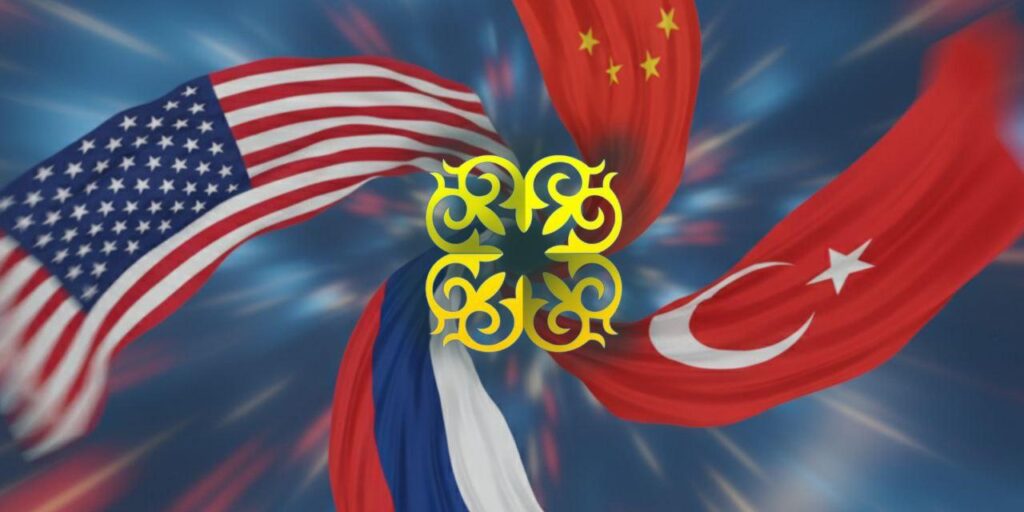
Every year, Moscow’s Red Square transforms into a stage for one of Russia's most celebrated traditions: Victory Day, an event which marks the Soviet Union’s triumph over Nazi Germany in World War II. Yet, as tanks roll through the cobblestone streets and military bands echo under the Kremlin walls, the occasion feels more heavily laden with geopolitical undertones than historical reminiscence these days. Against the backdrop of ongoing conflicts and shifting alliances, the presence of Central Asian leaders at this year’s event speaks to the region’s delicate relationship with the Russian Federation. But the question remains: amidst the pomp and circumstance, is there much for Vladimir Putin to celebrate? Central Asia’s Careful Balancing Act The attendance of Central Asian leaders at the Victory Day parade is a striking show of diplomatic choreography. On the surface, their presence will underscore the shared historical legacy of the Soviet era, when the sacrifices of the Central Asian republics contributed to the Allied victory in the Second World War. However, a more pragmatic lens reveals a balancing act that defines the region’s foreign policy. The region finds itself at the crossroads of global powers vying for influence in Central Asia. While Moscow leans on historical ties and cultural commonalities to retain its sway, Beijing’s economic clout continues to reshape the region’s trade networks and infrastructure projects. Meanwhile, as the inaugural EU-Central Asia Summit attests to, the European Union is eager to expand its reach, whilst hungry for Rare Earth Elements in which the region is rich, the U.S. is waiting in the wings. For Central Asian leaders, participating in Victory Day celebrations signals a nod to Russia’s historic role but also keeps the door open for economic and security cooperation. Amidst the shifting architecture of global politics, their diplomatic strategy remains one of pragmatism, seeking benefits from multiple partners while avoiding any over-alignment. What Does Russia Gain from the Optics? The presence of 29 leaders from across the globe – including Chinese President Xi Jinping - offers Moscow valuable optics at a time when its international relationships face significant strain. Last year, only nine attended. Isolated by Western sanctions over the invasion of Ukraine and with much of the world’s media painting Russia as cut off from the global stage, the impression of a united front with Central Asia helps the Kremlin portray the opposite. Victory Day, therefore, becomes a geopolitical tool, with the attendance of Central Asian leaders enabling Putin to send a message of shared unity within Russia’s historical sphere of influence. It tells both domestic and international audiences that Moscow retains significant allies, reinforcing the image of resilience despite ongoing challenges. How Much Does Moscow Truly Celebrate? The Victory Day parade is an event that is watched by an estimated three-quarters of the Russian public, drumming up patriotism as the state seeks to become the custodian of collective memory. Behind the spectacle, however, signs of disquiet are proving hard to ignore. Russia’s invasion of Ukraine has disrupted trade and migration flows...

Opinion – Central Asia’s Looming Water Crisis: A Ticking Time Bomb

When people think of Central Asia, they often picture vast deserts, ancient Silk Road cities, and oil pipelines stretching to distant markets. Yet the region’s most urgent and combustible resource is not buried underground — it flows above it. Water, or more precisely the lack of it, is rapidly becoming the defining fault line of Central Asia’s future. For decades, the five Central Asian republics have tiptoed around a growing water crisis. The two major rivers that sustain life in this arid region, the Amu Darya and the Syr Darya, are now so contested and depleted that what was once a technical issue has metastasized into a geopolitical threat. The region's major rivers, the Amu Darya and the Syr Darya are under immense pressure, threatening agriculture, livelihoods, and regional stability. At the heart of the crisis is a tragic irony. The upstream countries, Kyrgyzstan and Tajikistan, are rich in water but poor in energy and cash. They need to release water in winter to generate hydropower. Downstream nations, particularly Uzbekistan and Turkmenistan, want water stored until the summer to irrigate vast cotton and wheat fields. The result? Mutual distrust, occasional diplomatic spats, and an accelerating race to dam, divert, and hoard water in a region already gasping under the weight of climate change. A Region Parched Central Asia annually utilizes over 60 billion cubic meters of water for irrigation from the Amu Darya and Syr Darya basins. However, recent years have seen a decline in river flows, with the actual flow of the Syr Darya being 20–23% less than the norm. Further, the ghost of the Aral Sea — a once-thriving inland lake that has now shrunk by over 90% in its volume and 74 % in surface area — serves as a haunting reminder of the cost of mismanagement. The Soviet legacy of excessive irrigation has morphed into a post-Soviet scramble for control, where water is not just a tool of survival but a lever of power. This desiccation has transformed the region, leading to the emergence of the Aralkum Desert and causing severe ecological and health issues. Climate Change Intensifies the Crisis Climate change is exacerbating water scarcity in Central Asia. A recent study revealed that an extreme heatwave in March 2025, with temperatures soaring 5 to 10°C above pre-industrial levels, was significantly amplified by global warming. Such temperature surges accelerate glacier melt and increase evaporation rates, further reducing water availability. By some estimates, Central Asia could lose over 30% of its freshwater resources by 2050. Yet, rather than galvanize cooperation, this existential threat has sparked more competition. International efforts have largely fallen flat. The International Fund for Saving the Aral Sea (IFAS), the region’s main water cooperation body, is riddled with inefficiencies and lacks enforcement power. External actors like China and Russia have their own interests, often deepening the regional divide rather than healing it. Inefficient Water Management Inefficient agricultural practices remain one of the most profound and persistent contributors to water mismanagement across Central Asia. In...

Tokayev Moves to Reclaim Kazakhstan’s Energy Future

In January 2025, Kazakhstan’s President Kassym-Jomart Tokayev instructed the government to seek revisions to the nation’s production-sharing agreements (PSAs). The first known result of that directive has now surfaced, with the International Consortium of Investigative Journalists (ICIJ) publishing a report regarding a confidential interim ruling in an arbitration case. According to this information, Kazakhstan is pursuing a $160 billion claim against the North Caspian Operating Company (NCOC), the consortium managing the Kashagan oil field. The ruling states that after royalty payments, NCOC receives 98% of remaining revenue from Kashagan’s output. The document concerns a narrower environmental dispute, but the 98% figure alters the landscape. The contract in question dates to the 1990s, when Kazakhstan — newly independent, fiscally constrained, and eager for technical expertise — entered into deals that prioritized attracting investment over securing long-term national benefit. The government now argues that those historical constraints no longer apply, while the revenue-sharing terms remain effectively frozen in place. Rather than seek unilateral redress or executive override, Tokayev’s administration has turned to arbitration. The venue, the Permanent Court of Arbitration in The Hague, and the legal framing mark a continuation of Kazakhstan’s methodical approach to reasserting national interests in its domestic political economy. This latest move cannot be understood as an isolated decision. It reflects a trajectory of state behavior extending back three decades. In the early 1990s, when Chevron’s bid for Tengiz was effectively imposed as a condition for U.S. bilateral assistance, Kazakhstan lacked both the leverage and the institutional competence to resist — a dynamic I analyzed in detail at the time. Chevron’s refusal to direct more than a token amount of investment to social infrastructure nearly sank the agreement. A similar dynamic surrounded the financing and structuring of the Caspian Pipeline Consortium (CPC). Kazakhstan’s attempts to assert greater influence were often thwarted, not least by the asymmetry of legal expertise and negotiating experience. That imbalance began to shift by the early 2000s. The creation of KazMunaiGas (KMG) in 2002 consolidated the state's participation in the energy sector and enabled its strategic action to become more coordinated. By 2003, Kazakhstan was insisting on conformity with international accounting standards at Tengiz, not only to ensure transparency but also to block attempts by foreign operators to defer investment obligations. Environmental enforcement became more assertive as well, with fines imposed on Tengizchevroil for massive open-air sulfur storage, a practice that had long provoked public concern. The Kashagan field, discovered in the late 1990s and described as the largest oil find since Alaska’s Prudhoe Bay in 1968, became the focal point of these tensions. From the outset, Kazakhstan’s participation in the consortium was marginal. A restructuring of the consortium in the early 2000s brought KMG back in, but cost overruns and delays continued. By 2007, the government had suspended work at Kashagan, citing both ecological violations and spiraling expenditures, in a sequence of events I traced contemporaneously during the legislative and consortium restructuring that followed. Amendments to the Law on the Subsurface followed, granting...

Opinion – The Great Convergence: Central Asia and the EU in a New Geopolitical Landscape

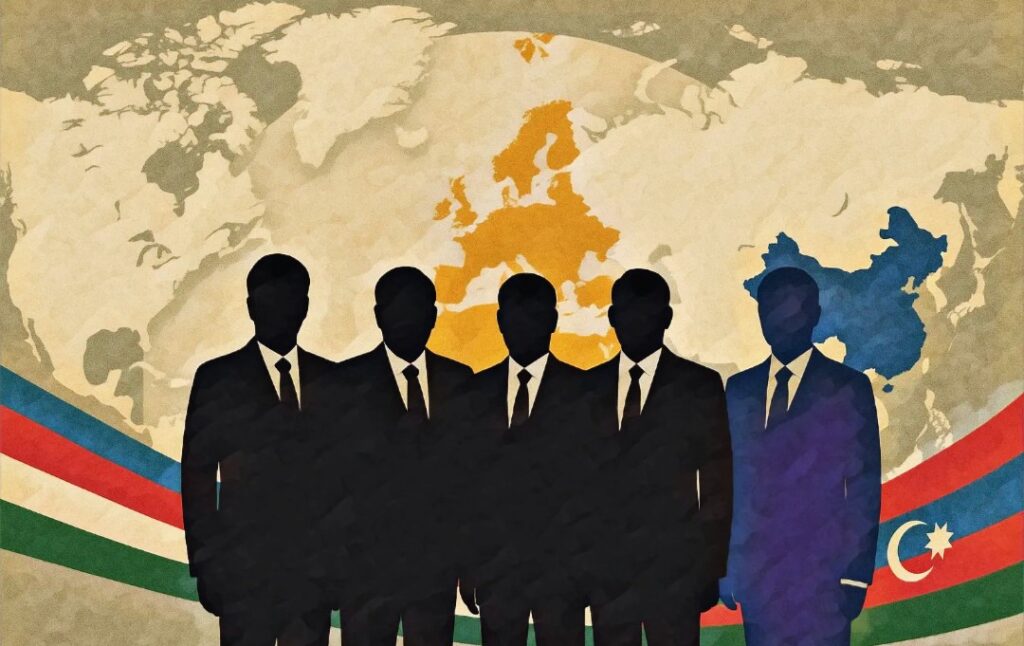
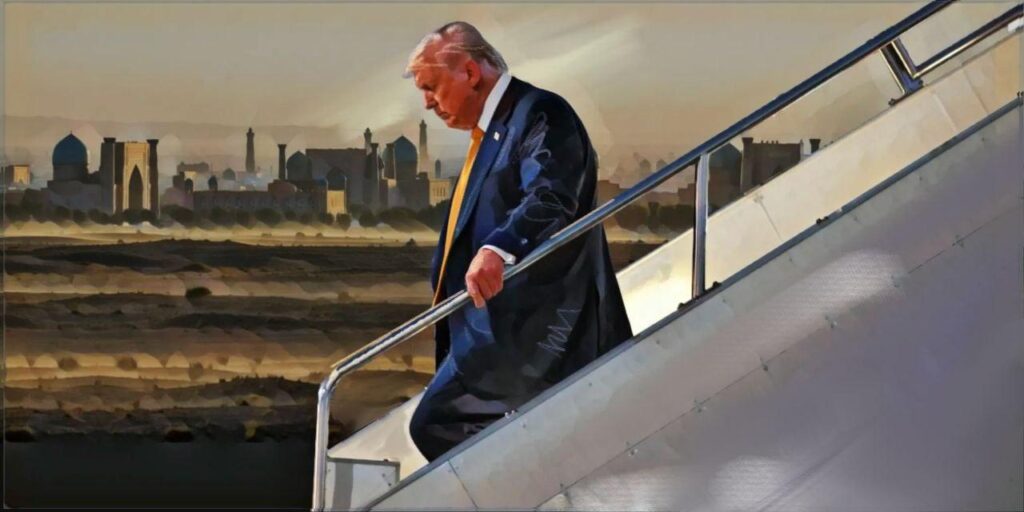
The Samarkand Summit, taking place on April 3–4, 2025, represents a defining moment in Central Asia-European Union (CA-EU) relations. Hosted in the historic city of Samarkand, a crossroads of civilizations and trade for millennia, this inaugural summit marks a geopolitical realignment as the European Union seeks to expand its engagement in a region historically dominated by Russia and China. Against the backdrop of Uzbekistan’s proactive foreign policy reforms under President Shavkat Mirziyoyev, the summit signifies a recalibrated vision for connectivity, sustainability, and economic diversification in Eurasia. The symbolism of Samarkand as the summit’s venue is profound. Once a flourishing center of Silk Road commerce and Timurid cultural grandeur, the city embodies the historical role of Central Asia as a bridge between East and West. Over the centuries, shifting empires and economic transitions relegated the region to a peripheral status in global affairs, particularly after the collapse of the Silk Road, its incorporation into the Russian Empire, and the subsequent Soviet era. However, post-Soviet transformations and recent geopolitical shifts — accelerated by Russia’s invasion of Ukraine in 2022 — have reinvigorated global interest in Central Asia. As the EU strives to reduce dependence on Russian energy and counterbalance China’s Belt and Road Initiative (BRI), the Samarkand Summit emerges as an urgent diplomatic effort to establish stronger economic and political ties with the region. At the heart of the summit’s agenda is the Trans-Caspian Transport Corridor (TCTC), a modern-day Silk Road initiative designed to enhance trade connectivity between Europe and Central Asia via the Caucasus, bypassing Russian territory. By offering an alternative route for energy exports and critical minerals, the corridor could significantly reduce transit times by 15–20%, facilitating the EU’s quest for strategic autonomy in global supply chains. For Central Asian states, particularly Uzbekistan and Kazakhstan, the project presents an opportunity to diversify trade partners and lessen their economic dependence on Moscow and Beijing. However, the corridor’s implementation faces substantial geopolitical and financial hurdles. Russia and China may perceive it as a challenge to their regional influence, potentially leading to diplomatic friction or economic countermeasures. Moreover, the corridor’s development requires an estimated $20–30 billion in infrastructure investments, a daunting figure for cash-strapped Central Asian economies. Parallel to trade discussions, the summit will spotlight climate action and green energy investments. The EU’s €1.5 billion Central Asia Water and Energy Program aims to modernize irrigation systems, promote renewable energy, and reduce fossil fuel dependency. This aligns with Brussels’ broader Green Deal ambitions, positioning the EU as a global leader in sustainable development while offering Central Asian states financial and technical support to address water scarcity and environmental degradation. However, challenges persist — bureaucratic inefficiencies, regulatory gaps, and regional water disputes complicate large-scale green energy implementation. Moreover, while hydropower is a viable alternative to fossil fuels, its intensive water usage could exacerbate tensions between upstream and downstream nations such as Uzbekistan and Tajikistan. The summit will also emphasize digital connectivity and modernization, with the Connecting Central Asia (C4CA) Initiative promoting e-governance, high-speed internet expansion,...

Opinion: In Central Asia, the EU Defies Its “Geopolitical Dwarf” Label

As the United States and Russia reportedly aim to create a new global security architecture, other major actors in the international arena are working to improve their positions in the redefined world order. Often underestimated in terms of its geopolitical influence, the European Union has actively focused its attention on the post-Soviet space, particularly the strategically important Central Asian region. The EU, despite Russia’s and the United States' attempts to undermine its role in the settlement of the Ukraine War and to portray it as a “geopolitical dwarf”, is seeking to increase its presence in global affairs. In Central Asia, the 27-nation bloc is often viewed as a key actor that Kazakhstan, Uzbekistan, Kyrgyzstan, Tajikistan, and Turkmenistan can rely on to balance China’s growing dominance, as well as their security and dependence on Moscow. The EU's desire to strengthen cooperation with Central Asia can be seen as Brussels’ attempt to reduce Russia's influence in the region. Indeed, bogged down in Ukraine, Moscow is slowly but surely being pushed out of Central Asia – a region that has traditionally been within the Kremlin’s geopolitical orbit. As a result, China has managed to significantly increase its economic presence in all five Central Asian nations. The EU is now attempting to do the same. The recent visit of the European Commissioner for International Partnerships Jozef Síkela to Central Asia, as well as the upcoming EU-Central Asia summit scheduled for April 3-4, 2025 in Samarkand, clearly indicates the intensifying geopolitical competition between the EU and China over the region. One of Síkela’s major goals was to expand the scope of the EU's investment strategy, Global Gateway, in Central Asia. The project, launched in 2021, is often viewed as the EU’s version of China’s Belt and Road Initiative (BRI). As part of its strategy to increase its economic presence in Central Asia, the European Union seems to have four priorities: the development of transport infrastructure (particularly the Trans-Caspian International Transport Route, also known as the Middle Corridor), cooperation in raw materials, digital connectivity, and the development of the water resources, energy, and climate sectors. The problem for Brussels is that China, due to its proximity to Central Asia and the lack of bureaucratic procedures, is ahead of the EU in most, if not all of these areas. Beijing has had 12 years to strengthen economic ties with the region through the BRI. As a result, in 2024, China’s overall turnover with Central Asia reached $94.8 billion, nearly double the EU's trade volume with the region in 2022, which stood at $47 billion. Last year, the world’s second-largest economy replaced Russia as Kazakhstan's biggest trade partner. In neighboring Uzbekistan, it remains the top trading partner, while in Tajikistan, over the past 18 years, China has become the major investor in the landlocked nation’s economy. The same applies to Tajikistan and China’s neighbor Kyrgyzstan. The European Union, however, is now intensifying its efforts to position itself as a major foreign power operating in Central Asia. According to...

Opinion: What the Loss of RFE/RL Would Mean for Central Asia

The decision to terminate the federal grant agreement funding for Radio Free Europe/Radio Liberty (RFE/RL) is a crushing blow for hundreds of millions of people. These people know their governments are not telling them the full truth about what is happening in their countries or in the world outside. The objective information provided by RFE/RL has been important to people such as these. Perhaps as important, since the end of the Cold War, was the platform RFE/RL provides, whenever possible, for people in these countries to explain their views to the outside world. I know, because I worked at RFE/RL for 25 years covering Central Asia. RFE/RL was founded in 1950, and I didn’t show up there until 1997. I can only speak about what I saw and heard when I was an RFE/RL employee. My understanding of my tasks as an RFE/RL employee was that we were supposed to keep close track of what was happening in Central Asia, cover as many of the important topics of the region as possible, and make objective and accurate information on these topics available to the people in Central Asia. During Tajikistan’s 1992-1997 civil war, for example, RFE/RL’s Tajik service, Radio Ozodi, was the most trusted source of information for the people of Tajikistan. During the Coronavirus pandemic, the Turkmen government would not even allow the word COVID to be spoken and denied there were any cases of the virus in the country, leaving RFE/RL’s Turkmen service, Azatlyk, as one of the only sources of information for Turkmenistan’s people about the illness. I lived in Central Asia before joining RFE/RL, so I had some idea of what was important to people there. Calling for respect for fundamental rights is a big part of RFE/RL’s work. Read the constitutions of any Central Asian country and you will see enshrined there the right to freedom of speech, freedom of assembly, the right to freely receive or disseminate information, and much more. In practice, these rights are not always observed in Central Asia. In such a situations RFE/RL’s Central Asian services are a voice for those who, with good reason, are afraid to speak out publicly, or more importantly, for those who did speak out and are punished for that. At RFE/RL we looked for “impact stories,” testimony from people of the region about unfulfilled government promises, abuses, or state mismanagement that were hurting communities and individuals. Central Asian government officials are among the most faithful RFE/RL listeners, and often RFE/RL reports that raised social issues led officials to rectify the situation. Ramshackle buildings or schools were suddenly repaired, electricity or running water became accessible to city districts and rural areas, sufficient food became available to communities. The pleas of average citizens too often fell on deaf ears in government halls, but the criticism of an international organization such as RFE/RL, which was broadcasting to the entire country and Central Asian region, was too embarrassing for officials to ignore. This made RFE/RL unpopular with Central...