
• KGS/USD = 0.01144 0%
  • KZT/USD = 0.00215 0%
  • TJS/USD = 0.10599 -0.28%
  • UZS/USD = 0.00008 0%
  • TMT/USD = 0.28571 0%
  • KGS/USD = 0.01144 0%
  • KZT/USD = 0.00215 0%
  • TJS/USD = 0.10599 -0.28%
  • UZS/USD = 0.00008 0%
  • TMT/USD = 0.28571 0%
  • KGS/USD = 0.01144 0%
  • KZT/USD = 0.00215 0%
  • TJS/USD = 0.10599 -0.28%
  • UZS/USD = 0.00008 0%
  • TMT/USD = 0.28571 0%
  • KGS/USD = 0.01144 0%
  • KZT/USD = 0.00215 0%
  • TJS/USD = 0.10599 -0.28%
  • UZS/USD = 0.00008 0%
  • TMT/USD = 0.28571 0%
  • KGS/USD = 0.01144 0%
  • KZT/USD = 0.00215 0%
  • TJS/USD = 0.10599 -0.28%
  • UZS/USD = 0.00008 0%
  • TMT/USD = 0.28571 0%
  • KGS/USD = 0.01144 0%
  • KZT/USD = 0.00215 0%
  • TJS/USD = 0.10599 -0.28%
  • UZS/USD = 0.00008 0%
  • TMT/USD = 0.28571 0%
  • KGS/USD = 0.01144 0%
  • KZT/USD = 0.00215 0%
  • TJS/USD = 0.10599 -0.28%
  • UZS/USD = 0.00008 0%
  • TMT/USD = 0.28571 0%
  • KGS/USD = 0.01144 0%
  • KZT/USD = 0.00215 0%
  • TJS/USD = 0.10599 -0.28%
  • UZS/USD = 0.00008 0%
  • TMT/USD = 0.28571 0%

Viewing results 31 - 36 of 278

Opinion: Kazakhstan Joins Abraham Accords – More Than a Symbolic Gesture

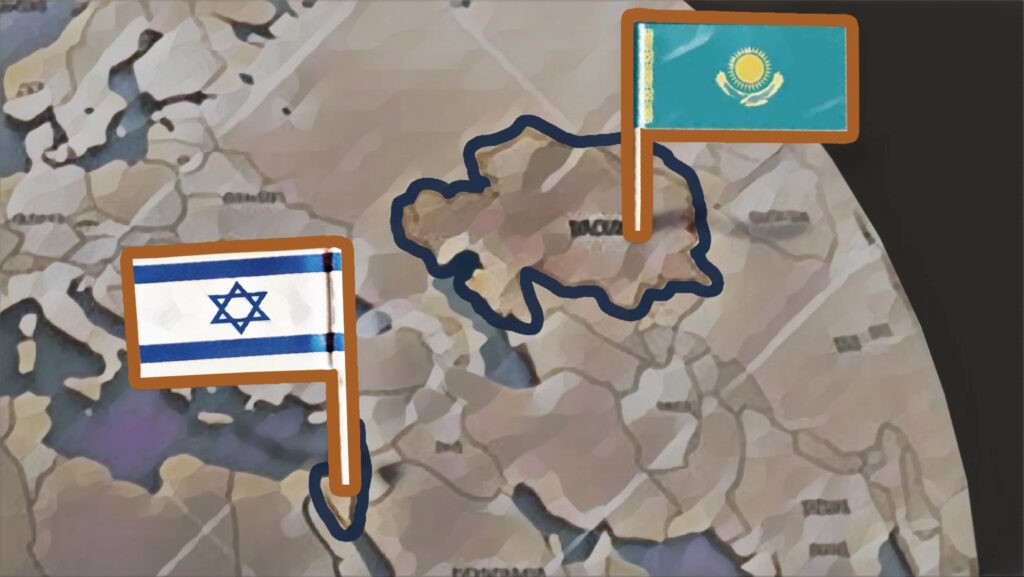
Kazakhstan has officially agreed to join the Abraham Accords during a C5+1 summit, giving another green flag of legitimacy to Israel for its policies and actions in West Asia, especially in Palestine. Reportedly, not only Kazakhstan but also Azerbaijan and Uzbekistan are set to follow this step. The Normalization process, brokered by the United States to advance the culture of peace among the three Abrahamic religions, was initiated by President Donald Trump during his first term. Since then, four Muslim-majority countries - the United Arab Emirates, Bahrain, Morocco, and Sudan - have joined the Abraham Accords. However, other Muslim-majority countries have previously followed the stand taken under the Arab Peace Process of 2002, which emphasizes the resolution of the Palestine issue before starting the normalization of ties with Israel. The joining of the Abraham Accords by Kazakhstan and the quest by other Caucasus and Central Asian Muslim-majority countries are distinctive in multiple aspects. As per the official definition, the Abraham Accords encourage the establishment of relations between Israel and its neighbors in the region. In this context, the extension of the Abraham Accords, originally designed to broker regional peace and stability in West Asia, to other regions and securing legitimacy by Muslim-majority countries outside West Asia reflects the pan-Abrahamic outlook of the U.S.-brokered deal. Moreover, Kazakhstan is a country that has established diplomatic ties with Israel since 1992, after the disintegration of the Soviet Union. So, the question is, what does the joining of the Abraham Accords by Kazakhstan signify for the Central Asian country, which shares a long border with Russia and already has substantial military and economic ties with it? The significance of the Abraham Accords for Kazakhstan can be comprehensively understood from the point of view of Kazakhstan, the United States, and Israel, the major participants of the agreement. Kazakhstan’s attempt to balance regional and global pressure Firstly, for Kazakhstan, the joining of the Accords with the perspective of enhancing ties with Israel can be taken more as a symbolic move, as Kazakhstan already fulfils 25% of Israel’s energy needs. The countries share a strong diplomatic relationship, with Israeli PM Benjamin Netanyahu visiting Kazakhstan in 2016; the two countries have signed several bilateral agreements. Kazakhstan has significant relations with Israel in the fields of irrigation and healthcare, and has also pursued discussions on visa-free travel, tourism, and technology. Kazakhstan and Israel have launched the Israel-Kazakhstan Irrigation Demonstration Centre in the Almaty region. Kazakhstan also hosts the largest Jewish population in Central Asia, which lives in peace and harmony with other ethnic groups. Considering the strong ties already in place, the lingering question is why Kazakhstan had to formally sign an agreement that appears to be a symbolic gesture from the outside. To this question, Adil Husain, PhD scholar of Central Asian Studies at Jamia Millia Islamia (JMI), New Delhi, says that “though the decision to formalize the normalization ties with Israel may appear as a formality, the move carries a strategic significance for the Central Asian country...

Insider’s View: Cooperation Between Uzbekistan and the United States in Tourism

In recent years, relations between the Republic of Uzbekistan and the United States of America in the field of tourism have reached a qualitatively new level. The foundation of this cooperation lies in the systematic efforts of the Tourism Committee to implement the provisions of the “Road Maps” aimed at strengthening bilateral ties, expanding tourism exchanges, and attracting American investment into the sector. The period of 2018–2019 became a turning point in enhancing the tourism dialogue between the two countries. Uzbekistan welcomed experts from the International Association of Tourism Professionals, led by H. Luis Lorenzo Gutierrez, representatives of “PBS” and “ABC” television channels, as well as a delegation from the Congress of Bukharian Jews of the USA and Canada. During the same period, the Tourism Committee organized a series of visits by well-known American bloggers Mark Wiens and Sonny Side, thanks to which millions of viewers around the world were introduced to Uzbekistan’s gastronomic and cultural richness. An important step was the introduction of American online booking services — Booking.com, Expedia, Hotels.com, and Tripadvisor. By the end of 2018, 886 hotels across the country had been connected to these platforms, significantly improving Uzbekistan’s accessibility for American travelers. Since 2019, special attention has been paid to promoting Uzbekistan’s tourism potential through U.S. media and digital platforms. Within the framework of the “World Influencers Congress 2019” forum, more than 20 leading American bloggers arrived in Tashkent, including the “Devin Super Tramp” team, which filmed a short movie titled “Aladdin” in Bukhara and Khiva. These projects not only enhanced Uzbekistan’s visibility on global social media but also helped build its image as a safe and welcoming destination. Cooperation in professional training also developed in parallel. Edward Castley, Vice President of the American Hotel & Lodging Association (AHLA), conducted master classes for university and college instructors, sharing U.S. best practices in training tourism industry professionals. During the COVID-19 pandemic in 2020, an online conference was held with the assistance of the Embassy of Uzbekistan in Washington, D.C., bringing together leading American travel companies — ASTA, Intrepid Travel, G Adventures, and others. The participants discussed measures to restore tourist flows and improve traveler safety. In subsequent years, American media outlets such as The New York Times, National Geographic, and Foreign Policy became increasingly active in covering the country’s tourism potential. Joint media collaborations, including Mystery Box’s 2021 production and CNN’s 2023 documentary The Spirit of Samarkand, have been instrumental in highlighting the cultural heritage and contemporary life of Uzbekistan’s historic cities. In recent years, Uzbekistan–U.S. cooperation in tourism has acquired strategic importance. In 2024, Chairman of the Tourism Committee Umid Shadiev met with U.S. Ambassador Jonathan Henick to discuss prospects for developing green tourism and workforce training. The participation of the Uzbek delegation in prestigious exhibitions — Miami World Travel Expo 2024 and New York Travel and Adventure Show 2025 — opened new opportunities for promoting the country’s tourism brand. Notably, Uzbekistan was recognized as the “Best New Exhibitor” at the New York event. The...

Opinion: The Twelfth Summit of the Organization of Turkic States – A Turning Point for Regional Peace and Integration

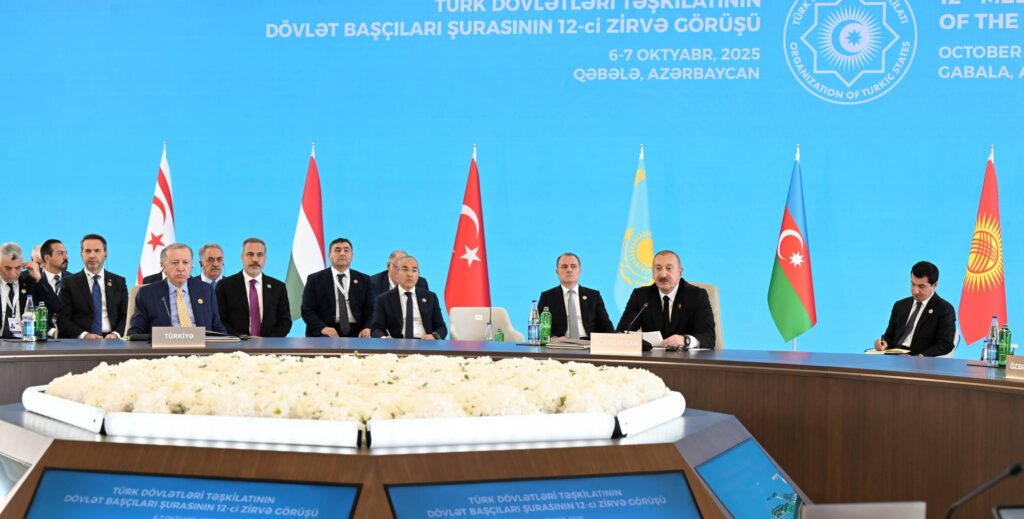
The Twelfth Summit of the Organization of Turkic States (OTS) was held on October 6–7, 2025, in Gabala, Azerbaijan, under the theme “Regional Peace and Security,” and was hosted by the President of the Republic of Azerbaijan, Ilham Aliyev. Attending the summit were Kassym-Jomart Tokayev, President of the Republic of Kazakhstan; Sadyr Japarov, President of the Kyrgyz Republic; Recep Tayyip Erdoğan, President of the Republic of Turkey; Shavkat Mirziyoyev, President of the Republic of Uzbekistan; and Viktor Orbán, Prime Minister of Hungary, participating as an observer. Turkmenistan, represented by Gurbanguly Berdimuhamedov, and the Turkish Republic of Northern Cyprus, represented by Ersin Tatar, also attended the summit as observer members. Among the central topics discussed was support for the Joint Declaration signed between Azerbaijan and Armenia on August 8, 2025, in Washington, D.C. The OTS member states regard this declaration as an important step toward lasting peace and stability in the South Caucasus. The summit also emphasized the need for a collective Turkic effort to sustain peace in the region. In his address, President Aliyev noted that one of the outcomes of the Washington Summit was progress on the Zangezur Corridor, describing it as a new transportation route of great importance within both the Middle Corridor and the North–South Corridor. Speaking before the 80th session of the United Nations General Assembly, Armenian Prime Minister Nikol Pashinyan had countered the use of the term “Zangezur Corridor,” which does not appear in the signed documents and was never used in negotiations. Despite these objections, however, Aliyev again used the term at the OTS Summit, reaffirming his intention to move forward under that framework. The New York meeting on September 22, 2025, between the foreign ministers of Azerbaijan and Armenia, where both sides agreed to continue dialogue based on the outcomes of the Washington Declaration, has been widely considered a constructive step toward normalization of relations between the two parties. Another highlight of the summit was President Erdoğan’s call to develop the ‘Turkish Large Language Model.’ “To catch up with global developments in artificial intelligence and to preserve our cultural richness, we need to accelerate the development of the Turkish Large Language Model,” Erdoğan said. “[In] Türkiye, we are taking the first step on the common alphabet issue by printing a work about Chingiz Aitmatov and the Oghuznames in the common alphabet. Today, we are also presenting a copy of this to the leaders.” The initiative reflects the vision for greater cultural, scientific, and digital integration among Turkic states, and it was included as part of the broader digital transformation and innovation agenda outlined in the Gabala Declaration, which followed the summit. Kazakh President Tokayev described the Organization of Turkic States as an “authoritative structure uniting friendly Turkic peoples,” capable of addressing shared challenges, and expressed support for establishing an “OTS+” format to expand cooperation and global visibility. President Aliyev, meanwhile, highlighted growing military collaboration between Azerbaijan and Turkey, referencing more than 25 joint exercises held within one year - although this figure has...

Opinion: Trump’s Tariff Policy Will Propel the Asian Century More Rapidly Than Ever Before

The concept of the Asian Century draws a parallel to the characterization of the 19th century as Britain's Imperial Century and the 20th century as the American Century. The Asian Century refers to the anticipated dominance of Asian politics and culture in the 21st century, contingent upon the continuation of specific demographic and economic trends. A study by the Asian Development Bank indicated that by 2050, approximately three billion Asians -- equating to 56.6% of the projected 5.3 billion total inhabitants of Asia -- could attain living standards comparable to those in Europe today. Furthermore, this region is expected to contribute to over half of global output by the middle of this century. It seems pertinent to explore further insights on this topic. China is home to approximately 1.4 billion people, while India's population is expected to reach around 1.45 billion by mid-2025. The share of South-South trade, i.e., trade between emerging economies, is expected to rise significantly, increasing from 18% in 2013 to approximately 40% by 2030. This shift will bring these nations back to a trading prominence reminiscent of their historical dominance roughly 200 years ago. Such a trend underscores the changing dynamics of economic power and highlights the growing importance of these countries in the global marketplace. It is interesting to note that China and India, together, accounted for approximately 50% of the worldwide GDP during the 19th century, according to economist Angus Maddison. However, predicting how these nations will integrate into the global economy proves challenging, as historical events like Germany’s reunification and the fall of the Iron Curtain provide inadequate comparisons for this process. Following those milestones in 1990, a significant number of individuals entered the global economy; yet, the scale of that influx pales in comparison to what is expected with the simultaneous rise of China and India. Whether this development is welcomed or not, the future of the world is inextricably intertwined with the trajectories of these two nations, Russia, and the former communist countries, such as those in Central Asia, as well as Pacific countries. It is widely acknowledged that Asia's impressive economic performance over the three decades leading up to 2024, especially in comparison to the rest of the world, arguably presents the strongest case to date for the emergence of an Asian Century. While this disparity in economic achievement had been recognized for some time, specific individual setbacks -- such as the 1997 Asian financial crisis -- often overshadowed the broader trends and general trajectory. However, by the early 21st century, it became increasingly clear that this superior economic performance was not only sustainable but also possessed a force and significance that could dramatically reshape the global distribution of power. Consequently, leadership in various critical domains -- such as international diplomacy, military strength, technology, and soft power -- may soon be assumed by one or more of Asia's nation-states. The Asia-Pacific Region is also a vast geographical area, from Vladivostok, Russia, in the North to Australia in the south, and...

Opinion: Uzbekistan’s Winds of Change – A Blueprint for Renewable Energy Transformation in Central Asia

For much of its post-Soviet history, Uzbekistan’s energy system has been defined by natural gas. Its abundant domestic reserves provide a cheap and reliable source of electricity generation, export revenues, and industrial growth. However, this reliance has come at a cost, including vulnerability to fossil fuel volatility, carbon emissions inconsistent with global climate commitments, and an energy profile increasingly at odds with international investment trends. Today, a new landscape is emerging in Uzbekistan’s energy sector. The vast steppes and desert plateaus of the Karakalpakstan and Navoi regions have emerged as some of the most promising areas for wind turbines and energy sector development. This transformation could redefine not only Uzbekistan’s energy security but also the regional energy map of Central Asia. A Decade in the Making: From Pilot to Pioneer This story begins in 2020, when the United Arab Emirates’ renewable energy developer Masdar signed an agreement to construct the Zarafshan Wind Farm in the Navoi region. Initially, this was not a pilot project, as its proposed capacity was about 500 MW, making it the largest wind project among the Central Asian countries at the time. Its symbolism pulsed with an energy no less powerful than the current itself. For Uzbekistan, which had no operating commercial wind capacity, the project marked a significant shift from concept to execution. The Zarafshan Wind Farm reached financial close in 2020, commenced construction in 2022, and was officially inaugurated in December 2024 by Uzbekistan’s President Shavkat Mirziyoyev. Developer reports describe it as one of the largest operational wind farms in Central Asia. It represented a step forward toward sustainability and a message of resolve for energy resilience. In a region where fossil fuels still dominate, Uzbekistan has positioned itself as a regional leader in large-scale wind energy production.. Scaling Beyond Zarafshan: Kungrad and Nukus The breakthrough at the Zarafshan Wind Farm signaled the dawn of a larger journey. Subsequently, Saudi Arabia’s ACWA Power, a giant in renewable energy, agreed to set up the Kungrad Wind IPP. This project includes a transformative complex of three 500 MW wind farms with a total capacity of 1.5 GW of power generation. According to project plans, it will also be accompanied by a 300 MW battery energy storage system (BESS) and roughly 1,450 kilometers of new transmission infrastructure. This single project surpasses Uzbekistan’s earlier renewable efforts and, when completed, will represent one of the most significant clean energy undertakings in the region. Similarly, the Nukus II wind farm-plus-storage project, which secured financing from the Asian Development Bank (ADB) and other partners in mid-2025, seeks to expand renewable energy use, reduce reliance on fossil fuels, cut greenhouse gas emissions, and strengthen energy security. It includes building and operating a 200 MW wind power plant, a 100 MWh battery storage system, a 44 km transmission line, and an upgrade of the 220 kV Beruniy substation. This integration of renewables with flexible storage represents a new phase of Uzbekistan’s energy transition, one where renewables are not simply added to the grid...

Opinion: Bridging Histories, Building Futures – Central Asia, Pakistan, and the Dream of a Railway

On 5 September 2025, the Times of Central Asia published an article titled “Trans-Afghan Railway: Can Uzbekistan Build a Railway Through Afghanistan to Reach the Sea?” Reading it stirred something deep within me. The piece was not just about steel tracks or trade corridors - it was about dreams, history, and the future of a region I have long been passionate about: Central Asia. I am not a political analyst; I am an engineer by training and a student of history by passion. Having worked in Afghanistan and witnessed the landscape of its geography and politics up close, I feel a personal connection to the idea of connectivity between Pakistan and Central Asia by rail. This is not just a policy debate for me - it is a lifelong vision tied to my family history, my professional journey, and my fascination with the region’s rich past. When the Soviet Union withdrew its last troops from Afghanistan on 15 February 1989, ending its long and bloody war, the region entered a new and uncertain chapter. That very moment coincided with the beginning of my own career. Just two months earlier, I had started my first job as a Junior Engineer. For me, the Soviet withdrawal was not only a historical milestone; it was also a symbolic reminder of how deeply Afghanistan and its neighbors were tied to global currents of power, conflict, and change. Standing at the threshold of my professional life, I wondered how this region - so often defined by wars - might instead be remembered for bridges, trade, and railways. My fascination with Central Asia is also deeply personal. From my mother’s side, my family traces its lineage back to Bukhara. This explains why many families in Pakistan carry the name Bukhari, as their ancestors once migrated southward from that historic Central Asian city. History was not abstract for me - it lived in the stories of my elders and in the books I devoured as a student. In my school years, I read the Baburnama twice. These memoirs of Zahīr ud-Dīn Muhammad Bābur, the founder of the Mughal Empire, fascinated me. Born in Andijan in the Ferghana Valley (modern-day Uzbekistan), Babur’s life was a reminder of how Central Asia and South Asia have always been linked - through migration, culture, politics, and ambition. In 1992, I made my first trip to Tashkent. The journey was more than a visit; it was a pilgrimage to the heart of a region I had admired from afar. That first encounter left an indelible mark on me, and more than three decades later, my passion for Central Asia remains unending. Long before modern projects and international agreements, history itself carved the routes of connectivity. The Khyber Pass, lying between present-day Pakistan and Afghanistan, has for centuries served as a gateway between Central and South Asia. Caravans laden with silk, spices, and stories once passed through its rugged cliffs. Empires - from the Mughals to the British - understood its importance. And...
