• KGS/USD = 0.01144 0%
  • KZT/USD = 0.00211 0%
  • TJS/USD = 0.10515 0.48%
  • UZS/USD = 0.00008 0%
  • TMT/USD = 0.28530 0%
  • KGS/USD = 0.01144 0%
  • KZT/USD = 0.00211 0%
  • TJS/USD = 0.10515 0.48%
  • UZS/USD = 0.00008 0%
  • TMT/USD = 0.28530 0%
  • KGS/USD = 0.01144 0%
  • KZT/USD = 0.00211 0%
  • TJS/USD = 0.10515 0.48%
  • UZS/USD = 0.00008 0%
  • TMT/USD = 0.28530 0%
  • KGS/USD = 0.01144 0%
  • KZT/USD = 0.00211 0%
  • TJS/USD = 0.10515 0.48%
  • UZS/USD = 0.00008 0%
  • TMT/USD = 0.28530 0%
  • KGS/USD = 0.01144 0%
  • KZT/USD = 0.00211 0%
  • TJS/USD = 0.10515 0.48%
  • UZS/USD = 0.00008 0%
  • TMT/USD = 0.28530 0%
  • KGS/USD = 0.01144 0%
  • KZT/USD = 0.00211 0%
  • TJS/USD = 0.10515 0.48%
  • UZS/USD = 0.00008 0%
  • TMT/USD = 0.28530 0%
  • KGS/USD = 0.01144 0%
  • KZT/USD = 0.00211 0%
  • TJS/USD = 0.10515 0.48%
  • UZS/USD = 0.00008 0%
  • TMT/USD = 0.28530 0%
  • KGS/USD = 0.01144 0%
  • KZT/USD = 0.00211 0%
  • TJS/USD = 0.10515 0.48%
  • UZS/USD = 0.00008 0%
  • TMT/USD = 0.28530 0%

Viewing results 145 - 150 of 1525

Tajikistan’s Forests on the Brink of Extinction

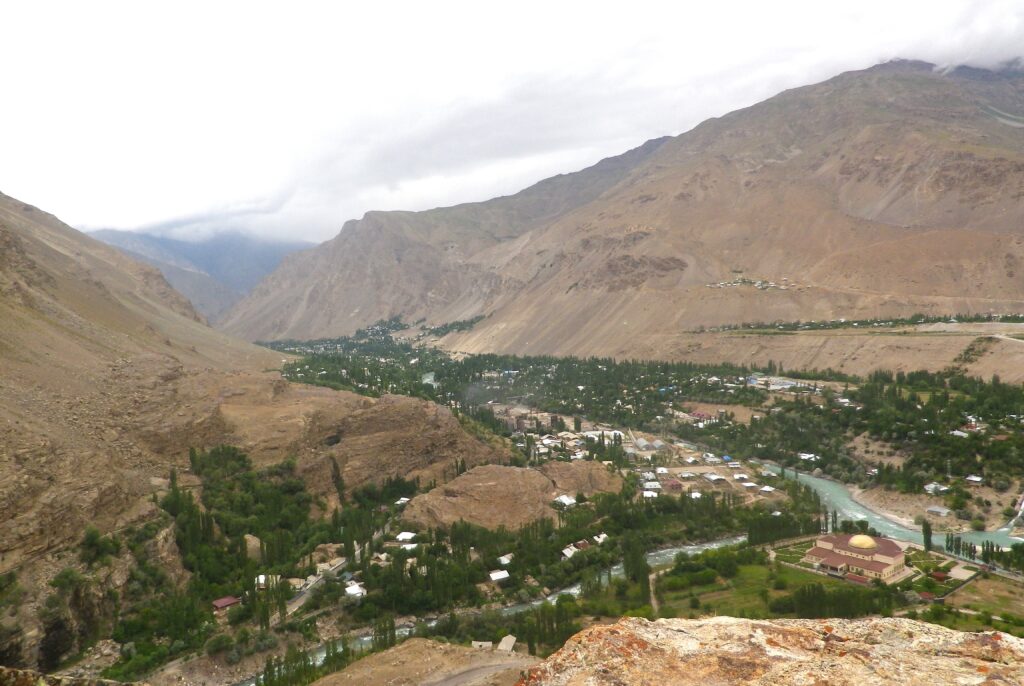
Tajikistan's forests, already scarce, covering just 3% of the country's territory, are facing unprecedented threats due to climate change and human activity. These fragile ecosystems, vital for maintaining the country’s ecological balance, are rapidly disappearing, with far-reaching consequences for the environment and public safety. Since the early 1990s, Tajikistan’s forest area has shrunk significantly. Currently, forests cover approximately 423,000 hectares, compared to about 20% of the national territory a century ago. In the 19th century, tugai forests alone spanned one million hectares, now reduced more than eightfold. The causes of deforestation are complex: widespread logging during past energy crises, land conversion for agriculture, rising temperatures, and declining precipitation. These factors have accelerated ecosystem degradation and disrupted the country’s water balance. Forest loss is also directly linked to the rising frequency of natural disasters. According to the National Climate Report, the number of mudslides and landslides has increased by 25-30% over the past two decades. Experts estimate that one in five landslides in mountainous regions is directly related to deforestation. Climate warming is also hastening snow and glacier melt, resulting in sudden floods, while prolonged droughts render the soil brittle and unstable. Forests once served as a natural buffer against these effects, but are no longer able to perform this function effectively. As temperatures rise, Tajikistan’s forests are becoming increasingly susceptible to fires. In 2025 alone, wildfires scorched over 430 hectares of forest in nine regions, including Varzob and Penjikent. Compounding the crisis is inadequate infrastructure. “There are no roads, equipment cannot reach the area, and the material and technical base is poorly developed,” said Davlatali Sharifzoda, Deputy Director of the Forestry Agency. Rising temperatures are also fueling the spread of pests such as bark beetles, which threaten rare species already listed in the Red Book of endangered flora. Forest degradation is also contributing to soil erosion, particularly in mountainous areas. This poses a serious threat to agriculture, which occupies 3.7 million hectares of Tajikistan’s land. “Soils are becoming less productive due to rising temperatures and reduced rainfall, which reduces crop yields and complicates the lives of farmers,” said Murod Ergashev, a researcher at the Institute of Soil Science. Tajikistan’s forests are home to approximately 270 species of trees and shrubs, 30 of which are endangered. Biologist Rustam Muratov warns that ongoing degradation could lead to the irreversible loss of unique ecosystems and endemic species. The Tajik government is taking action. Under the Bonn Challenge, the country has committed to restoring 66,000 hectares of degraded forests by 2030. Plans include planting drought-resistant species, such as pistachio, walnut, and saxaul. The national forest sector development program for 2022-2026 aims to modernize nurseries, expand seedling production, and establish industrial plantations. The goal is to restore 15,000 hectares of forest, double forest productivity, and reduce livestock grazing in forest areas by 30%. Community involvement is key to sustainable forest management. In the Sangvor and Shokhin districts, local residents, with support from the FAO, participate in regulated harvesting of berries and medicinal plants. Tajikistan’s forests...

Tajikistan Struggles to Fund Cleanup of Soviet-Era Uranium Waste

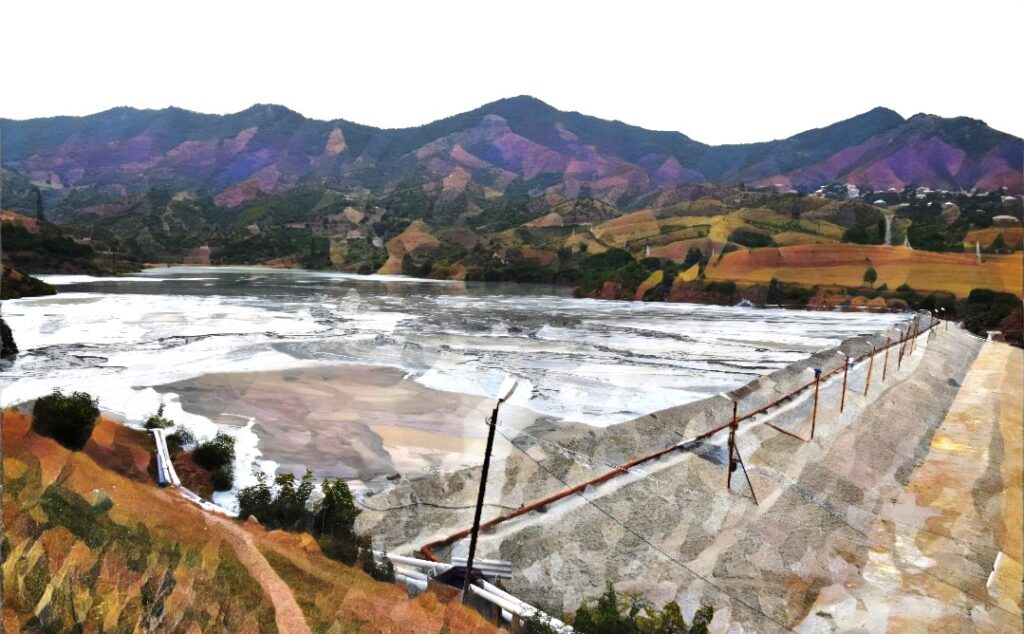
Tajikistan continues to grapple with the extensive environmental legacy of the Soviet-era uranium industry. Tens of millions of tons of radioactive waste still pose serious risks to human health and the environment. Addressing this legacy will require hundreds of millions of dollars and sustained international support. Uranium mining in Tajikistan began in the 1940s in areas including Taboshar, Adrasman, and nearby settlements. After mining operations were shut down, the country was left with abandoned mines, underground tunnels, and extensive tailings ponds containing more than 55 million tons of radioactive waste across an area exceeding 170 hectares. In 2023, partial rehabilitation work was completed in Taboshar, where 7.6 million tons of waste, representing 17.5 percent of the total, were remediated. The Tajik government has agreed to continue cooperation with Russia, which is expected to allocate approximately $17 million for the reclamation of selected facilities. However, the most hazardous areas remain unaddressed. These include early-stage Taboshar tailings ponds, underground workings, and the Degmai complex. International consultants Wismut GmbH, WISUTEC GmbH, and GEOS estimate that restoring the Taboshar facilities will require approximately $9.5 million, while reclamation of the Degmai tailings pond is expected to cost about $27 million. All of these sites are included in the International Atomic Energy Agency master plan and have been designated as funding priorities. Progress remains slow, largely due to limited financial resources. Despite some external support, current funding levels fall far short of what is required. To date, only 17 percent of contaminated sites have been decontaminated. The European Bank for Reconstruction and Development special environmental rehabilitation account for Central Asia has yet to become fully operational. In 2025, the government approved a national rehabilitation program covering the 2025 to 2030 period. The plan includes legislative updates, project design, implementation, and ongoing monitoring. Preliminary estimates suggest Tajikistan will need more than $110 million by 2030 to complete its remediation objectives. Given the scale of the required investment, international financing remains essential. Tajikistan is working to transform its uranium legacy into a manageable and transparent project, but without sustained international partnership, the challenge is unlikely to be resolved.

How Tajikistan Is Struggling to Keep the Lights On Amid Winter Power Shortages

As winter grips Tajikistan, severe electricity restrictions have become a daily reality. While officials claim that recent rainfall has helped partially stabilize the country’s largest hydroelectric power plant, residents across multiple regions report worsening shortages, with power barely available for a few hours each day. Government officials say that water inflow into the Nurek Reservoir has increased following recent rains. Kurbon Ahmadzoda, a representative of the state energy company Barki Tojik, reported an increase of 30-40 cubic meters per second, enabling authorities to supply electricity for four to five hours daily. Earlier, the government had attributed stricter electricity limits to a drop in water levels at the Nurek Hydroelectric Power Plant, which generates over half of Tajikistan’s electricity. A prolonged dry spell had reduced reservoir levels, triggering the latest round of supply cuts. “As of December 9, around seven meters of the reservoir’s total 53-meter reserve have already been used,” Ahmadzoda said, adding that recent rainfall had improved inflows into the Vakhsh River, which feeds the plant. Dustmurod Toirov, head of the Transmission Networks Control Center, confirmed a 15-20% increase in water inflow. As a result, daily depletion of the reservoir dropped from 23 centimeters to 17 centimeters. This, he said, allowed authorities to extend supply in some areas by an additional two to two-and-a-half hours. Toirov also claimed that residents in Khujand, Bokhtar, Kulob, and the Rudaki district were receiving consistent electricity, with high-rise buildings fully supplied. However, social media posts paint a different picture. Dozens of residents report receiving only one to three hours of electricity per day, describing increasing hardship as winter progresses. To address consumption, authorities have implemented strict rationing measures. Toirov said automated power cuts are triggered when household usage exceeds 4 kW, a move he claims has already led to more economical electricity use. In late November, the “Distribution Electric Networks” company sent mass SMS warnings to citizens: exceeding usage limits would result in 30-minute power cuts. Amid the broader energy crisis, the government has also introduced new penalties targeting illegal cryptocurrency mining, which officials say consumes large amounts of stolen electricity. Electricity rationing in Tajikistan typically begins in mid-autumn and continues through spring. However, in the past two years, restrictions have started earlier, as soon as September. The 2024-2025 winter has seen some of the harshest limits yet, with some regions receiving just two to four hours of electricity per day.

The Silk Visa Deadlock: The Long Road to a Borderless Central Asia

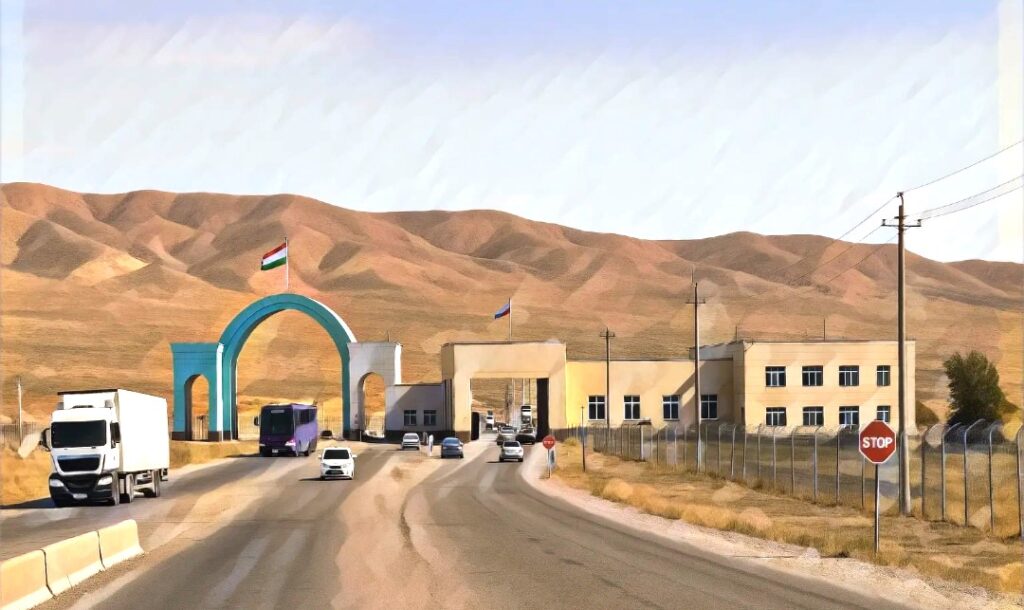
The year 2025 will likely be remembered as a milestone in Central Asian diplomacy. Regional leaders signed landmark agreements on water and energy cooperation and launched major investment projects. At high-level meetings, Central Asian presidents emphasized a new phase of deeper cooperation and greater unity, highlighting strategic partnership and shared development goals. But at ground level, at border crossings such as Korday between Kazakhstan and Kyrgyzstan, or the congested diversion routes replacing the closed Zhibek Zholy checkpoint, the picture is far less seamless. Long queues, heightened scrutiny, and bureaucratic delays remain the norm. While political rhetoric celebrates unity, the reality on the ground tells a different story. The region’s physical borders remain tightly controlled. A key symbol of unrealized integration is the stalled “Silk Visa” project, a proposed Central Asian version of the Schengen visa that would allow tourists to travel freely across the region. The project has made little headway, with experts suggesting that, beyond technical issues, deeper concerns, including economic disparities and security sensitivities, have played a role. Silk Visa: A Stalled Vision Launched in 2018 by Uzbekistan and Kazakhstan, the Silk Visa was envisioned as a game-changer for regional tourism and mobility. Under the scheme, tourists with a visa to one participating country could move freely across Central Asia, from Almaty to Samarkand and Bishkek. Seven years on, the project has yet to materialize. Official explanations point to the difficulty of integrating databases on “undesirable persons.” But as Uzbekistan’s Deputy Prime Minister acknowledged earlier this year, the delay stems from the need to harmonize security services and create a unified system. Experts also cite diverging visa policies and resistance from national security agencies unwilling to share sensitive data. As long as each country insists on determining independently whom to admit or blacklist, the Silk Visa will remain more aspiration than policy. Economic Imbalance: The Silent Barrier The most significant, albeit rarely acknowledged, hurdle to regional openness is economic inequality. Kazakhstan’s GDP per capita, at over $14,000, is significantly higher than that of Uzbekistan or Kyrgyzstan, which hover around $2,500-3,000. This disparity feeds fears in Astana that full border liberalization would trigger a wave of low-skilled labor migration, putting strain on Kazakhstan’s urban infrastructure and labor market. While Kazakhstan is eager to export goods, services, and capital across Central Asia, it remains reluctant to import unemployment or social tension. Migration pressure is already high: according to Uzbekistan’s Migration Agency, the number of Uzbek workers in Kazakhstan reached 322,700 in early 2025. Removing border controls entirely could exacerbate this trend, overwhelming already stretched public services. Security Concerns and Regional Tensions The geopolitical landscape further complicates the dream of borderless travel. A truly open regional system would require a strong, unified external border, something unattainable given Afghanistan’s proximity. The persistent threats of drug trafficking and extremist infiltration compel Uzbekistan and Tajikistan to maintain tight border controls. Kazakhstan, while geographically removed, remains cautious about loosening controls along its southern frontier. Moreover, despite recent agreements on delimiting the Kyrgyz–Tajik border, tensions in...

EDB Establishes Investment Bridge Between Gulf Capital and Central Asian Projects

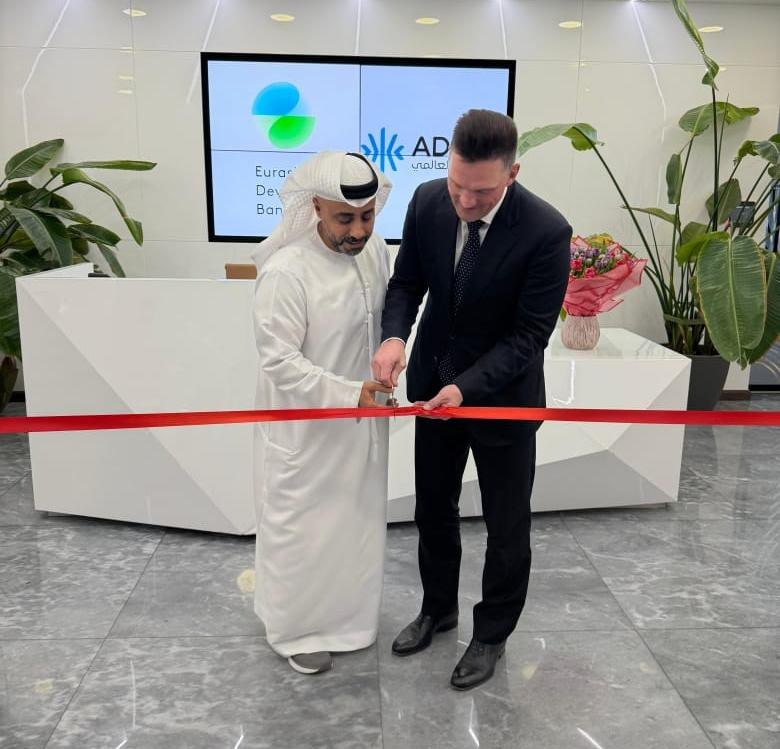
The Eurasian Development Bank (EDB), headquartered in Almaty, has opened a representative office in Abu Dhabi Global Market (ADGM), the United Arab Emirates’ international financial center, marking a strategic move to connect Gulf Cooperation Council (GCC) investors with high-potential projects across Central Asia. According to the Bank, the new platform will offer GCC investors structured investment opportunities backed by EDB analytics, regional expertise, and strong ties with the governments of its member states, Armenia, Belarus, Kazakhstan, Kyrgyzstan, Russia, Tajikistan, and Uzbekistan. Through this initiative, investors will gain access to infrastructure and sustainable development projects with optimized risk-return profiles. At the launch ceremony, EDB Management Board Chairman Nikolai Podguzov underscored the strategic significance of the move. “We are creating an ‘investment highway’ between Gulf capital and opportunities in Central Asia. Our new office in Abu Dhabi reinforces our role as a regional bridge, combining local knowledge with tailored financial instruments. Investors gain access to proven projects with favorable risk-return dynamics, while Central Asian economies unlock new development funding.” A centerpiece of the new platform is a specialized credit fund dedicated to financing infrastructure development in Central Asia. Registered under ADGM jurisdiction, the fund will focus on debt financing for EDB’s infrastructure portfolio. The Bank highlighted ADGM’s regulatory advantages, noting that the fund will offer Middle Eastern and global investors a secure and efficient entry point into the region’s development landscape. EDB will serve as both a structuring partner and co-investor, providing access to a diversified project pipeline. Priority Sectors for Investment Transport and Logistics: The development of the North-South Corridor could boost transit volumes through Central Asia by up to 40%, significantly reducing shipping distances between the Gulf and key Eurasian markets. Water Sector and Agribusiness: The irrigation equipment market in Central Asia is valued at approximately $426 million annually, while the broader water supply sector is worth up to $2 billion. Renewable Energy: The sector continues to attract major players such as the UAE’s Masdar, which has established a growing footprint across Central Asia. Strengthening Gulf-Central Asia Economic Ties In recent years, the Gulf states have become major trading partners and investors in Central Asia. According to EDB data, trade between the Gulf and Central Asia reached $3.3 billion in 2024, a 4.2-fold increase since 2020. Imports from the Gulf made up 80% of the total trade turnover. Top Central Asian trading partners with the Gulf in 2024 were: Turkmenistan - $2 billion (61%) Uzbekistan - $740 million (23%) Kazakhstan - $302 million (9%) The highest trade growth rates were recorded in: Turkmenistan - up 9.9 times Kyrgyzstan - up 9.5 times Uzbekistan - up 8.1 times The UAE accounted for 97% of all Gulf-Central Asia trade. For Turkmenistan, Gulf trade represented around 10% of total foreign commerce, while Kyrgyzstan’s share stood at approximately 1%, with even lower figures across other regional states. The EDB projects continued growth in trade, citing an unrealized potential of $4.9 billion, including $4.4 billion in potential Gulf exports (motor vehicles, electronics, jewelry) and $500...

Hydropower, Social Media and Climate Change: Some News From Tajikistan That You May Have Missed

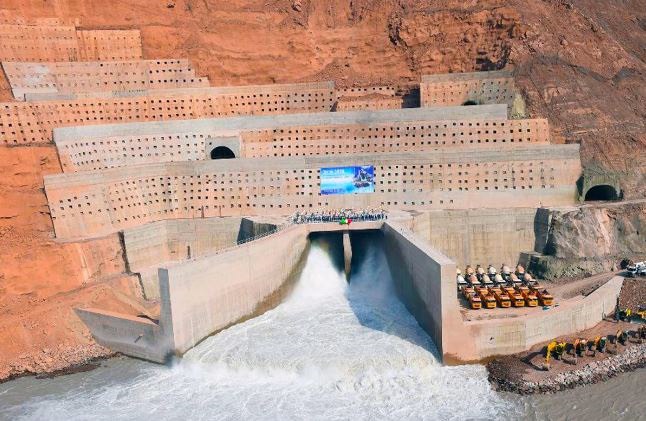
Drought Triggers Power Rationing at Nurek Hydro Station In early December, the Tajik government reintroduced electricity rationing after reservoir levels at the Nurek Hydroelectric Power Station fell sharply, due to an unusually dry autumn. The station normally supplies around 70% of the national grid, but current water levels are significantly below last year’s benchmark, affecting both domestic consumption and exports. According to Reuters, water levels have dropped more than three meters in the past month. With shortages now affecting many regions, authorities have ordered public buildings to cut electricity outside of working hours and have switched off most street lighting. Tajikistan is seeking emergency imports from Uzbekistan, Turkmenistan and Kazakhstan to stabilize supply. The crisis highlights vulnerabilities in a system dominated by hydropower. While Tajikistan has invested heavily in modernizing Nurek and other plants to improve winter reliability, lower precipitation remains a persistent threat. For regional energy markets, particularly those looking at cross-border electricity trade, the situation demonstrates how even large renewable systems are becoming more unpredictable under climate stress. Rogun: Progress, Profits, and Persistent Disputes Ambition continues to define the Rogun hydropower project, intended to make Tajikistan a top electricity exporter in the Eurasia region. With a projected capacity of 3,780 MW, Rogun is designed to host the world’s tallest dam. Financing momentum is building: the Asian Infrastructure Investment Bank has launched a $500 million multi-phase initiative, and Tajikistan has signed an energy-sale agreement with Uzbekistan at 3.4 US cents per kWh, paving the way for long-term regional integration. But Rogun’s size continues to attract scrutiny, especially downstream. An investigation has been approved by the World Bank’s Inspection Panel into claims from Uzbekistan and Turkmenistan that altered flows on the Amu Darya river could damage farmland and ecosystems. The project’s social footprint is also expanding, with resettlement estimates reaching as high as 60,000 people. Development banks have slowed some financing, pending stricter environmental and regional safeguards. Local environmental researchers and activists argue that international oversight is still insufficient, warning that the cumulative ecological impact of Central Asian dam-building could become irreversible if accountability is delayed. Digital “Likes” Decriminalised, But Restrictions Remain President Emomali Rahmon has signed amendments to remove criminal penalties for “liking” or otherwise reacting to online content labelled as "extremist". Under previous legislation, social media users could face up to 15 years in prison for interacting with banned material. More than 1,500 people have been prosecuted under those rules, according to Reuters. The government presented the reform as a correction of overly zealous enforcement, following Rahmon’s public criticism of harsh prosecutions. Yet rights monitors see only minimal change. The latest Human Rights Watch report on Tajikistan notes a continued clampdown on media, opposition figures and citizen journalists. The Committee to Protect Journalists ranks Tajikistan among the most restrictive media environments in Eurasia. European officials have echoed these concerns. An OSCE-backed statement by European embassies denounced the opaque eight-year treason conviction of journalist Rukhshona Khakimova, reportedly linked to analysis of Chinese policy. For many observers, the relaxed online...