
• KGS/USD = 0.01144 0%
  • KZT/USD = 0.00211 0%
  • TJS/USD = 0.10515 0.48%
  • UZS/USD = 0.00008 0%
  • TMT/USD = 0.28530 0%
  • KGS/USD = 0.01144 0%
  • KZT/USD = 0.00211 0%
  • TJS/USD = 0.10515 0.48%
  • UZS/USD = 0.00008 0%
  • TMT/USD = 0.28530 0%
  • KGS/USD = 0.01144 0%
  • KZT/USD = 0.00211 0%
  • TJS/USD = 0.10515 0.48%
  • UZS/USD = 0.00008 0%
  • TMT/USD = 0.28530 0%
  • KGS/USD = 0.01144 0%
  • KZT/USD = 0.00211 0%
  • TJS/USD = 0.10515 0.48%
  • UZS/USD = 0.00008 0%
  • TMT/USD = 0.28530 0%
  • KGS/USD = 0.01144 0%
  • KZT/USD = 0.00211 0%
  • TJS/USD = 0.10515 0.48%
  • UZS/USD = 0.00008 0%
  • TMT/USD = 0.28530 0%
  • KGS/USD = 0.01144 0%
  • KZT/USD = 0.00211 0%
  • TJS/USD = 0.10515 0.48%
  • UZS/USD = 0.00008 0%
  • TMT/USD = 0.28530 0%
  • KGS/USD = 0.01144 0%
  • KZT/USD = 0.00211 0%
  • TJS/USD = 0.10515 0.48%
  • UZS/USD = 0.00008 0%
  • TMT/USD = 0.28530 0%
  • KGS/USD = 0.01144 0%
  • KZT/USD = 0.00211 0%
  • TJS/USD = 0.10515 0.48%
  • UZS/USD = 0.00008 0%
  • TMT/USD = 0.28530 0%

Viewing results 181 - 186 of 1525

Central Asian Leaders Welcome Azerbaijan’s Accession at Tashkent Summit

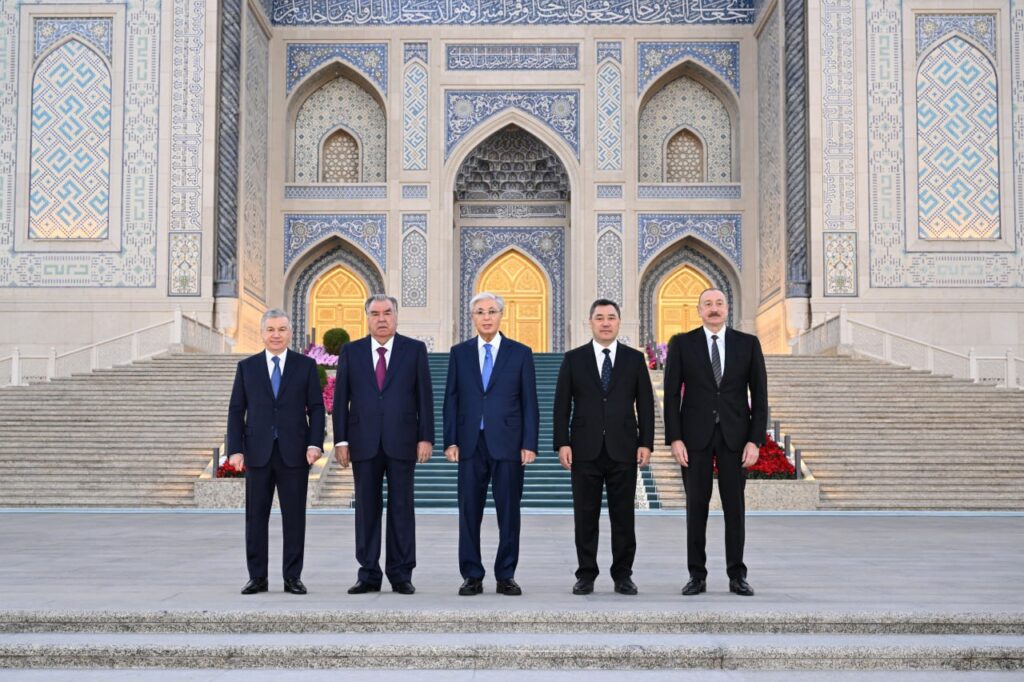
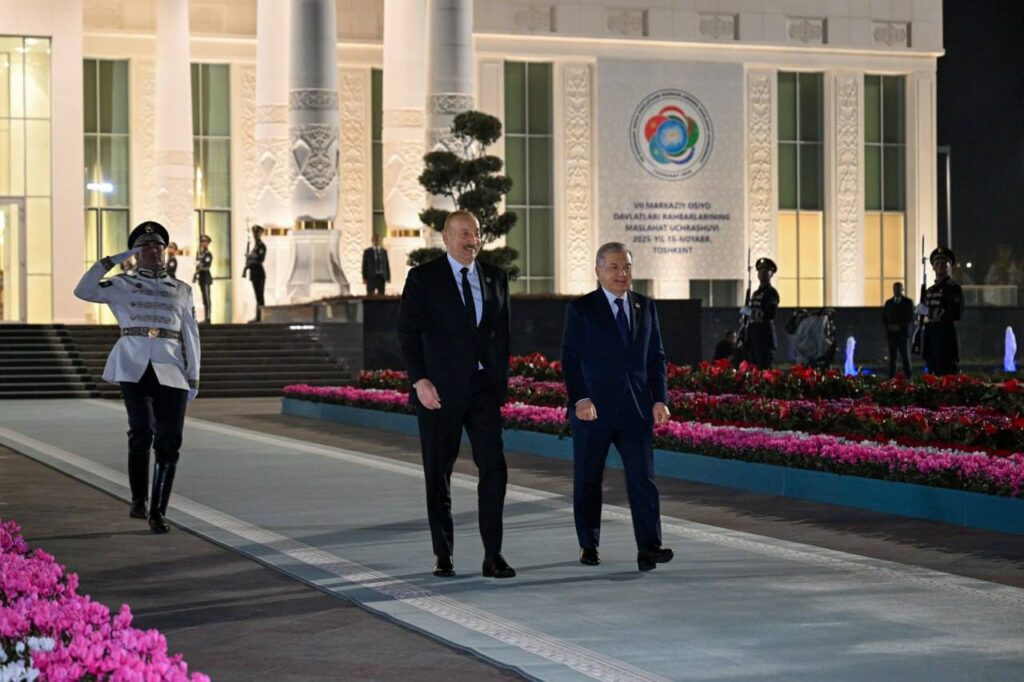
The leaders of Central Asia convened in Tashkent on November 16 for a high-level Consultative Meeting, marking a significant step toward deeper regional integration. The summit welcomed Azerbaijan as a full participant and endorsed a roadmap to formalize cooperation in trade, infrastructure, security, and water management. Hosted by Uzbekistan’s President Shavkat Mirziyoyev, the summit brought together the presidents of Kazakhstan, Kyrgyzstan, Tajikistan, Turkmenistan, and Azerbaijan, alongside a United Nations representative. Ahead of the meeting, Tashkent’s central streets were adorned with national flags and floral installations, underscoring the political and symbolic significance the Uzbek government placed on the event. Mirziyoyev hailed Azerbaijan’s accession as “a truly historic day,” as the country became a full member of the Consultative Meeting of the Heads of State of Central Asia. He proposed forming a “Community of Central Asia,” establishing a rotating Secretariat, appointing special presidential envoys for coordination, and creating a Council of Elders to promote cultural and humanitarian dialogue. [caption id="attachment_39410" align="aligncenter" width="1280"] Image: president.uz[/caption] Regional Economic and Connectivity Agenda Economic cooperation dominated the multilateral agenda. Leaders agreed to develop a Comprehensive Regional Program for Trade and Economic Cooperation through 2035 and to draft a Declaration on a Common Investment Space. “In essence, we will build a strong bridge between Central Asia and the South Caucasus and pave the way for the formation of a single space of cooperation, which will undoubtedly strengthen the strategic interconnectedness and stability of both regions,” said Mirziyoyev. Kazakhstan’s President Kassym-Jomart Tokayev also highlighted deepening bilateral ties with Uzbekistan. Trade between the two countries has reached $4 billion in 2025, with plans to increase it to $10 billion through expanded industrial cooperation and import substitution. Over 6,500 joint enterprises now operate between the two countries, with new projects worth more than $8 billion under development. Several initiatives, such as the Silkway Central Asia logistics center, new industrial facilities, and cultural programs, were launched in Tashkent during the visit. [caption id="attachment_39411" align="aligncenter" width="1280"] Image: president.uz[/caption] Tajikistan’s President Emomali Rahmon met with Mirziyoyev on the sidelines of the summit. The two leaders noted the steady growth in political dialogue and agreed to expand cooperation in energy, industry, agriculture, and innovation. Bilateral trade surpassed $440 million in the first nine months of 2025. They also discussed regional security, including collaboration against terrorism, extremism, cybercrime, and drug trafficking. Security, Water, and Cultural Cooperation To advance regional integration, Tashkent also hosted the first meeting of the Council of Ministers of Trade and Investment of Central Asian countries and Azerbaijan on November 13. Ministers discussed boosting trade, investment, and industrial cooperation, with the goal of increasing regional trade turnover to $20 billion. Plans were also made to develop joint production platforms under a “Made in Central Asia” label. Uzbekistan’s trade with Central Asian partners rose from $3.2 billion in 2017 to $6.9 billion in 2024, while trade with Azerbaijan has grown by 13% this year. Connectivity remained a focal point. Participants reaffirmed their commitment to the China-Kyrgyzstan-Uzbekistan railway and the Trans-Afghan corridor. Azerbaijan’s President...
With Shared Goals, Azerbaijan Draws Closer to Central Asia

Then there were six. The five Central Asian countries of Kazakhstan, Kyrgyzstan, Tajikistan, Turkmenistan, and Uzbekistan are widely thought of as a group, united by geography, their shared history as former Soviet republics, and growing collaboration in recent years. Now, Azerbaijan is emerging as a sixth member of the group, even though it is in the South Caucasus. At a summit on Sunday, Central Asian leaders supported Azerbaijan’s accession to the region’s Consultative Meeting format as a full participant, “forming a unified space for interaction between Central Asia and the South Caucasus,” Uzbekistan’s presidency said. The Consultative Meeting format is a vehicle for high-level collaboration among Central Asian countries, which have taken steps to resolve border disputes and other sources of tension between them over the years. The format addresses trade, security, and other issues. All five Central Asian leaders, as well as President Ilham Aliyev of Azerbaijan, attended the annual meeting in Tashkent on Sunday. In a speech, Aliyev noted that he had visited Central Asian countries 14 times in the last three years, and that Central Asian leaders had visited Azerbaijan a total of 23 times during the same period. He said Azerbaijan and Central Asia “today form a single geopolitical and geo-economic region, whose importance in the world is steadily growing.” Azerbaijan, which is also a former Soviet republic, shares the Turkic background of some of the Central Asian nations. While all the countries have distinct national identities, they covet the goal of more robust trade routes linking Asia and Europe, as well as regional solidarity in an uncertain geopolitical environment where China, Russia, and the United States are dominant powers. After Azerbaijan was admitted to the Central Asian talks format, Azerbaijani presidential adviser Hikmet Hajiyev posted on X: “From now on, Central Asia stands as 6.”

Made In Central Asia: Leaders Eye $20 Billion Trade Milestone as Regional Cooperation Deepens

The first meeting of trade and investment ministers from Central Asian countries, joined by Azerbaijan, has taken place in Tashkent, where participants agreed to nearly double mutual trade to $20 billion and discussed launching a regional brand, Made in Central Asia. Opening the session, Uzbekistan’s Minister of Investment, Industry, and Trade, Laziz Kudratov, highlighted the substantial potential for increased trade due to the complementarity of regional economies and growing business interest in joint initiatives According to Uzbek data, intra-regional trade doubled between 2017 and 2024, reaching approximately $11 billion. Kudratov proposed developing an action plan to raise trade turnover to $20 billion. The proposed strategy includes harmonizing customs procedures, implementing digital document management, mutually recognizing permits, and developing “single window” systems at borders. Additional measures under discussion include creating a regional electronic catalog of goods and producers and integrating the digital platforms of chambers of commerce, industry, and export agencies. Uzbekistan also proposed hosting the Central Asia and Azerbaijan Investment Forum in Samarkand in 2026, positioning it as a platform to launch the Made in Central Asia brand. Kazakhstan’s Minister of Trade and Integration, Arman Shakkaliev, urged countries to shift from a “buy-sell” model to an “invest-produce-sell” approach. He noted that Kazakhstan is entering a new investment cycle aimed at building export-oriented industries and sustainable value chains. Shakkaliev added that the upcoming industrial cooperation development program with Uzbekistan could be expanded to other Central Asian countries and Azerbaijan. Kazakhstan also supported the common branding initiative and proposed a pilot project using digital trading platforms. Tajikistan’s Minister of Economic Development and Trade, Zavki Zavkizoda, underscored the importance of digital technologies and cited examples of regional companies operating at an international level. Nazar Agakhanov, Turkmenistan’s Minister of Trade and Foreign Economic Relations, stressed that simplifying trade procedures and developing electronic platforms are essential to meeting shared goals. Ashgabat expressed its readiness to join the working group to be established following the meeting. Kyrgyzstan was represented by its ambassador to Uzbekistan, Duishonkul Chotonov, who noted that Bishkek views the format as a platform for collective decisions that advance regional economic development. Azerbaijan’s First Deputy Minister of Economy, Elnur Aliyev, reported that trade with Central Asian states grew by 58% in the first nine months of 2025, surpassing $1 billion. He said Azerbaijan is prepared to expand its transport infrastructure through new logistics hubs and the promotion of joint ventures. The meeting concluded with the signing of a joint communiqué expressing intentions to deepen economic ties, establish joint ventures, and develop new instruments for investment cooperation. The seventh Consultative Meeting of the Heads of State of Central Asia will be held in Tashkent on November 15-16. Azerbaijani President Ilham Aliyev is also expected to attend.

American Companies Explore Investment Prospects in Tajikistan

President Emomali Rahmon’s recent visit to the U.S. has sparked renewed interest in the Tajik economy. In New York, a major investment forum showcased large-scale development projects to American companies from hydropower initiatives to green data centers. U.S.-Central Asia Engagement via C5+1 An event titled Presentation on Tajikistan’s Investment Opportunities was held at the Vista LIC Hotel in New York. It was organized by the state-owned Tajinvest enterprise with support from the State Committee for Investment of Tajikistan and the U.S., Tajikistan Business Council. The gathering marked the tenth anniversary of the C5+1 platform, a regional framework for economic cooperation between the U.S. and Central Asia. Timed to coincide with Rahmon’s official visit to Washington, the event was designed to promote Tajikistan’s economic potential to U.S. businesses. Jonibek Ismoil Hikmat, Tajikistan’s permanent representative to the United Nations, opened the event with a speech emphasizing the country’s strategic aspirations. “Today, we are creating a new Silk Road, not of caravans and goods, but of ideas, innovations, and investments,” he stated. Elena Son, Executive Director of the U.S.-Tajikistan Business Council, encouraged American firms to more actively explore the Tajik market. She shared her experience accompanying major U.S. companies to Dushanbe, affirming that Tajikistan is increasingly ready for serious investment. “They sometimes take a long time to get started, but once they do, no one can catch up with them,” she noted, describing the pace of Tajik partners once projects are underway. Investment Mechanisms and Key Projects Tajinvest CEO Dilshod Jurazoda delivered a presentation titled How to Invest in Tajikistan? He outlined legislative guarantees, investor support mechanisms, and the implementation of a One-Stop-Shop model within Tajinvest to streamline business entry. Jurazoda highlighted a portfolio of strategic projects open to foreign investment, including: Dushanbe Mall Dushanbe Arena Hall Expo Center Dushanbe Sugdbarktaminot energy complex Mehrgon agro-cultural complex in Sughd Green data centers leveraging Tajikistan’s hydropower capacity Tourism infrastructure development projects U.S. Businesses Signal Interest The event featured interactive sessions, with participants pitching projects, engaging in open discussions, and networking in an informal setting. Representatives of major U.S. investment and tech firms were in attendance, including Edward Mermelstein (Atlantic Bridge Capital), Val Kogan (Mid-Atlantic-Eurasia Business Council), Burke McCormack (Ardmore Capital), Mack Kerker and David Halpert (Penataran), Leon Nektalov (Leon Diamond), Sam Bousfield (Samson Sky), and Erkin Mustafokulov (United Bros LC). The U.S. delegation stressed that direct dialogue with Tajik officials offered valuable insights into the local market and practical opportunities for cooperation. The New York presentation underscored growing American interest in Tajikistan. With major projects on offer, abundant energy resources, and demonstrated government support, prospects for deepening bilateral economic ties appear increasingly favorable.

Japanese Grant Program to Fund School Construction and Hospital Modernization in Tajikistan

Japan has committed around $230,000 in grant funding for two new social infrastructure projects in Tajikistan, aimed at enhancing education and healthcare in regions impacted by the April 2025 earthquake. A formal signing ceremony took place in Dushanbe, where Japanese Ambassador Keiko Furuta and representatives of the beneficiary organizations signed two grant agreements under Japan’s Grant Assistance for Grassroots Human Security Projects (GGP) program. The funding will support the following initiatives: Construction of a new school in Vahdat village, Tajikabad district - $128,739 Modernization of medical equipment at the Central Hospital in Istiklol - $99,960 Speaking at the event, Ambassador Furuta highlighted Japan’s long-standing partnership with Tajikistan. “Japan has supported the people of Tajikistan across various sectors for more than 30 years. We hope these projects will be implemented as planned and bring tangible benefits to the public, particularly those affected by the recent earthquake,” she said. Furuta emphasized that Japan’s development assistance aims to improve safety, infrastructure quality, and overall public well-being. Since 1996, Japan has implemented 470 humanitarian projects in Tajikistan under the GGP, with a cumulative value of $39.2 million.

Afghanistan Seeks Alternatives to Pakistan Trade; Fallout Likely for Central Asia

Afghanistan must look for “alternative trade routes” that bypass neighboring Pakistan, a senior Afghan official said Wednesday. The remarks reflect deepening tension after border clashes between the two countries and are a blow to some ambitious trade projects that would link South Asia and Central Asia. At the same time, the development could mean that Afghanistan will increasingly look to Central Asia for trade links as it cuts off business with Pakistan. “All Afghan traders and industrialists should turn to alternative trade routes instead of Pakistan,” said Abdul Ghani Baradar, Afghanistan’s deputy prime minister for economic affairs. “These routes have not only harmed our traders but have also caused difficulties for markets and the general public. I strongly urge all traders to implement alternative options for imports and exports as soon as possible.” Baradar also criticized what he called the poor quality of medicine being imported from Pakistan and said medicine importers have three months to close accounts there. He said that if Pakistan wants to reopen trade routes with Afghanistan, it must provide solid guarantees that they won’t be closed again. Pakistan has said it needs security guarantees to normalize trade. The minister’s comments were reported by TOLOnews, a Kabul-based outlet, as well as other regional media organizations. Afghanistan and Pakistan share a 2,600-kilometer border and trade was severely disrupted after clashes between the two sides last month. Pakistan accuses Afghanistan of providing sanctuary to militants who carry out attacks against Pakistani security forces, an allegation that the ruling Taliban in Afghanistan denies. Several big Central Asia-South Asia projects would require close collaboration between Afghanistan and Pakistan. They are the Trans-Afghan Railway, the TAPI natural gas pipeline and the CASA-1000 electricity project. Three Central Asian countries – Uzbekistan, Turkmenistan and Tajikistan – have borders with Afghanistan and share ethnic ties with minority populations there. In late October, the city of Shymkent in southern Kazakhstan, near the border with Uzbekistan, hosted a forum during which Afghan and Kazakh officials and business leaders discussed expanding trade. Deals worth several hundred million dollars were announced.
