• KGS/USD = 0.01143 0%
  • KZT/USD = 0.00213 0%
  • TJS/USD = 0.10593 0.47%
  • UZS/USD = 0.00008 0%
  • TMT/USD = 0.28571 0%
  • KGS/USD = 0.01143 0%
  • KZT/USD = 0.00213 0%
  • TJS/USD = 0.10593 0.47%
  • UZS/USD = 0.00008 0%
  • TMT/USD = 0.28571 0%
  • KGS/USD = 0.01143 0%
  • KZT/USD = 0.00213 0%
  • TJS/USD = 0.10593 0.47%
  • UZS/USD = 0.00008 0%
  • TMT/USD = 0.28571 0%
  • KGS/USD = 0.01143 0%
  • KZT/USD = 0.00213 0%
  • TJS/USD = 0.10593 0.47%
  • UZS/USD = 0.00008 0%
  • TMT/USD = 0.28571 0%
  • KGS/USD = 0.01143 0%
  • KZT/USD = 0.00213 0%
  • TJS/USD = 0.10593 0.47%
  • UZS/USD = 0.00008 0%
  • TMT/USD = 0.28571 0%
  • KGS/USD = 0.01143 0%
  • KZT/USD = 0.00213 0%
  • TJS/USD = 0.10593 0.47%
  • UZS/USD = 0.00008 0%
  • TMT/USD = 0.28571 0%
  • KGS/USD = 0.01143 0%
  • KZT/USD = 0.00213 0%
  • TJS/USD = 0.10593 0.47%
  • UZS/USD = 0.00008 0%
  • TMT/USD = 0.28571 0%
  • KGS/USD = 0.01143 0%
  • KZT/USD = 0.00213 0%
  • TJS/USD = 0.10593 0.47%
  • UZS/USD = 0.00008 0%
  • TMT/USD = 0.28571 0%

Viewing results 439 - 444 of 1567

UNICEF Delivers Over 500 Pieces of Medical Equipment to Tajikistan

The United Nations Children's Fund (UNICEF) has handed over more than 500 units of modern medical equipment to the Ministry of Health and Social Protection of the Population of Tajikistan in a significant move to bolster the country's healthcare system. The official handover ceremony took place on May 6 in Dushanbe and was attended by Deputy Health Minister Shodikhon Jamshed and international partners. Jamshed expressed gratitude for UNICEF’s longstanding cooperation, adding that such support plays a vital role in strengthening Tajikistan’s healthcare capacity. The new equipment, including CPAP (Continuous Positive Airway Pressure) machines and oxygen concentrators, will be used to treat newborns with respiratory difficulties and patients requiring oxygen therapy. “The equipment will be distributed across 73 neonatal care facilities nationwide. Additionally, training courses will be held for healthcare workers on using these devices and providing respiratory care to newborns,” Jamshed stated. Since its founding in 1946, UNICEF has been active in Tajikistan through various initiatives aimed at advancing children's rights and improving access to essential services such as education and healthcare. One of its flagship efforts includes a $1 million juvenile justice reform project, implemented in partnership with the Swiss government. The initiative seeks to establish alternative measures for minors in conflict with the law, focusing on rehabilitation and reintegration. In the field of early education, UNICEF and USAID are implementing a five-year, $7.5 million program to enhance school readiness. This includes teacher training, updated educational materials, and the promotion of inclusive learning environments. To address malnutrition, UNICEF has launched a three-year program in Khatlon and Dushanbe aimed at improving maternal and child nutrition and reducing mortality. Emphasis is placed on primary healthcare and preventive measures. In collaboration with the European Union, UNICEF is also contributing to the restoration of medical infrastructure. One example is the refurbishment of the central district hospital in Tursunzade, part of Tajikistan’s National Health Strategy 2030, designed to expand access to essential health services across the country.

Central Asian Perspectives Take Center Stage in Milan

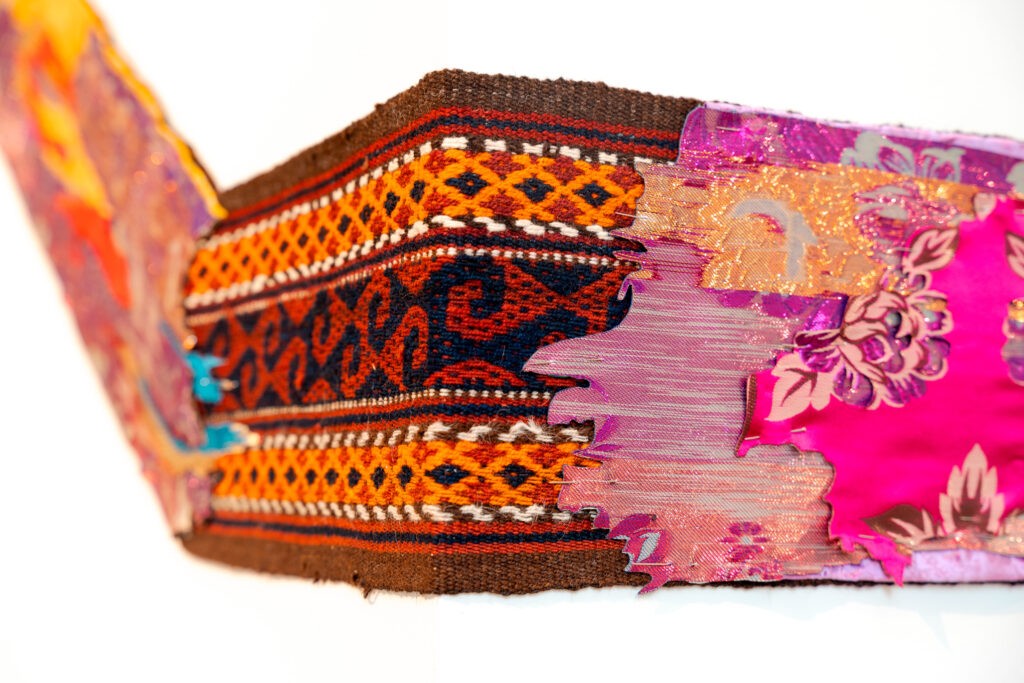
A pale Milanese dawn draped the city in shifting greys, as visitors crossed the threshold into the space of Fondazione Elpis, a foundation created to promote dialogue with emerging geographies and young artists. This time, it was Central Asian artists who were in the spotlight, claiming a shared history fractured by Soviet rule and global currents. The show YOU ARE HERE: Central Asia redraws a regional map, allowing artists to redraw the borders of their belonging beyond nation-states. At the same time, it invites each visitor to relate to the works by locating its place within these stitched, erased, and reconfigured narratives. Curators Dilda Ramazan and Aida Sulova orchestrated twenty-seven artists into a living constellation: from Munara Abdukakharova’s rolled patchwork, its golden hammer-and-sickle motifs softened by the hand-stitched curves of Kyrgyz kurak korpe, to Vyacheslav Akhunov’s furious erasures of scraped notes, the show reassembled in unexpected patterns stories of resilience, resistance, and reimagined belonging. YOU ARE HERE not only reframed Central Asia for a European audience but asserted that the region’s histories are neither static nor singular, they are stitched, erased, reconfigured, and claimed anew by the very people who live them. The Times of Central Asia spoke with Kazakh curator, Dilda Ramazan. [caption id="attachment_31541" align="aligncenter" width="2560"] "YOU ARE HERE. Central Asia", installation view, primo piano, Fondazione Elpis, Milano © Fabrizio Vatieri Studio[/caption] TCA: Can you tell us about the genesis of the show? The show emerged after the invitation of the Fondazione Elpis, whose founder, Marina Nissim, became interested in the region and its artists after seeing one of the Central Asian pavilions at the Venice Biennale. By presenting the complex Central Asian landscape to a European public who might not know it very well, we wanted to give artists the platform for free expression without framing the region from the stereotypical perspective, as is often the case in the Western context. We wanted the artists to reflect on the idea of space and belonging through the idea of locating oneself. TCA: Do you feel there is a growing awareness of Central Asia in Europe? Yes, I can feel and see it, but it is a natural process one should expect within the logic of globalization. The exhibition addressed the impact of Soviet and post-Soviet transitions on the cultural identities of Central Asian nations by showcasing artists of several generations. Some of them had a direct experience of living under the Soviet regime, so again the artists spoke for themselves and the region’s past through their works. [caption id="attachment_31542" align="aligncenter" width="2560"] Emil Tilekov, Traces and Shadows, 2024 © Fabrizio Vatieri Studio[/caption] TCA: How is the theme of migration explored in the exhibition, particularly concerning its economic and emotional implications for Central Asian communities? Migration was one of the key aspects evoked in the show because it is still an experience lived by the artists and/or their relatives and families. Two Kyrgyz artists, for example, raised this issue in their projects. This was the case in the video by Chingiz...

Tajikistan Has the Harshest Fines Relative to Income in Central Asia

Tajikistan ranks first among Central Asian countries in the ratio of maximum fines to average salaries, a disparity that has sparked growing dissatisfaction among the population. Structure and Scale of Fines Fines in Tajikistan fall into two categories: administrative and criminal. Administrative fines apply to less serious infractions, such as traffic violations, breaches of sanitary rules, and disorderly conduct. Criminal fines, by contrast, target serious offenses including fraud, tax evasion, and property crimes. Administrative penalties are more common and tend to disproportionately impact ordinary citizens. As of January 1, 2025, the minimum administrative fine for individuals and sole proprietors is 75 Tajikistani somoni (TJS), or approximately $7.20. For government officials, the minimum fine is 225 TJS ($21), and for legal entities it is 750 TJS ($72). The upper threshold for administrative fines is capped at $780 for individuals, $1,400 for officials, $2,120 for entrepreneurs, and $7,200 for legal entities. Regional Comparisons Compared to its neighbors, Tajikistan's fine-to-salary ratio is starkly higher. In Kazakhstan, the maximum fine for individuals is roughly $1,537, or about 80.5% of the average monthly salary ($851 as of January 2025). In Kyrgyzstan, the maximum individual fine of approximately $229 represents just 50.9% of the average salary ($450). In Uzbekistan, where the maximum individual fine is limited to $145, it amounts to about 35% of the average salary of $414. In contrast, the maximum administrative fine in Tajikistan for individuals exceeds the country’s average monthly income by more than 2.8 times, placing it at the bottom of the regional ranking in terms of fairness and affordability. Calls for Reform Experts have proposed that Tajikistan consider adopting a proportional system of fines based on the offender’s income. Such systems, already implemented in various European countries, aim to ensure that penalties are equitable across income groups. In Finland, traffic fines are linked to annual income; in Sweden and Norway, they depend on monthly earnings. Other countries, including Germany, Switzerland, Austria, and France, also tailor financial penalties to income. Estonia and Latvia have initiated similar reforms, signaling a broader European trend. Adopting such a model in Tajikistan could improve perceptions of justice and encourage compliance with laws, particularly among higher-income groups. However, experts caution that successful implementation would require sweeping legal reforms, along with mechanisms to accurately monitor and verify income levels.

Central Asia’s Green Energy Dream: Too Big to Achieve?

Although most Central Asian nations are heavily dependent on fossil fuel production and exports, they are aiming to significantly increase the use of renewable energy, hoping to eventually become crucial suppliers of so-called green electricity to Europe. Achieving such an ambitious goal will be easier said than done, given that developing the green energy sector in the region requires massive investment. What Central Asian states – struggling to attract long-term private capital into clean energy projects – need is financing for projects that modernize power networks, improve grid stability, and enable cross-border electricity flows. These upgrades are essential for large-scale renewable energy deployment and regional trade in power. Most actors in Central Asia seem to have taken major steps in this direction. In November 2024, at the COP29 climate conference held in Baku, Kazakhstan signed several deals worth nearly $3.7 billion with international companies and development institutions to support green energy projects. Neighboring Uzbekistan, according to reports, has attracted more than €22 billion ($23.9) in foreign investment in renewable energy, while Kyrgyzstan, Turkmenistan, and Tajikistan – which is aiming to generate all its electricity from green energy sources by 2032 – have developed strategies to help increase their renewable potential. But to turn their goals into reality, all these nations will need funding – whether from oil-rich Middle Eastern countries, China, the European Union, or various international financial institutions. Presently, the development of the Caspian Green Energy Corridor – which aims to supply green electricity from Central Asia to Azerbaijan and further to Europe – remains the region’s most ambitious project. According to Yevgeniy Zhukov, the Asian Development Bank's (ADB) Director General for Central and West Asia, this initiative is a strategic priority for Kazakhstan, Uzbekistan, and Azerbaijan. “While the prospect of exporting green electricity to Europe is part of the long-term vision, the core goal of the initiative is to accelerate green growth within the region,” Zhukov told The Times of Central Asia. Together with the Asian Infrastructure Investment Bank, the ADB is funding a feasibility study for this proposed transmission corridor. The study will assess the technical and economic viability of such a system, along with the environmental and regulatory requirements. In the meantime, the ABD is expected to continue funding other green energy projects in the region. The financial entity, according to Zhukov, invested $250 million in Uzbekistan in 2023 to support renewable energy development and comprehensive power sector reforms, while in other Central Asian countries, it remains “firmly committed to driving the green energy transition.” “For instance, in Tajikistan we are exploring the potential to co-finance the Rogun Hydropower Project alongside the World Bank and other international partners. In Kyrgyzstan, our focus has been on supporting foundational reforms in the energy sector, including strengthening the policy and regulatory environment to attract private investment in renewables. In Turkmenistan, we’ve launched a total of $1.75 million technical assistance initiative to help lay the groundwork for future renewable energy development,” Zhukov stressed, pointing out that these efforts are part...

Parents of Imprisoned Tajik Journalist Rukhshona Khakimova Urge Rahmon to Intervene

The parents of Rukhshona Khakimova, a Tajik journalist sentenced in February 2025 to eight years in prison on charges of treason, have issued an open letter to President Emomali Rahmon, urging him to reconsider their daughter’s case and facilitate her release. Family Appeals for Clemency A copy of the letter, signed by Khakimova’s parents, Zokir Khakimov and Makhsuda Sharopova, was published on social media on May 3. In the letter, the couple described their daughter’s upbringing in a family of educators committed to national values, patriotism, and humanism. Khakimov, a former school director in Kanibadam, and Sharopova, a retired teacher, emphasized their daughter’s achievements. “Our daughter graduated from school and university with honors, received a presidential scholarship, and always worked honestly and within the law,” they wrote. “We can say with complete confidence that Rukhshona could not have committed treason.” They appealed to Rahmon to intervene, especially considering that Khakimova is the mother of two young children. “We respectfully request and implore you, as the supreme leader of the nation, to take steps for her release,” the letter states. Background on the Charges Khakimova, 31, was convicted under Article 305, Part 2, Paragraph “c” of Tajikistan’s Criminal Code, “treason using her official position.” She was sentenced to eight years in prison following a closed trial. Human rights groups claim the charges were linked to her journalistic investigation into China’s influence in Tajikistan. Complicating the case is the fact that Khakimova is reportedly the niece of an opposition figure sentenced to 18 years for attempting a coup. Prior to her arrest, she had been placed under house arrest, her documents were confiscated, and on February 5, she was detained in the courtroom immediately following the verdict. An appellate court upheld the decision. Subsequently, about 230,000 somoni, savings intended for purchasing a home, were withdrawn from her bank account. On April 22, she was transferred from a pre-trial detention center in Dushanbe to a women’s correctional facility in Nurek. Public and International Reaction Khakimova’s sentencing has sparked condemnation both domestically and abroad. Journalists and human rights advocates described the case as emblematic of worsening conditions for press freedom in Tajikistan. Activists claim she faced repeated threats prior to her arrest. Earlier this year, a group of women and civil society activists also submitted a letter to Rahmon requesting leniency. International organizations including Human Rights Watch, Reporters Without Borders, and The Observatory for the Protection of Human Rights Defenders have called for her immediate release. Despite multiple appeals, Tajik authorities have yet to respond, and the sentence remains in effect.

Drone Attacks Intensify Security Worries Over Moscow Anniversary Event

Concerns about the security of dignitaries are circulating ahead of Russia’s plans for May 9 celebrations in Moscow of the 80th anniversary of the victory over Nazi Germany, an event that leaders from Central Asia are expected to attend as the Russo-Ukrainian war continues. The unease relates to Ukraine’s growing capacity in drone warfare, a dominant feature of the battlefield after years of war between Ukrainian troops and invading Russian forces. On Sunday, Moscow Mayor Sergei Sobyanin said air defense forces in the urban area of Podolsk, on the outskirts of Moscow, “repelled an attack” by four drones flying toward the capital. “According to preliminary data, there is no damage or casualties at the site of the fall of the debris. Emergency services specialists are working at the scene,” Sobyanin said on Telegram. Overnight, Ukrainian drones targeted Moscow again, disrupting operations at four of the city's airports. Sobyanin announced on Telegram that at least 19 Ukrainian drones were intercepted. Although no significant damage or injuries were immediately reported, debris from the intercepted drones landed on a major highway. On April 28, Russian President Vladimir Putin unilaterally declared a three-day ceasefire in the war with Ukraine from May 8 – 11 to coincide with the celebrations of victory in the Great Patriotic War, as the Soviet experience in World War II is called. But Ukraine rejected the proposal, saying it seems mainly designed to create a safe environment for its guests in Moscow and that a U.S-backed plan for a 30-day unconditional ceasefire would instead represent a serious step toward peace. Ukrainian President Volodymyr Zelenskyy has said Ukraine isn’t responsible for anyone’s safety on Russian territory on the day of the anniversary celebrations. Dmitry Medvedev, deputy chairman of Russia's Security Council, has warned of massive retaliation if Ukraine strikes Moscow during the May 9 event, saying on Telegram that “in the event of a real provocation on Victory Day, no one can guarantee that May 10 will come in Kyiv.” An analyst who tracks drone technology, Russian military weapons development and related issues said Russia’s concern about the May 9 parade stems from Ukraine’s growing expertise in drones. “Ukrainian long-range drones can already strike across the entire [of] Russia's European (west of Urals) territory,” Samuel Bendett, a researcher at the Center for Naval Analyses, said on X. The city of Sevastopol in Russia-controlled Crimea won’t hold a Victory Day parade for security reasons, said city Gov. Mikhail Razvozhayev, according to Russia’s state-run news agency TASS. Sevastopol hasn’t held a parade in the last couple of years because of similar concerns. In 2014, Russian forces occupied and annexed the Ukrainian territory of Crimea, where Ukraine has conducted periodic attacks with drones and other weapons since Russia’s full-scale invasion in 2022. The Kremlin says Chinese President Xi Jinping will visit Russia at Putin’s invitation on May 7-10 and will attend the Victory Day celebrations. Russian state media have reported that the leaders of the Commonwealth of Independent States, or CIS, will also attend....