• KGS/USD = 0.01143 0%
  • KZT/USD = 0.00213 0%
  • TJS/USD = 0.10593 0.47%
  • UZS/USD = 0.00008 0%
  • TMT/USD = 0.28571 0%
  • KGS/USD = 0.01143 0%
  • KZT/USD = 0.00213 0%
  • TJS/USD = 0.10593 0.47%
  • UZS/USD = 0.00008 0%
  • TMT/USD = 0.28571 0%
  • KGS/USD = 0.01143 0%
  • KZT/USD = 0.00213 0%
  • TJS/USD = 0.10593 0.47%
  • UZS/USD = 0.00008 0%
  • TMT/USD = 0.28571 0%
  • KGS/USD = 0.01143 0%
  • KZT/USD = 0.00213 0%
  • TJS/USD = 0.10593 0.47%
  • UZS/USD = 0.00008 0%
  • TMT/USD = 0.28571 0%
  • KGS/USD = 0.01143 0%
  • KZT/USD = 0.00213 0%
  • TJS/USD = 0.10593 0.47%
  • UZS/USD = 0.00008 0%
  • TMT/USD = 0.28571 0%
  • KGS/USD = 0.01143 0%
  • KZT/USD = 0.00213 0%
  • TJS/USD = 0.10593 0.47%
  • UZS/USD = 0.00008 0%
  • TMT/USD = 0.28571 0%
  • KGS/USD = 0.01143 0%
  • KZT/USD = 0.00213 0%
  • TJS/USD = 0.10593 0.47%
  • UZS/USD = 0.00008 0%
  • TMT/USD = 0.28571 0%
  • KGS/USD = 0.01143 0%
  • KZT/USD = 0.00213 0%
  • TJS/USD = 0.10593 0.47%
  • UZS/USD = 0.00008 0%
  • TMT/USD = 0.28571 0%

Viewing results 445 - 450 of 1567

OSCE, European Embassies Concerned About Media Freedom in Tajikistan

A conference was held in Dushanbe to mark World Press Freedom Day, celebrated annually on May 3. Despite Tajikistan's slight rise in the 2025 Press Freedom Index, international observers remain unconvinced that the situation in the country has improved. Official ratings vs. real-world conditions The event was organized by the media unit of the OSCE Office of Programs in Tajikistan, with support from Internews, the EU Delegation, and the embassies of Germany, France, and the United Kingdom. Discussions focused on the state of free speech, prospects for sustainable media development, and the role of women in journalism. According to Reporters Without Borders, Tajikistan ranked 153rd out of 180 countries in 2025, an improvement of two places from the previous year. However, Nuriddin Karshiboev, chairman of the National Association of Independent Media of Tajikistan (NAIMT), argued that the ranking does not reflect the lived reality. “The reality is different. The situation with freedom of expression and freedom of the press remains tense due to the prosecution of journalists, pressure on their relatives, self-censorship, and other factors,” he said. Karshiboev also criticized the ineffectiveness of existing mechanisms to protect journalists and a lack of understanding among some international media-support organizations. Freedom of speech is a right, not a privilege EU Ambassador to Tajikistan Raimundas Karoblis emphasized that journalism should never be grounds for intimidation or imprisonment. “No journalist should be subjected to intimidation or imprisonment for doing their job,” he told forum participants. Karoblis underlined that freedom of expression is not a political stance or cultural nuance, but a universally recognized right. “Freedom of expression in the media is a right, not a crime. The European Union’s protection of media freedom is not an external imposition. It is not a ‘European or Western value’ that can be exported or imposed, it is a universal human right recognized by all who believe in justice, dignity, and responsibility,” he said. He added that independent media do not threaten social stability but rather form its cornerstone. “Dynamic, independent media are not a threat to stability. They are the foundation of peace, democratic and economic progress,” Karoblis said, reaffirming the EU’s commitment to supporting journalists in Tajikistan and globally. High-profile cases against journalists In February 2025, Reporters Without Borders published a report highlighting increased repression of media figures in Tajikistan. One of the most notable cases involved freelance journalist Rukhshona Khakimova, who was sentenced to eight years in prison for treason following a closed trial. Her alleged offense was writing an analytical article on Chinese influence in Tajikistan. Khakimova is also the niece of an opposition politician sentenced to 18 years for an alleged coup attempt. Another case involved Ahmad Ibrohim, editor-in-chief of the weekly Payk, who was arrested in August 2024 on charges of corruption, extortion, and extremism. His trial was also held behind closed doors. According to media reports, the case was triggered by an officer from the State Security Committee demanding a bribe in exchange for renewing the paper’s state registration. Despite prosecution...

Kazakhstan Has a Deal for Tajik Electricity, Now the Wait Begins

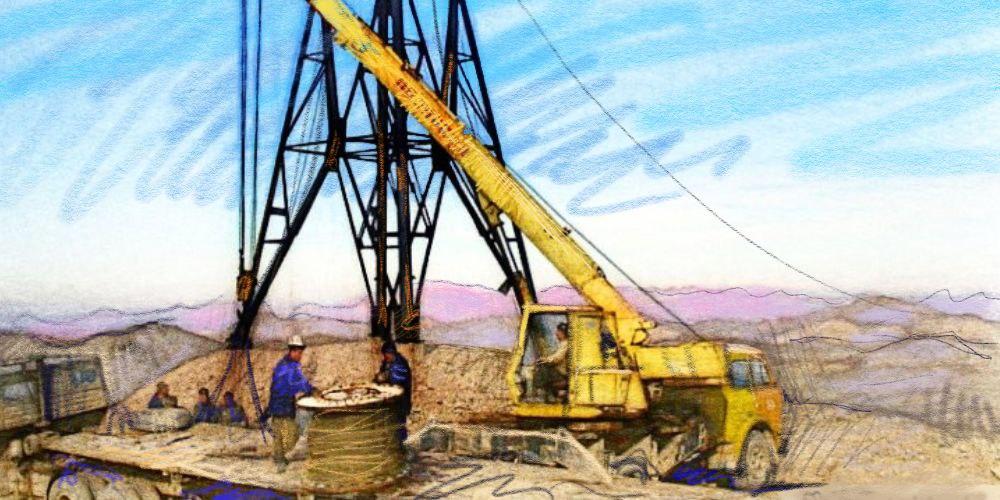
In the latest sign of Central Asian regional cooperation, Kazakhstan has signed a long-term deal to import electricity from Tajikistan. However, that electricity might not reach Kazakhstan anytime soon, as there are some important details that need to be worked out by Tajikistan before supplies can begin. Kazakhstan’s energy problems Kazakhstan has been experiencing severe energy deficits for several years now, particularly during winter months. Kazakh Senator Suyindik Aldashev said in late February this year that Kazakhstan would be short some 5.7 billion kilowatt hours (kWh) of electricity in 2025, which would be a 46% increase in the country’s electricity deficit compared to 2024. Kazakhstan was forced to import electricity from Russia during the winter of 2024 to help alleviate energy shortages. These shortages contributed to Kazakhstan's decision to hold a referendum to approve the construction of the country’s first nuclear power plant (NPP). To date, however, there has been no announcement of which company will build the NPP, so additional electricity from that source could be a decade or more away. This has led Kazakhstan to explore importing energy resources from its Central Asian neighbors. The head of Turkmenistan’s Halk Maslahaty (People’s Council) Gurbanguly Berdimuhamedov just visited Kazakhstan and met with Kazakh President Kassym-Jomart Tokayev with Turkmen gas exports to its northern neighbor high on the agenda. Kazakhstan has been in discussions with Tajikistan about electricity shipments for months, and the agreement was finalized toward the end of April. Rogun The source of the electricity Tajikistan intends to export to Kazakhstan is the Rogun Hydropower Plant (HPP) on the Vakhsh River, some 110 kilometers east of the Tajik capital Dushanbe. The Rogun HPP has a history of controversy. It was conceived in the 1960s when Tajikistan was a Soviet Republic. Construction on the project started in 1976, but not much had been done by the time the USSR collapsed in late 1991, and work ground to halt shortly thereafter. Russian company RUSAL signed an agreement in 2004 to invest more than $1 billion and finish building Rogun, but disputes over the project led the Tajik government to cancel the contract in 2007. One of the main differences between the two parties was RUSAL’s insistence the dam wall at Rogun be no higher than 285 meters, whereas the Tajik authorities wanted the original height of 335 meters. At 285 meters, the HPP’s output would have been 2400 megawatts (MW), while at 335 meters, the output would be 3600 MW. Russia’s Inter RAO EES was in talks with Tajikistan about the Rogun project in 2008, but in the end, nothing came from those negotiations. With no hope of foreign backing, Tajik President Emomali Rahmon started portraying Rogun as a project of national salvation, the key to energy independence. Rahmon’s government called on citizens to help finance construction of the HPP and when public support in the poorest country in Central Asia proved insufficient, citizens were pressured into buying shares in the project. The government in neighboring Uzbekistan objected to Rogun’s construction,...

May Day in Central Asia: From Soviet Parades to a Celebration of Unity

In Soviet times, May 1 and 2 were public holidays. May 1 was International Workers' Day, marked by large-scale parades celebrating the proletariat, while May 2 served as a day to recuperate before returning to work. Today, three of the five Central Asian republics have preserved the tradition of celebrating May Day, effectively marking the arrival of spring twice, once through Central Asian customs – Nauryz - and again through European ones. Workers of the world, unite! Coined by Karl Marx and Friedrich Engels in The Communist Manifesto, this famous communist slogan once appeared on the coats of arms of the Soviet Union and its republics. International Workers' Day became the living embodiment of this phrase. Celebrated on 1 May, May Day began as a European festival of spring but gained global significance through the labor movement. The Second International, formed at the 1889 International Workers Congress in Paris, called for an annual demonstration advocating an eight-hour workday. The date honors the U.S. general strike that started on 1 May 1886 and led to the tragic Haymarket massacre on 4 May. The date became a powerful symbol of working-class solidarity and a yearly tradition across large swathes of the globe. [caption id="attachment_31352" align="aligncenter" width="1174"] Soviet-era poster for International Workers' Day[/caption] Before the Bolsheviks came to power, political agitators in the Russian Empire used May 1 to call for change with slogans such as “Down with the Tsar” and “Give us freedom.” After the October Revolution, May 1 and 2 became official state holidays, with May Day becoming synonymous with International Workers' Day and mandatory parades. Unlike the more formal and solemn celebrations honoring the October Revolution, however, May Day events were often met with genuine enthusiasm. After the collapse The fall of the USSR brought about a widespread reevaluation of Soviet holidays. The celebration of the October Revolution on November 7 was widely discarded, but many post-Soviet republics retained May 1 as a public holiday, albeit with new interpretations and meanings. In Central Asia, Turkmenistan and Uzbekistan do not officially celebrate May 1. Turkmenistan has developed a distinct holiday calendar, while in Uzbekistan, May 1 is observed symbolically as the Day of Fountains. [caption id="attachment_31353" align="aligncenter" width="2560"] Day of Fountains, Tashkent; image: TCA, Stephen M. Bland[/caption] Though celebrations are more modest and it is no longer officially a day off, Tajikistan has retained the holiday’s Soviet-era name, International Workers’ Day. Some traditions, such as honoring outstanding workers, persist. Kyrgyzstan calls the holiday Labor Day, in line with its American equivalent. It is marked by festive events and activities organized by trade unions. Kazakhstan has taken a different approach, reimagining May Day as the Day of Unity of the People of Kazakhstan. The name reflects the country’s emphasis on stability and interethnic harmony, a model promoted by the Assembly of the People of Kazakhstan, an institution established on March 1, 1995, at the initiative of the country’s first president, Nursultan Nazarbayev. Since 2016, March 1 has also been celebrated as Thanksgiving...

Kazakhstan to Import Electricity from Tajikistan to Address Energy Shortages

Kazakhstan and Tajikistan have signed an agreement on long-term cooperation in the energy sector. The agreement will remain in effect for 20 years, with the possibility of a 10-year extension. The document aims to strengthen energy security, promote environmentally friendly technologies, and reduce greenhouse gas emissions. Monitoring and telemetry Under the agreement, Kazakhstan will receive scheduled electricity supplies from Tajikistan, particularly from the Rogun Hydroelectric Power Plant (HPP). These imports are intended to cover planned shortages in the North-South zone of Kazakhstan’s unified power system. The price is set at $0.034 per kilowatt-hour (kWh), including VAT at a zero rate. The agreement also includes the introduction of hourly electricity metering at connection points between Kazakhstan's and Central Asia’s power grids, as well as along the Tajik border. Kazakhstan's system operator, KEGOC JSC, will receive real-time telemetry data from Tajikistan via interstate transmission lines to ensure accurate metering and efficient coordination. Electricity deliveries will follow the routes specified in the purchase agreements. The primary source will be the Rogun HPP, with supplies timed to match Kazakhstan's peak shortage periods. A long-awaited step Energy cooperation between the two countries has been under discussion for some time. In August 2024, former Kazakh Energy Minister Almasadam Satkaliev held talks on importing electricity from Tajikistan. These discussions also addressed the issue of unscheduled electricity flows between their power grids. By December 2024, plans were already in place to finalize a 20-year agreement. In February 2025, the deal was confirmed during talks between Kazakhstan’s Foreign Minister Murat Nurtleu and his Tajik counterpart, Sirojiddin Mukhriddin. “We agree that Tajik-Kazakh energy cooperation has broad prospects. We have agreed that an intergovernmental agreement on electricity will be signed in the very near future,” the Tajik foreign minister said at the time. The potential of the Rogun HPP and prospects for Kazakhstan A key element of the agreement will be the Rogun hydroelectric power plant on the Vakhsh River. Once completed, its dam will reach a height of 335 meters, making it the tallest in the world. The power plant will have a capacity of 3,600 MW, making it the largest power plant in Central Asia. This makes the project strategically important not only for Tajikistan but for the entire region. The official website of the Rogun HPP states that the facility will be the upper stage of the Vakhsh cascade and will play a key role in ensuring sustainable energy supplies. The agreement is expected to not only enable Kazakhstan to stabilize its energy balance during peak loads, but also open up new opportunities for cross-border cooperation. With the growing demand for green energy, the strategic alliance with Tajikistan could become an important element of the country's energy transition. The resolution enters into force on the day of its signing and effectively launches an intergovernmental mechanism capable of strengthening Kazakhstan's energy security for decades to come.

Kyrgyzstan Begins Construction of Border Fence with Tajikistan

Kyrgyzstan has launched construction of a border fence along its frontier with Tajikistan in the Batken region, according to a report by 24.kg. The project commenced near the village of Koshmolo in the Tort-Gul area, a strategically significant location where the borders of Kyrgyzstan, Tajikistan, and Uzbekistan converge. An official ceremony marking the start of the project was held at a nearby border marker. Kyrgyz Deputy Prime Minister and head of the State Committee for National Security, Kamchybek Tashiev, addressed the event via video link. Other senior officials in attendance included Director of the Border Guard Service Major General Abdikarim Alimbaev and Aybek Shamenov, the presidential representative in Batken. To facilitate the project, a field operations camp has been established, and specialized construction equipment has been deployed. Authorities report that all necessary logistical conditions have been prepared for personnel working on site. “Today we are witnessing a significant event of great importance for the citizens of Kyrgyzstan and Tajikistan. The Border Service will make every effort to complete the development work within the established timeframe. Our goal is to create a zone of security and tranquility on the shared border,” said Alimbaev. 420 Kilometers of Fencing Planned in First Stage In its initial phase, the project aims to install barbed wire fencing along 420 kilometers of the border. The entire border fortification is expected to be completed by the end of 2025. The initiative follows a pivotal agreement between Kyrgyzstan and Tajikistan signed on March 13 in Bishkek. During a bilateral summit, the presidents of both countries reached a historic deal to fully delimit and demarcate the 1,006-kilometer border after years of disputes and sporadic clashes.

Opinion – Central Asia’s Looming Water Crisis: A Ticking Time Bomb

When people think of Central Asia, they often picture vast deserts, ancient Silk Road cities, and oil pipelines stretching to distant markets. Yet the region’s most urgent and combustible resource is not buried underground — it flows above it. Water, or more precisely the lack of it, is rapidly becoming the defining fault line of Central Asia’s future. For decades, the five Central Asian republics have tiptoed around a growing water crisis. The two major rivers that sustain life in this arid region, the Amu Darya and the Syr Darya, are now so contested and depleted that what was once a technical issue has metastasized into a geopolitical threat. The region's major rivers, the Amu Darya and the Syr Darya are under immense pressure, threatening agriculture, livelihoods, and regional stability. At the heart of the crisis is a tragic irony. The upstream countries, Kyrgyzstan and Tajikistan, are rich in water but poor in energy and cash. They need to release water in winter to generate hydropower. Downstream nations, particularly Uzbekistan and Turkmenistan, want water stored until the summer to irrigate vast cotton and wheat fields. The result? Mutual distrust, occasional diplomatic spats, and an accelerating race to dam, divert, and hoard water in a region already gasping under the weight of climate change. A Region Parched Central Asia annually utilizes over 60 billion cubic meters of water for irrigation from the Amu Darya and Syr Darya basins. However, recent years have seen a decline in river flows, with the actual flow of the Syr Darya being 20–23% less than the norm. Further, the ghost of the Aral Sea — a once-thriving inland lake that has now shrunk by over 90% in its volume and 74 % in surface area — serves as a haunting reminder of the cost of mismanagement. The Soviet legacy of excessive irrigation has morphed into a post-Soviet scramble for control, where water is not just a tool of survival but a lever of power. This desiccation has transformed the region, leading to the emergence of the Aralkum Desert and causing severe ecological and health issues. Climate Change Intensifies the Crisis Climate change is exacerbating water scarcity in Central Asia. A recent study revealed that an extreme heatwave in March 2025, with temperatures soaring 5 to 10°C above pre-industrial levels, was significantly amplified by global warming. Such temperature surges accelerate glacier melt and increase evaporation rates, further reducing water availability. By some estimates, Central Asia could lose over 30% of its freshwater resources by 2050. Yet, rather than galvanize cooperation, this existential threat has sparked more competition. International efforts have largely fallen flat. The International Fund for Saving the Aral Sea (IFAS), the region’s main water cooperation body, is riddled with inefficiencies and lacks enforcement power. External actors like China and Russia have their own interests, often deepening the regional divide rather than healing it. Inefficient Water Management Inefficient agricultural practices remain one of the most profound and persistent contributors to water mismanagement across Central Asia. In...